
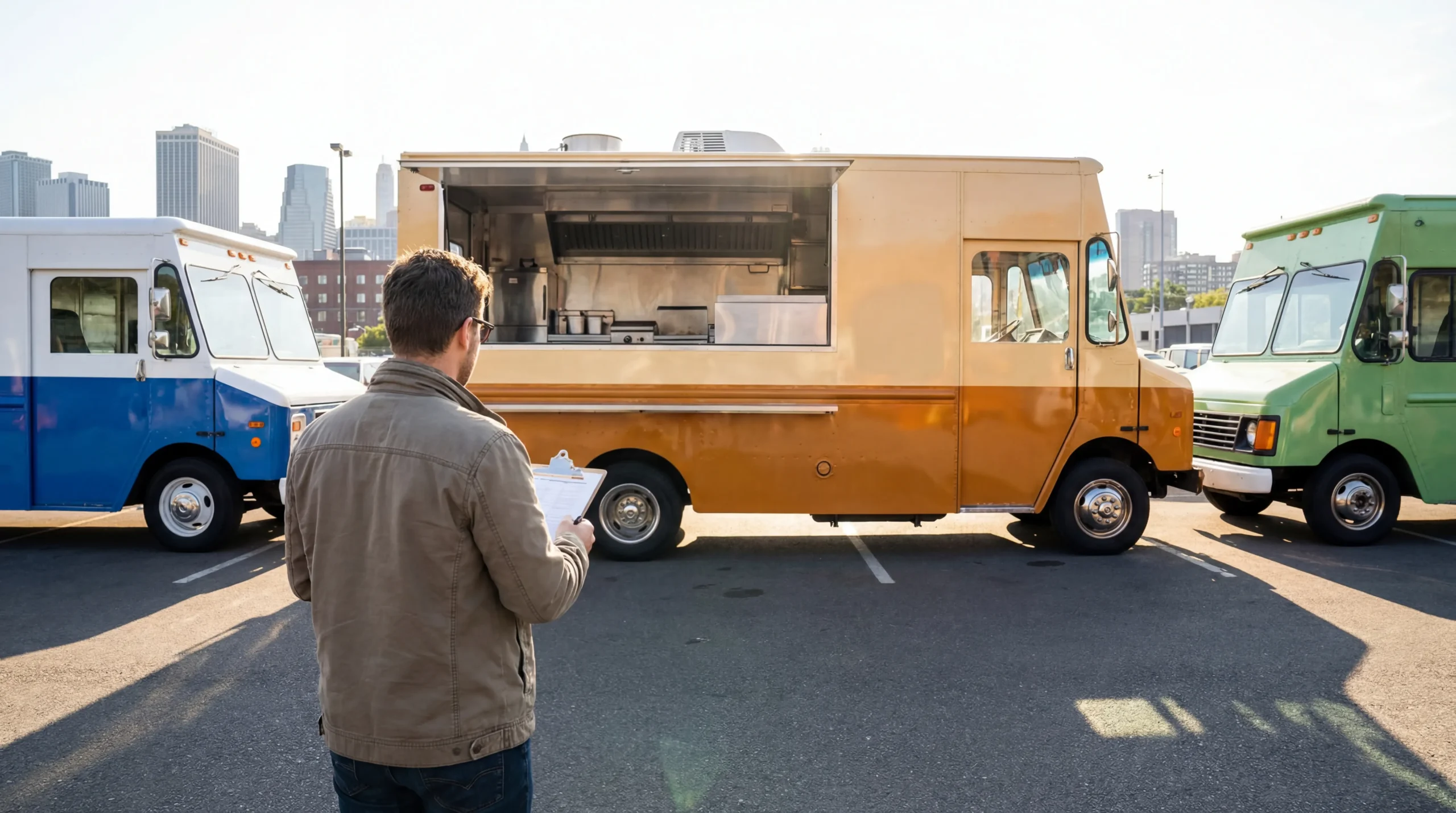

I spent four months searching for my truck. Four months of scrolling marketplace listings at midnight and driving across town to inspect vehicles that looked nothing like their photos. I almost handed over a deposit on the wrong one — twice.
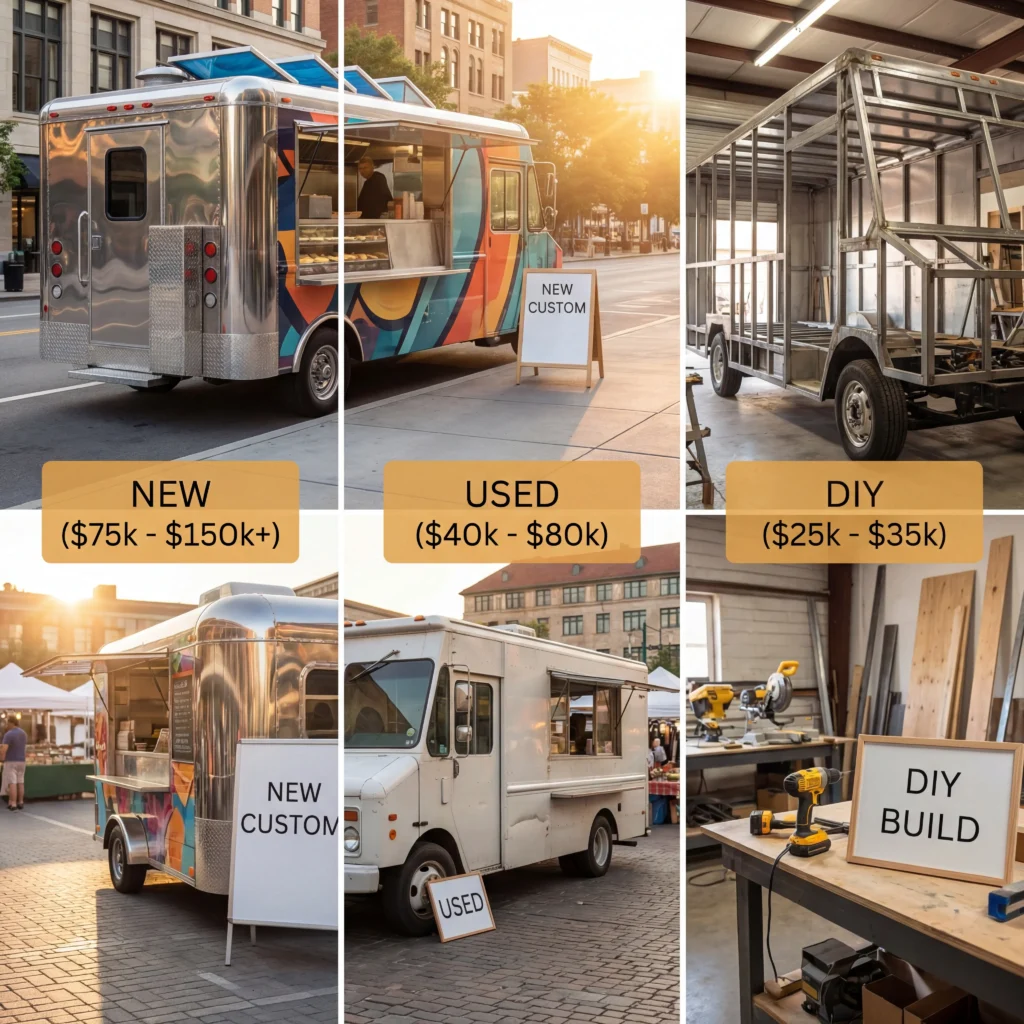
Here’s the thing: when you buy a food truck, you’re making the single biggest purchase of your food truck career, and most first-time buyers either overspend or miss critical problems that cost them thousands later. As of 2026, new custom-built trucks typically run between $75,000 and $150,000, while used trucks range from roughly $40,000 to $80,000 depending on age, mileage, and equipment. Your total startup budget — truck, permits, insurance, inventory, and cash reserve — will likely land somewhere between $50,000 and $200,000, though some simpler concepts like dessert carts or coffee setups can start for less.
I’m sharing what I’ve learned from my own journey and from mentoring other food truck owners. Your city’s costs and requirements might look completely different from mine — always do your own local research.
📚 Part of: Food Truck Startup Complete Guide
Should You Buy a Food Truck New, Used, or Build One Yourself?
This is the first real fork in the road, and your answer depends on one honest question: do you have more money or more time?
A brand-new, custom-built food truck gives you total control over the kitchen layout, the equipment brands, and the exterior design. Several reputable custom builders advertise starting prices in the six figures, and fully loaded builds can climb well past $200,000. The tradeoff is patience — custom builds often take three to six months from design to delivery.
Used trucks offer a faster path to launch. You can find partially or fully equipped units ranging from roughly $40,000 to $80,000 on dedicated platforms and marketplaces. I went the used route and I’m glad I did. But I also spent several thousand dollars on surprise repairs in my first year because I skipped a proper inspection. Don’t repeat that mistake.
Building your own truck is the most affordable path. Owners who go the DIY route typically invest between $25,000 and $35,000 all-in, but you’ll need hands-on building skills and a willingness to work through permitting requirements. You’ll also need to install commercial-grade plumbing, electrical, and a fire suppression system that meets your state’s code. (If you’re not sure what a fire suppression system is — it’s the automatic extinguishing setup required in every commercial kitchen. Your local fire marshal will inspect it.)
For a deeper breakdown on the trailer option specifically, check out our comparison on food truck vs food trailer pros and cons.
💡 Pro Tip from Jo: If you’re debating new versus used, ask yourself honestly: “Do I have more money or more time?” That answer will point you in the right direction every single time.
What Should You Inspect Before Signing Anything?
I’m not gonna lie — the inspection part felt overwhelming when I was going through it. There’s the vehicle side and the kitchen side, and you’ve got to check both.
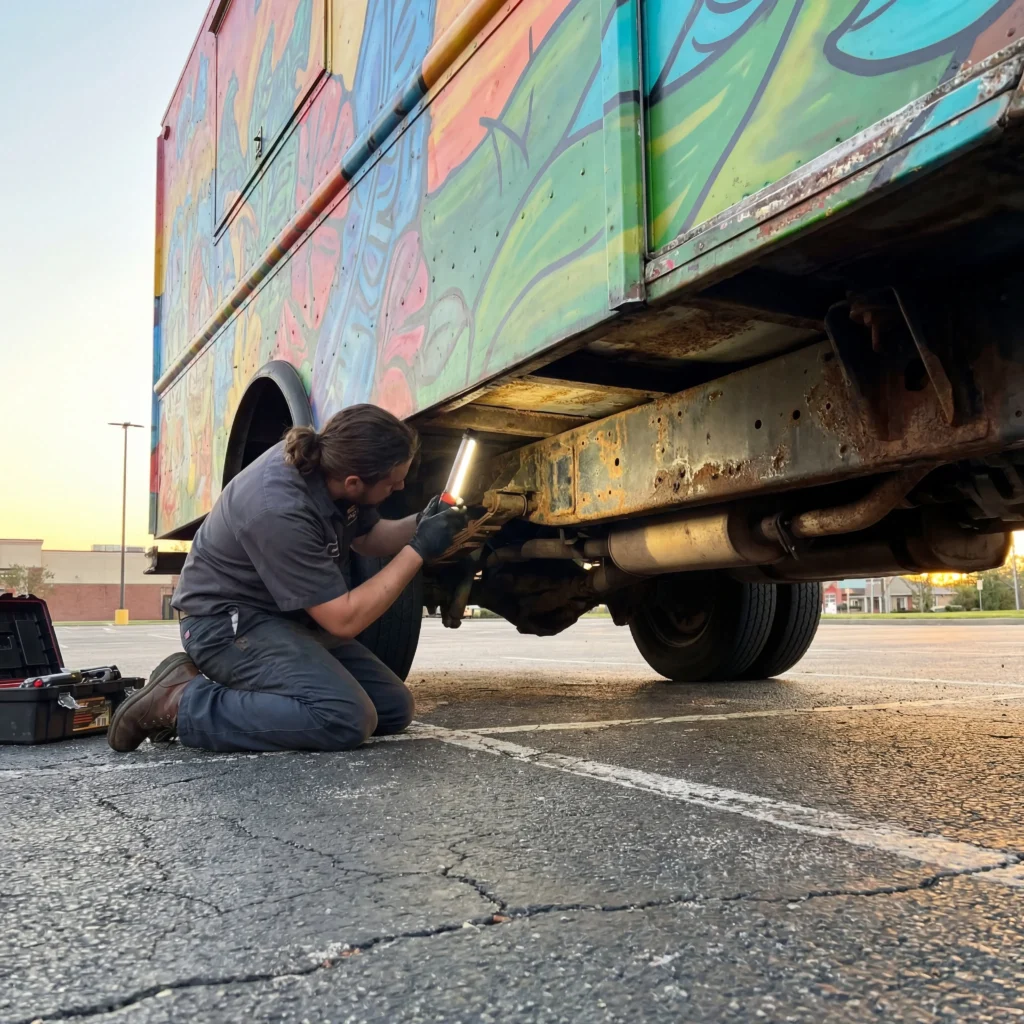
For the vehicle, ask for maintenance records. Check the mileage — anything over 150,000 miles on a box truck (the boxy delivery-style vehicles most food trucks are built on) is a red flag. You’re probably looking at major engine or transmission work within a couple of years at that point. Look underneath for rust, frame damage, and oil leaks. Take it for a real test drive on both city streets and the highway.
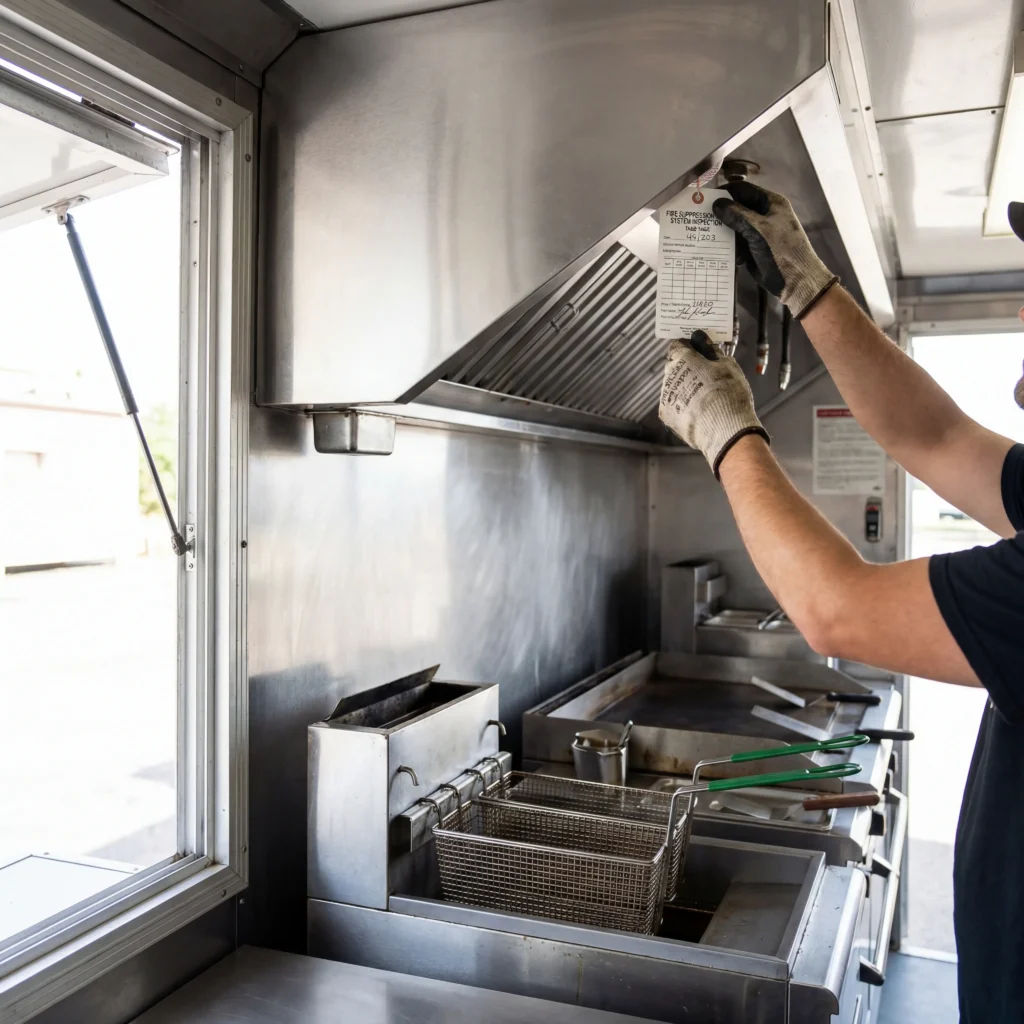
For the kitchen, run every single piece of equipment. Turn on the fryer. Fire up the grill. Make sure the refrigeration holds temperature. Run the water pump and check for leaks at every connection. Open the hood and look for a current inspection tag on the fire suppression system.
Here’s the step that saves the most money: hire a mobile mechanic and a commercial kitchen equipment tech to inspect the truck independently. In my experience, that runs a few hundred dollars for both — but the food truck owners I’ve mentored have uncovered anywhere from $3,000 to $12,000 in hidden problems thanks to those inspections. If the seller won’t let you bring an inspector? Walk away. No exceptions.
For the full technical equipment walkthrough, Darnell covers it in detail in our food truck equipment checklist.
💡 Pro Tip from Jo: Ask the seller to run all the kitchen equipment in front of you while you’re there. If they hesitate or say something “isn’t hooked up right now,” that’s your cue to leave.
How Much Does It Really Cost to Buy a Food Truck?
Can we talk about the real numbers for a second? Because the sticker price on the truck is only part of the story — and I wish someone had told me that before I started.
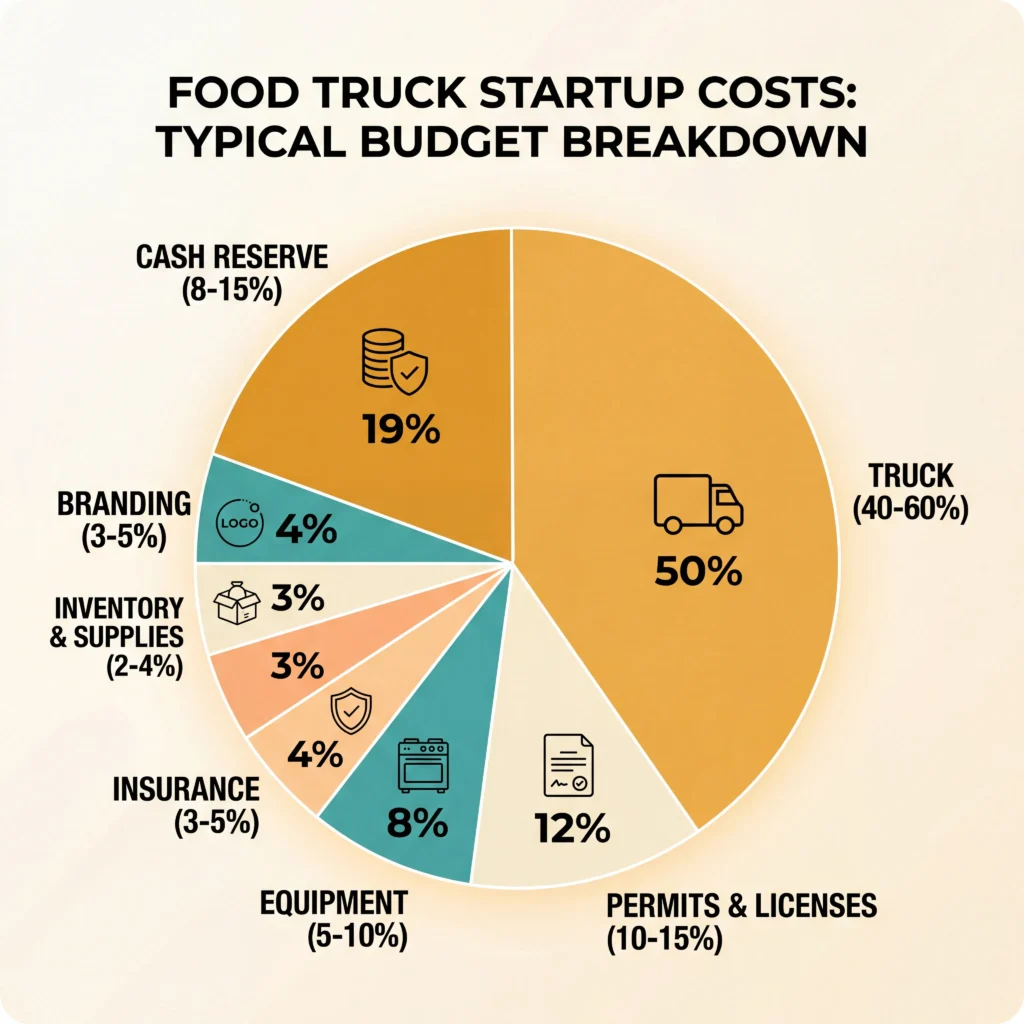
When I added up everything for my truck — the vehicle, the permits, my first grocery order, insurance, my little cash cushion — I landed around $65,000. I’m not a numbers person (that’s why I have an accountant), but here’s roughly how the money breaks down for most owners:
The truck itself eats up about 40% to 60% of your total budget. Permits and licenses vary wildly by city — according to the U.S. Chamber of Commerce’s 2018 Food Truck Nation report (still the most comprehensive national study available, though fees have likely shifted since), the average owner spends roughly $28,000 on permits, licenses, and compliance to start up and operate for one year. That said, some cities come in under $1,000 while others exceed $17,000 in fees alone.
Beyond the truck and permits, budget for insurance ($2,000 to $5,000 for your first year), initial food inventory and supplies ($1,500 to $3,000), branding and a truck wrap ($2,500 to $5,000), a point-of-sale system ($300 to $1,500), and a cash reserve for the first few months ($5,000 to $15,000).
Then there are the costs nobody warns you about: parking tickets in cities with aggressive enforcement (these can add up to several hundred dollars monthly), commissary kitchen fees if your city requires one ($400 to $1,200 per month), the lost revenue during weeks your truck is in the shop for repairs, and the branding revisions when your first wrap doesn’t turn out how you imagined.
For the full financial breakdown with projections and templates, Marcus goes much deeper in our food truck business plan guide.
Where Can You Find Food Trucks for Sale?
Now, I know what you’re thinking — “Okay Jo, where do I actually find these trucks?” There are more options now than when I was searching, and some of them are genuinely helpful.
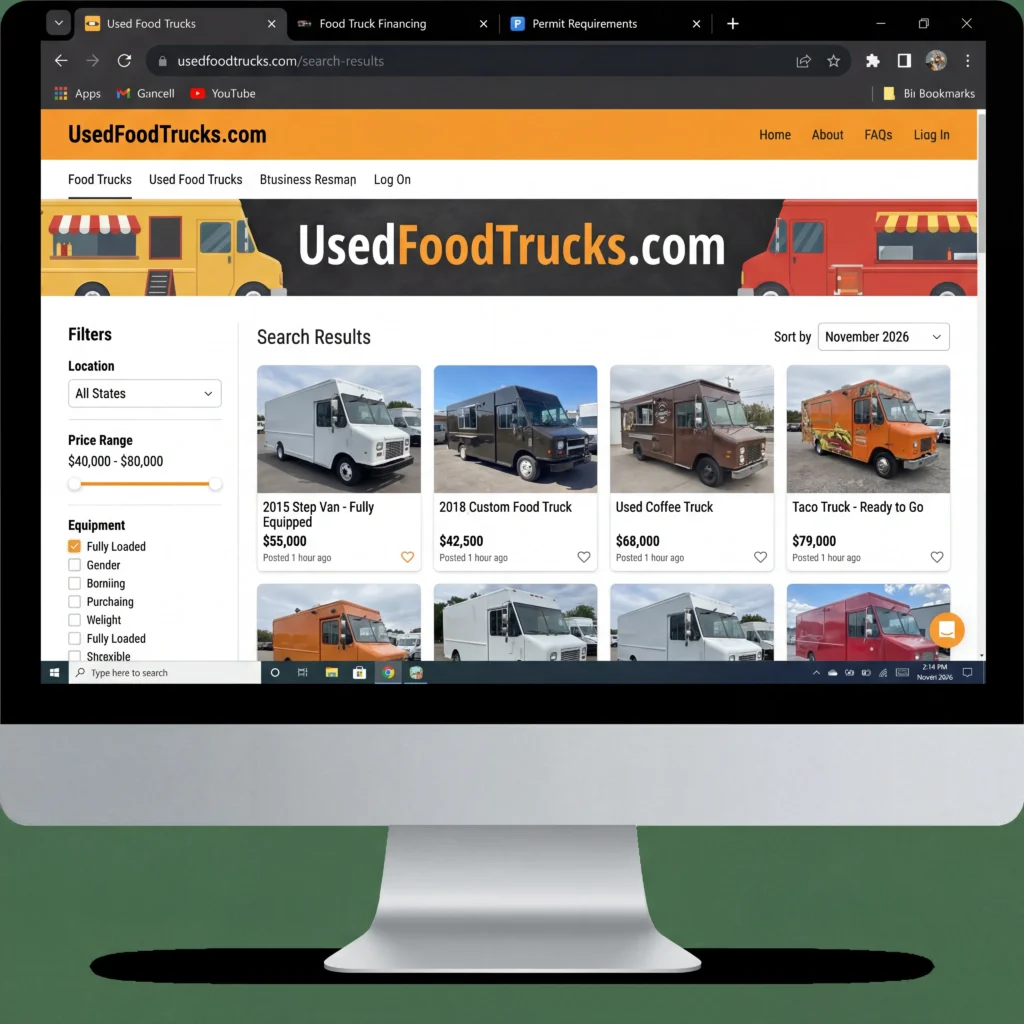
Online marketplaces are where most buyers start. UsedFoodTrucks.com is the largest dedicated platform and lets you filter by state, price, and equipment. Commercial Truck Trader lists both new and used units. eBay Motors occasionally has listings, though be extra careful with seller verification there.
Facebook Marketplace and regional food truck groups are where I’ve seen some of the best deals. Operators selling their own trucks directly tend to price more fairly, and you can usually get the full story on the vehicle’s history. Search for food truck buy/sell groups in your state — most regions have at least one active group.
Custom food truck builders are the route if you want a new build designed from scratch. Get at least three quotes before committing, and ask to speak with past clients about their experience.
One more thing most guides won’t tell you: timing matters when you buy a food truck. Fall (September through November) is often the best time to shop. Many operators are winding down their season, upgrading, or leaving the business — which means more inventory and lower prices. By January, new buyers flood the market and prices climb back up.
If you’re exploring the trailer route instead, our guide to food trailers and trucks compares your options. And for current listings, browse our food truck for sale page.
How Do You Finance Your First Food Truck?
Real talk: most first-time food truck owners don’t have $75,000 sitting in savings. And that’s perfectly normal. When I was in your shoes, I funded my truck with personal savings and a small loan from my dad — not glamorous, but it worked.
Here are the most common options. I’m not a financial advisor, so verify all terms, rates, and eligibility directly with lenders before making any commitments.
SBA microloans are designed for small businesses and cap at $50,000, with the average loan coming in around $13,000. They’re one of the more accessible options for food truck operators, especially if you have a solid business plan to attach to your application.
Equipment financing is popular because the truck itself acts as security for the loan (meaning the lender can repossess the truck if you default). This often means lower down payments and fixed monthly payments. Several lenders specialize specifically in food truck and restaurant equipment.
Personal savings and family loans are how a large number of first trucks get funded. If you go this route, still write up a simple agreement. It protects the relationship.
Crowdfunding through platforms like Kickstarter or GoFundMe can work if you have a compelling story and an existing community. I’ve seen a few of my mentees pull it off by offering catering credits and VIP event access as rewards.
💡 Pro Tip from Jo: When applying for any food truck loan, attach your business plan and a one-page summary of your projected first-year revenue. Lenders notice when you’ve done the homework — it sets you apart from applicants who show up with just a dream.
For a deep dive into loan programs and how to strengthen your application, our food truck loans guide covers the details.
What Mistakes Do First-Time Buyers Make?
After working with more than a dozen new food truck owners through their first year, I keep seeing the same mistakes. One of my mentees fell in love with a turquoise truck — gorgeous wrap, incredible curb appeal. Terrible engine. She spent over $6,000 on repairs before her first customer. She caught it early enough to recover, and so will you — but only if you know what to watch for.
Buying on emotion instead of inspection. You fall in love with the look and ignore the check-engine light. Always bring an independent inspector. Always.
Ignoring local health codes before purchasing. Every city and county has different requirements for hood systems, sink setups, water tank capacity, and ventilation. A truck that passes inspection in one city might fail in another. Research your local health department requirements before you buy — not after. Our food truck permits guide walks you through what to look up.
Underestimating total startup costs. The truck is roughly 40% to 60% of your total investment. If you spend everything on the vehicle, you won’t have enough left for permits, insurance, inventory, and the inevitable surprises.
Skipping the test drive. A food truck is a vehicle first. If it can’t reliably get you to your spots, it doesn’t matter how nice the kitchen is. Drive it on the highway. Test the brakes under load.
Not budgeting for downtime. Used trucks break down. New trucks have warranty periods that expire. Set aside at least a few thousand dollars annually for maintenance and unexpected repairs, and have a plan for lost revenue during downtime.
I’m not a lawyer — please verify all legal and regulatory requirements with your local authorities before purchasing.
What’s on the Pre-Purchase Checklist?
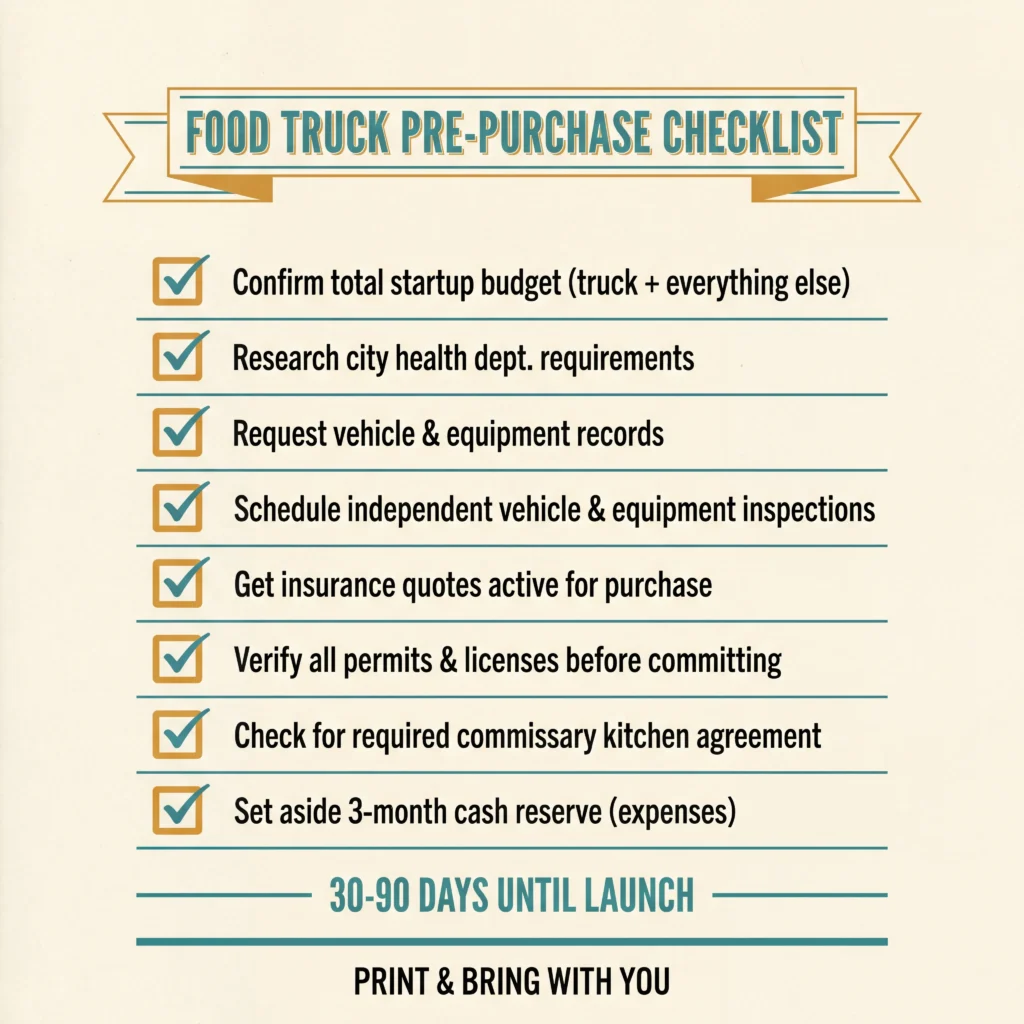
This is the exact list I give every mentee before they sign anything. Print it out. Bring it with you. Check every box.
☐ Confirm your total startup budget — truck plus everything else — and set your maximum vehicle price
☐ Research your city’s health department requirements and verify the truck’s kitchen layout will pass inspection in your specific jurisdiction
☐ Request the vehicle’s maintenance records, VIN history report, and documentation on the age and brand of each piece of kitchen equipment
☐ Schedule independent inspections for both the vehicle (mobile mechanic) and the commercial kitchen equipment (equipment tech) — most buyers complete this step within one to two weeks
☐ Get insurance quotes before purchase day — you’ll need coverage active from the moment you take ownership; talk to a broker about your specific needs
☐ Verify you can obtain all required permits and licenses in your operating area before committing to a launch date
☐ Check whether your city requires a commissary kitchen agreement — many health departments won’t issue a permit without one
☐ Set aside a cash reserve of at least three months of operating expenses for the post-purchase period before revenue starts flowing
After you sign the papers, expect roughly 30 to 90 days before you’re actually serving customers. That window covers final permit approvals, health department inspection, insurance activation, getting your wrap installed, and placing your first inventory order.
For the full startup timeline beyond just the purchase, our food truck startup checklist covers every phase.
Putting It Into Practice
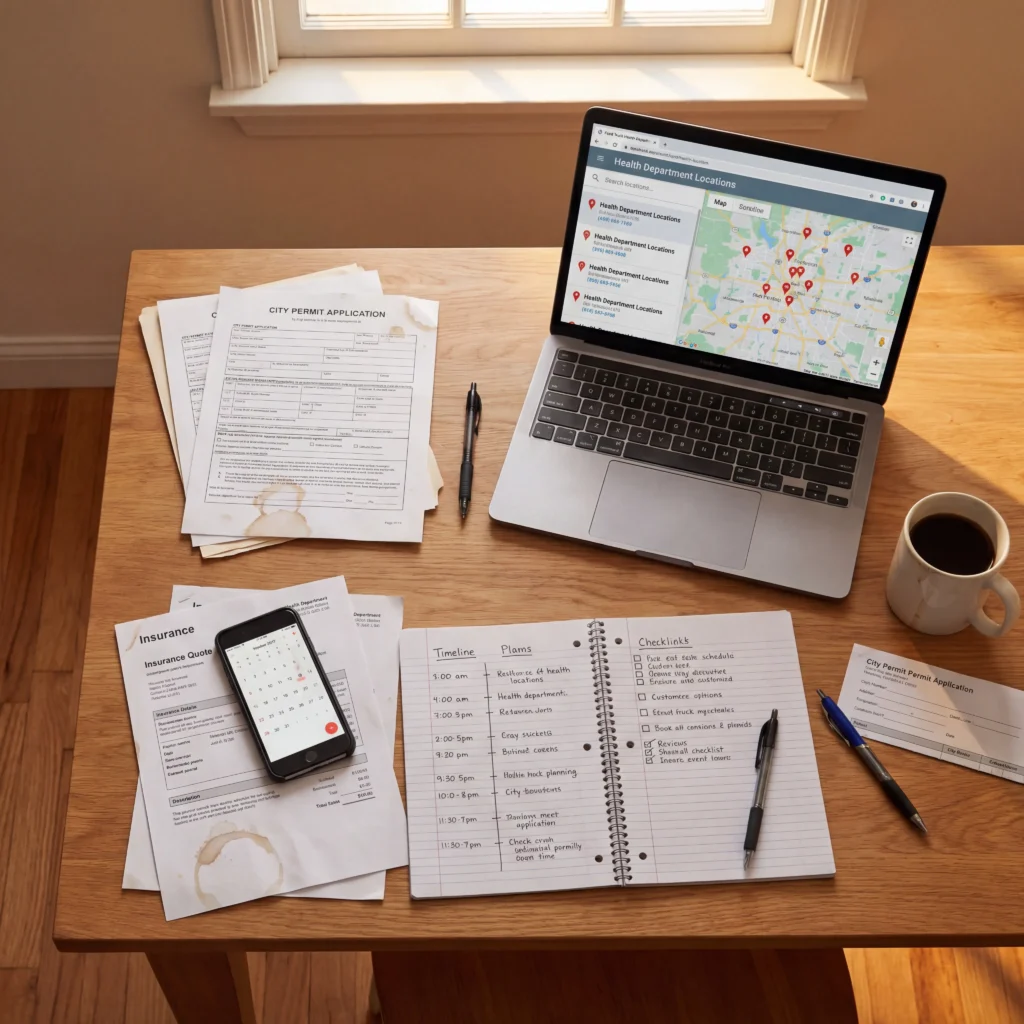
📅 Today: Set your maximum truck budget (total, not just vehicle price) and research your city’s health department food truck requirements
📅 This Week: Start browsing UsedFoodTrucks.com and your local Facebook food truck groups — schedule time to visit at least two trucks in person this week or next
📅 This Month: Hire an independent inspector, get insurance quotes, submit your first permit application, and line up a commissary kitchen if your city requires one
Tools You’ll Need: ☐ VIN check service (Carfax or AutoCheck) ☐ Contact for a mobile mechanic in your area ☐ Contact for a commercial kitchen equipment inspector ☐ Insurance broker who handles food truck policies ☐ Your city’s health department food truck application
Frequently Asked Questions
How much should I actually budget for my first food truck?
Most first-time owners spend between $50,000 and $120,000 total when you add up the truck, permits, equipment, insurance, and initial inventory. The truck itself typically accounts for 40% to 60% of that number. Starting with a well-inspected used truck in the $40,000 to $80,000 range keeps your overall costs manageable while still getting a reliable, equipped vehicle. Some niche concepts (coffee, desserts, hot dogs) can start for significantly less.
Is it smarter to buy a food truck new or used?
For most first-time owners, a well-inspected used truck is the smarter financial move. Used units typically cost $40,000 to $80,000 and get you on the road faster. New custom-built trucks offer full control and fewer surprises but start around $75,000 to $150,000 and take months to build. The key word is “well-inspected” — a used truck without a professional inspection is a gamble, not a bargain.
Can I buy a food truck with no money down?
Some equipment financing companies offer low or zero-down options, but you’ll typically need a credit score of 600 or higher and a solid food truck business plan. SBA microloans cap at $50,000 and are designed for small business startups. Community development financial institutions are also worth exploring if traditional lenders require too much upfront.
What should I look for when I buy a food truck used?
Focus on five areas: engine and transmission health, the condition of all kitchen equipment, plumbing and electrical systems, whether the fire suppression system has a current inspection tag, and whether the truck’s layout meets your local health department’s specific requirements. Always hire an independent mechanic and an equipment technician before committing to a purchase.
When is the best time of year to buy a food truck?
Fall — September through November — is generally the best window. Many operators are winding down their season, upgrading, or exiting the business, so inventory is higher and prices tend to drop. By January, new buyers flood the market and competition for the best trucks drives prices back up. If you buy in fall, you also gain several months to prep, brand, and permit your truck before the busy spring and summer season.
How long does it take to go from buying a food truck to serving customers?
From the moment you find the right truck, expect roughly 30 to 90 days before you’re serving. That timeline covers completing the purchase, obtaining permits and licenses, passing health department inspection, setting up insurance, ordering inventory, and getting your branding installed. Custom-built new trucks add three to six months of build time on top of that.
Wrapping Up
Quick Recap:
☐ Know your all-in budget before you start shopping — the truck price is only 40% to 60% of your total investment
☐ Always hire independent inspectors for both the vehicle and the kitchen equipment — this one step can save you thousands
☐ Used trucks are the smart first move for most owners, as long as you inspect them properly
☐ Fall is the best time to shop — more selection, less competition, lower prices
Your next steps: If you’re still figuring out what kind of food truck business you want to run, explore our food truck concepts and ideas for inspiration. Already know your concept? Start building your financial plan with Marcus’s food truck business plan guide.
If you’ve made it through this entire guide, you already know more than most first-time buyers do when they sign the papers. You’ve totally got this — and when you find the right truck, everything starts to click into place.
Back to the full Food Truck Startup guide.
— Jolene Matsumoto
