
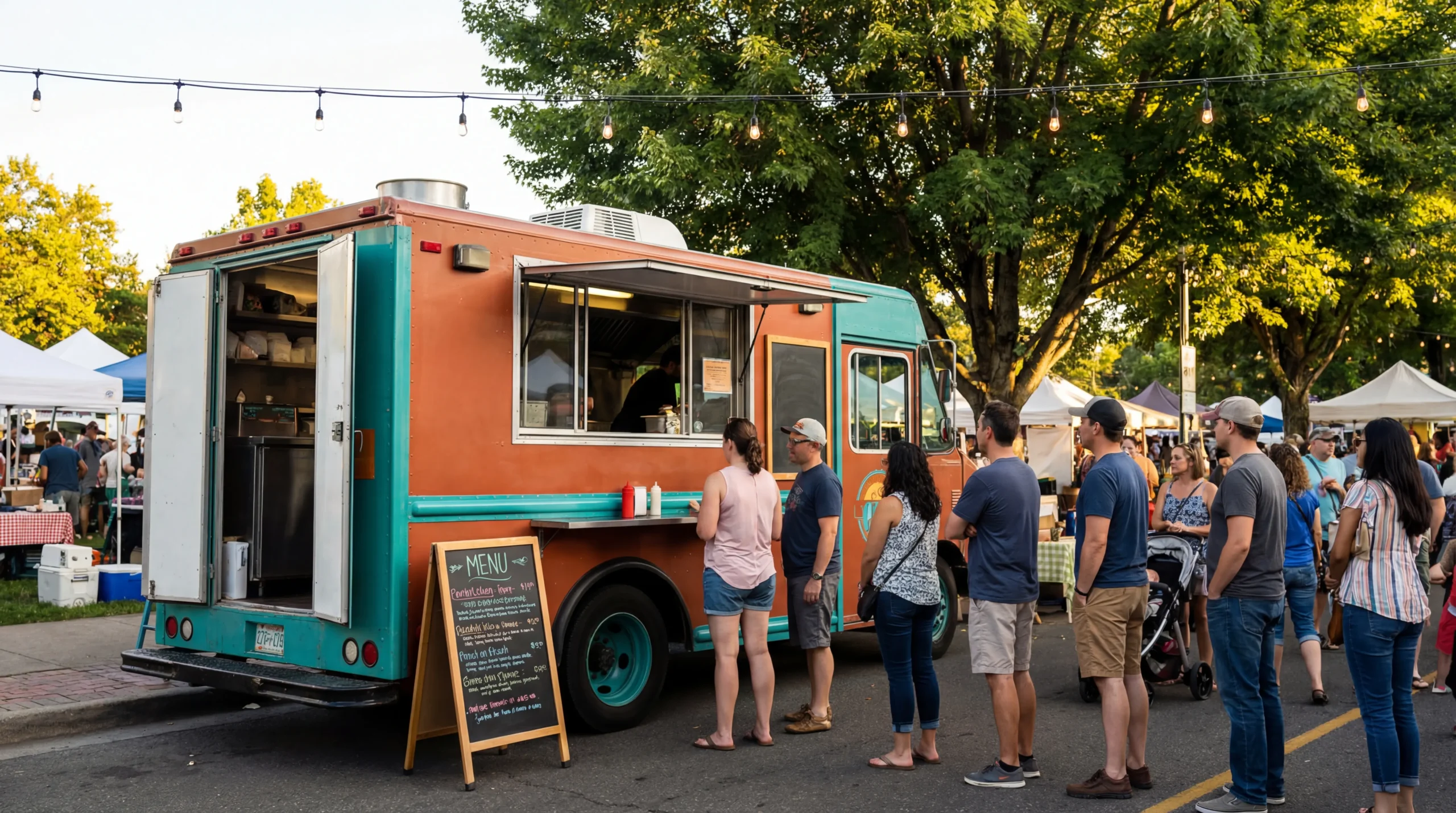

What Is a Food Truck Rental?
A food truck rental is an arrangement where you pay to use a fully equipped mobile kitchen — either on a monthly basis to launch your own food business, or as a short-term booking for events like weddings, corporate lunches, and festivals. As of early 2026, most long-term food truck rentals run between $2,000 and $3,000 per month, while event-based bookings are typically priced per guest or as a flat fee.
Renting is one of the lowest-risk paths into the food truck world. It lets you test your concept, build a customer base, and learn the daily realities of mobile food operations — without committing $50,000 or more to a truck you haven’t proven you need yet.
When I was getting my fusion truck off the ground back in 2018, I honestly didn’t know food truck rental was even an option. I assumed you either scraped together enough cash to buy one outright, or you didn’t get to play. Turns out, there’s an entire system built around helping new operators get on the road faster — and it would have saved me months of stress if I’d known about it sooner.
This guide walks you through how the food truck rental process actually works, what’s included, how to spot a good rental company, and which type of rental fits your situation.
This article is part of our complete Food Truck Startup guide.
How Does the Food Truck Rental Process Actually Work?
The food truck rental process typically involves six key steps: defining your needs, researching options, inspecting the truck in person, reviewing the rental agreement, securing insurance and permits, and picking up the keys. The whole timeline can range from two weeks to three months depending on your city’s permitting requirements.
Here’s how each step plays out.
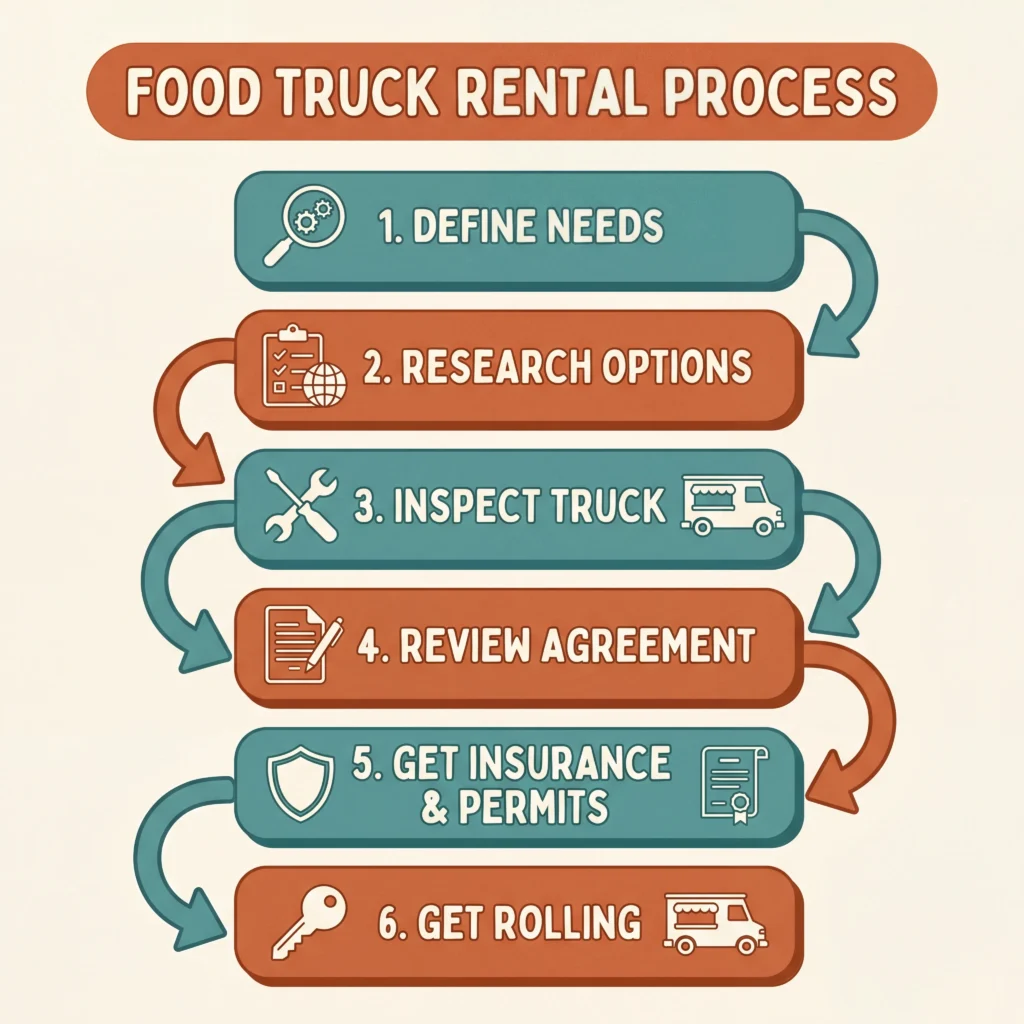
Step 1: Define what you need. Before you contact anyone, get clear on your situation. Are you renting long-term to launch a business, or booking a truck for a one-time event? Your menu drives the type of kitchen setup you need — a flat-top griddle for smash burgers, a wood-fired oven for pizza, or a full wok station for stir-fry. Start with the food, not the truck.
Step 2: Research your options. The food truck rental market is scattered across multiple platforms. You’ll find listings on Roaming Hunger and FoodTruckBooking, on Craigslist and Facebook Marketplace, through local food truck associations, and sometimes by reaching out to truck owners directly.
We cover where to look in more detail in our guide on food trucks for rent.
Step 3: Inspect the truck in person. Can we talk about how many people skip this step? It’s the single most important thing you can do before signing anything. Visit the truck. Turn on every burner. Open every fridge. Run the generator. Check the exhaust hood airflow.
One of the mentees I work with almost signed a lease on a truck where the exhaust hood fan barely pulled air. That’s a health inspection failure on day one — and she wouldn’t have caught it from a listing photo.
Step 4: Review the rental agreement. Read every line. Understand what’s included — equipment, commissary access, parking, security deposit amount — and what falls on you. Clarify who handles maintenance and repairs. Know your mileage limits and end-of-lease conditions.
Step 5: Handle insurance and permits. Most food truck rental companies require you to carry your own commercial auto insurance and general liability coverage before they hand over the keys. You’ll also need business permits and food handler certifications from your local health department.
Step 6: Get rolling. Once your paperwork is signed and insurance is confirmed, you pick up the truck and start operating. Some rental companies offer a brief orientation. Others hand you the keys and wish you luck.
💡 Pro Tip from Jo: Ask the rental company how quickly you can pick up the truck after signing. Some have trucks ready within days. Others need weeks for inspections or custom prep. Plan your launch timeline around their availability, not the other way around.
What’s Usually Included in a Food Truck Rental?
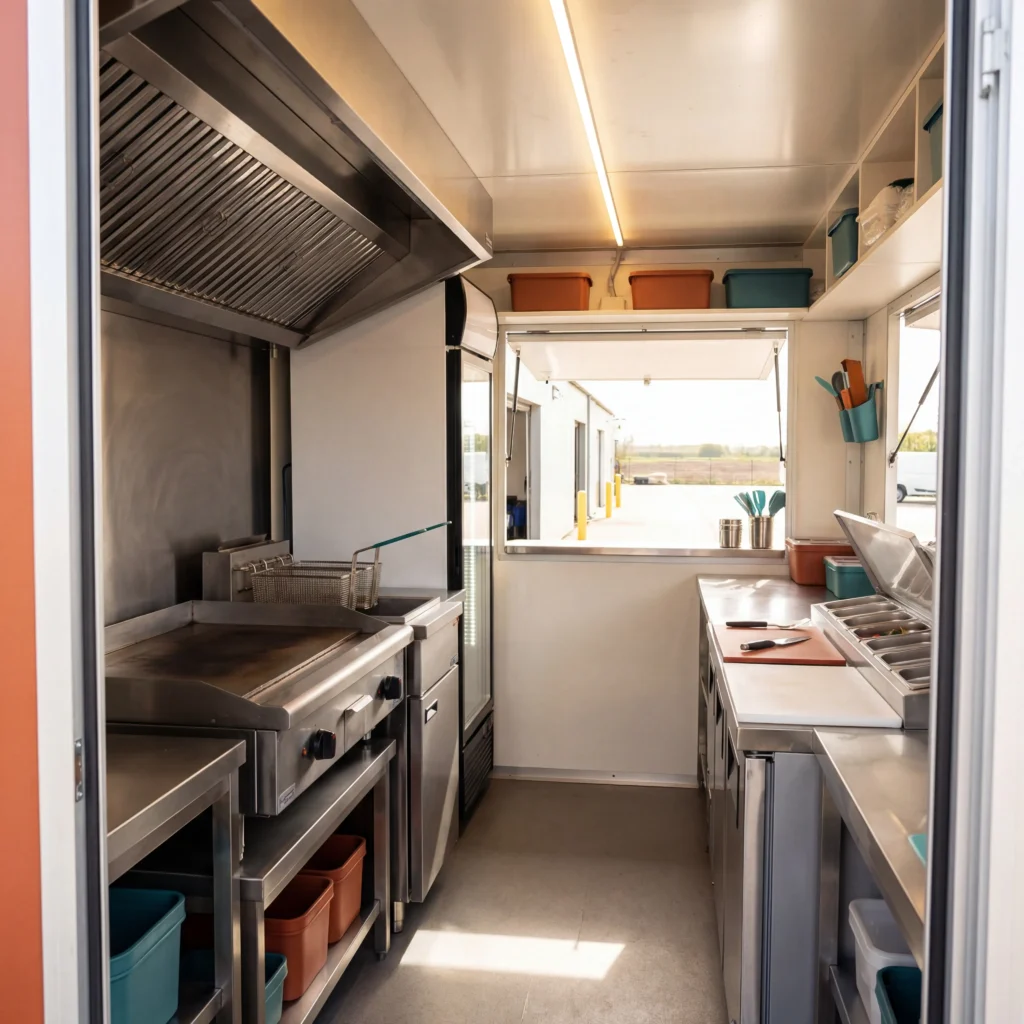
Most food truck rentals include the truck itself, basic kitchen equipment like a griddle, fryer, and refrigerator, a generator or power hookup, fresh and gray water tanks, and an exhaust ventilation system — but insurance, permits, fuel, and smallwares are almost always your responsibility to arrange and pay for separately.
Here’s the breakdown.
| Usually Included | Usually NOT Included |
|---|---|
| The truck and chassis | Business permits and licenses |
| Basic kitchen equipment (griddle, fryer, fridge) | Food handler certification |
| Generator or power hookup | Commercial auto insurance |
| Fresh and gray water tanks | General liability insurance |
| Exhaust hood and ventilation | Fuel and propane |
| Serving window | Smallwares (utensils, pans, containers) |
| Some leases include commissary access | Ingredients and food supplies |
| Some leases include parking/storage | Branding, wraps, and marketing |
The items in the right column are your responsibility because they’re tied to you as a business operator, not to the truck itself. Your city, your permits, your insurance policy, your food.
Commissary access and overnight parking are more commonly bundled with fleet rental companies and longer lease terms — typically six months or more. If you’re renting from a private truck owner, expect to arrange these on your own.
The level of kitchen equipment can range from bare-bones to fully loaded. A basic food truck rental might come with a single griddle, one fryer, and a reach-in fridge. A premium rental might include a multi-burner cookline, a commercial convection oven, walk-in-grade refrigeration, and a quiet inverter generator.
Here’s the thing — don’t assume anything is included just because it seems obvious. I’ve seen food truck rental agreements where the truck came with a generator, but the propane tanks were the renter’s responsibility. Small details like that can add hundreds of dollars to your first month if you’re not paying close attention.
💡 Pro Tip from Jo: Before you sign, ask the rental company for a full equipment inventory with model numbers and condition notes. Get it in writing. If something’s missing or broken on move-in day, you’ll have documentation to fall back on.
If you’re unsure what equipment you’ll actually need for your menu, our food truck for sale guide includes a section on equipment packages that applies to rentals too.
How Do You Know If a Food Truck Rental Company Is Legit?
The best way to evaluate a food truck rental company is to check their online reviews, ask detailed questions about maintenance history, read the full contract before committing, and compare what’s bundled into the monthly rate versus what you’ll pay for separately. A trustworthy company will welcome your questions — not dodge them.

Not all food truck rental companies operate the same way. Some are professional outfits with maintained fleets and clear contracts. Others are individual truck owners renting out a spare vehicle on the side. Both can work, but you need to know what you’re dealing with.
Check their reputation. Look for reviews on Google, Yelp, and Facebook. Ask for references from previous renters. If a company can’t point you to a single satisfied customer, that’s a red flag worth taking seriously.
Ask about maintenance history. A reputable food truck rental company should be able to tell you when the truck was last serviced, how old the generator is, and whether the kitchen equipment has passed a recent inspection. If they get vague or defensive about maintenance, walk away.
Understand their contract terms. The best rental companies provide a clear, written lease agreement that spells out the monthly rate, security deposit, maintenance responsibilities, mileage limits, insurance requirements, end-of-lease condition expectations, and early termination terms. If there’s no written agreement — or if the contract is suspiciously short — that’s another red flag.
Compare what’s bundled. Some food truck rental companies bundle in commissary access, parking, and even basic marketing support. Others charge the base rate and nothing more. A slightly higher monthly rent that includes commissary access might actually save you money compared to a cheaper rate where you arrange commissary separately at $400 to $1,200 per month.
Real talk: when I started mentoring food truck operators through our local small business incubator, the most common regret I heard was, “I wish I’d asked more questions before signing.” Don’t be afraid to slow down the process. A good rental company will respect your diligence.
Now, I know what you’re thinking — what if it doesn’t work out? Look for early termination clauses in your food truck rental agreement. Some companies charge a flat penalty fee. Others require you to pay the remaining months on the lease. Know your exit options before you need them.
If you’re still weighing whether to rent at all versus purchasing outright, our guide on buying a food truck covers when owning makes more financial sense.
What Are the Different Types of Food Truck Rentals?
There are four main types of food truck rental: traditional monthly leases, rent-to-own programs, short-term event bookings, and emergency or temporary rentals — each with different costs, contract terms, and ideal use cases.
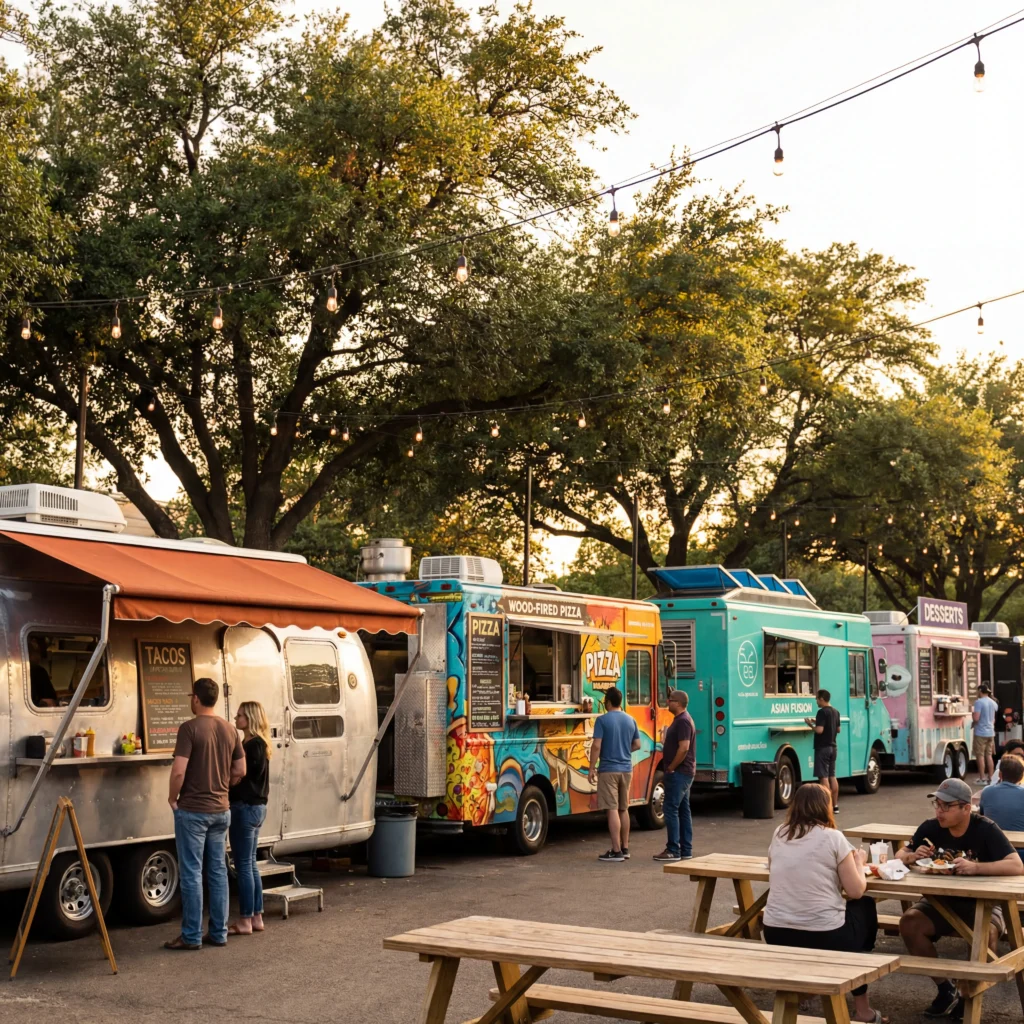
Traditional monthly lease. This is the most common food truck rental arrangement for people starting a mobile food business. You sign a lease — typically six months to two years — and pay a fixed monthly rate. At the end, you return the truck. Monthly rates generally range from $2,000 to $3,000, though higher-end trucks or major metro areas can push that number higher.
Rent-to-own (lease-to-own). In this arrangement, a portion of your monthly payment goes toward the purchase price of the truck. At the end of the term, you have the option to buy at a predetermined price. Monthly payments tend to run higher than a traditional lease because you’re building equity. For a deep dive on how these programs work, check out our lease food truck guide.
Short-term or event rental. This is for people who want to hire a fully staffed food truck for a specific occasion — a wedding, company picnic, birthday party, or festival. You’re booking the food truck experience, not the truck itself. Pricing is typically per person or requires a flat minimum spend.
Emergency or temporary rental. Restaurants doing renovations, school districts supplementing meal programs, or businesses affected by natural disasters sometimes rent food trucks as temporary commercial kitchens. These rentals are negotiated case by case.
I’m not gonna lie — figuring out which type of food truck rental you need can feel overwhelming at first. But it’s simpler than it looks. If you’re testing a new concept and want to minimize risk, a traditional monthly lease is your safest bet. If you’re confident in your business model and want to build equity, rent-to-own makes more sense. And if you just need a truck for a one-time event, that’s event rental territory.

💡 Pro Tip from Jo: If you’re considering rent-to-own, always calculate the total you’ll pay over the full lease term and compare it to the truck’s market value. I’ve seen deals where operators end up paying 40% more than what the truck is actually worth — and honestly, that math never works out for the renter.
Keep in mind that food truck rental availability and pricing can shift with the seasons. In cities with harsh winters, you’ll often find better deals on long-term leases from November through February when demand drops. Summer is peak season, and the best trucks tend to get claimed early.
Putting It Into Practice
The most important thing you can do this week is narrow your food truck rental search to three to five options and schedule in-person visits.
☐ Today: Write down exactly what type of rental you need (long-term business, event, or temporary) and what kitchen equipment your menu requires.
☐ This week: Search Roaming Hunger, FoodTruckBooking, Craigslist, and local food truck Facebook groups for available food truck rentals in your area. Make a shortlist of three to five options and contact each one.
☐ This month: Schedule in-person inspections for your top picks. Bring a checklist: test every burner, fridge, and piece of equipment. Ask about maintenance history, insurance requirements, and contract terms. Compare total monthly costs — not just base rent.
☐ Tools you’ll need: Business license application, food handler certification (ServSafe or equivalent), proof of commercial auto insurance, and ideally a lawyer or advisor to review the lease agreement before you sign.

If you’re wondering how to finance your rental deposit and first few months of operations, our food truck loans guide covers options specifically designed for food truck startups.
Frequently Asked Questions About Food Truck Rentals
Can I rent a food truck if I’ve never worked in food service before?
Yes. Most food truck rental companies don’t require food service experience to sign a lease. You will need a food handler certification and the proper business permits for your city and state before you can legally operate. Many jurisdictions require ServSafe or an equivalent course, which you can usually complete online in a few hours.
How long does it take to get a rented food truck up and running?
The timeline depends on how quickly you can secure permits, insurance, and a rental agreement. In straightforward markets, you can be operational within two to four weeks. In cities with complex permitting processes — like Portland, Los Angeles, or New York — it can stretch to two or three months. The truck itself is often the fastest part of the equation. Permits are what slow people down.
What happens if the food truck breaks down during my lease?
It depends on your rental agreement. Many food truck rental companies cover major mechanical repairs since the truck is their asset. Kitchen equipment repairs are more of a gray area — some lessors cover them, others expect you to handle it. Routine maintenance like oil changes, tire checks, and daily kitchen cleaning is almost always the renter’s responsibility. Clarify all of this before signing.
Do I need a commercial driver’s license to drive a rented food truck?
For most standard food trucks, a regular driver’s license is sufficient. However, if the truck’s gross vehicle weight rating exceeds 26,000 pounds, you may need a commercial driver’s license depending on your state’s regulations. Always confirm the weight rating with the rental company and check your state’s DMV requirements.
Can I rent a food truck just for weekends or part-time?
Some food truck rental companies offer flexible arrangements for part-time operators, but this is less common than full-time monthly leases. You’re more likely to find weekend-only flexibility through individual truck owners or short-term event rental companies. If part-time use is your goal, be upfront about it during negotiations — some lessors are open to reduced rates for limited use.
Is it possible to rent a used food truck?
Most food trucks available for rent are used — they’ve been previously operated by another business, and the condition can range from nearly new to well-worn. Trucks in rental fleets are typically three to eight years old, though maintenance standards vary widely between companies. This is exactly why inspecting the truck in person matters so much. For more on evaluating used trucks specifically, see our used food truck guide.
Ready to Start Your Food Truck Rental Search?
Here’s what to keep in mind as you move forward:
- The food truck rental process follows a predictable path — know the six steps before you jump in
- Always inspect the truck yourself and get every detail of the agreement in writing
- Understand what’s bundled in the rental and what you’ll need to handle on your own
- Match the rental type to your actual goals — testing a concept, building toward ownership, or a single event
The food truck rental market has more options than most people realize. Whether you’re testing a concept for the first time or scaling up an existing operation, renting gives you a practical path forward without the massive upfront investment of buying outright.
When I was in your shoes, I wished someone had spelled all of this out for me in one place. That’s what this guide is for.
For the full picture on launching your food truck business, head back to our complete Food Truck Startup guide — it covers everything from choosing your concept to landing your first customers.
You’ve totally got this.
I’m sharing what worked for me in Portland — your city’s requirements, costs, and rental options may be different. I’m not a lawyer, CPA, or financial advisor. Always verify legal requirements, insurance obligations, and pricing locally before committing to a food truck rental agreement.
— Jo
