
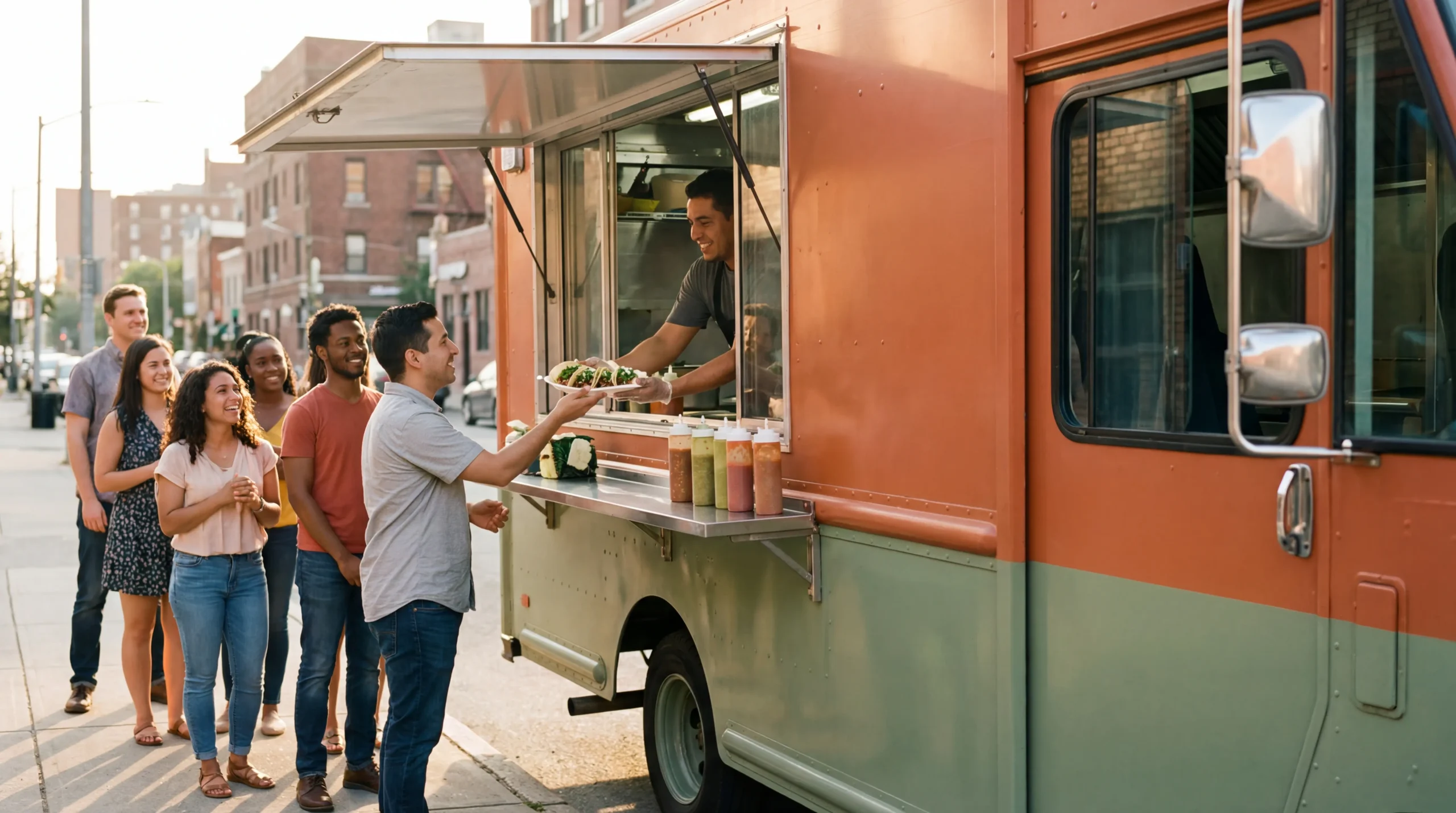

I still remember standing in front of my very first food truck, keys in hand, thinking: what have I gotten myself into? If I’d known then what I know now — especially about how forgiving the taco concept is for new operators — I would have stressed a whole lot less.
Here’s the thing: a taco food truck is one of the lowest-risk, highest-reward concepts you can launch in the mobile food industry. Startup costs typically fall between $50,000 and $200,000 depending on whether you buy new or used. Tacos have some of the best food cost margins in the business, and customer demand for authentic street tacos keeps climbing year over year.
Maybe you’re picturing a carne asada truck at weekend festivals. Maybe it’s a late-night birria spot that owns the post-bar crowd. Either way, this guide covers everything you need to know — from costs and equipment to menu strategy, permits, and real success stories from operators who started exactly where you are now.
📚 Part of our complete Food Truck Startup guide.
Why a Taco Food Truck Is One of the Smartest Concepts You Can Launch
Tacos aren’t just popular — they’re practically bulletproof as a food truck concept. The U.S. food truck industry reached roughly $2.4 billion in market size in recent years, with Mexican cuisine consistently ranking as one of the top-performing categories. About 1 in 10 U.S. restaurants serve Mexican food, and that demand extends directly to mobile vendors.
First, the ingredient overlap is incredible. With a handful of base proteins — carne asada, pollo, chorizo, al pastor — plus fresh tortillas and a rotating salsa bar, you can build a 10-item menu without bloating your inventory. That keeps your food cost percentage in the sweet spot, typically around 25% to 35% of revenue.
Second, tacos are fast. During a lunch rush, a well-organized taco truck can typically serve somewhere around 15 to 25 customers per hour. That speed translates directly into revenue, especially at events and festivals where foot traffic comes in waves.
Third, the concept scales beautifully. You can start with a simple street taco menu and gradually layer in catering packages, breakfast tacos, and fusion options — without overhauling your equipment or workflow.
If you’re weighing different food truck ideas, I always tell the folks I mentor: tacos give you the widest margin for error and the shortest path to profitability. That’s not a guarantee — nothing is — but it’s about as close as you’ll get in the food truck business.
How Much Does It Cost to Start a Taco Food Truck?
Startup costs for a taco food truck typically range between $50,000 and $200,000, depending on whether you purchase a new or used truck, how much customization you need, and where you operate. The truck itself is your biggest single expense, followed by equipment, permits, and initial inventory.
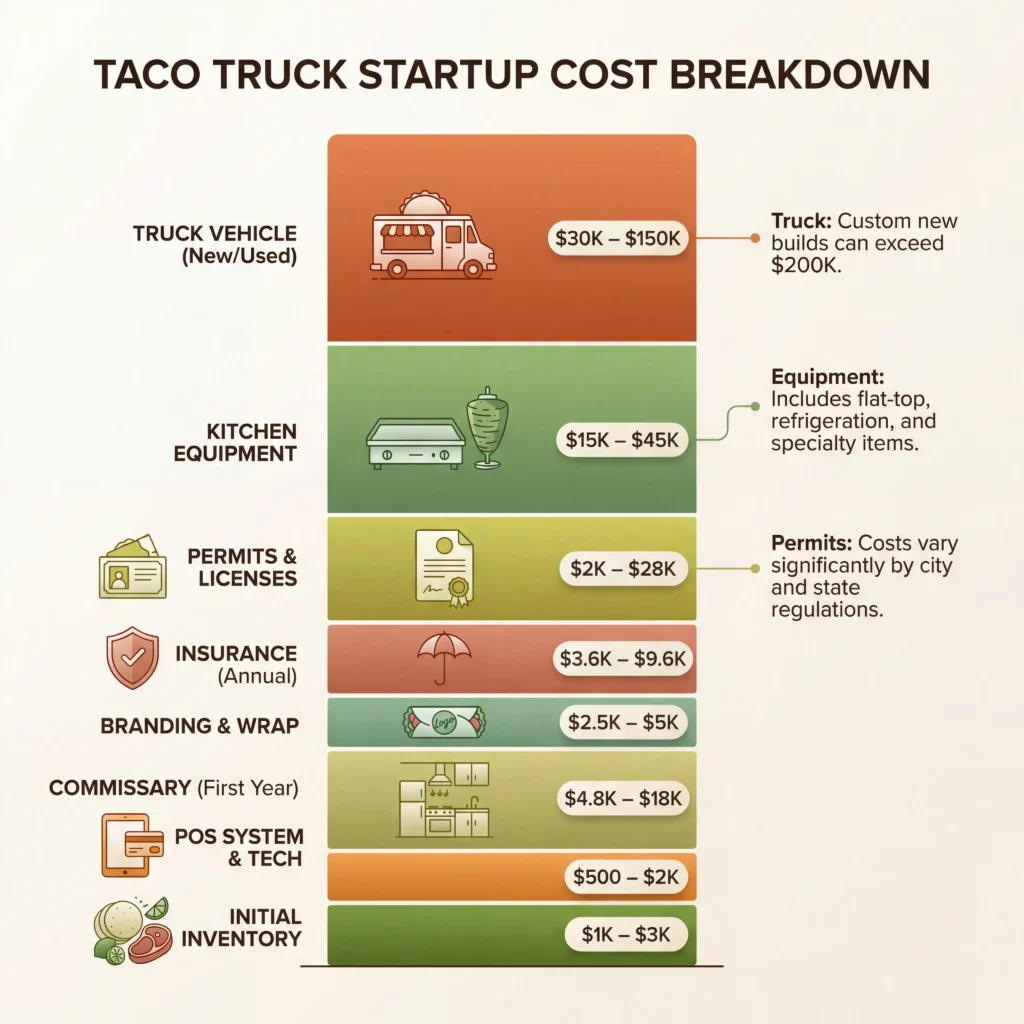
Okay, so here’s the deal with costs:
| Expense Category | Estimated Range |
|---|---|
| Food truck vehicle (new) | $75,000 – $150,000 |
| Food truck vehicle (used) | $30,000 – $80,000 |
| Kitchen equipment | $15,000 – $45,000 |
| Permits and licenses (first year) | $2,000 – $28,000 |
| Initial inventory | $1,000 – $3,000 |
| Branding and truck wrap | $2,500 – $5,000 |
| POS system and tech | $500 – $2,000 |
| Insurance (first year) | $3,600 – $9,600 |
| Commissary deposit | $400 – $1,500/month |
I’m not gonna lie — when I was in your shoes, my stomach dropped seeing those numbers for the first time. But here’s what calmed me down: you don’t have to go all-in on day one. Plenty of successful taco truck operators start with a used vehicle in the $40,000 to $60,000 range and upgrade as revenue grows.
Wondering how much to rent a taco truck instead of buying? Monthly food truck rentals typically run $2,000 to $4,000 and can be a smart way to test your concept before committing to a full purchase. Check our guide to food truck rental for more details.
For a deeper breakdown of every line item, check our full food truck cost breakdown.
💡 Pro Tip from Jo: Before signing anything, call your local commissary kitchens and get their monthly rates. That recurring cost catches a lot of new operators off guard — I’ve seen it range from $400 to $1,500 per month depending on your city. Factor it into your budget from day one.
Quick heads-up: the numbers I share here are based on my experience and industry data, but your actual costs will vary by city, market, and setup. I’m not a financial advisor — talk to one before making big money decisions.
So How Much Do Taco Trucks Actually Make?
On average, food trucks generate between $250,000 and $500,000 in annual revenue, with top performers in high-traffic states like California, Texas, and New York sometimes exceeding $490,000 per year. Taco trucks fall squarely in that range thanks to low ingredient costs and high ticket volume.
But revenue isn’t profit. The average net profit margin for food trucks sits between 6% and 9%, which is notably higher than the 3% to 5% margin most brick-and-mortar restaurants achieve. That margin advantage is one of the biggest reasons taco trucks make financial sense for first-time operators.
Let me put it in taco terms: if you sell 150 tacos a day at an average of $5 per taco, that’s $750 in daily revenue. Over a 5-day week, you’re looking at $3,750 — or roughly $195,000 per year before you add in catering gigs, events, and weekend festivals. Layer those on, and $300,000+ becomes very realistic.
For more detail on how these numbers break down across the industry, read our deep dive into how much food trucks really make.
The numbers are on your side — now it’s about putting them to work.
What Types of Taco Trucks Make the Most Money?
Not all taco trucks are built the same, and your concept choice directly affects your revenue ceiling, customer base, and operating costs. Here’s where it gets interesting:
| Type | Best For | Avg Ticket | Profit Margin | Difficulty |
|---|---|---|---|---|
| Traditional Mexican | Lunch crowds, blue-collar areas | $8 – $12 | High | Low |
| Fusion (Korean, Japanese, etc.) | Urban foodies, nightlife | $12 – $18 | Medium-High | Medium |
| Vegan / Plant-Based | Health-conscious markets, events | $10 – $15 | High | Medium |
| Breakfast Tacos | Morning commuters, offices | $6 – $10 | Very High | Low |
| Birria / Specialty | Social media buzz, events | $12 – $16 | Medium | Medium-High |
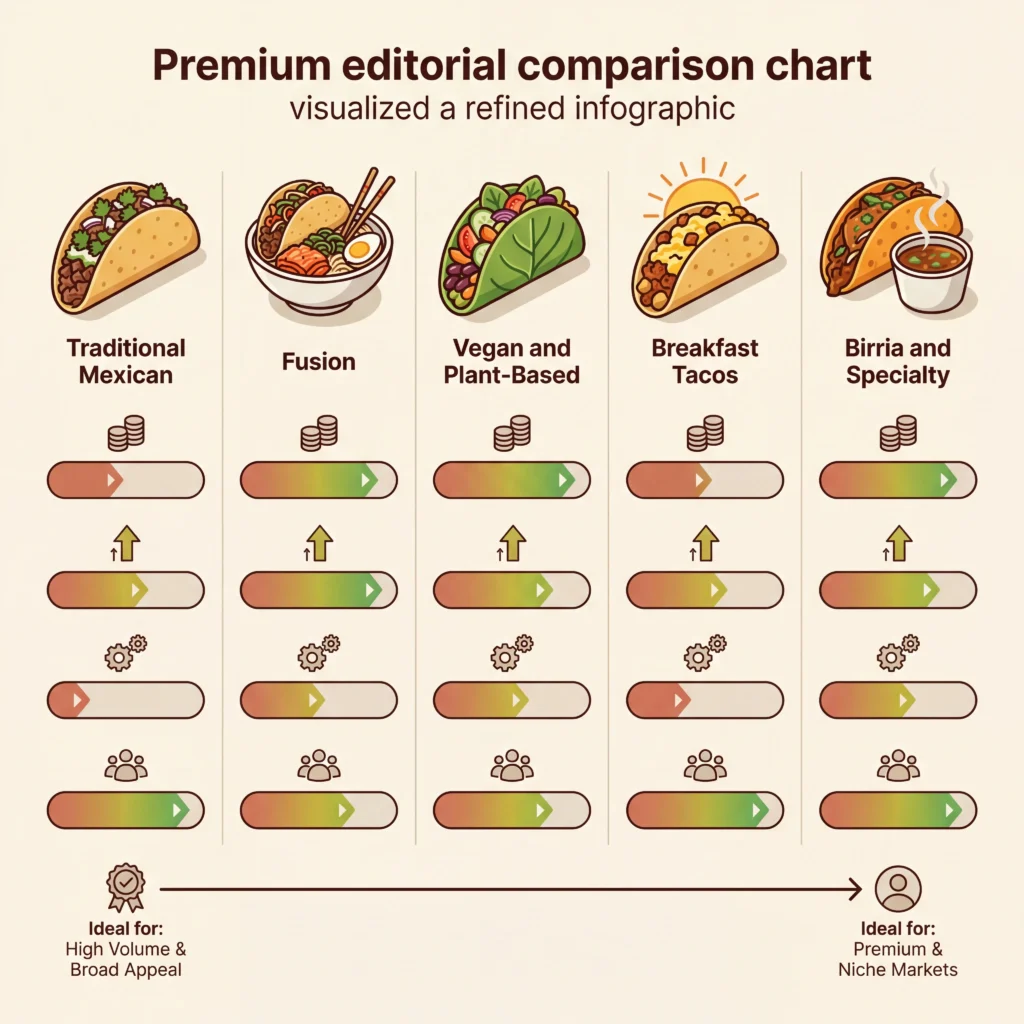
Traditional Mexican tacos give you the lowest barrier to entry with proven demand. Fusion concepts like Korean-Mexican tacos (think Kogi BBQ style) command higher prices but require more culinary skill and a market that appreciates the creativity.
Vegan and plant-based taco trucks are growing fast. Roughly 4% of Americans follow a vegan diet and another 6% are vegetarian — but the real opportunity is the much larger group of flexitarians who order plant-based options when they’re available.
Can we talk about breakfast tacos for a second? This is one of the most underrated lanes in the taco truck world. Morning competition is almost nonexistent — most food trucks don’t open until lunch — and your ingredients (eggs, beans, cheese, salsa, tortillas) are dirt cheap. A breakfast taco truck operating in a business district can build a loyal daily crowd faster than almost any other concept.
Late-night birria trucks are the social media darlings of the taco world. The consommé dipping format photographs beautifully, drives organic shares, and creates the kind of cult following that fills a line at 1 AM. Just keep in mind that late-night operations may require special permits in some cities.
What Equipment Do You Need for a Taco Truck?
A taco food truck requires specific equipment tailored to high-volume taco production, and the setup looks meaningfully different from a general food truck. Unlike a burger or pizza truck, your layout prioritizes flat-top grilling, protein warming, tortilla handling, and efficient salsa prep.
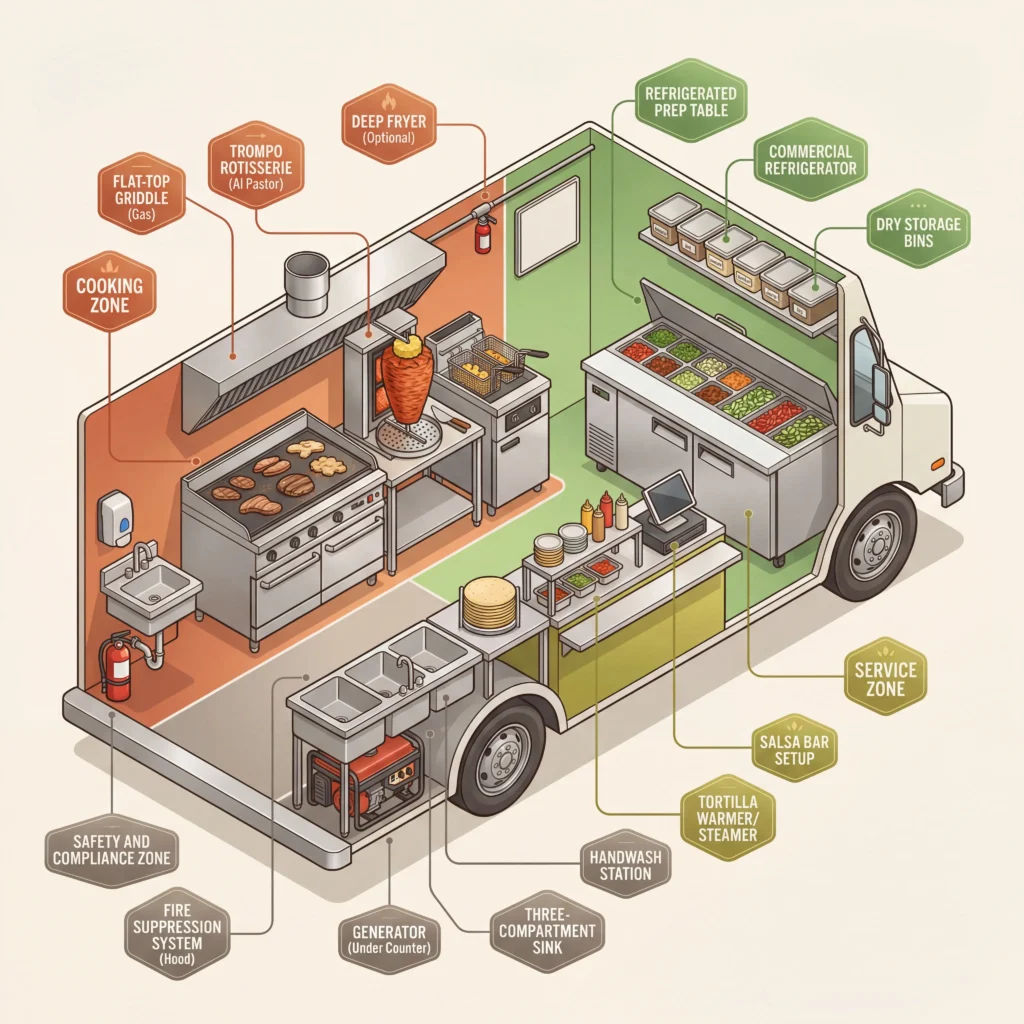
Here’s the essential equipment checklist:
Cooking equipment: Commercial gas flat-top griddle (36″ minimum), trompo or vertical rotisserie for al pastor, deep fryer (for chips, churros, or fried items), and steam table inserts for holding proteins at temperature.
Prep and storage: Refrigerated prep table with ingredient wells, cold holding unit for proteins and produce, dry storage bins for tortillas and dry goods.
Service essentials: Tortilla warmer, salsa bar setup (6–8 squeeze bottles or portion cups), speed rail for toppings, and a POS system with card reader.
Safety and compliance: Fire suppression system (required in most states), three-compartment sink, handwash station, and a generator rated for 7,000 to 12,000 watts.
The trompo is worth special mention. If you’re planning to serve al pastor — and you should — a vertical rotisserie creates both the flavor profile and the visual spectacle that draws people in. Watching meat shave off a spinning trompo is marketing that money can’t buy.
For a complete equipment checklist covering all food truck types, see our food truck equipment checklist.
I know this list looks long, but it’s way more manageable than it seems once you start checking items off.
💡 Pro Tip from Jo: Buy your big equipment used whenever possible. Restaurant auctions and food truck resale sites often have commercial griddles and fryers at 40–60% off retail. That savings alone can shave $5,000 to $10,000 off your startup budget.
Building Your Taco Truck Menu That Sells
Your taco food truck menu is your most powerful sales tool. A tight, strategic menu keeps your food costs low, your line moving fast, and your customers coming back.
Start with 5 to 8 core taco options. That’s the sweet spot — enough variety to satisfy different tastes, few enough to manage inventory and speed. Every item on the board should earn its place based on margin, popularity, and prep simplicity.
Build your menu architecture in tiers. Your base tacos ($3–$5) drive volume. Premium options ($6–$8) like birria or specialty fusion tacos boost your average ticket. Sides (elote, chips and guac, rice and beans) add $3–$5 per transaction with minimal extra labor. Combo meals ($10–$14) simplify the ordering decision and increase per-customer spend.
Price based on food cost percentage. If a taco costs you $1.25 in ingredients, price it at $4.50 to $5.00 to stay within that 25–35% food cost target. Always calculate your actual food cost — don’t guess.
Rotate seasonal specials monthly. This keeps regulars excited and gives you a built-in reason to post on social media. A limited-time mango habanero shrimp taco in summer or a short rib birria in winter creates urgency without complicating your core operations.
Don’t forget beverages. Aguas frescas (horchata, jamaica, tamarindo) cost pennies to make and sell for $3–$4 each. That’s margin you’re leaving on the table if you only offer bottled water.
For more menu strategy, check out our complete food truck menu ideas guide.
Designing a Taco Truck That Stops People in Their Tracks
Your taco food truck logo and overall design are your most valuable marketing assets — they’re what customers see first and remember longest. Your truck’s exterior is a moving billboard, and it needs to communicate your brand from at least 30 feet away.
Invest in a professional truck wrap. A full wrap typically costs between $2,500 and $5,000 and is worth every dollar. Use bold, saturated colors that pop in sunlight and under streetlights. Your truck should be instantly recognizable — not generic.
Include your social media handles prominently on both sides. Make the font large enough to read from a passing car.
Your taco food truck logo appears on everything: the truck, your menu board, social media profiles, packaging, business cards, and catering proposals. Invest in a clean, versatile logo design that works at any size — from a 6-foot truck panel to a 1-inch social media avatar.
Design your service window area for maximum efficiency and visual appeal. Customers should be able to see the menu clearly from 10 feet back, and the window should feel inviting. Adding string lights, a small chalkboard for daily specials, or a branded canopy creates a warm atmosphere that encourages people to linger and photograph your setup.
For a deeper guide to truck aesthetics, see our food truck design guide.
Permits, Licenses, and Legal Stuff You Can’t Skip
I’m not gonna lie — navigating food truck permits was the most frustrating part of my entire startup process. I ugly cried in a health department parking lot when my first permit got rejected. But the process is survivable, and once you’re through it, you’re through it.
Real talk: every taco food truck needs, at minimum:
- A business license (city and/or county)
- A mobile food vendor permit
- A food handler’s card (often ServSafe or equivalent)
- A health department permit
- A fire department inspection certificate
- A commissary agreement (required in most cities)
- A vehicle-specific permit or decal (varies by city)
The total cost for permits and licenses in your first year typically runs between $2,000 and $28,000, depending on your city and state. Yes, that range is huge — and it’s one of the most unpredictable parts of your startup budget. Cities like San Francisco and New York sit at the high end. Smaller metros and suburban counties are often far more affordable.
Start your permit research at least 3 to 6 months before your planned launch date. Some permits take weeks to process, and you may need to complete a health department inspection before you can serve your first taco.
I’m not a lawyer, and requirements change all the time. What I listed above is the most common set of permits, but your city or county might need additional ones. Always verify with your local health department and city clerk’s office before assuming you’re covered.
For a full walkthrough of every permit type, see our food truck permits guide.
Where to Park Your Taco Truck for Maximum Sales
Location is everything, and the best taco truck operators treat location scouting like a second job — at least in the early months.
High-traffic lunch spots near office parks, construction sites, and university campuses are your bread and butter for consistent weekday revenue. Scope these locations in person during lunch hours. Watch foot traffic, count competitors, and talk to people in the area. One good weekday spot that delivers $600–$800 per lunch rush is worth more than three mediocre ones.
Festivals, farmers markets, and community events are your weekend revenue engine. These events bring built-in foot traffic and customers in a spending mindset. Apply early — the best events fill vendor spots months in advance.
Brewery and taproom partnerships are an underrated goldmine. Many craft breweries don’t have kitchens and actively seek food truck partners. You get a captive, hungry audience that’s already spending money. They get a reason for customers to stay longer. Negotiate a regular weekly slot and watch your repeat customer base grow.
For a complete location strategy, check our guide to food truck locations and events.
Finding your spot takes patience, but when you lock it in, everything changes.
Catering: The Revenue Stream Most Taco Truck Owners Sleep On
Can we talk about catering? Taco trucks are naturally built for it, and most operators I’ve mentored don’t realize how much money they’re leaving on the table by not offering catering packages from day one.
Wedding catering from a taco truck can bring per-guest costs down from the typical $70 range to somewhere between $25 and $50 — and couples love the casual, fun vibe. Corporate events, birthday parties, graduations, and office lunches are all prime catering territory.
Here’s a rough pricing guide to start with:
| Event Size | Price Range | Per Person |
|---|---|---|
| 20 – 25 guests | $395 – $500 | ~$18 – $20 |
| 30 – 35 guests | $450 – $600 | ~$15 – $17 |
| 50 – 55 guests | $560 – $800 | ~$11 – $15 |
| 75 – 80 guests | $800 – $1,100 | ~$11 – $14 |
| 100 – 110 guests | $1,000 – $1,400 | ~$10 – $13 |
| 150+ guests | $1,400 – $2,000+ | ~$9 – $13 |
Pricing varies by your menu, location, and travel distance. Use these as a starting framework, then adjust based on your actual food costs and local market.
Start by creating 2 to 3 tiered catering packages (basic, premium, all-inclusive) that make it easy for clients to choose without a lengthy negotiation. Include setup and cleanup time in your pricing — don’t give that labor away for free.
When I was building my own catering business, the majority of my first bookings came from word-of-mouth in local community groups — not fancy marketing. Post in local Facebook groups, partner with event planners, and always hand out catering menus at your regular truck stops.
For a deeper dive into food truck catering strategy, see our full food truck catering guide.
Real Taco Truck Success Stories to Inspire Your Journey
What makes the best taco food truck operators stand out isn’t just their recipes — it’s how they built something bigger than a single truck. Here are real stories from taco truck owners who started exactly where you are now.
Kogi BBQ (Los Angeles) — Roy Choi launched the Korean-Mexican fusion food truck movement and turned a single truck into a restaurant empire. Kogi proved that a creative taco concept can break through any market ceiling.
Seoul Taco (St. Louis → 10 locations) — Started as a single food truck and grew into a multi-location brand with a loyal social media following built almost entirely on community engagement and consistent quality.
Tacotarian (Las Vegas) — A plant-based taco concept that proves vegan food trucks can thrive. Tacotarian transitioned from truck to brick-and-mortar and became one of the most popular spots in Vegas for both vegans and non-vegans alike.
Tacos El Guero — A traditional street taco truck that built a cult following through consistency, authenticity, and word-of-mouth. No fusion gimmicks, no viral marketing — just exceptional tacos done right every single day.
Beyond the famous names, some of the most inspiring stories come from operators who started with a used truck and a tight budget — Uneeda Taco, El Mero Taco, and The Drowning Taco all grew from single-truck operations into recognized regional brands. The common thread? They picked a lane, mastered it, and didn’t try to be everything to everyone.
Putting It Into Practice
Here’s your action plan to get moving — no overthinking allowed:
- ☐ Today: Pick your taco truck concept — traditional, fusion, vegan, breakfast, or a blend
- ☐ This Week: Research permit requirements for your specific city and county. Call your local health department and ask what you need.
- ☐ This Month: Build your startup budget using the cost table above, explore truck options (new, used, or rental), and start scouting 3 potential locations during peak hours
Tools you’ll need: A basic spreadsheet for your budget, your city’s health department website, and our food truck cost breakdown for detailed line items.
Frequently Asked Questions
How much money can a taco truck make?
A successful taco food truck can generate between $250,000 and $500,000 in annual revenue, depending on location, concept, and how aggressively you pursue catering and events. Top performers in high-traffic markets can push past $490,000. Net profit margins typically land between 6% and 9%.
How much does it cost to start a taco truck?
Startup costs typically range from $50,000 to $200,000. The biggest variable is the truck itself — new custom trucks run $75,000 to $150,000, while used trucks start around $30,000. Equipment, permits, insurance, and initial inventory make up the rest.
Is a taco food truck profitable?
Yes — taco trucks are among the more profitable food truck concepts because of low ingredient costs and high customer demand. With net margins of 6% to 9% (compared to 3% to 5% for sit-down restaurants), a well-run taco truck can generate $15,000 to $45,000 in annual net profit, with significantly more if you add catering.
What equipment is needed for a taco food truck?
Essential taco truck equipment includes a commercial flat-top griddle, tortilla warmer, refrigerated prep table, steam table inserts, fire suppression system, three-compartment sink, handwash station, POS system, and a generator (7,000–12,000 watts). If you plan to serve al pastor, add a trompo (vertical rotisserie).
What is the most profitable food for a food truck?
Tacos consistently rank among the most profitable food truck items because of their low ingredient cost, fast prep time, and broad customer appeal. Breakfast tacos are particularly profitable due to cheap ingredients (eggs, beans, cheese) and almost zero morning competition from other trucks.
How much does it cost to feed 50 people tacos from a food truck?
Feeding 50 people from a taco food truck typically costs between $560 and $800, depending on your menu, protein choices, and whether you include sides and drinks. That works out to roughly $11 to $15 per person — significantly cheaper than most traditional catering options.
How much is a taco truck for a party?
Taco truck catering for a party typically starts around $395 to $500 for 20 to 25 guests and scales up from there. For 100+ guests, expect to pay $1,000 to $1,400 or more. Most operators charge per person with tiered packages, and pricing varies by your menu selection, travel distance, and event duration.
Ready to Roll? Your Next Steps
You now have the full picture — costs, revenue potential, equipment, menu strategy, design, permits, locations, catering, and real success stories from operators who built exactly what you’re planning to build.
Here’s what I’d do if I were starting over tomorrow:
- ☐ Nail down your taco truck concept (traditional, fusion, vegan, breakfast, or a blend)
- ☐ Build your budget using our cost breakdown and the table above
- ☐ Start your permit research now — call your local health department before anything else
- ☐ Begin scouting locations during lunch hours this week
For the complete step-by-step roadmap, head to our Food Truck Startup guide — it connects every piece of the puzzle in order.
You’ve totally got this.
— Jolene Matsumoto
