

What Does “Food Truck for Sale” Actually Mean Today?
If you’ve been scrolling through listing after listing wondering which food truck for sale is actually worth your money, I know exactly how you feel. I spent three weeks refreshing marketplace pages like it was a dating app — not my proudest moment, but I found my truck that way.
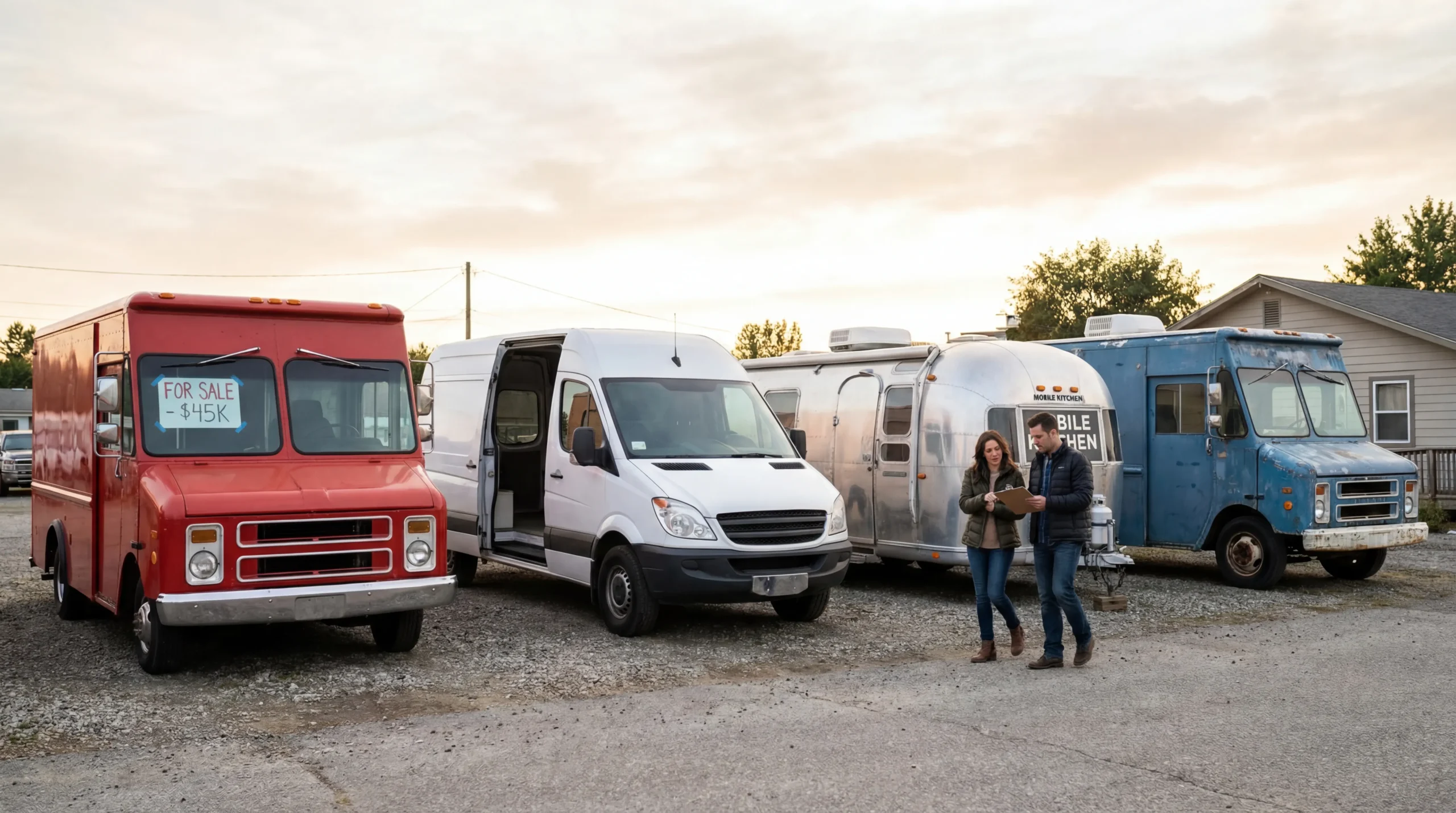
Here’s what you need to know: a food truck for sale is any mobile kitchen — whether it’s a fully built-out step van, a converted sprinter, or a bare-bones trailer — listed for purchase through a dealer, an online marketplace, or a private seller. With over 92,000 food truck businesses now operating across the United States and the industry approaching $3 billion in annual revenue, there’s never been more inventory available for buyers at every price point.
But here’s the thing — “for sale” can mean wildly different things depending on where you’re shopping. A shiny new custom build from a specialty fabricator? That’ll run you $50,000 to $200,000. A used truck on an online marketplace? Maybe $25,000 to $100,000. And that Facebook Marketplace listing at $8,000? It probably needs more work than you think.
After six years running my own Japanese-Hawaiian fusion truck in Portland and helping over 15 food truck owners through their first purchase, let me walk you through where to look, what to pay, and what to avoid.
📚 Part of our complete Food Truck Startup guide.
How Much Should You Pay for a Food Truck for Sale?
Okay, so here’s the deal — the price of a food truck depends on three things: whether you’re buying new, buying used, or building custom. Each path comes with a very different experience, timeline, and budget.
A brand new, fully equipped food truck from a specialty dealer typically costs between $50,000 and $200,000. You get warranties, clean equipment, and a truck that meets current health codes right out of the gate. The trade-off is the wait — custom builds often take three to six months before you’re serving your first customer.
Used food trucks are where most first-time owners start, and honestly, that’s how I did it too. Prices generally fall between $25,000 and $100,000 depending on age, mileage, equipment condition, and location. I bought my truck used, and while it needed a new wrap and some equipment swaps, it saved me tens of thousands compared to going new.
Building a custom truck from a base vehicle gives you total control over layout and equipment, but expect to invest anywhere from $50,000 to $200,000 or more once you factor in the vehicle purchase, kitchen buildout, plumbing, electrical, ventilation, and fire suppression systems. This route also requires the most patience with permitting — your local health department will want to inspect every detail before you serve a single plate.
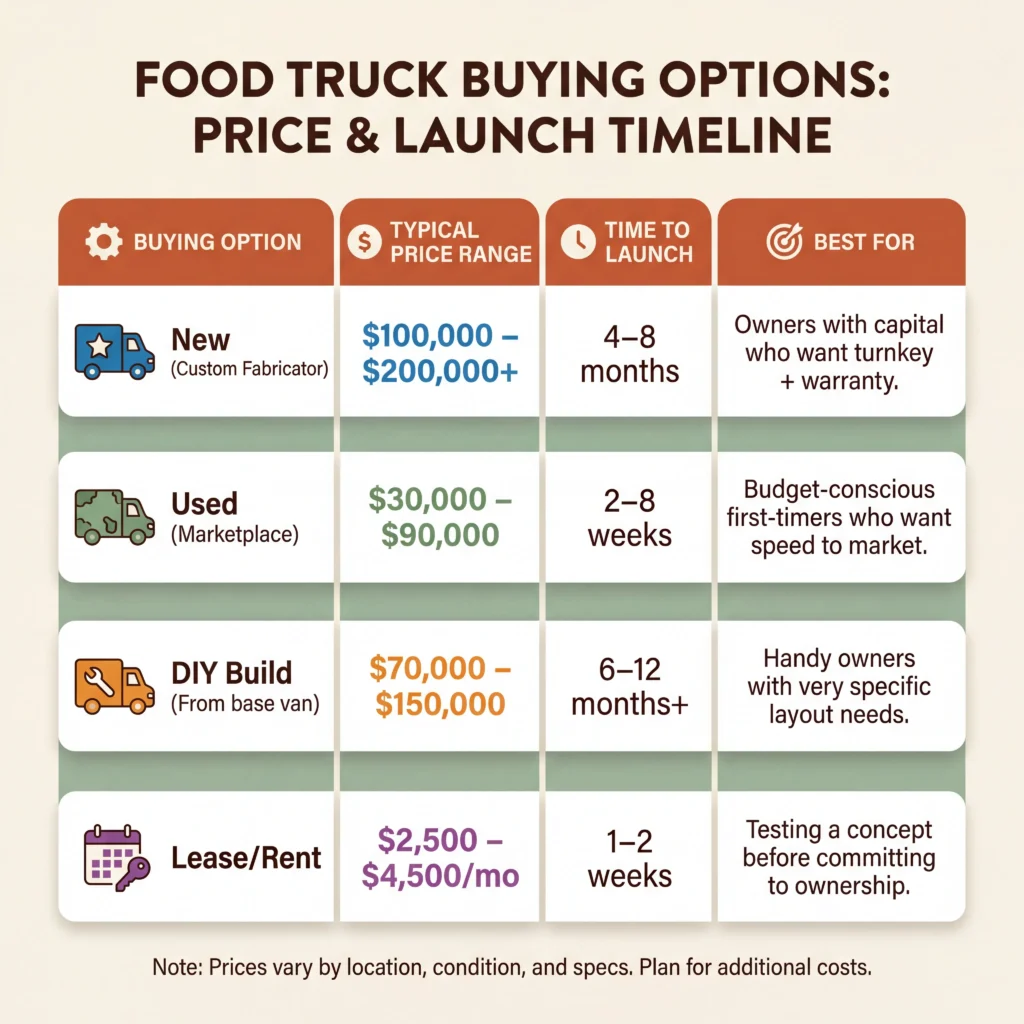
Here’s a quick side-by-side to help you compare:
| Buying Option | Typical Price Range | Time to Launch | Best For |
|---|---|---|---|
| New (dealer) | $50,000–$200,000 | 3–6 months | Owners who want turnkey + warranty |
| Used (marketplace) | $25,000–$100,000 | 2–8 weeks | Budget-conscious first-timers |
| Custom build | $50,000–$200,000+ | 4–8 months | Owners with a specific concept |
| Lease/Rent | $2,500–$4,500/month | 1–2 weeks | Testing a concept before committing |
💡 Pro Tip from Jo: Set aside an extra 10–20% of the purchase price for repairs and upgrades you won’t see coming. I thought my truck was “move-in ready” and still spent another $4,000 in the first two months on plumbing fixes and a new prep table. Every mentee I’ve worked with has a similar story.
📎 Related: For a full breakdown of every dollar you’ll spend, check our Food Truck Startup Costs guide.
Where Can You Find a Food Truck for Sale Right Now?
This is the question I hear more than almost anything during my mentoring sessions. The good news? There are more places to find a food truck for sale than ever before. The tricky part is knowing which ones are worth your time — and which ones might waste it.
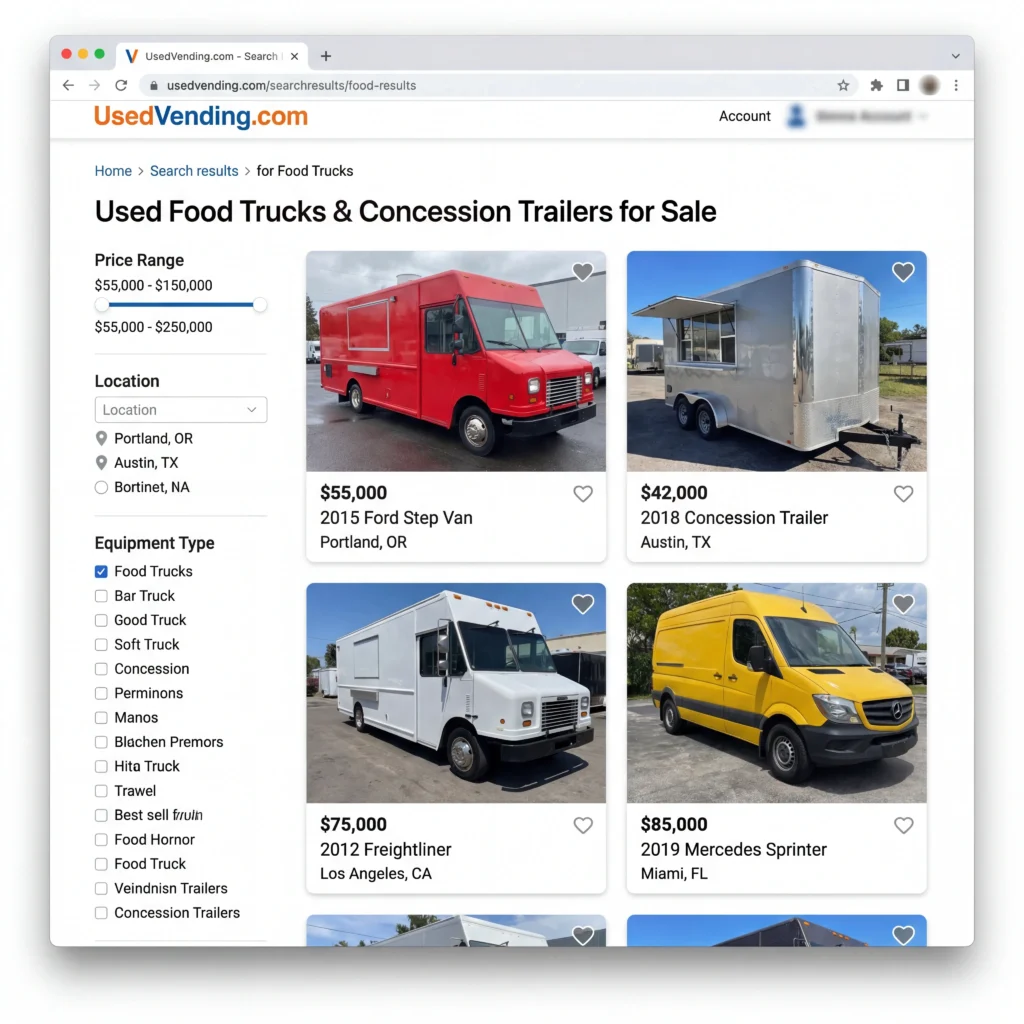
Specialized online marketplaces are your strongest starting point. Sites like UsedVending.com, UsedFoodTrucks.com, and the Roaming Hunger Marketplace focus specifically on mobile food equipment. They list hundreds of trucks nationwide and let you filter by price, location, equipment type, and condition. Commercial Truck Trader also carries food truck listings alongside their regular commercial vehicle inventory.
Now, I know what you’re thinking — what about regular marketplaces? Platforms like eBay, Facebook Marketplace, and Craigslist have a wider range of food truck listings — including some genuine bargains — but they also carry more risk. There’s no vetting process, so you’re relying entirely on your own homework. I’ve seen mentees find great deals on Facebook Marketplace, and I’ve also watched someone nearly wire $15,000 to a listing that turned out to be completely fake.
Custom food truck builders are the route to consider if you want something purpose-built for your concept. Companies across the country will take a base vehicle and build your kitchen to your exact specifications.
Don’t overlook the offline world, either. Food truck rallies, expos, and industry events are underrated places to discover trucks for sale. Owners looking to exit the business often bring their trucks, and you can see the equipment running in real-world conditions before you commit. Post in your local food truck community groups too — some of the best deals never make it to a public listing.
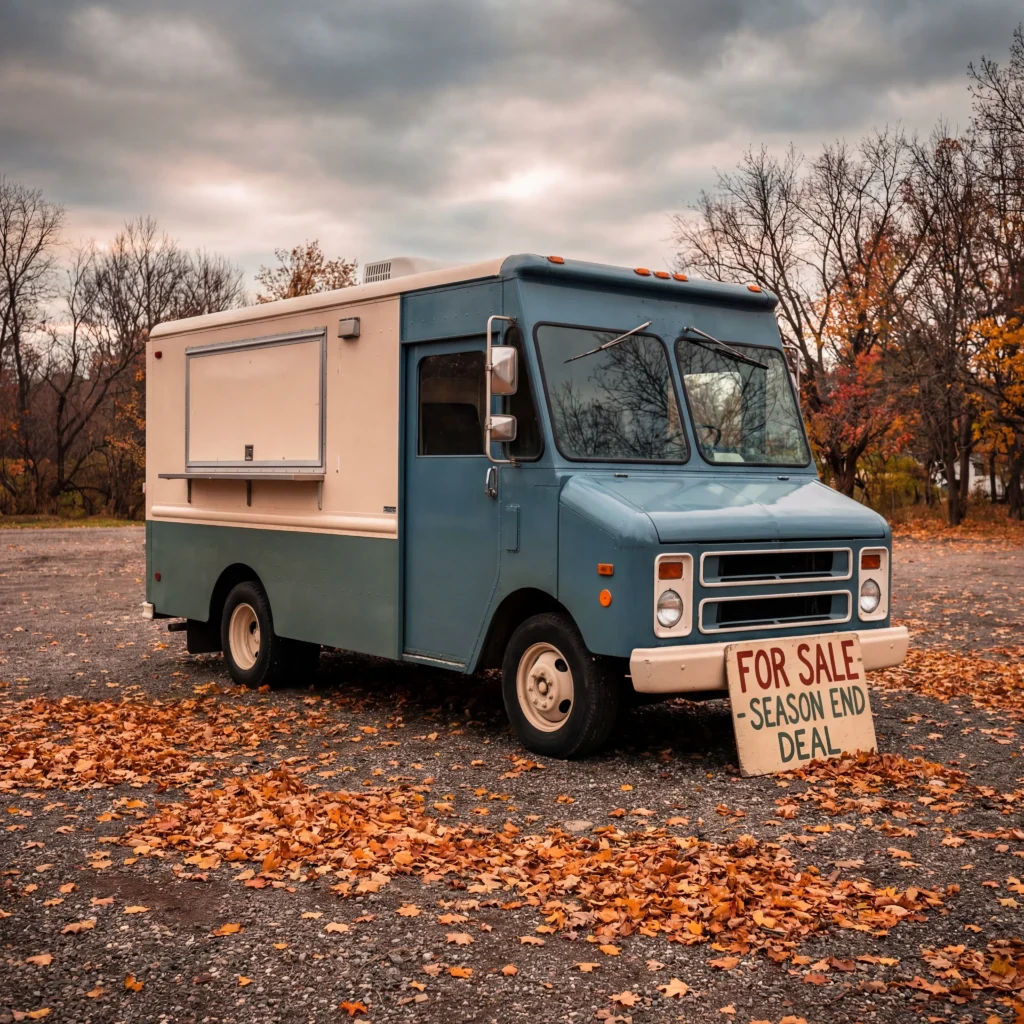
💡 Pro Tip from Jo: Timing matters more than most buyers realize. Truck prices often dip in late fall and winter when owners who had a tough season are ready to exit. If you can be patient and shop between October and January, you’ll typically find more inventory and more room to negotiate.
📎 Related: Still deciding between a truck and a trailer? Our Food Truck vs Food Trailer comparison breaks down the pros and cons.
What Should You Inspect Before Buying a Used Food Truck?
I’m not gonna lie — this is where most first-time buyers make expensive mistakes. A food truck that looks great in photos can hide thousands of dollars in problems underneath. When I was in your shoes, I wish someone had handed me this checklist before I signed anything.
I’m not a mechanic or an electrician — I’m sharing what I learned the hard way in Portland, and your local requirements might be different. Please verify everything with professionals in your area.
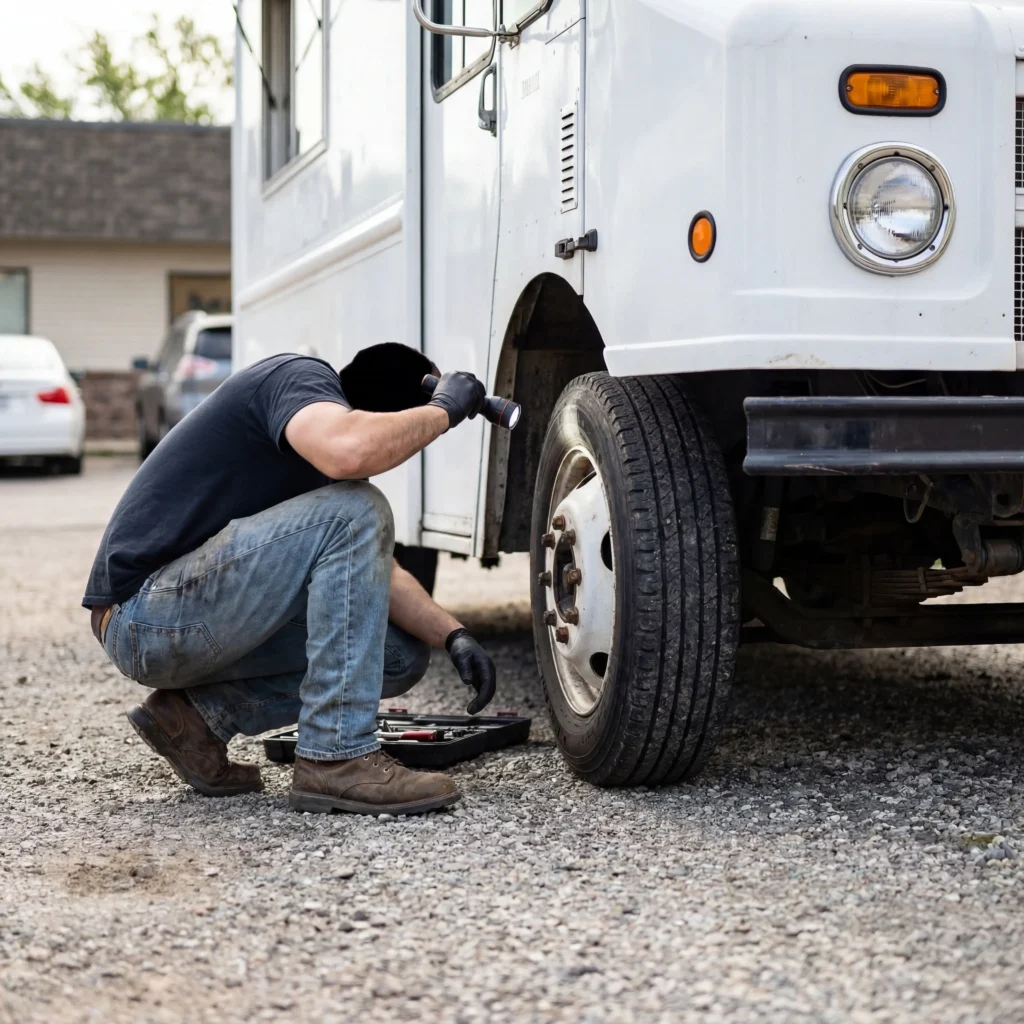
☐ The vehicle itself. Check the engine, transmission, brakes, tires, and frame for rust or structural damage. Ask for maintenance records. Run a vehicle history report using the VIN number. If mileage is over 150,000 on a step van, factor in upcoming mechanical costs. And please — drive it. Not around the block. Take it on a highway for at least 20 minutes. You need to feel how it handles at speed, how the brakes respond, and whether the steering pulls. My truck pulled to the right, and that $800 alignment issue would have been a dealbreaker if I hadn’t caught it on the test drive.
☐ The kitchen equipment. Turn on every burner. Open every fridge. Run the water. Check that the hood ventilation system works and that grease traps are intact. Look underneath sinks for leaks. Test the generator under load — not just idle. Equipment that “worked last week” but can’t be demonstrated right now is equipment you should assume is broken.
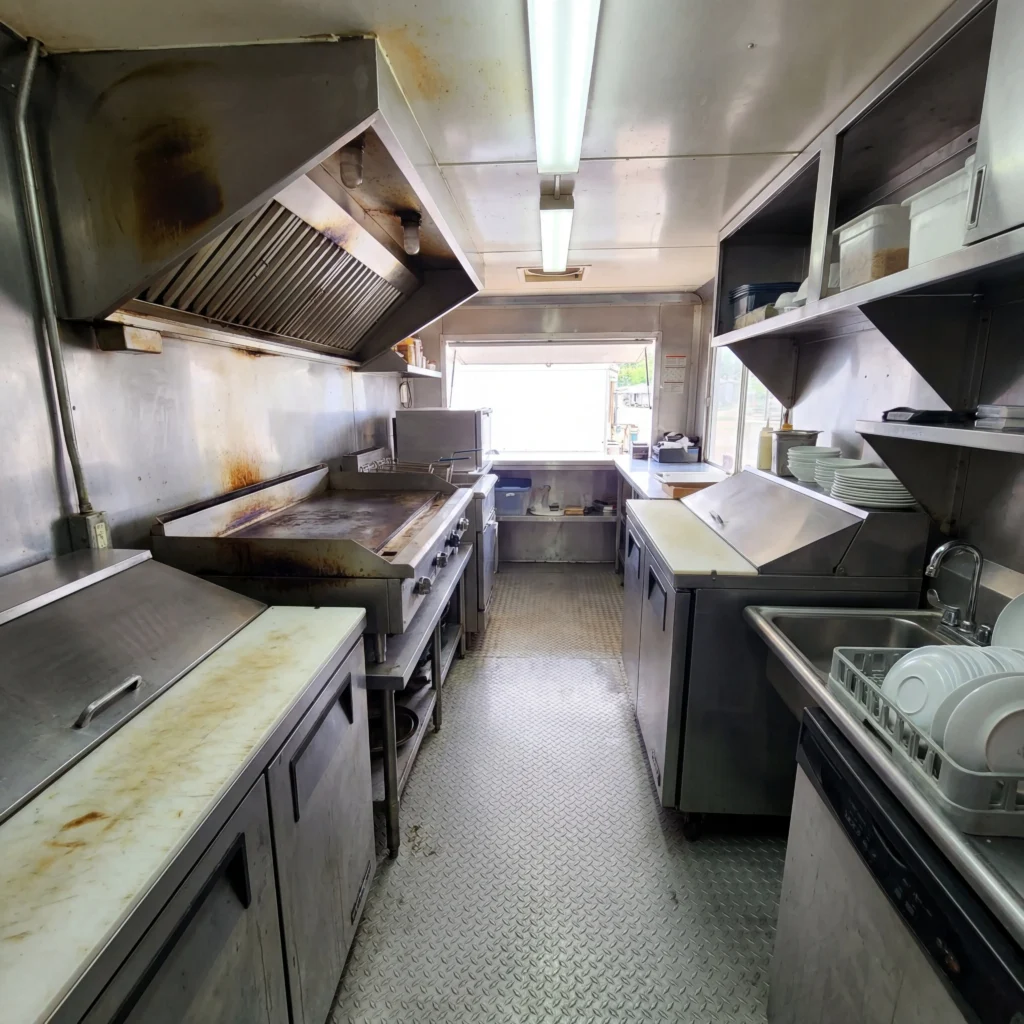
☐ Plumbing and electrical. This is where I brought a friend who knows more than I do, and he caught three things I would have missed. Verify that fresh water and gray water tank sizes meet your local health code requirements. Check water pump pressure. Look at all electrical connections, outlets, and the breaker panel (that’s the electrical control box for the truck). Watch for exposed wires, overloaded circuits, or repairs that look improvised.
☐ Permits and compliance history. Ask the seller if the truck has passed a health department inspection within the past 12 months. Find out if the fire suppression system has been serviced and tagged. A truck that was legal in one county might not meet the requirements in yours, and getting it into compliance can be costly — I’ve heard numbers ranging from a couple thousand to well over ten thousand depending on what’s needed. Get quotes from your local fire marshal and health department before you budget for this.
☐ Paperwork. Get everything in writing. A bill of sale, the vehicle title (check for liens at your state DMV), an equipment inventory list, and any warranty documentation still active. Always verify the VIN matches the title. If a seller won’t put details in writing, walk away.
💡 Pro Tip from Jo: Ask the seller to run the truck for at least 30 minutes while you’re there. Problems with generators, overheating, and electrical systems only reveal themselves under sustained use — a quick five-minute demo hides everything. Grab a coffee and watch the truck work. That patience can save you thousands.
📎 Related: Once you’ve secured your truck, you’ll need permits — our Food Truck Legal guide covers everything.
How Do You Spot and Avoid Food Truck Scams?
Can we talk about this for a second? Because scams in the food truck buying market are more common than people realize, and they specifically target excited first-time buyers who are ready to jump in with their wallets open.
The number one rule is simple: if you can’t see it in person, don’t buy it. I’ve heard from mentees who wired deposits to out-of-state sellers for trucks that either didn’t exist or looked nothing like the photos. Legitimate sellers will always let you inspect the truck, test the equipment, and take a test drive before any money changes hands.
Watch out for prices that look too good to be true. A fully equipped food truck listed at $12,000 when comparable trucks sell for $40,000 is almost certainly a scam, a truck hiding serious problems, or an imported unit built with components that won’t meet U.S. health and safety codes.
Be cautious with food trucks imported from overseas wholesale platforms. These trucks are often advertised at attractively low prices, but they may use materials and components that don’t pass local fire, health, or electrical inspections. Getting one into compliance can cost more than the truck itself.
Here’s where it gets interesting — the red flags are actually pretty easy to spot once you know what to look for:
- Sellers who refuse to meet in person or let you inspect the truck
- Pressure to wire money or pay with gift cards or cryptocurrency
- No vehicle title available or title doesn’t match the VIN
- A generic contract with no specific details about the truck
- Listings that use stock photos rather than actual pictures of the unit

Use an escrow service for any large purchase from a private seller. It protects both sides and gives you recourse if the truck isn’t as described.
📎 Related: Understanding realistic Food Truck Startup Costs will help you spot deals that are suspiciously underpriced.
New vs Used: Which Food Truck for Sale Should You Actually Choose?
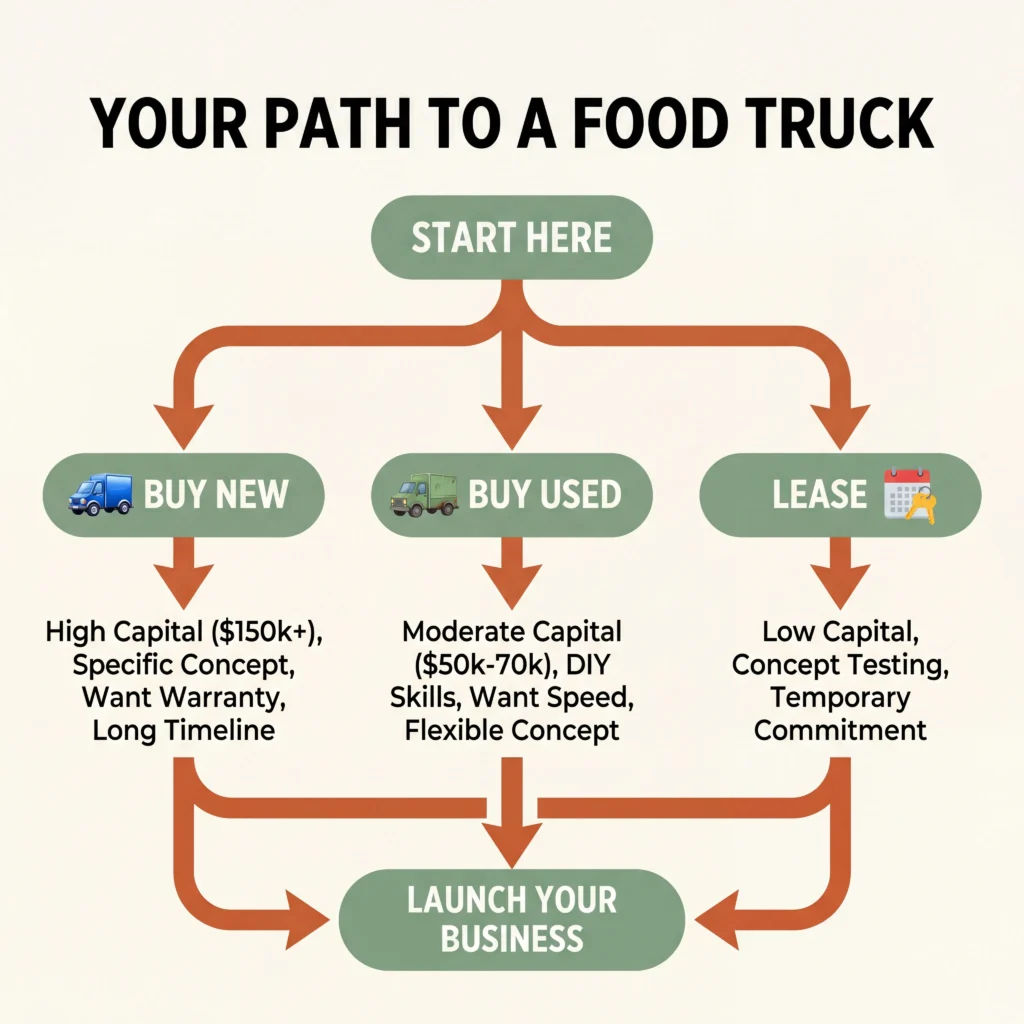
This is the fork in the road every aspiring food truck owner hits, and honestly, there’s no single right answer. It depends on your budget, your timeline, how much DIY work you’re comfortable with, and — this is the part nobody talks about — how clearly you’ve defined your concept.
Buying new makes sense if you have the capital or financing to invest $75,000 or more, you need a specific kitchen layout that matches a well-defined menu concept, and you’d rather spend your energy developing recipes and building community than fixing equipment. New trucks come with warranties, meet current codes, and are ready to permit.
Buying used makes sense if you’re working with a tighter budget, you’re comfortable managing some repairs and upgrades, and you want to start serving customers sooner. A solid used truck in the roughly $40,000 to $70,000 range — what many experienced operators consider the sweet spot — can get you on the road within weeks instead of months.
Leasing is the middle ground that doesn’t get talked about enough. At roughly $2,500 to $4,500 per month, a lease lets you test your concept, build a customer base, and start generating revenue while you save for an eventual purchase. I actually recommend this route to about half the people I mentor, especially those who haven’t fully nailed down their menu concept yet.
One thing I tell everyone: don’t let the perfect truck delay your launch by six months. The food truck that gets you serving customers today is almost always a better investment than the dream truck you’re still saving for next year. You can always upgrade later — and many successful owners do exactly that. Sound familiar? You’ve got more company than you think.
💡 Pro Tip from Jo: If you lease first, try to negotiate a lease-to-own clause. One of my mentees locked in a purchase price at signing, which protected her when truck values went up during her first year of building the business. She ended up saving around $8,000 compared to buying at market price later.
📎 Related: For a detailed step-by-step walkthrough, see our Buying a Food Truck guide.
How Do You Negotiate the Best Price on a Food Truck?
Now, I know what you’re thinking — “Do people actually negotiate on food trucks?” Yes. Every used truck listing is negotiable, and even some new builds have flexibility built into the quote.
My approach — and I’m terrible with confrontation, so trust me, this is gentle — is to let the inspection do the talking. Get an independent mechanic to look at the truck. Document every issue. Then use the repair estimate as your negotiation tool. I knocked $3,500 off my truck’s asking price this way, and the seller didn’t even push back because the numbers were right there on paper.
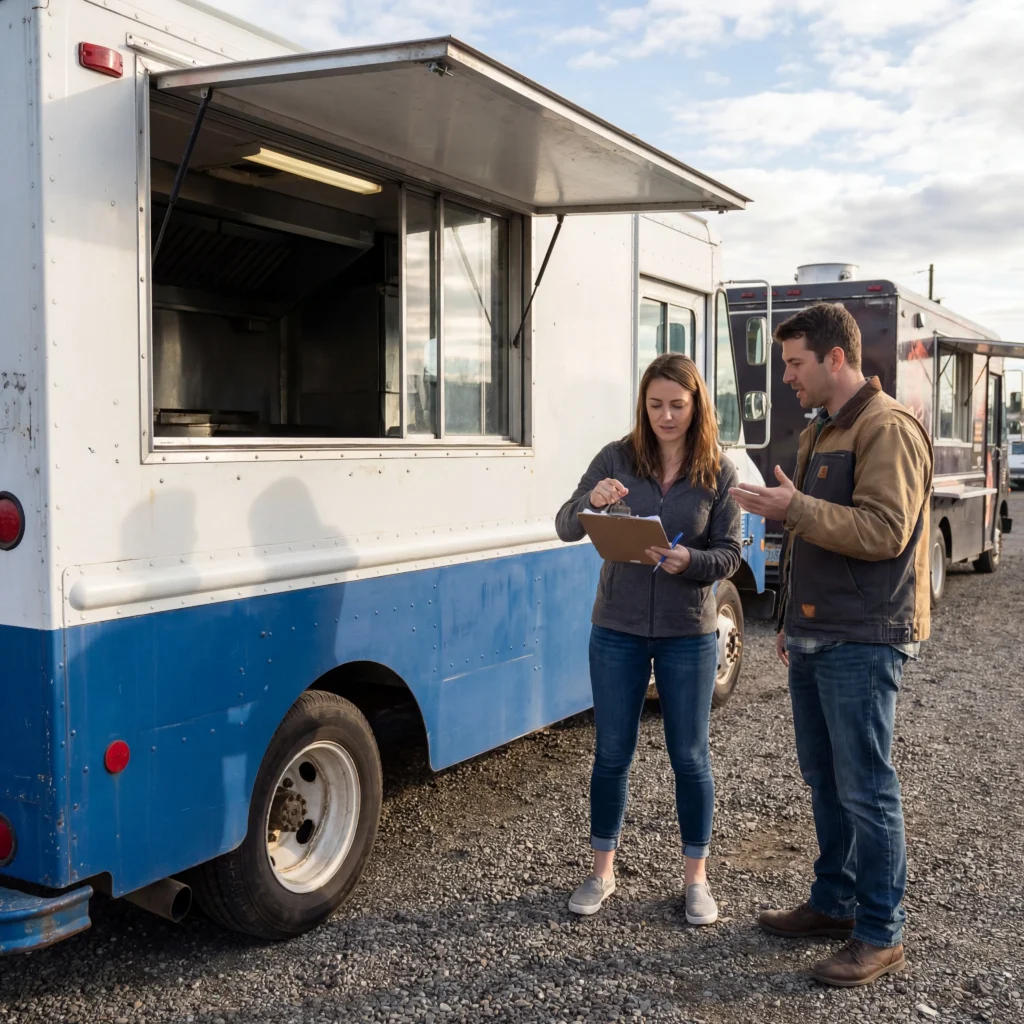
A few other strategies that have worked for me and my mentees:
Know the market before you make an offer. Browse comparable listings for a week or two so you understand what trucks in similar condition actually sell for. Sellers can tell when a buyer has done their homework — and when they haven’t.
Ask about the seller’s timeline. Someone who needs to sell by end of month because they’re moving or shutting down has more flexibility than someone casually testing the market. This isn’t about taking advantage — it’s about understanding what kind of deal is realistic.
Don’t negotiate over text or email alone. Have the conversation in person or at least on the phone. It’s harder for someone to say no to a reasonable offer when you’re standing there being polite and prepared.
I’m not going to pretend I’m a negotiation expert — that’s really not my thing. But the combination of inspection documentation and market research has worked for every mentee I’ve coached through a purchase.
Can You Finance a Food Truck Purchase?
Here’s where it gets interesting — you don’t actually need to pay cash for everything upfront, and for many first-time owners, financing is what makes the difference between launching this year and waiting indefinitely.
I’m terrible with spreadsheets — that’s why I hired an accountant before I even started comparing options. If numbers aren’t your thing either, get help. But here’s what I wish I’d known when I was figuring this out:
SBA (Small Business Administration) microloans go up to $50,000 and are built specifically for small businesses and startups. The application takes some effort, but the terms tend to be much friendlier than other options.
Equipment financing uses your truck itself as the guarantee for the loan, which often makes approval easier even if you don’t have a long business track record.
Personal savings, family contributions, and crowdfunding are how many food truck owners — myself included — piece together their starting capital. I funded my first truck with savings and a small loan from my parents. There’s no shame in bootstrapping.
The details of interest rates, repayment terms, and qualification requirements get complicated fast, so I’d point you to our dedicated Food Truck Financing guide for the real numbers. That’s Marcus’s world, not mine — he’s the spreadsheet person on our team.
I’m not a financial advisor, so please talk to a qualified lending professional before committing to any financing agreement. What worked for me in Portland might look very different in your market.
📎 Related: Our complete Food Truck Financing guide covers every option in detail with comparison tables and calculators.
Putting It Into Practice
Here’s your action plan — grab a pen:
☐ Today: Browse 2–3 food truck marketplaces (UsedVending.com, UsedFoodTrucks.com, Commercial Truck Trader). Save 5 listings in your price range. Get a feel for what’s out there.
☐ This Week: Contact 2 sellers and schedule in-person inspections. Line up a mechanic friend or hire one for a pre-purchase check — budget roughly $100 to $200 for a professional inspection.
☐ This Month: Compare your top options side-by-side using the pricing table above. Check financing pre-approval if needed. Make your offer — and bring your inspection notes to the negotiation table.
☐ Before You Sign: Verify the title is clean, confirm local health code requirements for the truck’s configuration, and have your bill of sale reviewed. Then take a deep breath — you’re about to become a food truck owner.
Frequently Asked Questions
How much does a food truck cost on average?
A used food truck typically costs between $25,000 and $100,000, while a new truck from a specialty builder generally ranges from $50,000 to $200,000. Most first-time buyers looking for a solid, operational used truck should expect to spend roughly $40,000 to $70,000 for a unit in good condition with working kitchen equipment.
What is the cheapest way to get started with a food truck?
The most affordable entry point is buying a used step van or cargo vehicle for roughly $5,000 to $15,000 and converting it yourself, though buildout costs typically add $20,000 or more depending on your equipment needs. Leasing a truck at roughly $2,500 to $4,500 per month is another low-barrier option that lets you start serving while you save for a permanent purchase.
Where is the best place to find a food truck for sale online?
Specialized marketplaces like UsedVending.com, UsedFoodTrucks.com, and Commercial Truck Trader offer the largest curated inventories with search filters for location, price, and equipment type. For local deals, Facebook Marketplace and food truck owner groups in your area often have listings from sellers you can visit in person.
Should I buy a new or used food truck?
Used trucks are typically the stronger choice for first-time owners because they cost significantly less than new builds and can get you serving within weeks rather than months. Buying new makes more sense if you need a very specific kitchen layout, want full warranties, and have the budget to invest $75,000 or more comfortably.
What paperwork do I need when buying a food truck?
You need the vehicle title (check for liens through your state DMV), a detailed bill of sale that lists all included equipment, maintenance records for both the vehicle and kitchen systems, the fire suppression system service tag, and any active warranty documentation. Always verify the VIN matches the title before handing over payment.
Can I start a food truck business with very little money?
Starting with minimal capital is challenging but not impossible. Some owners begin by leasing a truck, using equipment financing, or applying for an SBA microloan. Grants targeting women, veterans, or minority entrepreneurs can also help. Realistically, plan to have access to at least $20,000 to $30,000 through some combination of savings, loans, and creative financing — that’s enough to get started if you’re resourceful.
Your Next Move
The right food truck for sale is the one that fits your budget, passes a thorough inspection, and gets you serving real customers — everything else can be upgraded down the road. I’ve seen it happen over and over with the people I mentor, and it can happen for you too.
Quick Recap:
☐ New trucks run $50,000–$200,000 with warranties and clean builds. Used trucks fall between $25,000–$100,000 and get you started faster on a smaller budget.
☐ Shop specialized marketplaces first for the safest buying experience. Watch for seasonal deals in fall and winter.
☐ Always inspect in person — test every piece of equipment, drive the truck, and bring a mechanic. Use your inspection findings to negotiate.
☐ If you can’t see it, don’t buy it. Scams are real, and deposits wired to strangers rarely come back.
Your Next Steps:
- Still building your concept? Start with our Food Truck Concepts and Ideas guide.
- Comparing trucks and trailers? See our Food Truck vs Food Trailer breakdown.
- Need the full financial picture? Read our Food Truck Startup Costs guide.
📥 Want a printable inspection checklist? We’re putting one together based on this guide. Keep an eye on this page — we’ll link it here when it’s ready.
Back to the big picture: Food Truck Startup complete guide.
— Jolene Matsumoto
