


Starting a food truck feels like juggling flaming tacos while riding a unicycle, doesn’t it? I remember sitting in my Portland apartment with 47 browser tabs open, a legal pad covered in scribbles, and this sinking feeling that I was definitely forgetting something critical.
Spoiler: I was forgetting things. Like the fact that my city required a commissary agreement before my health permit application. Or that my fire inspection would take 3 weeks to schedule. Fun times.
Here’s the good news—you don’t have to learn this the hard way like I did. After launching my taco truck in 2018 and helping dozens of friends through their launches, I’ve compiled the ultimate food truck startup checklist. And yes, there’s a free downloadable PDF at the end.
Let’s make sure you’re actually ready for launch day.
📌 Quick Answer
A complete food truck startup requires 50+ action items across five key phases: pre-planning (concept validation, market research), legal setup (permits, licenses), equipment acquisition (truck, kitchen gear), financial foundations (banking, insurance), and marketing prep (branding, social media). Most successful launches take 4-6 months from start to first service. The biggest time-sink? Permits—start those EARLY.
What You’ll Learn:
- ✅ Complete 50+ item checklist organized by phase
- ✅ Timeline guidance for when to tackle each step
- ✅ Common rookie mistakes that delay launches
- ✅ Free downloadable PDF checklist
Reading time: 7 minutes
📚 Part of: How to Start a Food Truck Business Complete Guide
This checklist covers your essential pre-launch tasks. For the complete roadmap from concept to first customer, start with our comprehensive How to Start a Food Truck Business guide.
Pre-Planning Phase: Foundation Work (Weeks 1-4)
Okay, so here’s the deal—this is where most people want to skip ahead to picking truck wraps and menu items. I get it. But this unsexy foundation work is what separates successful launches from expensive disasters.
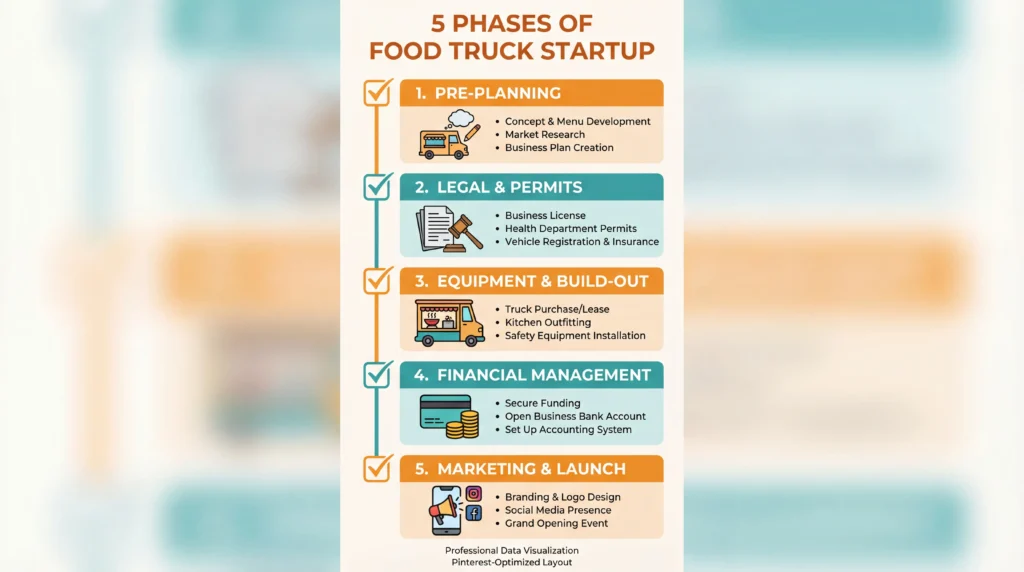
Business Concept
- ☐ Define your core menu (3-5 signature items max)
- ☐ Research local competition (visit 10+ trucks/restaurants)
- ☐ Identify your specific target customer
- ☐ Calculate rough startup budget ($50K-$200K+)
Market Research
- ☐ Survey 50+ potential customers
- ☐ Analyze city food truck regulations
- ☐ Scout high-traffic locations during peak hours
- ☐ Test menu items with honest critics (not just friends who love you)
Business Structure
- ☐ Choose business entity (LLC recommended)
- ☐ Register business name (check social handles first!)
- ☐ Get EIN from IRS (free, takes 5 minutes)
- ☐ Open business bank account (separate from personal—non-negotiable)
💡 Pro Tip from Jo: Start this phase 4-6 months before your target launch. Permit processing alone can take 8-12 weeks in some cities. I know it seems early, but you’ll thank me later.
📎 Related: Need help planning your timeline? Check our Food Truck Startup Timeline for week-by-week guidance.
Legal & Permit Phase: The Paper Chase (Weeks 5-12)
Deep breath. This section makes everyone’s eyes glaze over, but it’s literally the difference between operating legally and getting hit with $500-$5,000 fines. Been there, learned that lesson.
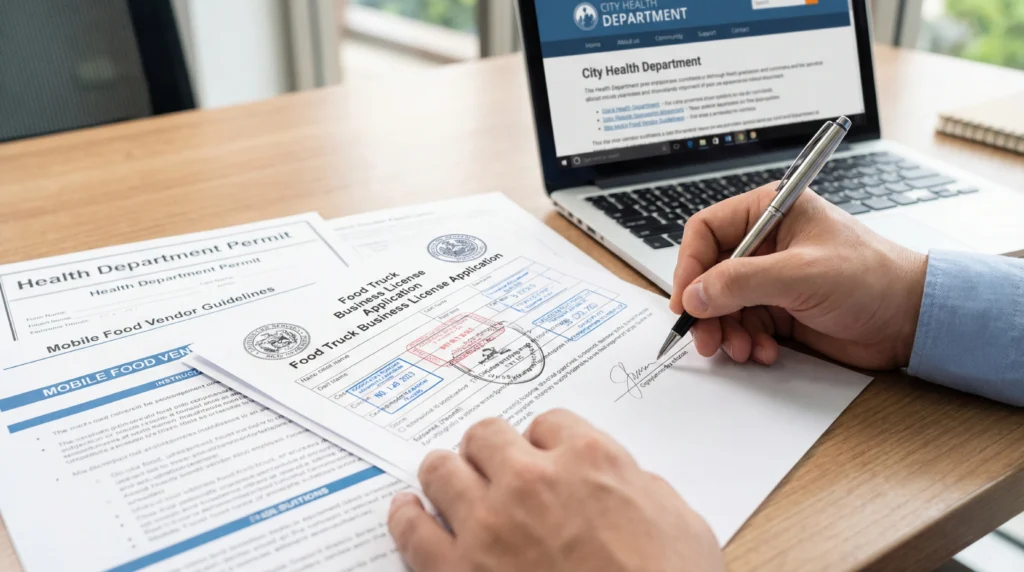
Federal & State Requirements
- ☐ EIN (Employer Identification Number)
- ☐ Register for sales tax collection (if your state requires it)
- ☐ Business license from Secretary of State
- ☐ Food handler’s permit (you + all staff)
- ☐ Mobile food facility license (state health department)
- ☐ Seller’s permit (for sales tax states)
Local City Permits
- ☐ City business license
- ☐ Mobile vendor permit
- ☐ Parking permits for specific zones
- ☐ Fire safety certificate (propane + fire suppression inspection)
- ☐ Health department inspection (schedule 2-3 weeks before launch)
- ☐ Commissary kitchen agreement (required in most cities)
Insurance Coverage
- ☐ General liability ($1M minimum recommended)
- ☐ Commercial auto insurance
- ☐ Workers’ compensation (if hiring staff)
- ☐ Property insurance for equipment
⚠️ State-Specific Note: Requirements vary dramatically. California = strictest. Texas = more lenient. Always check your local health department website first.
💡 Pro Tip from Jo: Create a spreadsheet with all required permits, costs, renewal dates, and issuing agencies. I update mine every January and it’s saved me from expired permits more times than I’ll admit.
📎 Related: For deep-dive permit guidance, see our Food Truck Permits and Licenses pillar.
Equipment & Vehicle Phase: The Big Investment (Weeks 8-14)
This is where your budget meets reality. Equipment is your second-biggest expense after the truck itself.
Truck/Trailer Selection
- ☐ Decide: New ($80K-$200K) vs. Used ($30K-$80K) vs. DIY ($25K-$60K)
- ☐ Hire mechanic to inspect vehicle (DON’T skip this—my $6K transmission lesson)
- ☐ Verify truck meets local health codes (3-compartment sink, etc.)
- ☐ Purchase or lease your truck
Essential Kitchen Equipment
- ☐ Cooking equipment (griddle, fryer, range—based on YOUR menu)
- ☐ Refrigeration (reach-in cooler, under-counter fridge)
- ☐ 3-compartment sink + handwashing station
- ☐ Ventilation system + fire suppression (required by law)
- ☐ Generator ($2K-$5K) or shore power hookups
- ☐ Water tanks (fresh + gray water)
- ☐ Point-of-sale (POS) system
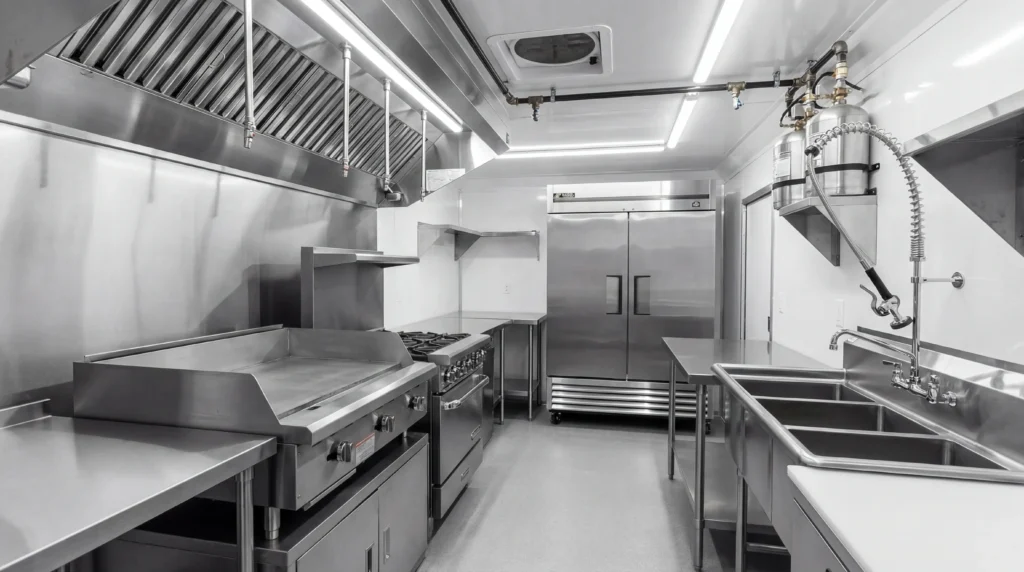
Safety & Operations
- ☐ Type K fire extinguisher
- ☐ First aid kit
- ☐ Slip-resistant mats
- ☐ Storage containers (Cambro-style)
📎 Related: Complete equipment lists and buying guides in our Food Truck Equipment Guide.
Financial Setup Phase: Money Matters (Weeks 10-14)
Nobody’s favorite topic, but it’s how you avoid becoming another food truck failure statistic.
Banking & Accounting
- ☐ Business checking account
- ☐ Business savings (emergency fund—3-6 months expenses)
- ☐ Business credit card (builds credit + tracks expenses)
- ☐ Accounting software (QuickBooks, Wave, etc.)
Payment Processing
- ☐ Credit card processing setup
- ☐ Enable contactless payments (Apple Pay, Google Pay)
- ☐ Backup payment method for WiFi failures
- ☐ Test all payment systems before launch
💡 Pro Tip from Jo: I keep a paper credit card imprinter in my truck. Old school? Yes. Has it saved me when WiFi died during a festival? Also yes.
📎 Related: Food Truck Financing Options for funding your startup costs.
Marketing Launch Phase: Build the Buzz (Weeks 12-16)
Here’s where it gets fun! This is your “get people excited to spend money on your food” phase.
Branding Essentials
- ☐ Design logo (professional, scalable)
- ☐ Choose 2-3 brand colors
- ☐ Design truck wrap ($3K-$8K investment—worth it!)
- ☐ Create menu board design (readable from 10 feet away)
- ☐ Print business cards
Social Media Setup
- ☐ Instagram handle (your primary marketing channel)
- ☐ Facebook Business Page
- ☐ Google Business Profile (free local SEO)
- ☐ TikTok account (Gen Z finds trucks here now)
- ☐ Plan content calendar (2-3 posts/week minimum)
Grand Opening Prep
- ☐ Set launch date (3-4 months out minimum)
- ☐ Book first location (high-traffic, permits approved)
- ☐ Create opening day promotion
- ☐ Reach out to local food bloggers
- ☐ Plan soft opening (friends/family test 1-2 weeks before)
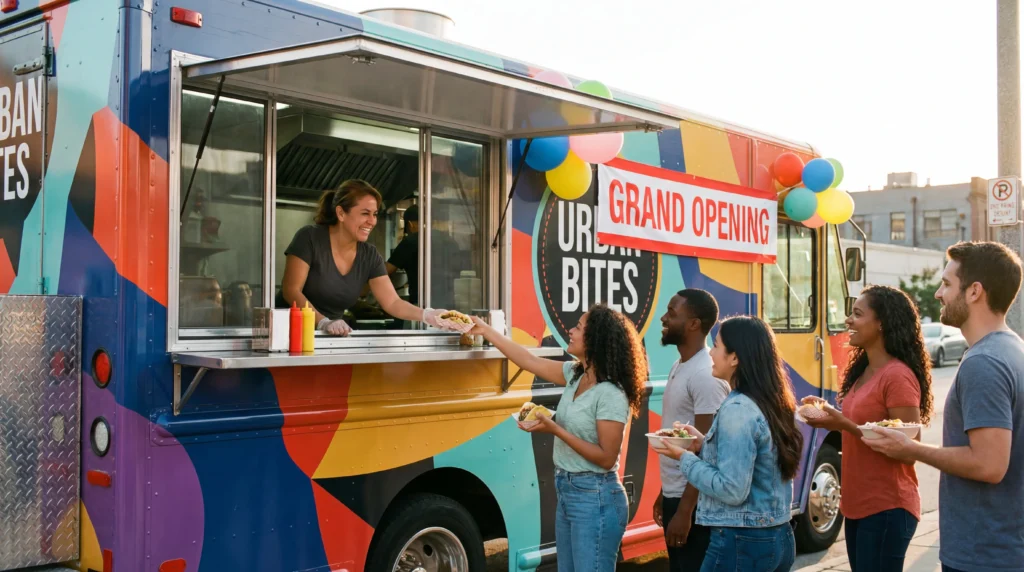
💡 Pro Tip from Jo: Don’t announce your launch date until you’re 100% sure. I moved mine twice and lost momentum. Learn from my chaos.
🎯 Putting It Into Practice
Your Quick Action Plan:
📅 This Week:
- ☐ Download the PDF checklist below
- ☐ Create your launch timeline spreadsheet
- ☐ Start researching local permit requirements
📅 This Month:
- ☐ Complete business registration
- ☐ Begin permit applications
- ☐ Start scouting locations
📅 Within 3 Months:
- ☐ Secure truck and equipment
- ☐ Complete all inspections
- ☐ Launch soft opening
Tools You’ll Need:
- Google Sheets (for tracking permits + timeline)
- Canva (for social media graphics)
- Your city’s health department website
- This checklist PDF
💡 Pro Tip: Print this checklist and keep a laminated copy in your truck for easy reference during your startup phase!
Frequently Asked Questions
What’s the first step in starting a food truck?
Before buying anything, validate your concept. Research your competition, identify your target customer, and create a rough budget. I’ve seen too many people buy trucks first and realize their market is oversaturated. Do the homework first—your bank account will thank you.
How long does it take to start a food truck from scratch?
Realistically? 4-6 months minimum. My timeline: Months 1-2 (planning), Months 2-3 (permits—longest wait), Months 3-4 (truck + equipment), Month 5 (marketing setup), Month 6 (soft launch). Some cities process permits in 2 weeks, others take 12+. Check your launch timeline carefully.
What permits do I need for a food truck?
Minimum: EIN, business license (state + city), mobile food facility license, food handler’s permits, vehicle registration, commercial insurance, parking permits, fire safety certificate, and commissary agreement. Costs range $2K-$10K+ depending on location. See our permit guide for state-specific requirements.
How much does it cost to start a food truck?
Total startup costs range $50K-$200K+ including: truck ($30K-$150K), equipment ($20K-$50K), permits ($2K-$10K), initial inventory ($2K-$5K), insurance ($3K-$8K/year), and marketing ($1K-$5K). Budget 20% more than you calculate—trust me on this one.
Final Thoughts
Quick Recap:
- ✅ 50+ checklist items across 5 phases
- ✅ Start permits 4-6 months before launch
- ✅ Don’t skip the foundation work
- ✅ Download the PDF to stay organized
Your Next Steps:
- 📋 Download the free checklist
- 📊 Calculate your startup costs
- 📅 Map out your launch timeline
- ⚠️ Avoid common mistakes
Back to the Big Picture:
Ready for the complete roadmap? Head to our How to Start a Food Truck Business pillar guide.
Starting a food truck is equal parts exciting and terrifying. When I served my first customer and saw their face light up after that first bite? Worth every permit application, every inspection, every sleepless night.
You’ve got this.
— Jolene Matsumoto
Portland, OR | Food Truck Owner since 2018
