

So you want to know how to start a food truck business? I get it—it’s scary, exciting, and overwhelming all at once.
When I first decided to launch my Japanese-Hawaiian fusion truck in Portland back in 2018, I had no idea what I was getting into. I ugly cried in the health department parking lot when my permit got rejected the first time. I made every mistake in the book during my first six months.
But here’s the thing—I also built something incredible. Our Instagram grew from 200 to 12,000 followers in 18 months. I’ve mentored 15+ food truck owners through their first year. And now I want to share everything I learned so you don’t have to figure it all out the hard way.
This isn’t just another generic guide. This is the real deal—from someone who’s actually done it.
Quick Summary: 7 Steps to Start a Food Truck Business
- Nail down your concept and niche
- Create a solid business plan
- Calculate your startup costs ($50,000-$200,000 typical range)
- Secure funding through loans, investors, or savings
- Obtain all required permits and licenses
- Buy or lease your food truck vehicle
- Equip your mobile kitchen and launch
Ready? Here’s everything you need to know.
Table of Contents
Why Start a Food Truck Business in 2026?
Can we talk about why right now might be the best time ever to start a food truck?
The food truck industry statistics are genuinely exciting. The U.S. food truck market hit $1.09 billion in 2025, with projections showing continued growth of 5-8% annually through 2030. That’s not hype—that’s real opportunity.
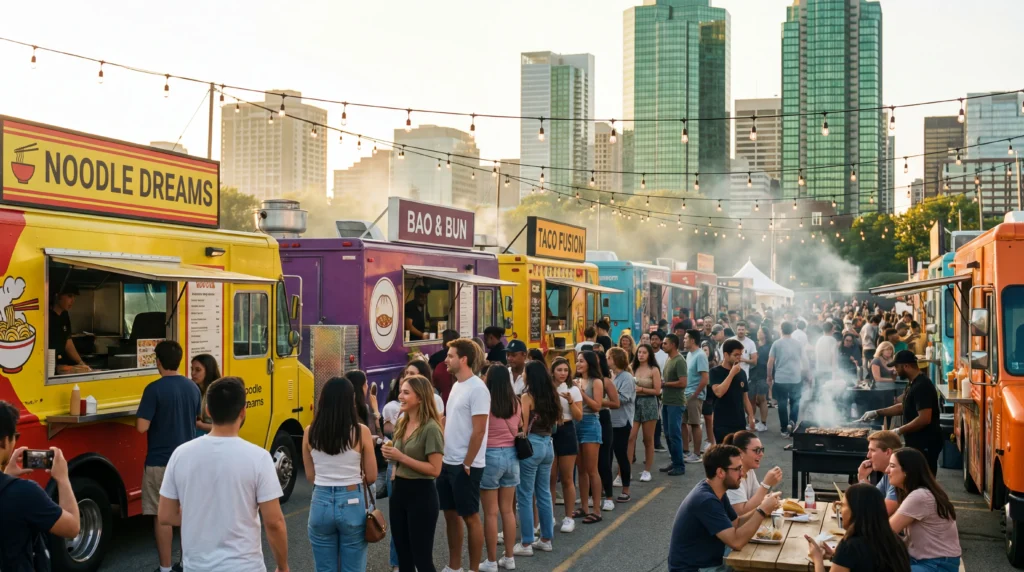
Here’s why food trucks are thriving:
Lower startup costs than restaurants. While opening a brick-and-mortar restaurant can cost $275,000 to $425,000, you can launch a food truck for $50,000 to $200,000. That’s a massive difference when you’re starting out.
Flexibility that restaurants can’t match. You can test different locations, adjust your schedule based on demand, and pivot your menu without the fixed overhead of a traditional restaurant.
Built-in marketing. Your truck IS your advertisement. When people see your beautifully wrapped vehicle at a festival or downtown event, that’s marketing you’re not paying extra for.
Growing consumer demand. Millennials and Gen Z love food trucks—68% report eating from food trucks regularly according to the National Restaurant Association.
I’m not gonna lie—it’s still hard work. But if you’re passionate about food and willing to put in the effort, there’s never been a better time to explore whether the food truck business is right for beginners like you.
How to Start a Food Truck Business? Nail Down Your Concept
Before you even think about trucks or permits, you need to nail down your concept. This is where your food truck journey actually begins.
Choosing Your Cuisine and Niche
Your concept isn’t just “what food you make.” It’s your entire brand identity—your story, your vibe, your reason for existing.
When I was developing my concept, I spent weeks researching food truck concepts and ideas before landing on Japanese-Hawaiian fusion. Why that combination? Because it’s what I grew up eating, and there wasn’t anyone else doing it in Portland.
Here’s my framework for choosing a food truck niche:
Start with your passion and expertise. What food makes you come alive? What do friends and family always ask you to make? If you’re not genuinely excited about your food, that’ll show.
Research your local market. Drive around your city. Hit up food truck pods, farmers markets, and events. What’s already there? More importantly, what’s missing?
Identify your target customer. Are you feeding busy office workers at lunch? Late-night partiers? Families at weekend events? This affects everything from your menu to your schedule to your pricing.
Test the profitability potential. Some cuisines have better margins than others. Check out our guide on whether a food truck business is profitable before committing.
Real talk: I’ve seen too many new food truck owners choose a concept because they think it’ll be “easy” or “trendy.” Don’t do that. Choose something you genuinely love cooking because you’ll be making it hundreds of times.
Popular niches include taco food trucks, pizza food trucks, BBQ food trucks, and coffee food trucks. Each has different equipment needs and profit margins.
Creating Your Brand Identity
Once you’ve got your concept, you need food truck name ideas that capture your vibe.
Your name should be:
- Easy to remember and spell
- Descriptive of what you do (or intriguingly mysterious)
- Available as a business name and social media handles
- Something you’ll still love saying 5 years from now
Your visual branding—logo, truck wrap, menu design—should all flow from your name and concept. When people see your truck, they should immediately understand what you’re about.
Need help? Try a food truck name generator to brainstorm ideas, then check our complete list of food truck names for inspiration.
Do You Really Need a Business Plan? (Yes—Here’s Why)
Here’s the thing about business plans: most people skip them. And most food trucks fail within their first three years. Coincidence? I don’t think so.
Your business plan isn’t just for investors (though you’ll need it if you’re seeking funding). It’s your roadmap. It forces you to think through all the details before you’ve spent a dime.
For a comprehensive guide, check out our complete food truck business plan pillar page. But here’s the essential structure:
Essential Business Plan Components
Executive Summary
One page covering your concept, target market, competitive advantage, and financial highlights. Write this last, even though it goes first.
Company Description
What makes your food truck unique? What problem are you solving for customers? Why should anyone care?
Market Analysis
Demographics of your target area, competitor research, market size and growth trends. Don’t skip this—it’s where most people discover deal-breakers before they become expensive mistakes.
Menu and Operations
Your initial menu, pricing strategy, food costs, prep procedures, and daily operations plan.
Marketing Strategy
How will people find you? Social media, events, partnerships, loyalty programs—map it all out.
Financial Projections
Startup costs, monthly expenses, revenue projections, break-even analysis, and cash flow forecasts for years 1-3.

I know this seems like a lot. But I promise—every hour you spend on your business plan saves you 10 hours of painful lessons later.
How Much Does It Cost (And How Do You Pay for It?)
Real talk: most guides lowball the costs. I don’t want you to be blindsided like I was.
The Real Numbers
The typical range for food truck startup costs is $50,000 to $200,000, with most falling between $70,000 and $130,000.
| Category | Low Estimate | High Estimate |
|---|---|---|
| Food Truck Vehicle | $30,000 | $150,000 |
| Commercial Kitchen Equipment | $10,000 | $50,000 |
| Permits and Licenses | $3,000 | $15,000 |
| Initial Inventory + POS | $1,500 | $5,500 |
| Insurance (First Year) | $2,000 | $6,000 |
| Marketing, Branding, Legal | $3,000 | $15,000 |
| Working Capital | $5,000 | $15,000 |
| TOTAL | $55,000 | $258,500 |
💡 Pro Tip: When I started, I budgeted $75,000 and ended up spending $82,000. Whatever number you land on, add 15-20% as a cushion. You’ll thank yourself later.
Ways to keep costs down: Consider buying a used food truck to save $30K-$70K. Food trucks vs food trailers—trailers cost 30-50% less. Lease equipment first. Start with a limited menu.
Starting smaller? A small food truck can cut costs significantly. You can also explore custom food trucks built to your exact specifications.
How to Fund Your Dream
Unless you have $100,000+ in savings, here are your options:
Personal Savings – No interest, no investors. Even partial “skin in the game” helps secure other funding.
Bank Loans – Need 680+ credit score and solid business plan. SBA-backed loans offer better terms but take longer. Typical rates: 6-13%.
Equipment Financing – Your truck serves as collateral. Often easier to qualify for than general business loans.
Investors/Crowdfunding – Friends, family, or platforms like Kickstarter. Get everything in writing.
For a complete breakdown, visit our food truck financing guide.
When I was in your shoes, I cobbled together savings ($25,000), a family loan ($15,000), and an equipment loan ($40,000). It wasn’t pretty, but it worked. You’ve totally got this.
What Permits and Licenses Do You Need?
Okay, I’m not gonna lie—this is the part that makes most people want to quit. The permit process can be confusing, frustrating, and time-consuming.
But here’s what nobody tells you: once you understand the system, it’s manageable. I promise.
For a comprehensive guide to all requirements, see our food truck permits and licenses pillar page.
Federal Requirements
Every food truck needs:
- Employer Identification Number (EIN) from the IRS—free and takes 10 minutes online
- Food Establishment License (required in all states)
State Requirements
Requirements vary dramatically by state. The best states for food trucks have streamlined processes; others… not so much.
Common state-level requirements include:
- State Business License
- Sales Tax Permit (Seller’s Permit)
- Food Handler Certificates (for you and all employees)
Local Requirements
This is where it gets complicated. Cities and counties each have their own rules. Typical local permits include:
- Health Department Permit – Usually requires inspection of your truck
- Mobile Food Facility Permit – Your main operating license
- Fire Department Permit – For cooking equipment and fire suppression
- Zoning/Parking Permits – Where you can and can’t operate
- Commissary Agreement – Proof you have access to a licensed commercial kitchen
Pro Tip: Call your local health department and ask for a new food truck checklist. Most have one, and it’ll save you hours of research.
Insurance Requirements
You’ll need at minimum:
- General Liability Insurance ($1,000,000+ coverage recommended)
- Commercial Auto Insurance (your personal auto policy won’t cover a food truck)
- Workers Compensation (if you have employees)
Budget $200-$500 per month for comprehensive coverage.

How Do You Get Your Truck and Equipment?
Now for the exciting part—getting your actual truck and filling it with everything you need!
Buying vs Leasing Your Food Truck

Looking for options? Browse food trucks for sale or consider buying a food truck used to save money.
You have three main options for buying a food truck:
New Custom-Built Food Truck ($80,000 – $200,000) – Built to your exact specs with warranty, but highest cost and 3-6 month wait time.
Used Food Truck ($30,000 – $80,000) – Lower cost and immediately available, but unknown history and may need repairs.
DIY Conversion ($50,000 – $100,000) – Full customization potential, but time-intensive and may have permit challenges.
When looking at food trucks for sale, compare new vs used options carefully. You can also consider a food truck rental or lease a food truck while you’re getting started.
💡 Pro Tip: Never buy a used food truck without getting it inspected by someone who knows what they’re looking for. Check vehicle mileage, generator hours, refrigeration, plumbing, electrical, and fire suppression systems. This one thing can save you tens of thousands of dollars.
Essential Equipment for Your Mobile Kitchen
With your truck secured, it’s time to fill it with equipment. For a complete breakdown, see our food truck equipment guide pillar page.
Cooking: Commercial griddle/grill, fryers (if needed), range/burners, convection oven (optional).
Refrigeration: Under-counter refrigerators, prep tables with refrigerated base, freezer.
Prep & Sanitation: Stainless steel work tables, three-compartment sink (required), handwashing station, fresh/waste water tanks.
Power & Safety: Generator (5,000-7,000 watts), propane system, exhaust hood, fire suppression, fire extinguishers.
Point of Sale: You’ll need a food truck POS system that works offline. For equipment recommendations, check our best food truck equipment guide.
How Do You Actually Get Customers?
You’ve done the hard work. Now it’s time to get customers!
Pre-Launch Marketing
Start building buzz before your first day:
Social Media Presence
Create accounts on Instagram, TikTok, and Facebook. Share your journey—behind-the-scenes content performs amazingly well. Our Instagram grew from 200 to 12,000 followers largely from “day in the life” content.
Website and Google Business Profile
You need a simple website with your menu, schedule, and contact info. Your Google Business Profile is arguably more important—it’s how people find you when they search “food truck near me.”
Build an Email List
Even before you launch, start collecting emails. These become your most loyal customers.
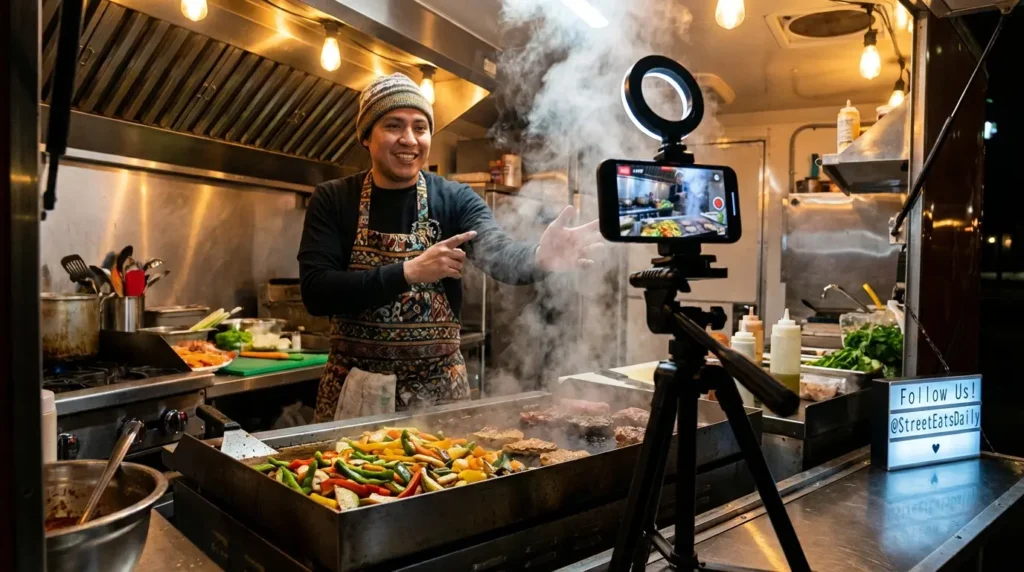
For a complete strategy, see our food truck marketing pillar page.
Finding Your First Locations
Location is everything in this business. Check out our comprehensive food truck locations and events guide, but here are the basics:
Food Truck Pods and Parks
Many cities have designated areas where food trucks gather. These provide built-in foot traffic and customer expectations.
Private Events
Corporate lunches, weddings, private parties—these can be lucrative and help fill weekday gaps.
Festivals and Markets
Farmers markets, street fairs, music festivals—anywhere crowds gather.
Regular Spots
Build relationships with breweries, businesses, or apartment complexes that need regular food service.
Grand Opening Strategy
For your first day:
- Soft launch first (friends and family only) to work out kinks
- Offer opening day specials to drive traffic
- Have extra staff on hand—you’ll be slower than you think
- Capture photos and videos for social media
- Collect customer contact info for your mailing list
What Mistakes Should You Avoid (And What Does Month One Look Like)?
When I was in your shoes, I made pretty much every mistake possible. Learn from my pain:
Financial Mistakes
❌ Underestimating startup costs – Add 25% buffer to whatever you think you need
❌ Not having enough working capital – You need 3-6 months of operating expenses saved
❌ Ignoring food costs – Track your food cost percentage religiously (aim for 28-32%)
❌ Pricing too low – You can always run specials, but raising prices is harder
Operational Mistakes
❌ Starting with too large a menu – 8-12 items maximum to start
❌ Skipping the soft launch – Test everything before going public
❌ Poor prep planning – Prep everything you can before service
❌ Neglecting maintenance – Schedule regular truck maintenance like your business depends on it (because it does)
Marketing Mistakes
❌ Inconsistent social media – Post at least once daily when you’re starting
❌ Not capturing customer data – Every customer should have a way to find you again
❌ Relying on one location – Diversify your spots
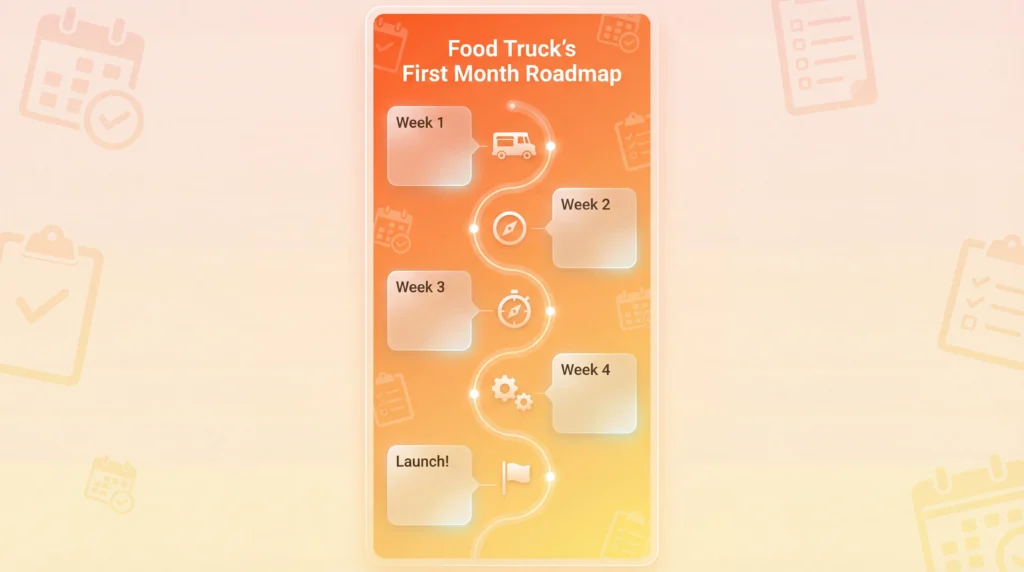
Your First Month Roadmap
Once you launch, here’s what your first month with a food truck should look like:
Week 1: Foundation – Focus on operations, not profits. Work out food prep timing, learn your equipment quirks, and build relationships with early customers.
Week 2: Optimization – Analyze what’s selling vs what’s not. Adjust prep quantities and refine your service flow.
Week 3: Expansion – Test a second location, begin booking private events, and start tracking key metrics.
Week 4: Systematization – Create standard operating procedures and build your schedule for month 2.
Frequently Asked Questions
How much does it cost to start a food truck?
The average food truck startup cost ranges from $50,000 to $200,000, with most owners investing between $70,000 and $130,000. Major costs include the truck ($30,000-$150,000), equipment ($10,000-$50,000), permits ($3,000-$15,000), and working capital ($5,000-$15,000). Costs vary significantly based on whether you buy new vs used, your location’s permit fees, and your menu complexity.
What permits do I need for a food truck?
At minimum, you’ll need: a business license, EIN, food service license, health department permit, mobile food facility permit, fire department permit, and seller’s permit. Requirements vary by state and city—some areas require 10+ separate permits. Contact your local health department for a complete checklist specific to your area.
Is a food truck business profitable?
Yes, food trucks can be highly profitable. According to industry data, the average food truck generates $250,000-$500,000 in annual revenue, with profit margins of 6-9%—often higher than traditional restaurants. However, profitability depends on factors like location strategy, food costs, and operating efficiency. Learn more in our guide on do food trucks really make money.
How long does it take to start a food truck?
The typical timeline from concept to launch is 6-12 months. Securing funding takes 1-3 months, obtaining permits takes 2-4 months, and purchasing/outfitting a truck takes 2-6 months. Some entrepreneurs manage faster timelines, but rushing often leads to expensive mistakes.
Can I start a food truck with no experience?
Absolutely! Many successful food truck owners started with zero restaurant experience. However, you’ll need to invest in learning: take food safety courses, work in a food truck or restaurant temporarily if possible, and thoroughly research the business side.
You’ve totally got this.
Starting a food truck is one of the most rewarding (and challenging) things you can do. You’ll have days when everything goes wrong—equipment breaks, customers complain, the weather ruins your plans. But you’ll also have days when someone tells you your food made their whole week better. Those moments make it all worth it.
Here’s what I want you to do next:
- Download our food truck startup checklist – Your complete task list from concept to launch
- Calculate your estimated costs – Use our food truck startup costs guide
- Research your local market – Spend a weekend visiting food trucks in your area
- Start your business plan – Even a rough draft helps clarify your thinking
- Join the community – Connect with other food truck owners on social media
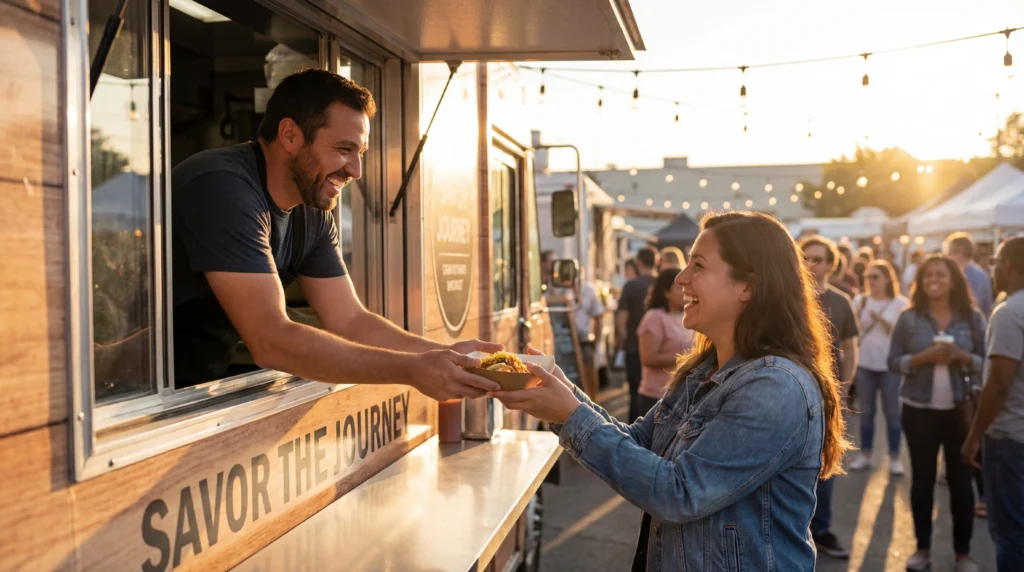
For food truck success stories and inspiration, check out our interviews with owners who’ve been where you are.
The food truck industry needs passionate people like you. I can’t wait to see what you create.
Welcome to the community.
— Jolene Matsumoto
About the Author
Jolene Matsumoto runs a Japanese-Hawaiian fusion truck in Portland, Oregon. She believes every food truck dream deserves a fighting chance. She cried in a parking lot over permits once—now she helps others avoid the same fate. When she’s not cooking, she’s mentoring new food truck owners and growing her community of 12,000+ Instagram followers.
Read more articles by Jolene Matsumoto→