Commercial food truck insurance is the part of this business nobody dreams about and everybody needs. You did not get into food to read policy declarations, but the day a customer slips at your window, a fryer fire spreads, or a festival asks for proof of a million dollars in coverage before they let you set up, the policy is the only thing standing between a bad afternoon and the end of your business. I have carried this coverage for years, and I am going to explain what you actually need, what it tends to cost, and the requirements that catch new owners off guard.
One honest warning before the numbers. Every figure here is a typical market range, not a quote. Premiums move with your state, your equipment, your cooking method, your driving record, and the carrier you choose. Two trucks parked side by side can pay very different rates. Use these ranges to plan and budget, then get a real quote from a carrier or broker before you count on any single number.
What commercial food truck insurance actually is
A food truck is several risky things bolted together: a commercial vehicle, a working kitchen with open flame, and a retail counter serving the public. Each of those creates a different kind of claim, so food truck insurance is rarely one policy. It is a stack of coverages, and the carrier-branded landing pages you find online almost never tell you which ones you truly need or what they cost. They want you to click quote. I want you to understand the stack first.
The good news is that you do not need every coverage on the menu. A new single-truck operator serving cold-prep food has very different needs from a festival-circuit BBQ rig with three employees and a propane smoker. Start by understanding the building blocks, then assemble the ones that match how you actually operate. The Insurance Information Institute keeps a non-carrier overview of business insurance basics that is worth reading precisely because it is not trying to sell you a policy.
The core coverages, explained
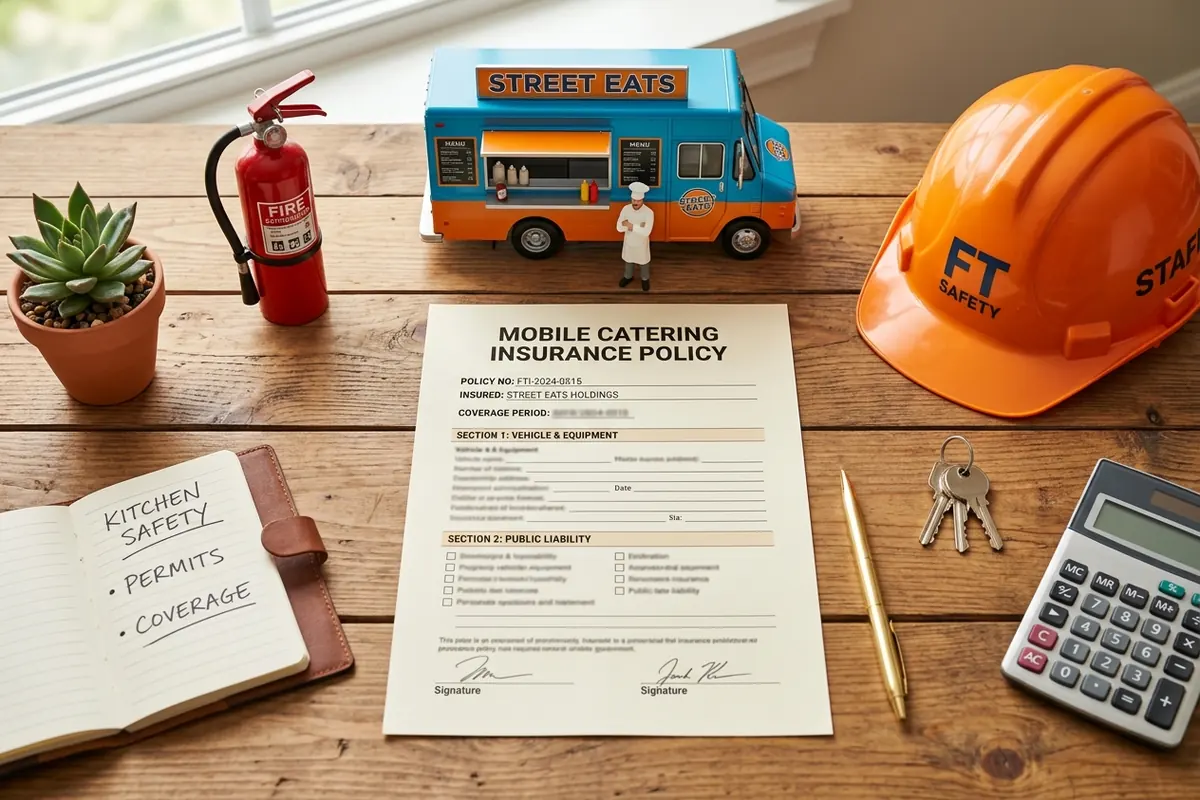
General liability is the foundation. It covers third-party bodily injury and property damage, the customer who trips on your cord or claims your food made them sick. This is the coverage festivals, commissaries, and cities ask to see, and it is the one you should never operate without. Product liability, which covers claims tied to the food itself, is often bundled into a general liability policy, so confirm it is included rather than assuming.
Commercial auto is the next pillar, and it is usually the single most expensive line. Your personal auto policy will not cover a vehicle used as a business, and it will deny a claim the moment it learns the truck is a rolling kitchen. Commercial auto covers the vehicle itself, plus permanently attached equipment, against collision, theft, and vandalism. If you drive the truck, you need it, full stop.
Property and equipment coverage protects the gear inside. A business owner’s policy, or BOP, bundles general liability with property coverage, while a separate inland marine or tools-and-equipment policy can cover movable gear. Then come the situational coverages: workers’ compensation, which most states require the moment you have employees; business interruption, which replaces lost income when a covered event shuts you down; and liquor liability, which you only need if you serve alcohol.
| Coverage | What it protects against | Who needs it |
|---|---|---|
| General liability | Customer injury, property damage, food claims | Every truck, non-negotiable |
| Commercial auto | The vehicle and attached equipment on the road | Anyone who drives the truck |
| Property / equipment | Damage or loss of kitchen gear | Trucks with valuable equipment |
| Workers’ compensation | Employee injury and lost wages | Required in most states with staff |
| Business interruption | Lost income during a covered shutdown | Anyone living on truck income |
| Liquor liability | Alcohol-related incidents | Only if you serve alcohol |
What commercial food truck insurance costs
Here is the question the carrier pages refuse to answer with a number, so I will. Most food truck operators pay somewhere between seventy and five hundred dollars a month all in, depending on which coverages they carry and how risky their setup is. A full package for a typical owner-operator commonly lands in the range of thirty-five hundred to fifty-five hundred dollars a year, while a festival-heavy operation with employees can run well past eight thousand. These are planning ranges, not promises.
Break it down by coverage and the picture gets clearer. General liability on its own is often the cheapest piece, sometimes only thirty to a hundred and fifty dollars a month. A business owner’s policy that adds property protection pushes higher. Commercial auto is usually the biggest single cost. Add employees and the required workers’ compensation, and your monthly number climbs into the hundreds. The table below shows the rough buckets operators report.
| Coverage type | Typical monthly | Typical annual |
|---|---|---|
| General liability only | $30 – $150 | $360 – $1,800 |
| Business owner’s policy (BOP) | $80 – $250 | $960 – $3,000 |
| Commercial auto | $150 – $400+ | $1,800 – $4,800+ |
| Full package with employees | $350 – $1,000+ | $4,200 – $12,000+ |
Specialty programs aimed at food vendors can anchor the low end. Some food-vendor liability programs start a basic plan in the low hundreds of dollars per year, which is a real option for a small, low-risk operation that mostly needs general and product liability. The catch is that a bare-bones liability plan does not cover your vehicle, your equipment, or your employees, so know what you are and are not buying before you celebrate a cheap rate.
What drives your premium up or down
Your rate is not random, and understanding the levers lets you control some of them. The value of your truck and equipment matters: a rig packed with fifteen thousand dollars of gear costs more to insure than a lightly equipped one. Your cooking method matters more than people expect. Deep fryers, smokers, and propane systems raise the fire risk and the premium, while a cold-prep or assembly menu keeps it lower.
Your driving record and where you park the truck overnight feed into the commercial auto cost. How often you work festivals and large events raises exposure, since crowds mean more chances for a claim. Claims history follows you the way it does on any policy. Payroll size sets your workers’ compensation cost. And serving alcohol adds liquor liability on top of everything. None of this is mysterious once you see it laid out.
This is also where your menu and build interact with your insurance bill in ways worth planning around. If your concept leans on a wall of deep fryers, you are buying more fire risk than a menu built around an air fryer or a flat-top, and the lighter cooking styles you can study over at the air-fryer snack recipes collection genuinely run a different risk profile. A propane-heavy BBQ rig, the kind that leans on the slow-smoke technique behind good homemade BBQ sauce recipes, sits at the other end and prices accordingly. The way you decide to cook is also a way you decide what you pay to insure it, and how you lay out that kitchen is its own decision worth thinking through on the food truck equipment and build hub.
The limits and certificates permits actually require
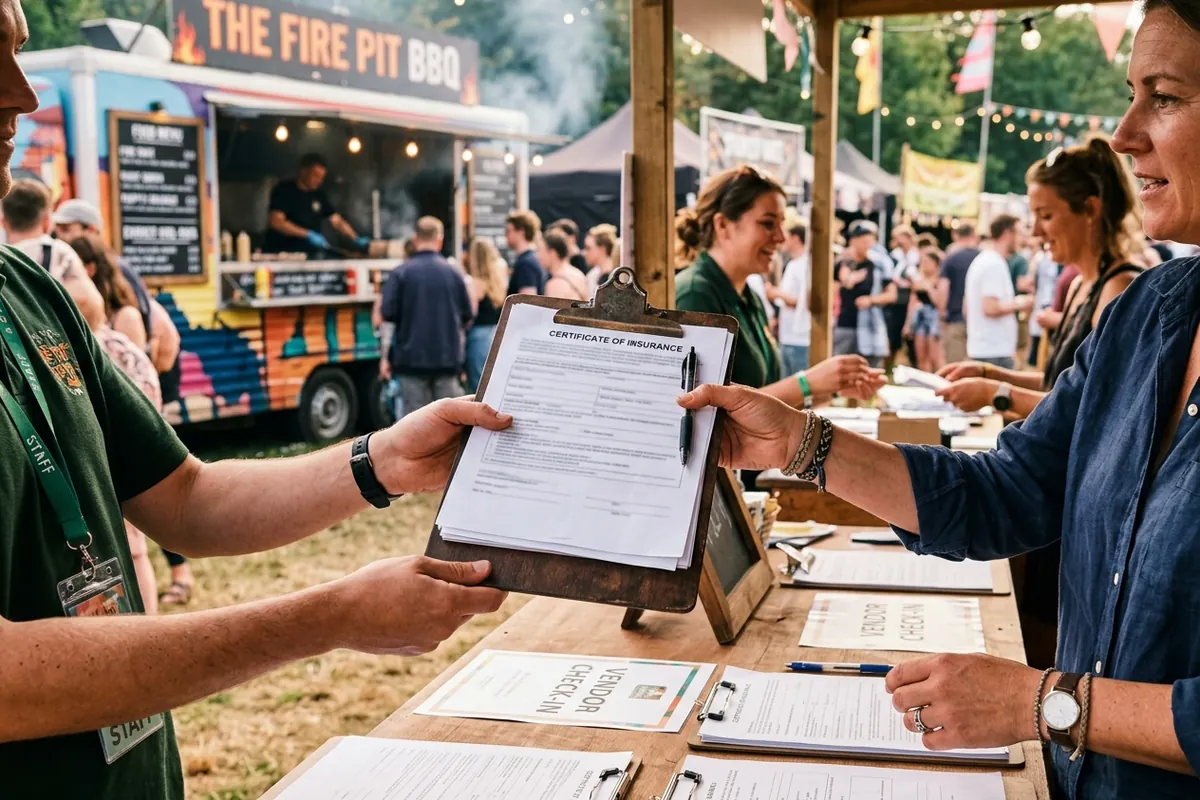
This is the section that saves you a wasted trip to a festival gate, and it is missing from nearly every insurance page online. Cities, commissaries, and event organizers do not just want you to have insurance, they want specific limits and proof. The common market standard is a general liability limit of one million dollars per occurrence and two million dollars aggregate. Many cities will not issue a mobile food vendor permit without proof of a million-dollar general liability policy.
Events add another wrinkle. Festivals, farmers markets, and commissary kitchens frequently require a certificate of insurance, a COI, and often ask to be named as an additional insured on it. That means your policy lists them as protected parties for the duration of the event. A good insurer turns a COI around quickly, sometimes the same day, but a slow one can cost you a booking, so know your carrier’s turnaround before you need it.
| Who asks | What they typically require |
|---|---|
| City permit office | Proof of general liability, often $1M, to issue a mobile vendor permit |
| Festival or event | COI, $1M/$2M limits, named as additional insured |
| Commissary kitchen | Proof of liability before signing the agreement |
| Catering client | COI for the event date and location |
Map these requirements before you buy, not after. If your city, your commissary, and the festivals you want all require a million-dollar limit and additional-insured certificates, then a bare liability plan that cannot produce those documents is not actually cheaper, it just fails you at the gate. Buy to the requirements you will face, and keep digital copies of your COI ready to send, because the request always comes with less notice than you would like. The legal and licensing side of all this lives alongside the rest of the groundwork on the starting and running a food truck hub.
The coverage gaps that quietly burn operators
The expensive lessons in this business come from the coverages people skip to save a few dollars a month. Food spoilage is the classic one. A power failure or a refrigeration breakdown can ruin a truck full of inventory overnight, and a basic liability policy does nothing for it. A spoilage endorsement is cheap relative to the loss it prevents, and for a truck carrying hundreds of dollars of perishable product, it pays for itself the first time a compressor quits in July.
Equipment breakdown is the next gap. Your property coverage typically pays when gear is damaged by a covered peril like fire or theft, but a flat-top or a refrigeration unit that simply fails from mechanical breakdown is often excluded unless you add the endorsement. Given that your equipment is your ability to earn, the breakdown coverage is worth pricing. Business interruption rounds out the trio: if a covered event shuts you down for weeks, it replaces the income you would have made, which is the difference between a setback and a closure for anyone who lives on truck revenue.
Two more traps catch people off guard. If you run a towed trailer rather than a self-driven truck, there can be a coverage gap for general liability while the trailer is parked and detached from the tow vehicle, which is exactly when you are serving customers, so confirm your policy covers the trailer in operation, not just on the road. And never let your commercial auto lapse on the theory that you barely drive: the moment your personal auto insurer learns the vehicle is a business kitchen, a claim gets denied, and the gap between personal and commercial auto is where uninsured disasters live.
| Gap | What goes wrong | Fix |
|---|---|---|
| Food spoilage | Power or fridge failure ruins inventory | Spoilage endorsement |
| Equipment breakdown | Gear fails mechanically, not from a peril | Equipment breakdown endorsement |
| Business interruption | A shutdown wipes out weeks of income | Business interruption coverage |
| Trailer-detached liability | No GL while a trailer is parked and serving | Confirm trailer is covered in operation |
How to buy it without overpaying
You have three main routes. A specialty food-vendor program is fast and cheap for basic liability, ideal if your needs are simple. A national commercial carrier can package a full stack, often as a BOP that bundles liability and property at a better rate than buying them separately. An independent broker shops multiple carriers for you, which is worth it once your setup gets complex enough that comparing policies yourself becomes a part-time job.
A few honest ways to lower the bill without gutting your protection: bundle coverages into a BOP instead of buying piecemeal, raise your deductible if you have a cash cushion to absorb a small claim, and adjust coverage seasonally if your truck genuinely hibernates in winter. What I would not do is shave your liability limit below what your permits and events require, or drop commercial auto to save money while still driving the truck. Those are the two places a cheap policy turns into no policy at the worst moment. The SBA’s overview of how to get business insurance is a solid, neutral starting point before you start collecting quotes.
When you do collect quotes, compare the actual coverage, not just the monthly price, because two policies at the same rate can protect you very differently. Read the declarations page for the liability limit, the deductibles, what is excluded, and whether your equipment and spoilage are covered or merely mentioned. A broker is worth their commission here, since they translate the fine print and flag the gap a cheaper policy leaves open. Review the whole package once a year as your truck, your menu, and your route change, because the coverage that fit a one-person prep truck rarely fits the same operator two seasons later running a fryer-heavy menu with two employees and a festival schedule.
Frequently Asked Questions
How much does commercial food truck insurance cost?
Most operators pay roughly seventy to five hundred dollars a month all in, with a full package for a typical owner-operator commonly landing around thirty-five hundred to fifty-five hundred dollars a year. General liability alone can be as little as thirty to a hundred and fifty dollars a month, while adding employees, commercial auto, and festival exposure pushes the total higher. These are market ranges, not quotes, so get a real quote based on your truck and operation.
What insurance does a food truck legally need?
It varies by state and city, but general liability is effectively required because cities, commissaries, and events demand proof of it before you can operate. Commercial auto is required to legally drive the truck, since a personal policy will not cover business use. Most states also require workers’ compensation once you have employees. Liquor liability is only needed if you serve alcohol. Check your local permit office for the exact mandated limits.
What liability limits do permits and events require?
The common standard is one million dollars per occurrence and two million dollars aggregate on general liability. Many cities require proof of a million-dollar policy to issue a mobile food vendor permit, and festivals and commissaries usually ask for a certificate of insurance at those limits with themselves named as an additional insured. Buy to those requirements so you are never turned away at a gate.
Why is commercial auto usually the most expensive coverage?
Because a food truck is a heavy commercial vehicle carrying valuable equipment and operating in busy areas, and your personal auto policy will not cover it. Commercial auto protects the vehicle and its permanently attached equipment against collision, theft, and vandalism, and it prices in your driving record, where you park overnight, and how far you travel. It is the coverage you cannot skip if you drive the truck, which is why it tends to be the largest single line.