A burger truck name does two jobs at once: it has to drag a hungry stranger across a parking lot, and it has to survive three legal checks before you ever pay for a wrap. Most burger truck names floating around generator sites are recycled (catchy, available-sounding, and quietly risky). The choice that matters isn’t which pun you like best; it’s whether the name clears a federal trademark search, a state business-entity search, and your city’s mobile-vendor permit. Put the word “burger” in it if you want “near me” searchers to find you fast, but keep it short enough to read at thirty feet on the side of a moving truck.
See also: our Mr Gees Burger Truck guide.
The short version: strong burger truck names are modern, literal, and easy to read on a sign. Build them with alliteration, a pun, or a plain description of what you sell: then run them through three independent gates before you commit. A federal trademark search shows whether a confusingly similar food mark already exists. A state business-entity search shows whether the legal name is taken where you operate. A DBA or trade-name filing, plus your city permit, decides what name legally appears on the truck. Clear all three and the name is yours to paint.
What makes a burger truck name work at the window
Three naming patterns do most of the heavy lifting, and none of them is clever for its own sake. The first is a plain description: say what you sell, because a passerby decides in about a second whether you have what they want. The second is alliteration: repeated sounds stick in memory. The third is wordplay built on your signature patty. According to Weblium’s naming guide, burger truck names “need to be modern, catchy, and appetizing,” which is a useful filter: if a candidate isn’t at least two of those three, drop it.
The team at Small Business Trends leans on the same generator tricks: alliteration and puns, the “Burger Bliss” or “Taco Temple” school of naming. That guide is written by senior staff writer Annie Pilon, 12 years on the team, so the patterns come from a long paper trail of small-business naming, not a one-off brainstorm. For a burger truck specifically, a catchy name answers reader questions like “what’s a good name for a burger food truck” or “what are some catchy burger names” the same way: pick one pattern and commit, rather than cramming three into one sign.
Real burger-truck name examples and the recycled-name trap
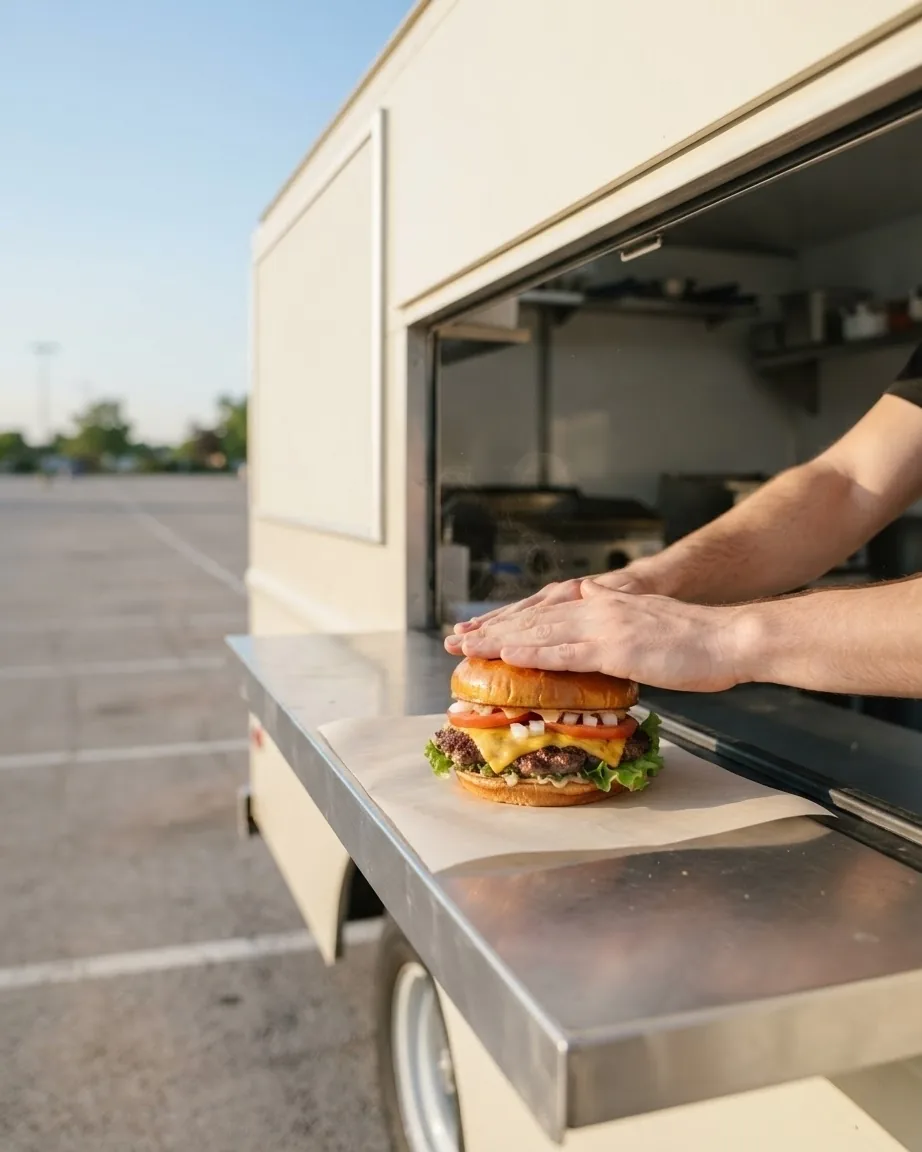
Here’s the catch nobody mentions when they hand you a list of 200 ideas: the best-known examples are the ones most likely to be taken. A handful of burger-truck names turn up on generator after generator:
- The Patty Wagon: the most-recycled pun in the category
- Burger Bliss, classic alliteration, copied everywhere
- Burger Brigade, another repeat offender on idea lists
Because these circulate so widely, a confusingly similar food mark may already be registered to a real burger business, which raises your conflict risk before you’ve sold a single patty. Treat a name you found on a list as a starting point, not a decision. NameFatso’s burger-name notes push toward names that are short and legible on signage for the same reason: a distinctive, readable name is easier to own and easier to defend than a crowded pun. “Funny names for burger shops” are fine, as long as the joke is yours and not the fifth copy of someone else’s.
Should “burger” be in the name? Discovery versus the wrap
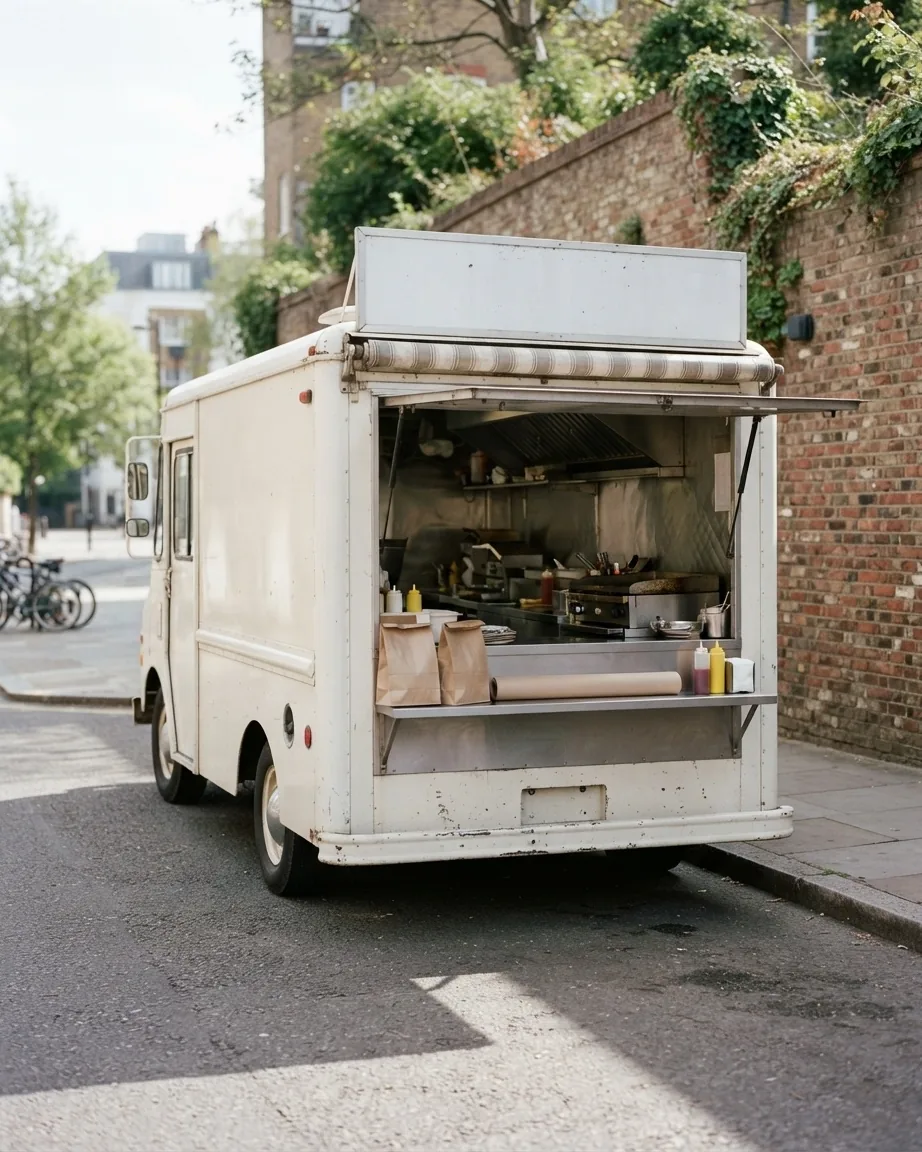
This is a real tradeoff, and it splits along two lines. Putting “burger” in the name helps discovery: when someone searches “burger near me,” a literal name is a plain signal, and guidance from eTakeawayMax ties straightforward, searchable names directly to findability. Elementor’s naming advice makes the same descriptive case: a name that states the product is the low-risk default for a food truck.
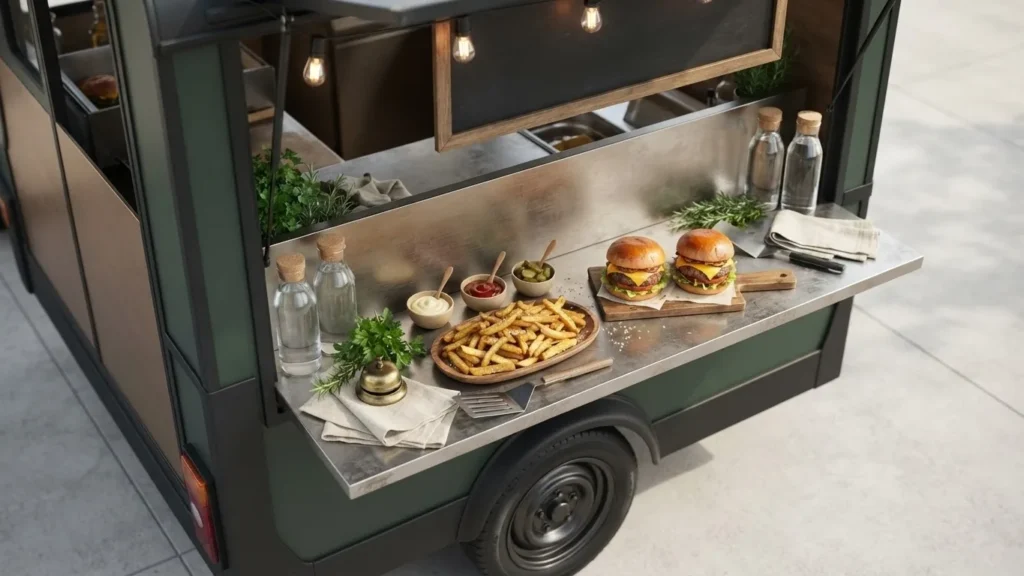
The cost shows up on the wrap. A long or abstract name eats vinyl, crowds your logo, and reads poorly at a distance: the exact moment you need it to land, when a truck or a hungry walker is moving. So the working rule for burger truck names: keep it literal enough to be found and short enough to paint large. For example, a two-word name with “burger” in it clears both bars; a six-word pun clears neither.
Trademark, entity, and DBA: 3 gates a name must clear
“Available” is not one answer: it’s three, and they can disagree. A name can be free as a DBA, taken as a state entity, and blocked federally, all at the same time. The mechanism to understand is likelihood of confusion: the United States Patent and Trademark Office can refuse a trademark when it’s close enough to an existing mark for related goods that customers would be confused (even if the spelling differs).
Burgers and restaurant service are related goods, so a near-match to another burger brand is exactly the collision that gets refused. The classic exception, where identical marks coexist for unrelated products, doesn’t rescue you: two burger businesses are not Dove soap and Dove ice cream.
The U.S. Small Business Administration lays out the separate ways to register a name, and the point is that they protect different things. The table below lines up what each check actually gives you, so you can see why one “available” answer can contradict another:
| Check | Where it applies | Legal protection | Two burger businesses can share it? |
|---|---|---|---|
| DBA / trade name | The state or county you file in | None on its own | Yes, more than one business can hold it in a state |
| Business-entity name | Your state only | Usually exclusive inside that state | Usually no, a matching entity name is typically blocked |
| Federal trademark | Nationwide | Strongest, can block confusingly similar food marks | No for related goods like burgers |
Read it this way: a free DBA tells you almost nothing about trademark risk, and an open entity name in your state tells you nothing about a national burger brand that could challenge you. All 3 gates have to agree before a name is genuinely clear.
How to choose the best burger truck names and get them on the permit
Run the checks in order, cheapest-to-fix first, so you don’t fall for a name before you know it’s clear:
- Search the USPTO trademark database for similar food and restaurant marks. A confusingly similar one is a hard stop.
- Search your state Secretary of State business-entity database to see whether the legal name is already registered where you operate.
- Confirm the DBA/trade-name rule and the name requirement on your city’s mobile-food-vendor permit.
That last step hides a disagreement worth knowing. Cities don’t handle the truck name the same way. The City of West Branch, Iowa permit asks for the business name as registered with the state. The City of Sparta, Wisconsin permit records a separate trade or food-truck name alongside the legal one. Both are valid; they’re different jurisdictions, not a contradiction. The stance that keeps you out of trouble: don’t generalize one city’s form to the next, and confirm the binding rule with your own city and county before you print anything, because the local office is the one that enforces it.
For a first-time operator, the safe sequence is boring on purpose: clear the name nationally, clear it in your state, then match it to how your permit wants it recorded. A name you love that fails gate one costs you a wrap and a reprint; a name that clears all three is paint you only buy once.
See also: our Tasty Halal food truck guide.