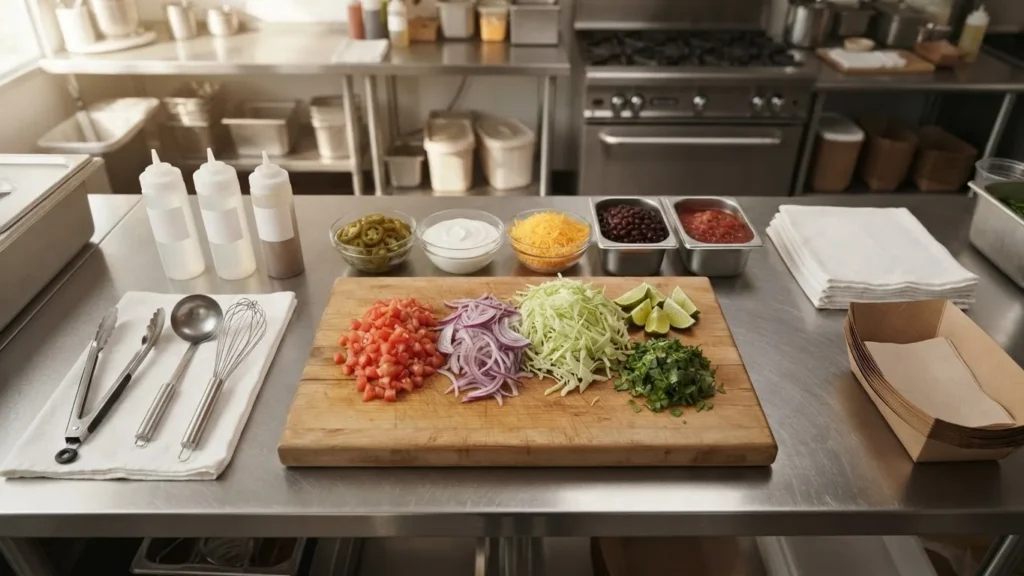
You do not automatically need a food truck commissary kitchen: whether one is required depends on your state, your menu, and how much equipment your truck carries. Utah bars local health departments from forcing a commissary on qualifying tier-one trucks. The FDA treats it case by case, tied to the menu and on-board equipment. Texas, by contrast, has been reported to require one for every truck. The binding call is never national: your own city and county health department sets it, so confirm with them before you sign a kitchen agreement or buy a rig.
A food truck commissary kitchen is a licensed commercial space your truck uses as a home base: you prep, cook, store cold food, and clean there, then sell from the truck. It has to be a permitted food establishment itself, carrying fixtures a truck can’t, like a 3-compartment warewashing sink and a mop sink. Shared access usually runs $200 to $800 a month. If you run off an existing restaurant, a written, health-department-approved agreement has to be on file before your truck permit is issued.
What a Commissary Costs and How Long Your Permits Last
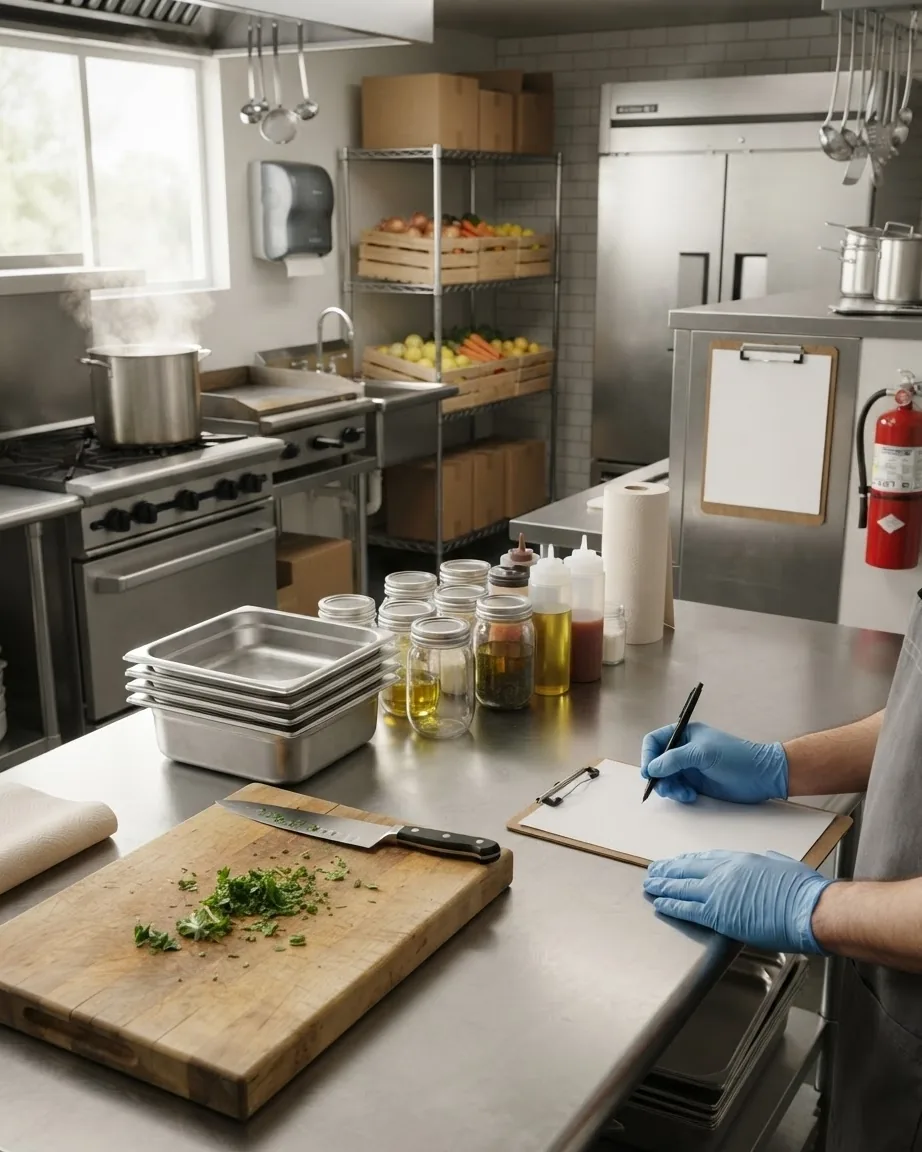
The table lines up the hard numbers different authorities attach to running off a commissary, so you can tell a monthly cost from a one-time deadline.
| What it measures | The figure | Who states it |
|---|---|---|
| Shared-kitchen access | $200, $800 per month | Startpermit |
| Mobile-vendor permit validity | 3 years from the exam | Tooele County, UT |
| Food-handler certificate window | 30 days after the course | Tooele County, UT |
| Advance prep you must disclose | prepared over 12 hours ahead | Tooele County, UT |
See also: our food truck size guide.
When the Law Actually Makes You Have One
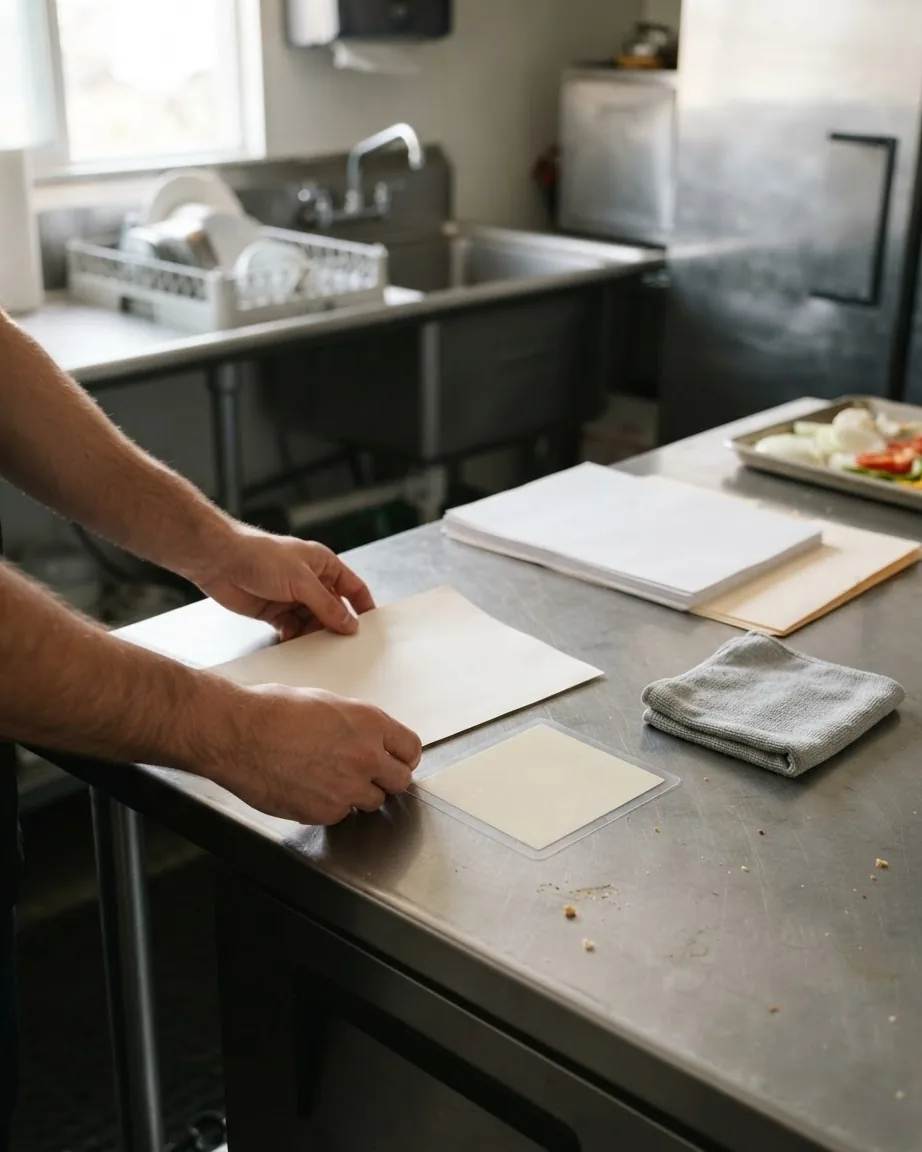
There is no national mandate. The FDA Food Code matrix leaves the call to the local authority, based on your menu, operation type, and on-board equipment. Where a commissary is required, the signed agreement is a permit precondition: no agreement, no truck permit. Where it is not, a self-contained unit may clear inspection on its own.
What a Food Truck Commissary Kitchen Actually Covers
Day to day, the commissary is where off-truck work happens:
- Bulk prep and batching
- Cooking that won’t fit the service line
- Cold and dry storage
- End-of-shift cleanup and water and waste service
How often you go back is not settled nationally. Harrison County, Indiana tells operators that “Mobile units must return to the commissary daily for supplies, maintenance and cleanup”. Other counties, like Tooele in Utah, leave the frequency to the health department’s approval instead of fixing a daily rule, so don’t assume your schedule until you ask.
How the Requirement Changes From State to State
Texas
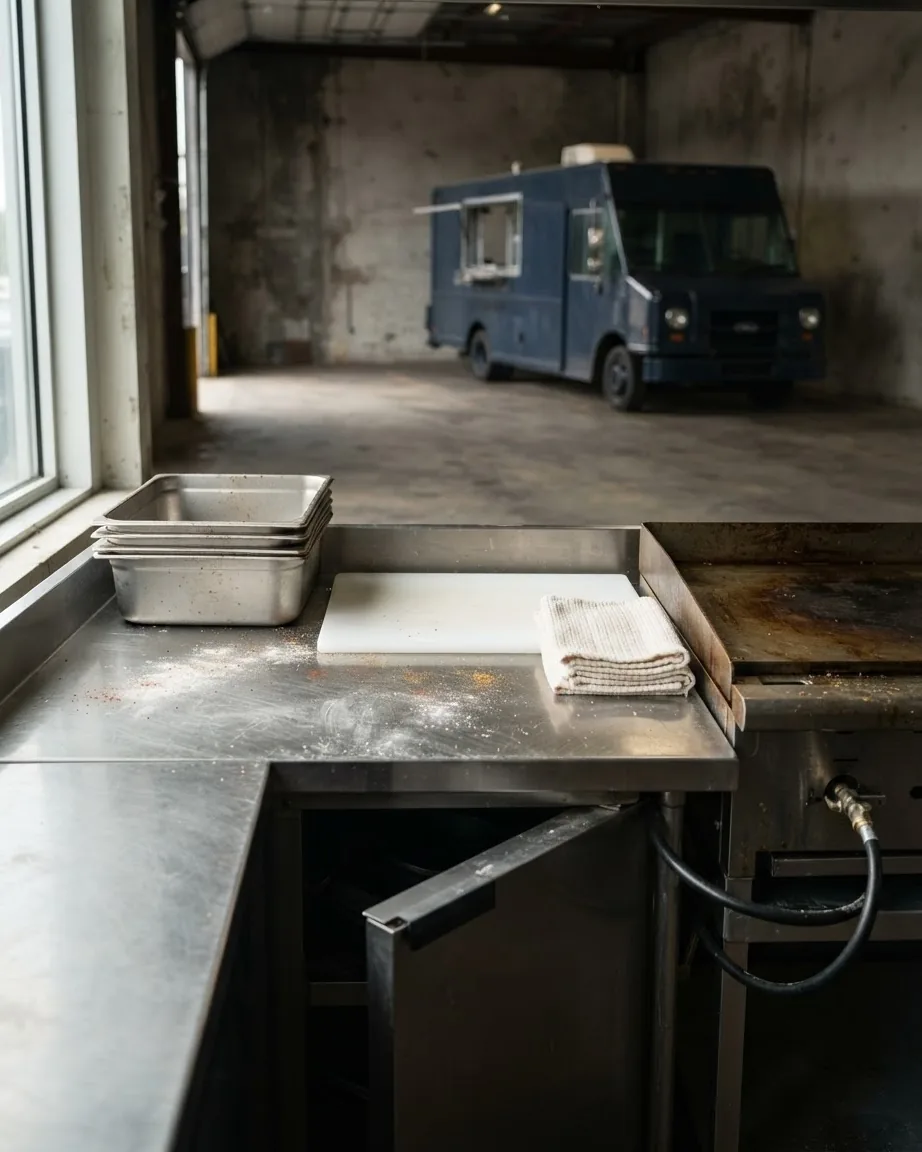
Texas has sat at the strict end: KXXV News reported that the state health department requires every truck to work with a commissary, usually an outside restaurant renting out its prep space.
Utah
Utah went the other way. State law stops a local health department from requiring a commissary once a truck is designated tier-one by that authority. For example, a taco truck doing all its cooking and holding on board can qualify and skip the commissary entirely.
New York
In New York, county health departments applying the state sanitary code generally push food prep off the truck and into a commissary for anything the unit can’t safely handle on board.
Using a Restaurant as Your Commissary

Renting prep time from an existing restaurant is a common and legal route. What trips people up is the order of paperwork: per The Restaurant Warehouse, you need a written shared-kitchen agreement, signed by the restaurant owner and approved by your health department, on file before your truck permit is issued. Handle it backward and your permit stalls.
What a Commissary Must Contain
A commissary is not just any kitchen: it has to be a permitted food establishment, and inspectors expect a specific set of fixtures. At a minimum the space needs:
- A handwashing sink
- A 3-compartment warewashing sink
- A mop sink
- A dedicated food-prep area
- Cold and dry food storage
- Proper employee restrooms
The Permit Risk That Can Shut You Down Overnight
Here’s the failure mode that catches new operators: your truck’s permit is chained to the commissary’s permit. Tooele County, Utah states that if the host kitchen’s food service permit is pulled, “all associated food truck permits are also suspended immediately”.
For example, if your host restaurant fails an inspection and loses its permit on a Friday, you can be off the road that same day through no fault of your own. Operating with no valid commissary at all carries its own penalties: The Food Corridor warns it can mean fines and a forced shut-down. Two moves protect you: confirm the host’s permit is current before you commit, and line up a backup commissary before launch.
Commissary vs. Servicing Area, Not the Same Thing
One more distinction saves money: a commissary and a servicing area are not interchangeable. The Missouri Department of Health & Senior Services notes that “A servicing area is not always a food establishment”, while a commissary always is: a fully inspected, permitted kitchen. For example, a self-contained unit that only needs fresh water, waste dumping, and restocking may be allowed to use an approved servicing area and skip the full commissary. Knowing which one your operation needs keeps you from paying for a licensed kitchen you don’t use, or under-providing and failing inspection.
See also: our Japanese food truck guide.
Frequently Asked Questions
How to find a commissary for a food truck?
Start with existing restaurants, shared commercial kitchens, and churches or schools with licensed kitchens that rent off-hours. Before you commit, check that the host’s food service permit is in good standing so your truck permit is not suspended, and get the shared-kitchen agreement approved by your health department first.
Can you sell food from a commissary kitchen?
The commissary is your licensed prep and storage base, not your sales window: you cook, portion, and clean there, then sell from the truck. For example, if you batch sauces or marinate meat more than 12 hours before service, many health departments require you to disclose those items on your plan review. Can a food truck act as its own commissary? Can a food truck be its own commissary? The supplied authorities treat the commissary as the permitted food-establishment base used by the mobile unit; ask your local health department how that distinction applies to a self-contained truck.