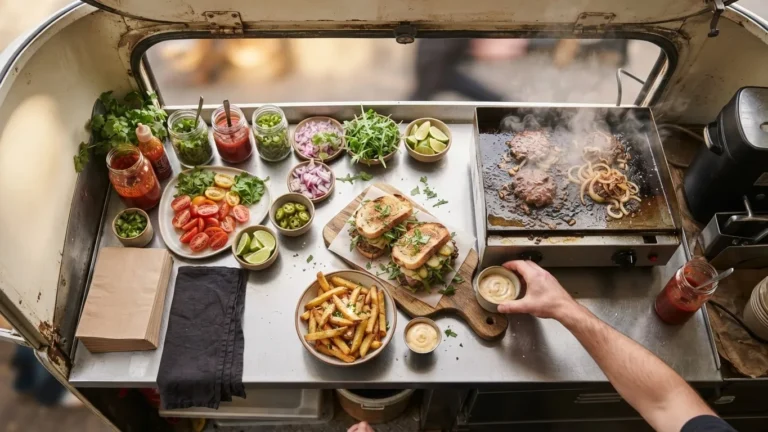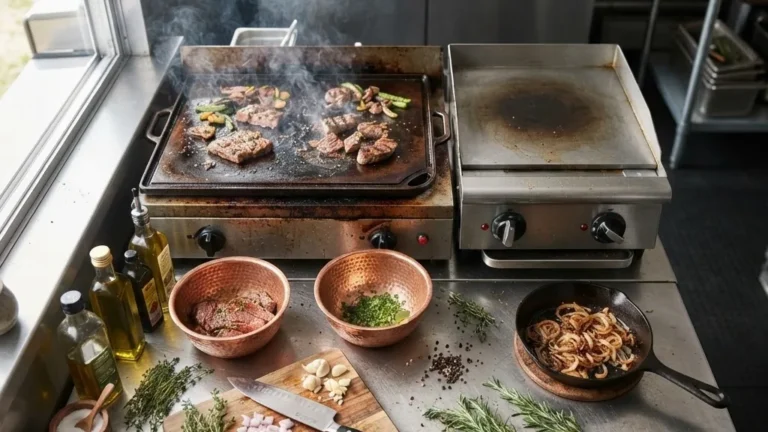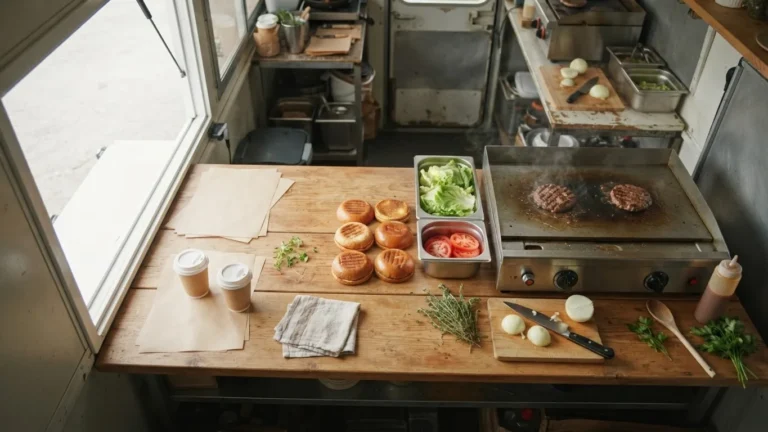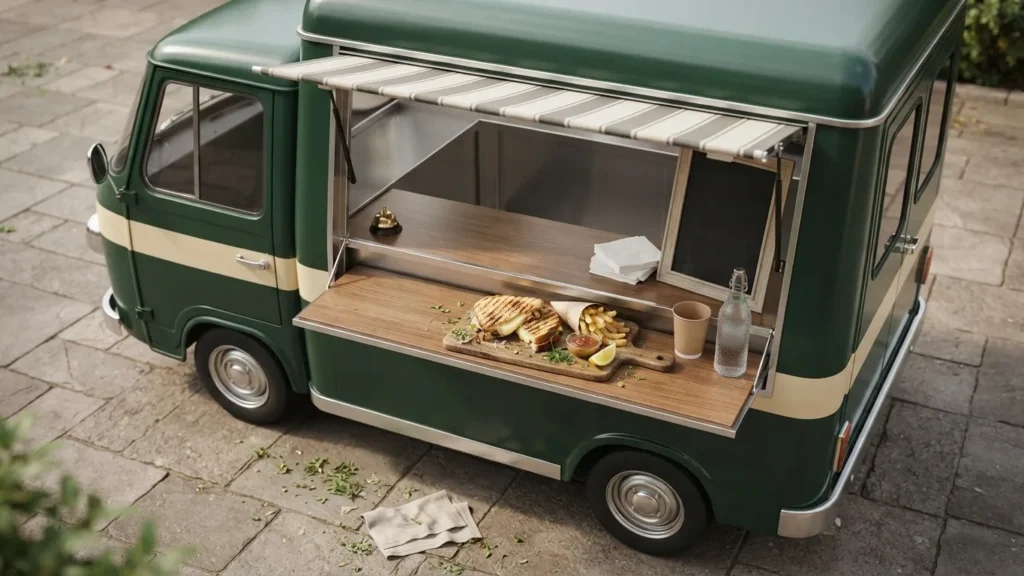
Most working food trucks land at 14 to 24 feet long, 7 to 8 feet wide, and 8 to 10 feet tall, and when a kitchen is bolted in they weigh 12,000 to 16,000 lb: roughly 10,000 lb under the federal CDL line. So picking a food truck size is really three decisions at once: the length your menu needs, the width that stays street-legal, and the loaded weight that keeps you on a standard driver’s license.
If you are starting out, go small: 10 to 14 feet. Coffee fits a cart or a compact truck. A full cooking line wants 14 to 18 feet. BBQ, with smokers and prep, pushes you toward a box truck or trailer. A standard build stays under 102 inches wide and well below 26,001 lb, which is the threshold that triggers a commercial driver’s license. Trailers stretch the length ceiling far past trucks: up to 53 feet in the widest ranges.
What Counts as an Average Food Truck Size
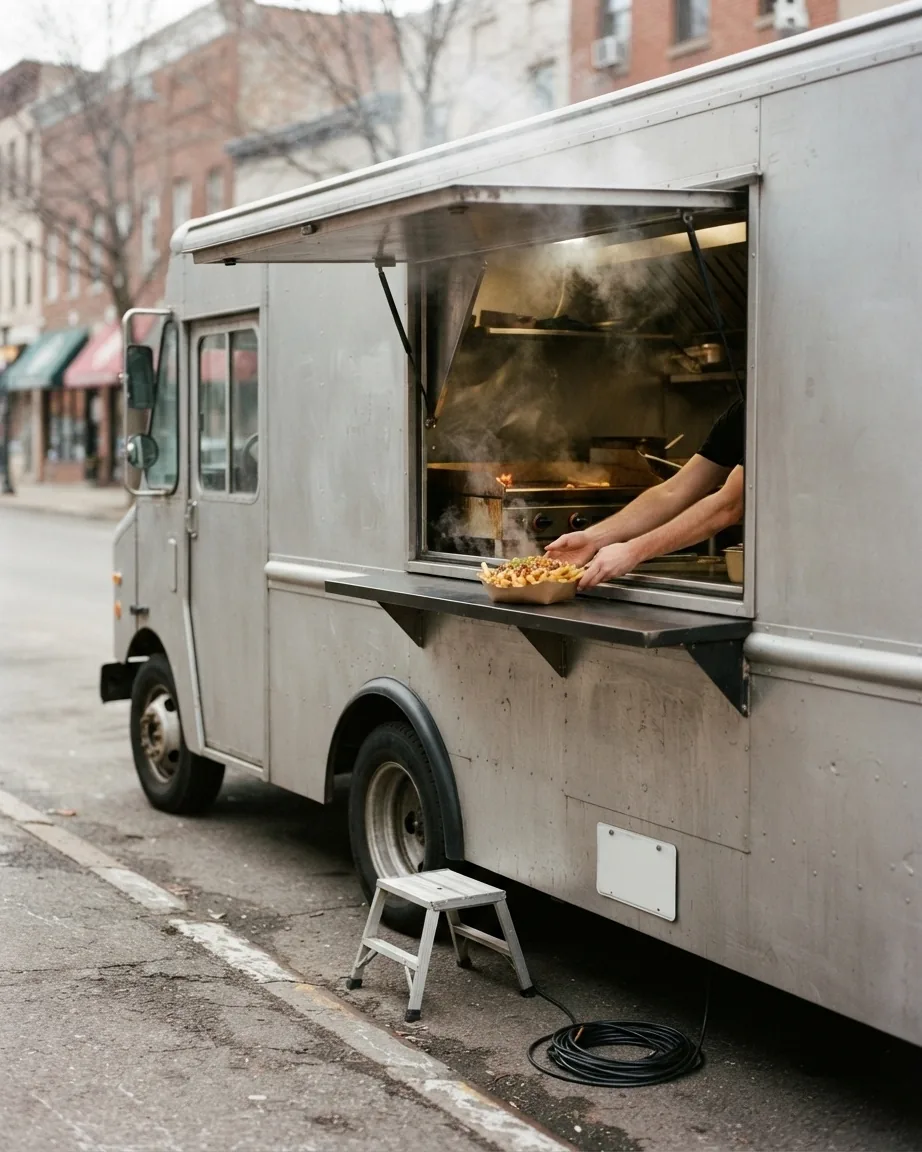
Shanghai Mobile Kitchen Solutions, a food truck manufacturer, puts typical rigs at 16 to 18 feet long and 8 to 10 feet high, with an average truck width around 7 to 8 feet. In New York City, where there is no minimum or maximum food truck size on the books, the manufacturer notes most trucks run 14 to 24 feet long. A classic full-kitchen truck, by its count, sits at 14 to 18 feet with room for a small crew.
WebstaurantStore, a foodservice supplier, frames it differently: the most common builds are discrete sizes (14 feet, 16 feet, and 22 feet) rather than a smooth range. These aren’t contradictions so much as different measures: an observed average, one city’s spread, and the lengths builders actually sell. See also: our food truck mobile app guide.
Reading the Layout Inside the Length
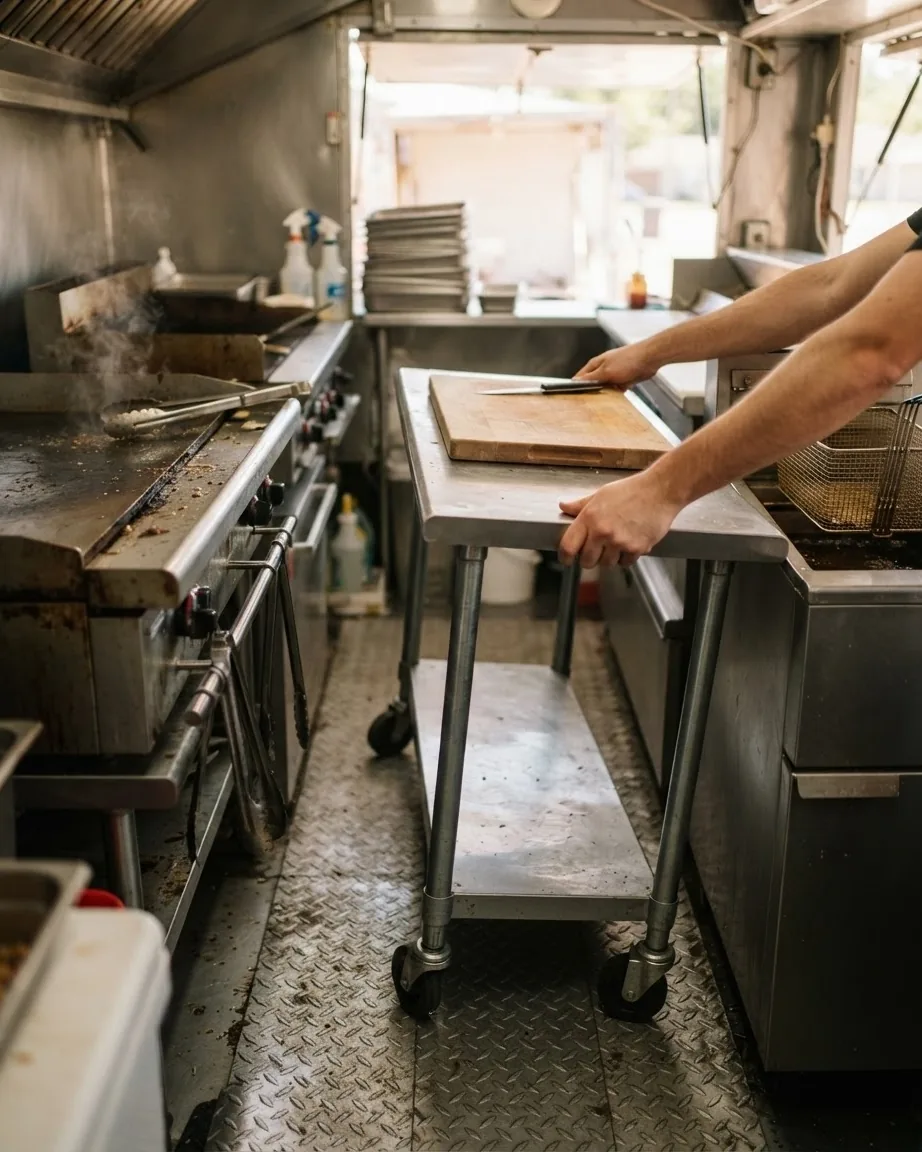
Length is floor space, and floor space is stations. A 14-foot build gives you a tight line: one cook, maybe two, a single hot station and a window. Move up to the 22-foot end and you can run a grill, a fryer, a prep table and a second body without anyone knocking elbows. Interior width is the hidden limit: most trucks give you a 7-foot kitchen to work in, per the mobile-kitchen builder Delivery Concepts, which barely leaves an aisle once equipment lines both walls.
The practical read: don’t buy length you can’t staff, and don’t buy a line wider than your busiest rush needs. A short menu runs faster at a window on 14 feet than a sprawling one does on 22.
Where Your Dry and Cold Storage Actually Fits
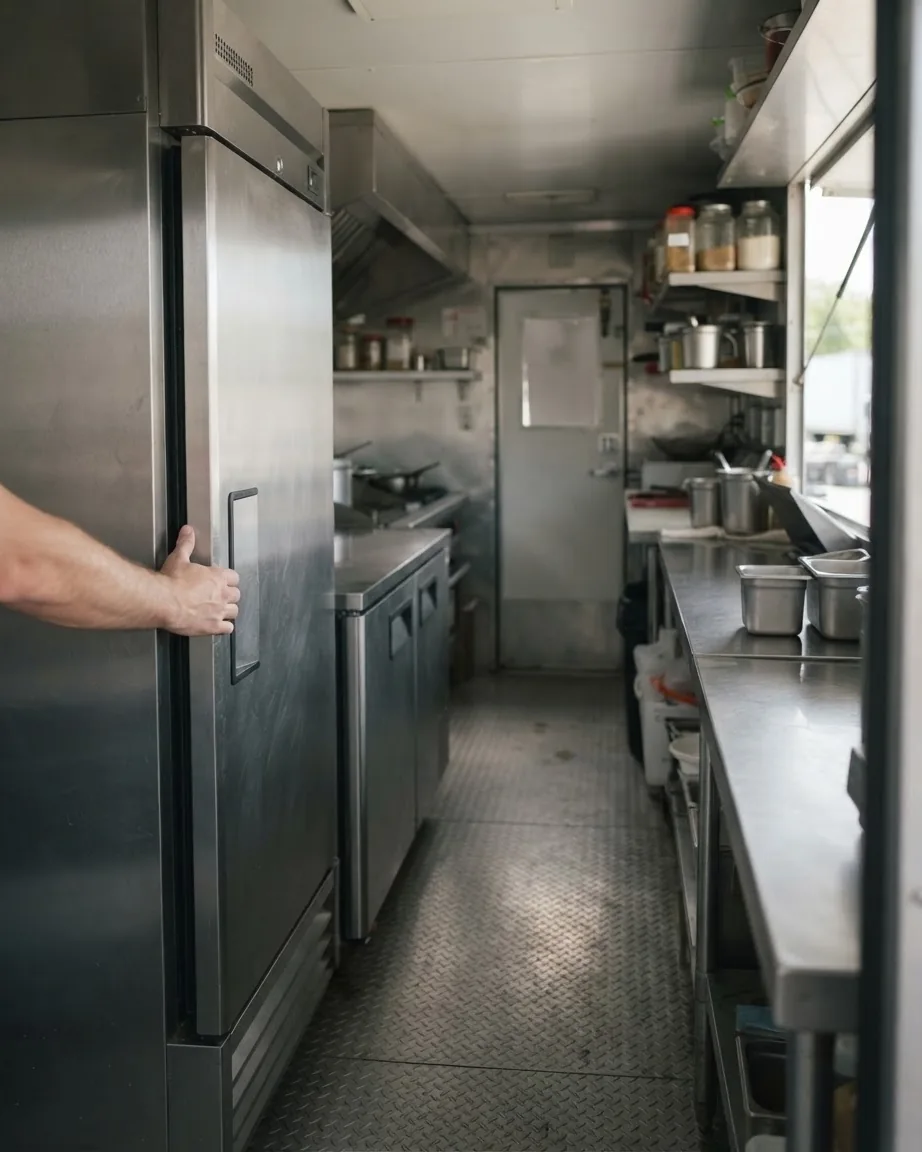
Storage competes with cooking for the same linear feet. On a compact 10-to-14-foot startup truck, there is almost no slack: you prep off-site and restock mid-shift. The jump from a food truck’s 7-foot kitchen to a trailer’s 8.5-foot kitchen, noted by Delivery Concepts, is where a reach-in or a second freezer finally fits against a wall without choking the aisle.
Food Truck Dimensions by the Numbers
The sources use different yardsticks, so lining them up side by side keeps you from treating one source’s “average” as another’s “maximum.” The table below shows what each authority reports for length, width and weight, and on what basis.
| Source | What it measures | Figure |
|---|---|---|
| Shanghai Mobile Kitchen Solutions | Typical length / most trucks (NYC) | 16-18 ft; majority 14-24 ft |
| Shanghai Mobile Kitchen Solutions | Overall width / height | 7-8 ft wide; 8-10 ft tall |
| WebstaurantStore | Most common build sizes | 14 ft, 16 ft, 22 ft |
| Delivery Concepts | Full truck length range | 10 ft to 26 ft |
| Delivery Concepts | Kitchen interior width | Truck 7 ft; trailer 7 or 8.5 ft |
Startup, mid-size and large length bands
Mapping the ranges to a decision:
- Startup / compact (10-14 ft): one cook, a short menu, minimal storage. The manufacturer calls 10 to 14 feet the best small food truck for a startup.
- Classic full kitchen (14-18 ft): a small team cooking a varied menu, the workhorse size.
- Large build (up to 22-26 ft): multiple stations, high volume, heavier equipment loads.
Truck versus trailer size envelopes
Where the two formats split hard is length. Delivery Concepts puts trucks at 10 to 26 feet, while trailers span a far wider 8 to 53 feet. The manufacturer agrees trailers stretch further, noting they “can measure up to 30 feet long” in its sizing guide. A trailer also buys interior width: 8.5 feet in the kitchen against a truck’s 7 feet. The trade is that you tow it and park it separately.
The CDL weight question, resolved
This is where owners panic unnecessarily. A commercial driver’s license is tied to weight, and under the Federal Motor Carrier Safety Administration a single or combination vehicle with a gross vehicle weight rating of 26,001 lb or more is a commercial motor vehicle. The concession manufacturer M&R Specialty Trailers and Trucks phrases the trigger as a gross combined weight rating of 26,001 lb and adds, from its own build experience, that “a typical food truck will weigh 12,000-16,000 pounds” on its CDL explainer.
Do the margin: a fully equipped truck at 12,000 to 16,000 lb sits roughly 10,000 lb or more under the 26,001 lb line. Even a large 22-foot food trailer runs about 8,000 lb, well below the 10,000 lb trailer threshold. For most vendors a standard license is enough.
Two exceptions flip that. A CDL is required regardless of size to transport 16 or more people including the driver: relevant to bus conversions. The two sources label the trigger differently (GCWR versus GVWR), so if you are near the edge, confirm your rating with your state’s DMV before you commit.
The federal width ceiling nobody mentions
There is a reason trucks cluster at 7 to 8 feet wide and don’t go wider. The Federal Highway Administration sets the maximum width states must allow on the National Network at 102 inches (“its approximate metric equivalent, 2.6 meters”) per its size-and-weight FAQ, with Hawaii allowed 108 inches. That ceiling applies to commercial motor vehicles. A standard build at 8 feet is within about half a foot of the limit, which is why you rarely see one wider. Fire and health codes that govern your build, though, are set and enforced by your own city and county.
What Size Costs You at the Window
Size and price move together, but the lever isn’t length alone: it’s the equipment load the length lets you carry. A 10-to-14-foot startup truck costs less to buy, fuel and insure, and it parks almost anywhere. A 22-foot build carries more cooking capacity and therefore more revenue per rush, at a higher buy-in and heavier weight. Because the sources here don’t carry dollar figures, treat the size-to-price link as directional: more feet means more equipment, more weight, and a bigger bill. For catering and event pricing math, see our hire a food truck guide.
Matching the Interior to Your Concept
The cleanest way to pick a size is to start from what you cook. Equipment footprint, not vanity, sets the floor plan:
- Coffee: a food cart or compact truck works; the manufacturer says so directly, since an espresso setup needs little floor.
- Full-kitchen cooking: 14 to 18 feet gives a small team room for a varied menu.
- BBQ: smokers, grills and prep demand a larger truck, a food trailer, or a box truck, per the manufacturer.
For example, if your concept is wrapped novelties versus a hot cooking line, the former fits a compact rig while the latter needs the classic 14-to-18-foot box. Browse the wider equipment library before you commit to a build.
Portability, Permits and the Size That Keeps Your License
Size changes two things beyond cooking: where you can legally drive, and who can drive it. Stay under 26,001 lb loaded and under 16 passengers, and a standard license covers you. Keep overall width at or under 102 inches and you are road-legal on the National Network. A compact truck is easier to park and maneuver at tight event sites; a 53-foot trailer gives you the most kitchen but needs a tow vehicle and a staging plan. Your binding local rules (vending zones, fire clearances, health inspections) come from your own city and county, not from any size chart.
Picking Your Food Truck Size: A Quick Decision Path
Run your situation through these questions to land on a band:
- Startup with one short menu? Go 10-14 ft.
- Full cooking line, small crew? Go 14-18 ft.
- High volume or BBQ smokers? Go large: 22 ft truck, box truck, or a trailer up to 53 ft.
- Near 26,001 lb loaded, or carrying 16+ people? Confirm CDL need with your DMV first.
- Any build: verify overall width stays at or under 102 inches.
How Far a Typical Food Truck Sits Below the CDL Weight Line
The Federal Motor Carrier Safety Administration sets the commercial motor vehicle weight threshold at 26,001 lb, and M&R Specialty Trailers and Trucks reports a typical food truck weighs 12,000 to 16,000 lb fully equipped. Subtracting one from the other, a 12,000 lb truck sits 14,001 lb under the line and a 16,000 lb truck still sits 10,001 lb under it, so even the heavier end of the typical range clears the threshold by more than ten thousand pounds.
Frequently Asked Questions
What is the average food truck size?
A typical rig runs 16 to 18 feet long, 8 to 10 feet tall, and about 7 to 8 feet wide, per one manufacturer’s figures. Suppliers point to three common builds instead: 14 feet, 16 feet, and 22 feet. The 14-to-18-foot full-kitchen box is the everyday workhorse.
What size generator for food truck?
The sources here don’t specify a generator rating. Size it to your actual equipment load: total the wattage of every appliance running at once, add headroom, and confirm with the manufacturer’s spec on each unit. A heavier build in the 22-foot class draws more than a compact 10-to-14-foot startup truck, so the generator scales with the kitchen, not the length alone.
How much space does a food truck need?
Plan for the truck plus clearance to open the service window and position a generator. The rig itself is 14 to 24 feet long and 7 to 8 feet wide at the common end. A towed trailer needs extra: trailers stretch to 53 feet, and you stage the tow vehicle separately. Add working room around the window for a line.
What size food truck do I need?
Start from the menu. Coffee fits a cart or compact truck; a varied cooked menu wants 14 to 18 feet; BBQ with smokers needs a larger truck, box truck, or trailer. First-timers are steered to 10 to 14 feet. Keep loaded weight under 26,001 lb to avoid a CDL.