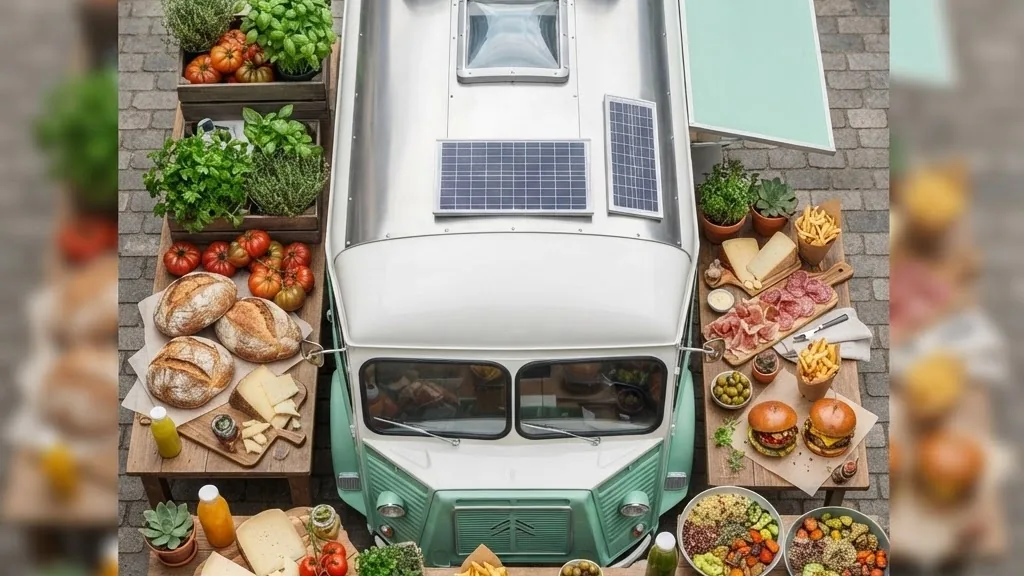
When people search for a food truck template, they usually think they need one file. They do not. What runs a truck is a whole stack of documents: a business plan, a startup budget, a menu board, a recipe-costing sheet, prep and order sheets, temperature logs, a permit checklist, and a handful of marketing graphics. Each one does a different job, and the trucks that make it are the ones where every document in that stack is filled in with real numbers instead of left blank in a folder.
I built my first truck in Austin on a pile of half-finished spreadsheets, and it cost me a full season of guesswork before I sat down and treated the paperwork like part of the equipment. The plan template told me what I was actually building. The costing sheet told me what to charge. The prep sheet stopped me from throwing away chicken every Sunday night. None of it was glamorous, and in my experience it is exactly the part new operators skip because it feels like homework instead of cooking.
Every template source, price, and fill-in number below is one I have used or checked against my own books this season, not a link I copied off another blog.
Quick answer: The food truck template stack you actually need is a business plan (grab the free SBA template – traditional or one-page lean), a startup budget spreadsheet, a 3-year financial projection with a break-even tab, a recipe-costing sheet so you price every plate at a 30-35% food cost, a menu-board design (free on Canva), daily prep and order sheets, temperature and cleaning logs your health inspector will ask for, and a permit checklist for your city. Download real ones from SBA, SCORE, Sage, and Canva, then customize them with your own numbers. A template you never fill in is just a pretty file.
The document stack that keeps a truck alive
Think of your templates in three buckets: the plan, the money, and the daily grind. The plan bucket is your business plan and your menu concept. The money bucket is your startup budget, your financial projection, your break-even math, and your recipe costing. The daily-grind bucket is your prep sheet, your order sheet, your temperature and cleaning logs, and your permit checklist. Most guides hand you one download from the first bucket and call it done, and the trap I see is operators who have a beautiful business plan and no prep sheet, so they nail the pitch to the bank and then over-prep twenty pounds of protein every weekend.
Here is the honest ranking from someone who has run the line. The two templates that decide whether you make money are the recipe-costing sheet and the daily prep sheet, because they control food cost, which runs 28-35% of revenue and can creep to 40% if you are sloppy. The business plan matters most before you open and when you borrow money. The logs matter most the day the health inspector climbs into your truck. Build all of them, but do not fool yourself that the plan document is the hard part – the daily sheets are where the money leaks. If you want the concept-level version of this, I keep a running breakdown in my food truck business plan guide.

The business plan template worth downloading
Start with the plan, and start with a free one from a real source instead of a $40 PDF off a marketplace. The U.S. Small Business Administration publishes two business plan templates side by side: a traditional format and a one-page lean startup format. The traditional version walks nine sections – executive summary, company description, market analysis, organization and management, service or product line, marketing and sales, funding request, financial projections, and an appendix. The SBA even posts a completed example, the Wooden Grain Toy Company, as a small .doc file around 247 KB you can open and copy the structure from.
For a food truck, I usually steer people to the lean one-pager first. A truck is a fast, changing business, and a one-page canvas you revisit every month beats a thirty-page document you write once and never open. Having spent years watching operators bury a good idea under a plan nobody reads, I would rather see a lean canvas taped to the commissary wall, and according to SBA, the lean format exists precisely for businesses that need to move fast and adjust often, which is every food truck I have ever run.
Whichever you pick, a food-truck plan template should cover eight blocks: your executive summary, your concept, your menu with costs, your target market, your locations and route, your branding, your management, and your financials. That last block is where a real template earns its keep, because it forces a three-year projection and a break-even number instead of a hope. While you are in plan mode, get your paperwork straight with the IRS too – your EIN and your Schedule C recordkeeping feed straight into the budget template you are about to build. SCORE, the SBA resource partner, also hands out free lean-canvas and financial templates plus a live mentor, and I have sent more than one new operator their way.
A menu template that reads from thirty feet
Your menu board is a template too, and it is the one your customer actually sees. The job is not to look like a design portfolio – it is to let a hungry person in a moving line decide before they reach the window. The menus that move a line have a few things in common, and from my 8 years on the street, none of them are fancy fonts. Item names run at least an inch tall, category headers bigger than that, dark text on a light field or the reverse with no busy background, and a sans-serif face you can read while walking. If a stranger cannot order in the ten seconds it takes to reach your window, the board failed, however pretty it is.
You do not need a designer for this. Canva has free, customizable food-truck menu and board templates, and a clean DIY board costs you $0-50 depending on printing. I built my first board in an afternoon by dropping my six items into a free template and printing it at a local shop. Keep the board short on purpose – a tight board is faster to read and cheaper to run – and match it to the concept you settled on in your plan. I dig into board layout and the sign-versus-digital-menu question in my food truck menu breakdown, and the visual side of the whole truck, wrap and board together, in the food truck design guide.
The money templates: budget, projection, break-even
Now the bucket that decides whether any of this works. You need three money templates, and they build on each other. First, a startup budget: every dollar before you open, from the truck and build-out down to opening inventory and a cash reserve. Sage publishes a free downloadable Excel food-truck startup-cost calculator with low and high estimate columns, which is a smart way to plan a range instead of a single fragile number. Depending on how custom you go, the all-in number lands anywhere from a lean $50,000 build to the $100,000-$250,000 band that gets quoted for 2026 starts.
Second, a financial projection – a monthly profit-and-loss forecast across three years. ProjectionHub and similar tools publish food-truck projection models with the P&L and ratios already wired in. Third, and most important, a break-even template. The math is simple enough to run on a napkin: break-even units equal your fixed costs divided by your average ticket minus your variable cost per plate. In plain terms, most trucks need to sell somewhere around 80-130 plates a day to cover the nut, and a break-even sheet just automates that so you can see it move when you change a price. Watch your labor line while you are in there – staff runs 30-40% of sales at roughly $17 an hour, and it is the cost most new operators underestimate. For the full startup number and how the lines split, I keep it current in the food truck cost breakdown.
| Template | What it does | Where to get a real one |
|---|---|---|
| Business plan (traditional or lean) | Master doc; concept, market, financials | SBA, SCORE (free) |
| Startup budget spreadsheet | Every cost before you open | Sage Excel calculator (free) |
| 3-year financial projection | Monthly P&L and cash forecast | ProjectionHub, SharpSheets |
| Break-even sheet | Plates/day to cover fixed costs | Build in your projection tab |
| Recipe-costing sheet | Cost per plate; sets your prices | Food Truck Empire (free) |
| Menu-board design | Customer-facing board | Canva food-truck templates (free) |
| Prep, order, and log sheets | Daily quantities, reorders, temps | Health department + your own build |
The one spreadsheet that sets your prices
If you download only one money template, make it the recipe-costing sheet. This is the spreadsheet where you weigh a portion, price every input, and get the true cost of a single plate. Food Truck Empire and others publish free costing templates, but the value is in the discipline, not the file. Once you know a plate costs you, say, $3.25 to build, you price it so that cost lands at 30-35% of the sale – which means charging around $9-$11, not whatever the truck down the block charges, and the pattern I see is new operators copying a competitor’s sign and never costing their own plate, then wondering why a busy week does not feel like money.
Here is what a costing sheet forces you to fill in for every menu item, and why each line matters:
- The exact weight of each protein portion, so a generous scoop does not quietly wreck your margin
- The unit cost of every input – protein, starch, produce, sauce, packaging – priced from your real invoices
- The total plate cost, which is the number your price has to beat by a healthy multiple
- Your target food-cost percentage, the 30-35% band you refuse to cross
- The resulting menu price, set off the math instead of off the sign next door
Pricing off a real cost versus guessing off a competitor is the single biggest swing between a truck that clears money and one that just moves volume. I underpriced my board for a month my first summer because I skipped this sheet, and what most guides get wrong is telling you to “keep food cost low” without handing you the one document that actually shows you where it is.
Daily sheets and the logs inspectors want
The daily-grind templates are unglamorous and they are where the money actually leaks or holds. Three matter most. A prep sheet, sometimes called a par sheet, lists how much of each item to prep for a given day so you neither run out at noon nor dump product at close. An order sheet tracks what to reorder from your commissary or distributor so you never open a shift short. And your logs – temperature and cleaning – are the ones the health inspector will ask to see first.
Do not treat the logs as busywork. The FDA Food Code sets the thresholds a temperature log exists to prove: cold holding at or below 41 F, hot holding at or above 135 F. A simple log with those two lines, checked twice a shift, is what stands between you and a failed inspection. The USDA Food Safety and Inspection Service is the deeper reference for handling and labeling if you serve meat. Build your prep sheet the way I do:
- Step 1 – Write down every item you serve and the unit you prep it in, pounds, pans, or portions.
- Step 2 – Pull your last four weeks of sales by day and set a par – the amount to have ready – for a slow, normal, and busy day.
- Step 3 – Each morning, count what you already have and prep only up to the par for that day’s forecast.
- Step 4 – At close, log what you tossed, and adjust next week’s par down if the waste keeps showing up.
That loop is boring and it is the difference between a truck that prints money on a Saturday and one that feeds the dumpster. I have seen an operator cut weekend waste by a third in two weeks just by starting a par sheet and actually writing the close-out number down.
Permit and food-safety checklist templates
The least fun template in the stack is the permit checklist, and skipping it is how a launch date slips by two months. Every city is different, but a working checklist covers the same core documents: a business license, a mobile food facility permit from the health department, a seller’s or sales-tax permit, a fire permit if you run propane or a fryer, a commissary agreement proving you have a licensed kitchen to prep and clean in, and a plan review or food-plan submission that many health departments require before you ever serve.
Budget honestly, because the numbers swing hard by location. Permit and license costs range from about $811 in Denver to $17,000 or more in Boston, averaging near $1,864 across major food-truck cities, so you cannot copy another town’s total – you call your own health department and ask. Some places are simplifying: Texas launched a statewide mobile-food permit on July 1, 2026, with a $258 application fee, which replaces chasing a separate permit in every city. Keep the actual certificates and your plan-review approval in a folder in the truck, because an inspector who asks for them wants to see paper, not your word. After 8 years I still keep that folder within arm’s reach of the window.
How I actually use these templates
Templates are scaffolding, not the building, and the mistakes I made with them are the same ones I watch new operators make. My first mistake was treating the business plan as a trophy – I wrote a polished one, printed it, and never opened it again while my daily sheets stayed blank. The plan is the least of your worries once you are rolling; the prep and costing sheets are what you touch every single day. I launched my second season with a lean one-pager and a par sheet instead, and it ran better than the fat binder ever did.
The second mistake was copying instead of customizing. A downloaded menu template with someone else’s prices, a projection with someone else’s rent, a prep sheet with someone else’s pars – none of it fits your truck until you replace every number with your own. The trap I see most is an operator who loves how a template looks and never changes the numbers inside it. Fill in your real invoices, your real sales history, your real city’s permit costs, and the template starts working for you. Leave the defaults in and it lies to you with a straight face. If you are still shaping the concept those templates describe, my menu planning guide pairs with the costing sheet to lock a board you can actually price.
Frequently asked questions
Where can I get a free food truck business plan template?
Start with the SBA, which posts both a traditional nine-section template and a one-page lean template, plus a completed example you can copy. SCORE, the SBA resource partner, offers free lean-canvas and financial templates along with a live mentor. Both are free with no signup catch, and they beat paying for a marketplace PDF that is often just a reformatted version of the same free document.
Do I need a lean plan or a full business plan?
For most food trucks I recommend the lean one-page canvas first. A truck changes fast, and a one-pager you revisit monthly stays useful, while a thirty-page plan usually gets written once and forgotten. Write the full traditional plan when a bank or SBA lender asks for it, since lenders often want the longer format with detailed financial projections. Otherwise, keep it lean and keep it current.
What should a food truck menu template include?
A short list of items with prices, category headers, and nothing that slows a reader down. Keep item lettering at least an inch tall, use high contrast and a clean sans-serif font, and limit the board so a customer can decide before they reach the window. Canva has free food-truck menu templates, and a DIY board runs $0-50. Match the board to the concept and prices from your costing sheet.
How do I use a food cost or recipe-costing template?
Weigh each portion, enter the real invoice cost of every input, and let the sheet total the cost per plate. Then price the item so that cost sits at 30-35% of the sale. If a plate costs $3.25 to build, a $9-$11 price keeps you in range. The point is to set prices off your own math instead of the competitor’s sign, which is the mistake that quietly sinks new trucks.
What templates does the health department want to see?
Expect to show a permit checklist worth of documents – business license, mobile food facility permit, seller’s permit, fire permit, and a commissary agreement – plus a plan review in many jurisdictions. Day to day, inspectors ask for temperature logs proving cold holding at or below 41 F and hot holding at or above 135 F, and a cleaning log. Confirm the exact list with your own city or county, since requirements vary widely.
Are paid food truck template bundles worth it?
Sometimes, but only after you have tried the free ones. The SBA, SCORE, Sage, and Canva templates cover the plan, budget, projection, and menu for nothing. A paid bundle can save time if it packages prep sheets, logs, and marketing graphics together in your style, but the value is always in the numbers you fill in, not the file itself. Never pay for a plan template that just rewraps the free SBA one.
The bottom line
A food truck template is not one download – it is a stack: a plan, a budget, a projection, a break-even sheet, a recipe-costing sheet, a menu board, daily prep and order sheets, temperature and cleaning logs, and a permit checklist. Pull the free ones from the SBA, SCORE, Sage, and Canva, then do the work most operators skip, which is filling every one with your own real numbers. Cost every plate to a 30-35% food cost, set a par so you stop feeding the dumpster, keep the logs your inspector wants, and treat the templates as tools you use daily, not trophies you file once. Do that and the paperwork stops being homework and starts being the reason your truck is still open next season.