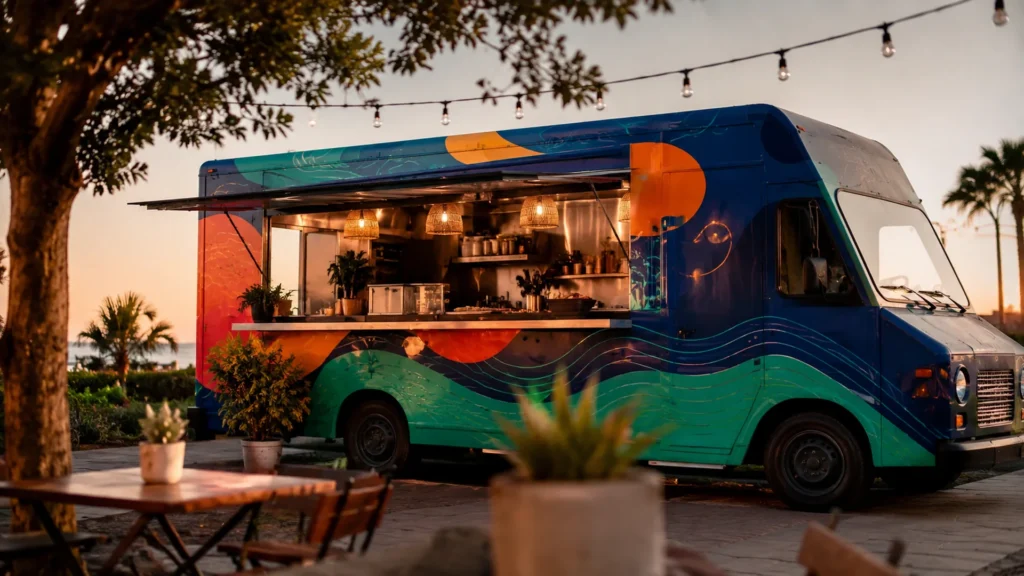
Food truck design is two jobs that get treated as one, and doing only half is how owners end up with a gorgeous wrap on a kitchen that fights them every shift. The outside is a billboard that has to sell you in three seconds from across a parking lot. The inside is a commercial kitchen that has to feed a line fast, in a footprint the size of a hallway, while passing a health inspection. I have worked rigs that nailed both and rigs that nailed neither, and this guide covers the whole thing: the wrap, the kitchen layout, and the code-driven design rules that quietly decide what you are even allowed to build. The costs here are typical ranges, not quotes.
Get the design right and the truck earns money and runs smooth for years. Get it wrong and you pay twice, once to build it and again to fix the workflow you should have planned. So let me start where the design actually starts, which is not the paint and not the pictures, but the menu.
Design starts with the menu
Every good truck build works backward from the menu. The menu decides the equipment, the equipment decides the line, and the line decides the layout. Plan it in that order and the kitchen flows; plan it in any other order and you end up cramming a fryer you do not need into space you needed for prep. A focused menu built from shared components is not just a sales strategy, it is a design strategy, because fewer pieces of equipment mean a roomier, faster, cheaper kitchen.
So before you sketch a single cabinet, lock the board. Decide the five to eight things you sell and the handful of components they share, and let that dictate the cooking equipment you actually need. The thinking on building a lean, sellable board lives in the food truck menus and ideas hub, and it is the foundation the rest of the design sits on. A truck designed around a tight menu has room to move; a truck designed around an everything menu is a traffic jam with a window.
It also helps to design for how you will actually work, not just what you will cook. If you run mostly evening events, plan for lighting and a back-lit menu board. If you chase festivals, design for fast load-in and a service window that handles a long, fast line. If you work a daily route, prioritize quick setup and breakdown and reliable storage. A truck is a tool, and the best designs are shaped by the specific job, hours, and locations the owner has in mind, rather than copied from a photo of someone else’s very different operation.
The interior: designing the workflow
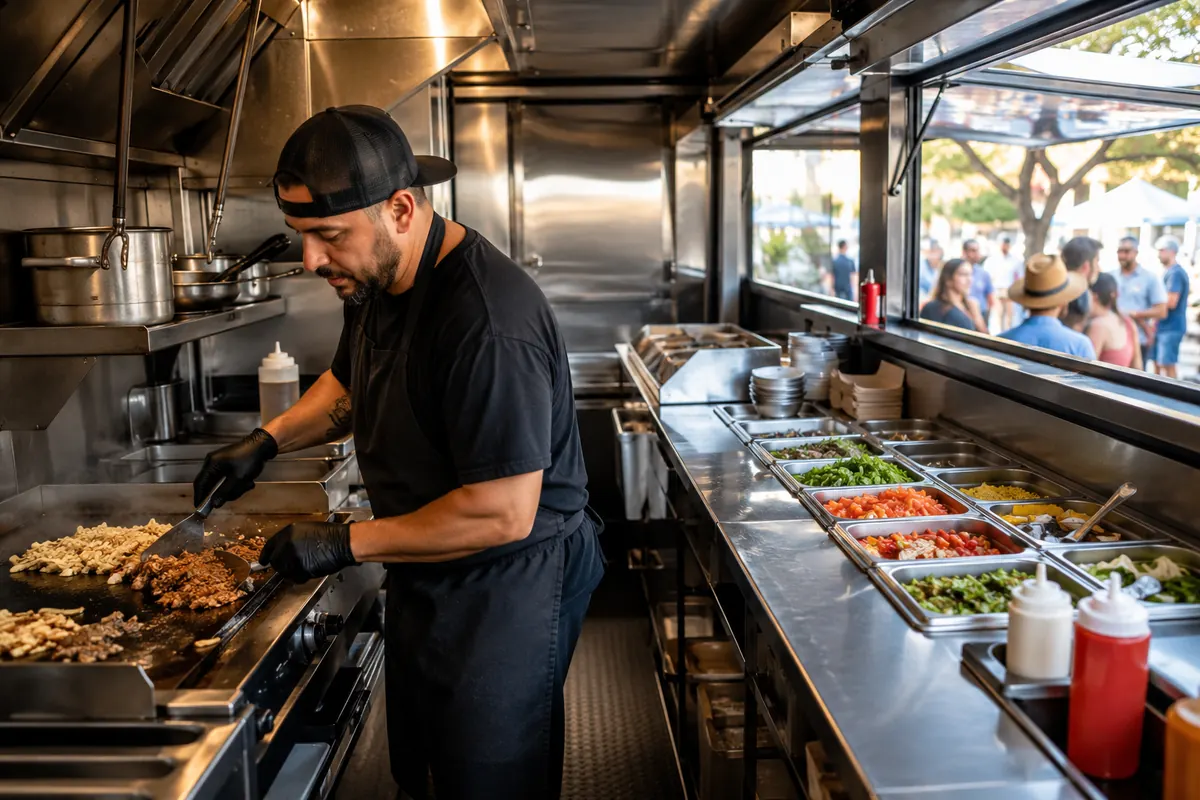
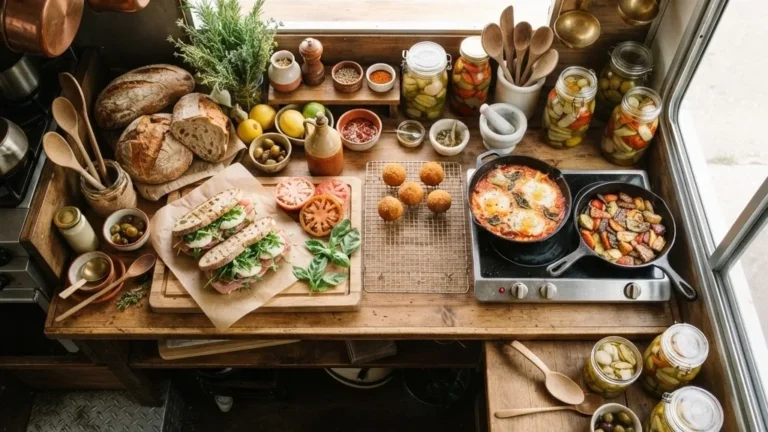
Inside, the goal is a line where staff take a step, not a walk, between tasks. The classic move is to sequence your stations the way an order flows: a cold rail for toppings, a hot line for cooking, an assembly and plating zone, and the service window, arranged so the food moves forward and the cook is never crossing the truck mid-rush. This cook-ahead-and-assemble flow is what lets a two-person crew turn a ticket in a couple of minutes during a lunch crush.
Space is the constraint that shapes every choice, so design upward and double up. Undercounter and specialized refrigeration save floor; vertical racks and shelving use the walls; countertop and portable appliances flex where a full-size unit would not fit. Put proteins held hot within arm’s reach of assembly, and put the cold toppings right at the window. Build everything in food-grade stainless, the 304 grade, with smooth cleanable surfaces, because that is both the durable choice and the one the inspector wants. A well-laid-out unit in the sixteen-to-thirty-foot range can serve hundreds of customers a day; a badly laid-out one of the same size backs up at the first rush. The deeper equipment-and-build thinking lives in the food truck equipment and build hub.
Match the equipment to the footprint, not to your ambition. A compact cooking method that does the job without a wall of heavy gear keeps the kitchen open and the power demand sane, which is exactly why the air-fryer-style approach behind these compact-equipment snack ideas suits a tight build, and why a menu leaning on a signature sauce, the kind in this house dip and sauce collection, adds character with almost no equipment at all. Every appliance you can avoid is floor space, propane, and cleaning you get back.
Power, water, and ventilation
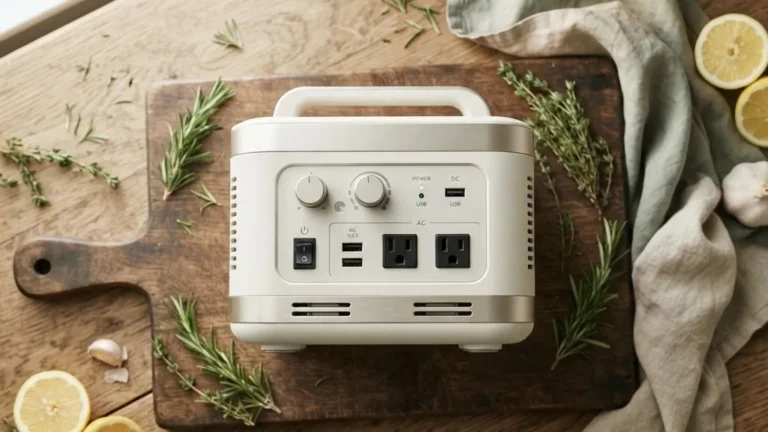
The systems behind the walls are where design gets unglamorous and critical. Power and water are the two most underestimated. A generator has to carry everything running at once with headroom, or it trips during a rush, and your fresh and gray water tanks have to be sized for a full service plus handwashing. A common code requirement is that the wastewater tank be larger than the fresh tank that feeds your sinks, often at least fifty percent larger, so plan the plumbing as a system, not an afterthought.
Ventilation is the one you cannot design around. Any cooking line that produces smoke, grease, or heat needs a commercial exhaust hood, and on most cooking setups that means a fire-suppression system over it as well. This is not a decor choice, it is a code and safety requirement, and inspectors check it closely. Sinks are equally prescriptive: expect a separate handwashing sink with hot water alongside your warewashing sinks, with minimum sizes and water temperatures your local code spells out. Design these systems to the standard the first time, because retrofitting plumbing and ventilation in a finished truck is miserable and expensive.
| System | Design requirement |
|---|---|
| Power | Generator sized for full load plus headroom |
| Fresh + gray water | Tanks for full service; wastewater tank larger than fresh |
| Ventilation | Commercial hood over cooking; fire suppression on most lines |
| Sinks | Separate handwash + warewash, code-set sizes and hot water |
| Surfaces | 304 stainless, smooth, non-porous, cleanable |
The exterior: your truck is a billboard
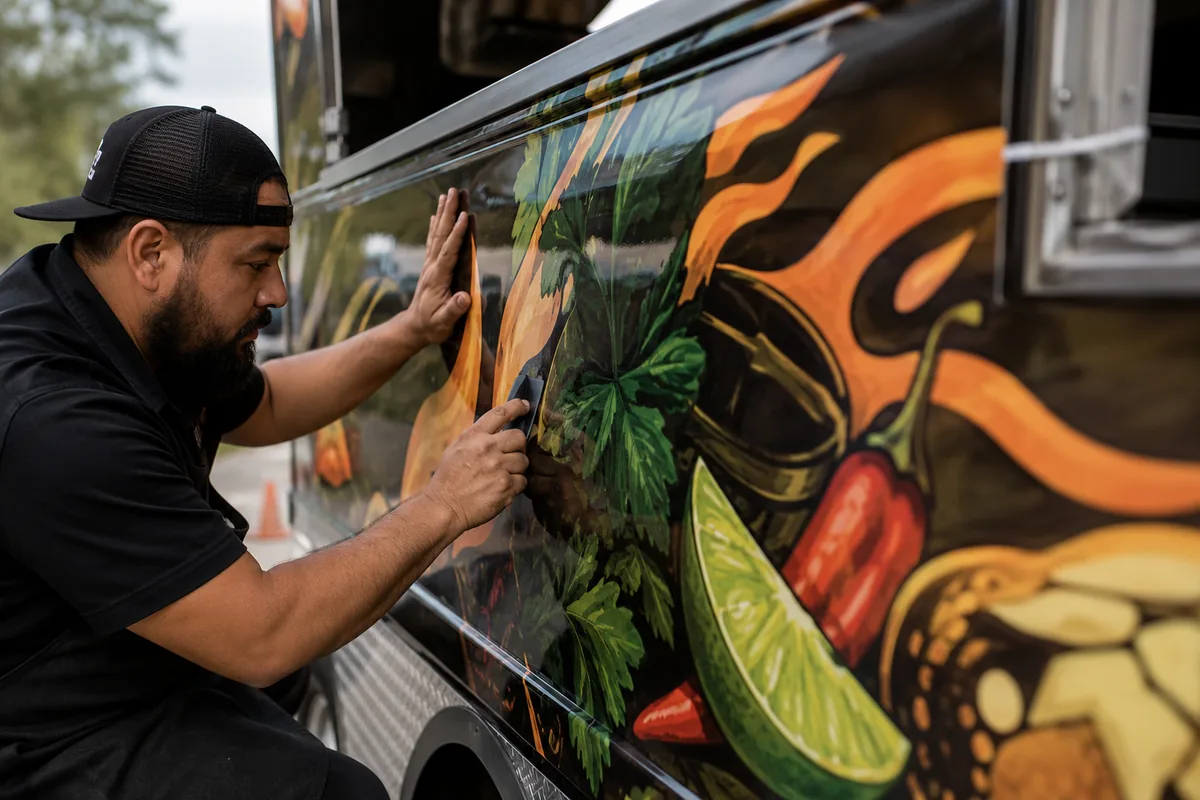
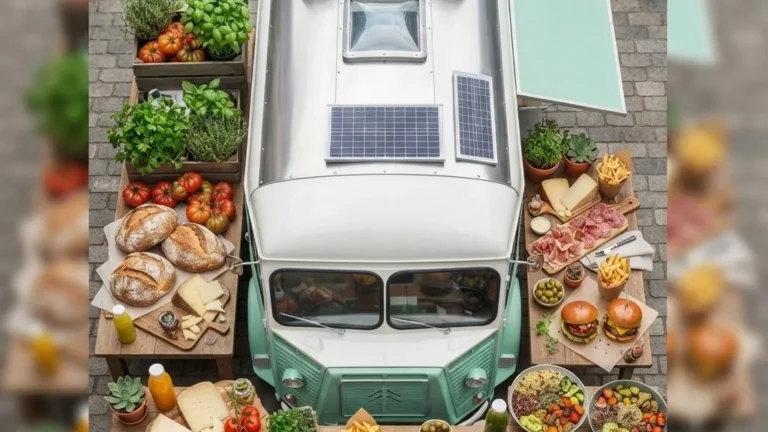
Now the part everyone thinks of first. The wrap is your single biggest marketing asset, a moving billboard that has to communicate what you sell and make someone hungry from across the street. A full custom wrap commonly runs about twenty-five hundred to six thousand dollars, broken into design, the cast vinyl material, and a couple of days of skilled installation. A partial wrap, your logo, name, and hours on side panels over a solid factory color, runs cheaper, often fifteen hundred to three thousand, and still looks professional. Premium films from the major makers last five to seven years, so it is not a yearly cost.
Design the wrap to be read, not just admired. Use bold, high-contrast type and skip the script fonts that turn to mush on a moving vehicle. Tell your story in three seconds or less, because that is how long a driver or a passerby gives you. Big legible name, a clear sense of the food, and your social handle or schedule so people can find you again. A beautiful wrap that no one can read at a glance is decoration; a clear one is advertising that works every mile you drive.
Think about the wrap as the cheapest marketing you will ever buy on a per-impression basis. A full wrap costs a few thousand dollars once and then advertises you to every car, every pedestrian, and every line of customers for five to seven years, parked or moving. Compare that to what any other advertising channel costs to reach the same number of eyes and the wrap is a bargain, which is exactly why it deserves real design money and not a rushed afterthought. Spend on the design and the install, because a sharp, readable wrap pays for itself in recognition long before the vinyl wears out.
| Wrap option | Typical cost | Note |
|---|---|---|
| Full custom wrap | $2,500 – $6,000 | Design + cast vinyl + 2 – 4 days install |
| Partial wrap | $1,500 – $3,000 | Logo/name/hours over a solid color |
| Premium film life | 5 – 7 years | Not a yearly expense |
Code, plan review, and working with a builder
Before you build, your design usually has to pass a health-department plan review, where an inspector checks the layout against the local adoption of the food code for sinks, water, surfaces, and ventilation. Designing to that standard from the start is far cheaper than discovering a violation in a finished truck. The SBA’s guide to calculating your startup costs helps you budget the build, and your county’s construction guidelines for mobile food facilities, like this mobile food facility construction guide, spell out the sink, tank, and ventilation specifics in plain terms.
You can build a truck yourself, but most owners work with a builder, and the configurator-and-quote process is worth navigating carefully. Get the workflow you want in writing, confirm the build meets your local code before you sign, and ask the questions the sales page avoids: total price, what is included, lead time, and whether they handle the pre-construction health review. A good builder turns your menu and your line into a code-compliant kitchen; a cheap one hands you a beautiful shell you cannot legally operate. Design is the one place in this business where measuring twice genuinely saves you a fortune.
Take your time with this stage even when you are itching to open, because design is the decision that is hardest to undo. You can change your menu, your spots, and your prices any day of the week, but you cannot easily move a sink, resize a generator, or re-cut a service window once the truck is built. The hours you spend getting the layout, the systems, and the wrap right before fabrication are the cheapest hours in the whole venture, and they pay you back every single shift the truck rolls. A truck that flows, looks sharp, and passes inspection on the first try is not luck, it is the visible result of design decisions made carefully and in the right order, long before the first customer ever walks up to the window.
The design mistakes that cost you later
A few design errors show up again and again, and every one of them is cheaper to avoid than to fix. The most common is designing the kitchen before locking the menu, which leads to equipment you do not need crowding out space you do. The second is undersizing power and water, the systems behind the walls that fail at the worst moment, because they felt like a place to save money during the build. The third is treating ventilation and the fire-suppression hood as an upgrade rather than the code requirement it is, which means a failed inspection on a finished truck.
Two more catch people repeatedly. Forgetting the service window’s height and placement makes for a counter that exhausts your staff and a window that does not match the line behind it, so the food crosses the truck to reach the customer. And over-customizing the wrap with tiny type and busy art that no one can read at a glance turns your best marketing asset into expensive decoration. None of these are exotic problems. They are the predictable result of designing in the wrong order or cutting the wrong corner, and a careful plan, or a good builder, catches all of them before the stainless is cut.
| Mistake | The fix |
|---|---|
| Kitchen designed before the menu | Lock the board first, let it drive equipment |
| Undersized generator and water tanks | Size for full load plus headroom from the start |
| Hood and suppression treated as optional | Build to code; it is a requirement, not an upgrade |
| Poor service-window placement | Put the window at the end of the assembly line |
| Unreadable, over-busy wrap | Bold type, high contrast, readable in three seconds |
Branding beyond the wrap
The wrap gets all the attention, but your visual identity is bigger than the truck’s panels, and a coherent look pays off everywhere people see you. Your logo, colors, and name should carry from the wrap to your menu board, your social posts, your cups and bags, and your signage, so that a customer who saw you at a festival recognizes you on a street corner three weeks later. Consistency is what turns a one-time stop into a brand people remember and seek out.
The menu board deserves real design thought, because it is the thing customers actually read while deciding. Keep it clean, legible from a few feet back, and organized so the eye finds the hero items fast, and consider a back-lit or LED board if you work evenings. Small touches like a string of lights, a clean awning, and a tidy service area make the truck feel established and trustworthy, which matters more than people admit when a customer is choosing between you and the truck next door. Good design does not stop at the wrap; it runs through every surface a customer touches, and the cumulative effect is a truck that looks like it knows what it is doing.
Frequently Asked Questions
How much does it cost to design and wrap a food truck?
A full custom wrap commonly runs about twenty-five hundred to six thousand dollars, split between design, the cast vinyl material, and two to four days of skilled installation. A partial wrap with your logo, name, and hours over a solid factory color is cheaper, often fifteen hundred to three thousand, and still looks professional. Premium films last five to seven years. Interior design is separate and tied to your build, but professional layout work can save money by avoiding a kitchen you have to rework later.
How should I lay out a food truck kitchen?
Work backward from your menu: the menu sets the equipment, and the equipment sets the line. Sequence stations the way an order flows, cold rail, hot line, assembly, then the service window, so staff step rather than walk and never cross the truck mid-rush. Hold proteins hot within arm’s reach of assembly and keep cold toppings at the window. Use undercounter refrigeration and vertical storage to save floor space, and build in smooth, cleanable 304 stainless steel throughout.
What are the code requirements for food truck design?
Most jurisdictions require a commercial exhaust hood over any cooking that produces smoke or grease, with a fire-suppression system on most cooking lines. You typically need a separate handwashing sink with hot water alongside warewashing sinks, with minimum sizes and water temperatures set by local code, and a wastewater tank larger than the fresh tank feeding your sinks. Surfaces must be smooth, non-porous, and cleanable. Your design usually has to pass a health-department plan review before you build.
Should I design the truck myself or hire a builder?
You can self-build, but most owners work with a professional builder because they turn your menu and workflow into a code-compliant kitchen. Get the layout you want in writing, confirm the build meets your local health code before signing, and ask directly about total price, what is included, lead time, and whether they handle the pre-construction health review. Professional design can save real money by preventing a workflow or compliance problem that is expensive to fix in a finished truck.