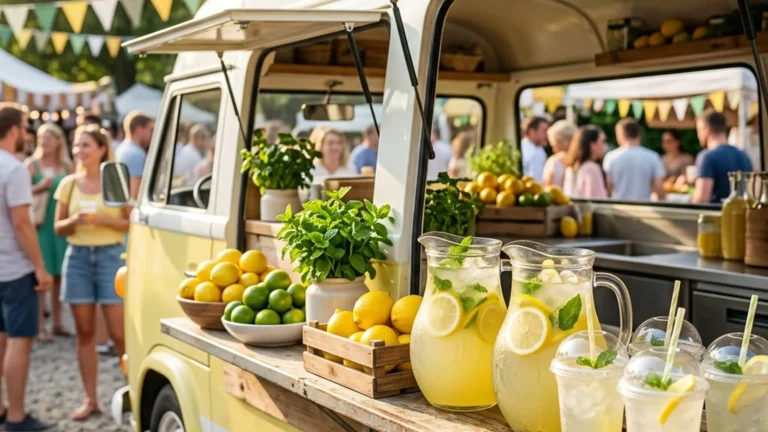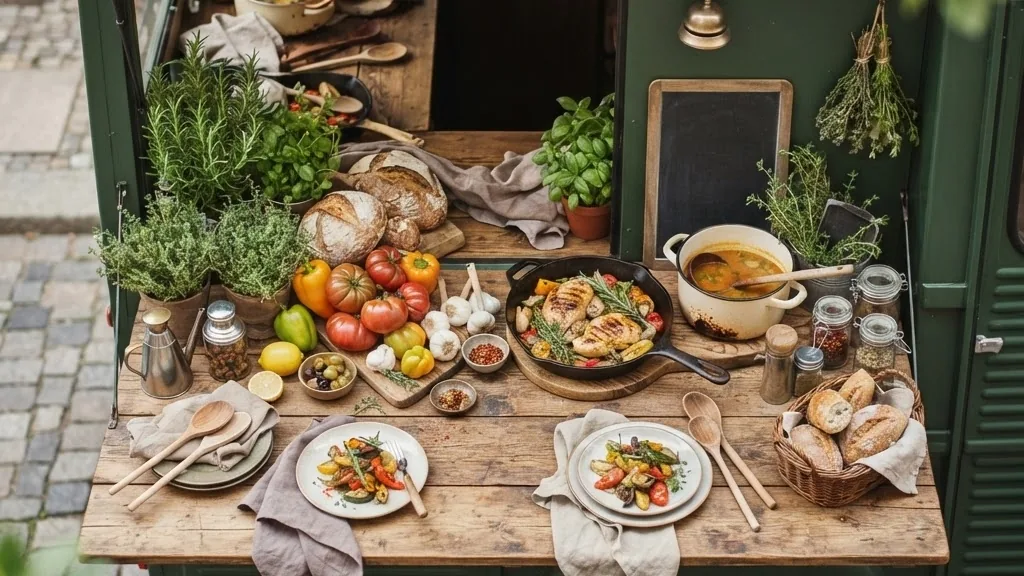
Food truck menu design is not about picking trendy items off a list, and that is exactly why most of the advice out there fails you. Around 48,000 food trucks roll in the United States, and roughly six in ten new ones close inside their first year, almost always because the menu was wrong, not because the food was bad. I have watched genuinely talented cooks go under because they built a menu that could not be prepped, could not be served fast, and did not clear margin. The lists you find online tell you burgers and birria and boba are popular. Sure they are. That tells you nothing about whether you can run them on your truck, in your space, at your speed, for your numbers. This is the framework that actually answers that question.
Here is the core idea the item-list articles miss completely: your menu is constrained by physics before it is constrained by imagination. The size of your flat-top, the power your generator can carry, the square footage between you and the window, and how many orders you can physically push out per hour, those decide your menu more than any food trend. So we are going to design from constraints first, build a structure that prints money, cost it with real math, then engineer it item by item. By the end you will be able to look at any menu idea and know in thirty seconds whether it belongs on your truck.
Design From Constraints First, Not Cravings
Before you write a single item, you measure your reality. A food truck is a tiny kitchen on wheels, and the menu has to fit inside its limits or it will fight you every shift. There are four constraints that matter, and a smart menu respects all four.
Equipment and space come first. What can you actually cook on the line you have? A truck with one flat-top and a fryer can do burgers, smashed sandwiches, and loaded fries beautifully, but it cannot also run a full taco steam table and a soft serve machine. Pick the cooking method your equipment does well and build the menu around it. A menu that needs gear you do not have is a fantasy.
Power is the silent constraint. Every piece of equipment draws watts, and your generator has a ceiling. If your dream menu needs a fryer, a flat-top, two refrigerators, and a freezer all pulling at once, price the generator that can carry it before you commit, because tripping a breaker mid-rush is how you lose a whole service.
Prep-ahead capacity is the third. The best truck menus are mostly assembled at the window from components prepped earlier at the commissary. Items that must be cooked entirely to order from raw are slow and dangerous to your line. Items you can batch, hold safely, and assemble fast are gold. Design toward assembly, not toward cooking-from-scratch theater.
Throughput is the fourth, and it is the one nobody mentions. Every item has a serve time, and serve time times your line equals your ceiling on orders per hour. We will come back to this because it deserves its own math. The point right now: constraints first. Build the menu your truck can actually run, then make it delicious.
The Winning Structure: Signature, Sidekick, Sip
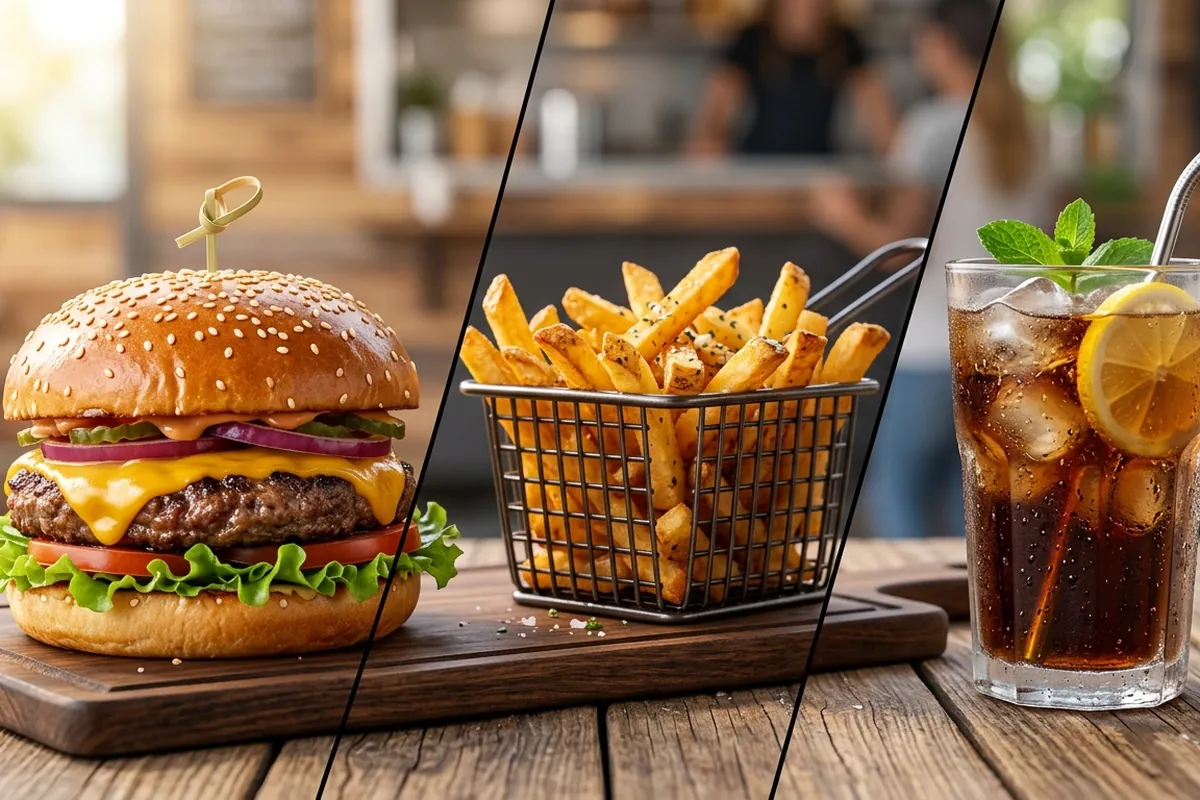
The most profitable trucks I know all share the same simple menu shape, and once you see it you cannot unsee it. One signature, one high-margin sidekick, one drink. Everything else is variation on those three roles.
Your signature is the high-ticket main that people come for and remember: the smashburger, the birria taco, the loaded brisket sandwich, the lobster roll. It is what your truck is known for, it carries the bigger price, and it is the reason people get in line. You can offer two or three versions of it, but it is one concept executed well, not five concepts executed poorly.
Your sidekick is the high-margin add-on that costs you pennies and lifts every ticket: loaded fries, chips, a side, a dessert. The signature pulls people in; the sidekick is where a chunk of your profit hides, because the customer is already buying and the marginal cost is tiny. A truck that sells only mains leaves real money on the table.
Your sip is the drink, and drinks are the best margin on any truck, full stop. Bottled water, a fountain soda, lemonade, horchata, coffee, boba, these run a food cost in the low teens or single digits and add a couple of dollars to nearly every order. If you sell food and forget drinks, you are skipping the easiest profit in the business. Build all three roles and your average ticket climbs without adding a single complicated cooking step.
The Throughput Math Nobody Applies to Menus
Here is the calculation that separates a busy truck from a profitable one. Every item has a serve time, the seconds it takes to make and hand over. Your orders per hour is roughly 3,600 seconds divided by your average serve time, times how many things you can run in parallel. A menu of items that each take ninety seconds to build caps you far lower than a menu of forty-five-second items, and during a lunch rush that ceiling is your whole revenue.
| Item | Serve time | Throughput effect |
|---|---|---|
| Pre-wrapped / assembled | 5-15 sec | Huge line speed |
| Assembled to order (taco, sandwich) | 30-60 sec | Good |
| Cooked to order (burger, fries) | 3-6 min | Needs batching |
| Complex build (loaded plate) | 5-8 min | Line killer at peak |
This is why fast-casual truck menus lean on items that are mostly prepped and assembled at the window. It is also why a single slow item can wreck an otherwise good menu, because the whole line waits on it. When you design, ask of every item: how long does this take to hand over, and what does that do to my line during the twenty-minute rush that makes my day. If an item is delicious but takes six minutes, it lives on the festival board where people wait, not the lunch board where they do not.
Cost Every Item: The Food-Cost Discipline
A menu without numbers is a wish. Every item needs a known food cost, the dollar cost of its ingredients, and a known food-cost percentage, that cost divided by the price. Aim to keep most items in the 25 to 35 percent food-cost range, with your drinks and simple sides running far lower to pull your blended average down.
The category math matters because it tells you where to lean. Beverages run a food cost in the 10 to 22 percent range, which is why every truck should sell them aggressively. Desserts and fried sides land around 15 to 25 percent, fantastic margin. Protein mains, your signature, often run higher, 30 to 40 percent, because good meat costs money, but they drive the traffic. The art is balancing a traffic-driving signature against high-margin sidekicks and sips so your blended food cost lands healthy even though the headline burger does not. This is the exact per-item modeling that feeds the projections in our food truck business plan guide, where the menu math becomes the monthly number that decides whether you make rent.
Price in clean, round numbers at a cash and tap window, and build a ladder: an easy-yes entry item, a sweet-spot middle where most volume lands, and a premium top that lifts the willing spender. The serious recipe testers at America’s Test Kitchen are obsessive about consistency and yield, and that same obsession is what lets you cost an item accurately instead of guessing.
Menu Engineering: Stars, Plowhorses, Puzzles, and Dogs
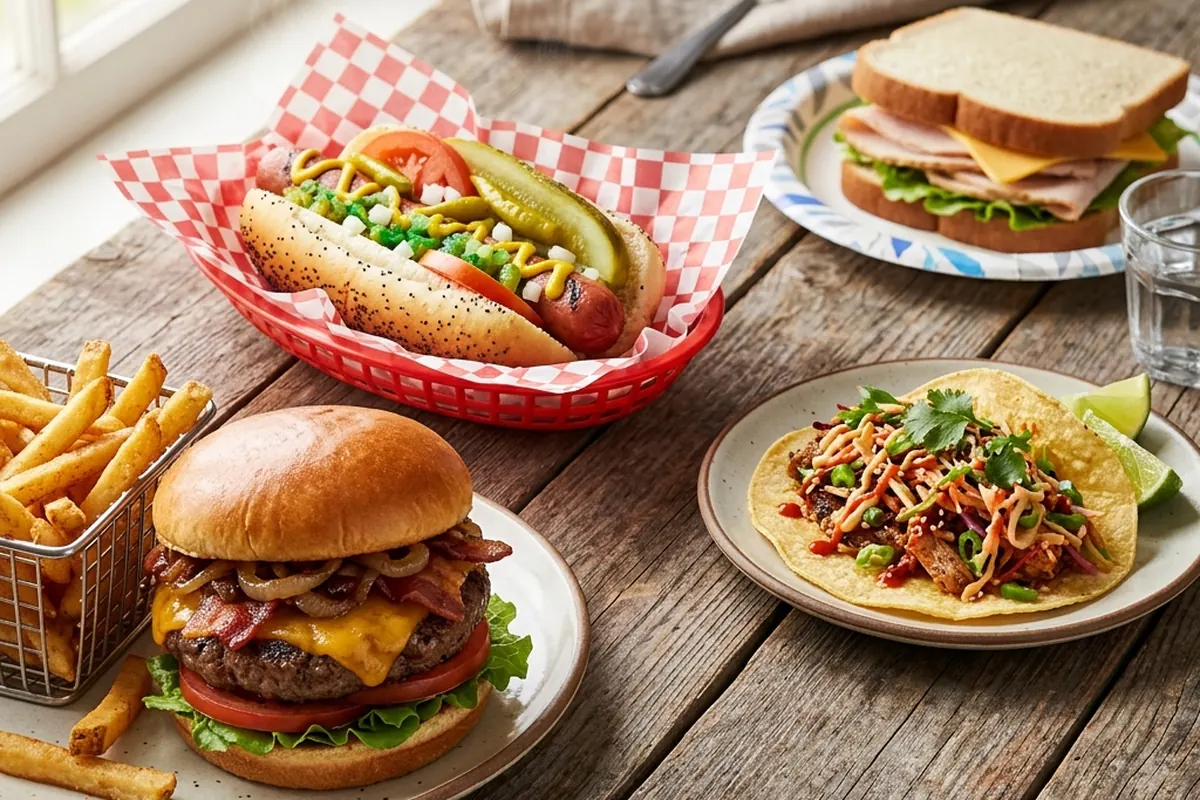
Once your truck has run a few weeks, the menu stops being a guess and starts being data, and that is when you engineer it. Classic menu engineering sorts every item into four buckets by two axes: how popular it is and how profitable it is. The buckets tell you exactly what to do.
Stars are high-popularity, high-profit items. These are your heroes, your signature done right. Feature them, photograph them, put them top of the board, and never touch the recipe. Plowhorses are high-popularity but lower-profit, the items everyone orders that you barely make money on. You either gently raise the price, trim the portion or cost, or pair them with a high-margin sidekick to fix the ticket. Do not cut them, because people love them, but make them pay.
Puzzles are high-profit but low-popularity, great items nobody orders. The fix is marketing, not removal: better placement, a tasting suggestion, a bundle. Sometimes a puzzle just needs a better name or a spot at eye level. Dogs are low-popularity and low-profit, and dogs get cut. They take up board space, prep time, and a hold pan for almost no return. Killing a dog frees space for a star. Most operators carry two or three dogs out of sentiment and pay for it in waste and slow lines.
Run this exercise every couple of months. The board you launch with is never the board that works; the board that works is the one your customers and your numbers carved out of it. The general culinary press, including Bon Appetit, is a good source for the flavor upgrades that can turn a puzzle into a star without blowing your food cost.
Prep-Ahead and Cross-Utilization Are Menu Design
The smartest menu trick is to make a handful of prepped components feed your whole board. When one batch of pulled pork goes into a sandwich, a loaded fries, a taco, and a bowl, you have one prep job covering four menu lines, which slashes both your morning workload and your waste. When every item demands its own dedicated ingredient, your prep list explodes and food sits around dying.
So design the menu and the prep together. Pick a small set of core components, your proteins, a couple of sauces, a base like rice or fries, and build the whole board out of combinations of them. This is not cutting corners; it is how every efficient food operation works, and on a truck where storage is tiny and prep time is short, it is survival. It also keeps quality consistent, because you are perfecting a few components instead of juggling forty ingredients. The physical side of this, where prep happens, how components flow to the window, lives in our food truck design guide, because a menu and a layout are really the same plan viewed from two angles. And if your route includes events, the menu shifts again toward higher-ticket, wait-friendly items, which is exactly the territory our food truck festival guide covers.
The Menu Mistakes That Sink New Trucks
I have seen the same handful of menu errors kill promising trucks over and over, and every one of them is avoidable if you know to watch for it. The first is the everything menu, where a nervous new owner tries to please everyone and ends up with a board so long they cannot prep it, cannot serve it fast, and cannot keep it fresh. A long menu reads as ambition and operates as chaos. Cut it in half and you will sell more, not less.
The second is the no-margin signature. People fall in love with an item that looks great and tastes great but costs so much to make that they barely clear a dollar on it. A signature has to be both crave-able and profitable, and if it is only the first one, you are running a charity. Reprice it, re-portion it, or build a high-margin sidekick around it so the ticket still pays.
The third is forgetting drinks entirely. I cannot count the food-focused operators who pour all their love into the food and offer one warm bottle of water as an afterthought. Drinks are the easiest, fattest margin on the truck, and skipping them is leaving free money at the window. A simple, well-chosen drink program can lift your average ticket by a couple of dollars on nearly every order with almost no extra labor.
The fourth is the slow-item trap. One beautiful but time-consuming dish on a lunch menu can collapse your throughput, because the whole line waits while you build it. Save the slow showpieces for events where people will wait, and keep the lunch board fast. The fifth and quietest mistake is never revisiting the board at all, running the launch menu for two years out of inertia while two dogs quietly bleed you. Treat the menu as living, and these five mistakes mostly solve themselves.
Frequently Asked Questions
How do I design a food truck menu?
Design from constraints first: your equipment, generator power, prep-ahead capacity, and how many orders you can serve per hour. Then build the winning structure of one signature high-ticket main, one high-margin sidekick, and one drink. Cost every item to a 25 to 35 percent food cost, keep the board short and fast, and refine it with menu engineering once you have real sales data.
How many items should a food truck menu have?
Keep it tight, usually around eight to fifteen items built from a small set of cross-utilized components. A short menu prepped from shared ingredients reduces waste, speeds the window, and keeps quality consistent. Long menus look generous but slow your line, balloon your prep, and increase the food you throw away. Fewer, faster, better-costed items beat a sprawling board on a truck.
What is the most profitable food truck menu item?
By margin, beverages win every time, running a food cost in the 10 to 22 percent range, followed by fried sides and desserts at 15 to 25 percent. Protein mains drive the most traffic and revenue but carry tighter margins around 30 to 40 percent. The most profitable menu pairs a traffic-driving signature main with high-margin sidekicks and drinks so the blended food cost stays healthy.
How do I price food truck menu items?
Cost each item’s ingredients, then price so most items land at a 25 to 35 percent food cost. Price in clean, round numbers for a fast cash and tap window, and build a ladder with an easy-yes entry item, a sweet-spot middle tier where most volume lands, and a premium top that lifts the willing spender. Let low-cost drinks and sides pull your blended food cost down.
Why do so many food trucks fail?
Roughly six in ten new food trucks close within their first year, and the menu is usually the culprit. Common menu mistakes are too many items, slow-to-serve dishes that wreck line speed during the rush, no high-margin sidekicks or drinks, and items priced without knowing the real food cost. A constraints-first, tightly costed, fast-serving menu is the single biggest survival lever you control.
Should I change my food truck menu over time?
Yes. The board you launch with is a hypothesis; the board that works is the one your sales data carves out. Run menu engineering every couple of months, sorting items into stars to feature, plowhorses to reprice, puzzles to market better, and dogs to cut. Cutting a low-performing item frees board space, prep time, and a hold pan for a better one, which steadily lifts your numbers.
Bottom Line
A food truck menu is a system, not a list, and the operators who treat it that way are the ones still rolling after year one. Start from your physical constraints, build the signature-sidekick-sip structure, apply throughput math so your line never chokes, cost every item to a real food-cost target, and then let menu engineering and cross-utilized prep tighten the board over time. The trendy item lists will tell you what is hot; this framework tells you what will actually work on your truck, at your speed, for your numbers. Build the menu your truck can run, run it fast, cost it cold, and you put yourself in the four-in-ten that make it instead of the six-in-ten that do not.