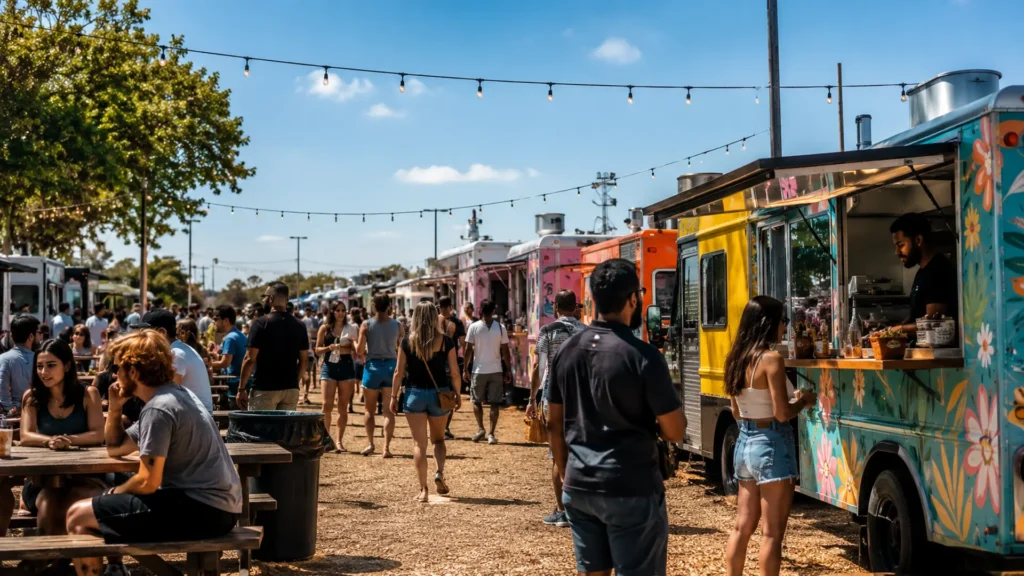
A food truck festival looks like free money from the outside: a field full of hungry people who came specifically to eat. From the inside of the window, it is a high-stakes day where a booth fee, a permit stack, and your own throughput decide whether you go home ahead or behind. I have vended enough of these to tell you they can be the best days of your season or an expensive lesson, and the difference is almost entirely preparation. This guide is for the operator: how to get accepted, what it costs, what you legally need, and how to actually cash out at a high-volume event.
Most of what you find searching for a food truck festival is event listings for people who want to attend. This is the other side of the fence. Every number here is a typical range, since fees, permits, and rules vary wildly by festival and by city, so treat them as planning figures and confirm with each event and your local health department before you commit.
Why festivals are worth the hassle
A festival hands you something daily vending never does: a guaranteed crowd that is already in a spending mood. You get volume, brand exposure to people who have never seen your truck, and a roster of new regulars if the food lands. For a single concentrated day, the revenue can dwarf an ordinary service. That is the upside, and it is real.
The catch is that the upside comes with upfront cost and risk. You pay a booth fee or surrender a cut of sales, you carry per-event permits and insurance, you work a brutally long prep-and-service day, and you eat the weather, because a rained-out festival still charged you to be there. The operators who win at festivals are the ones who go in with the numbers worked out, not the ones who show up hoping the crowd is big. Festivals reward planning and punish winging it.
How vendor fees actually work
Festivals charge vendors in one of a few ways, and understanding the model is how you judge whether an event will pay. The most common structure is a flat booth fee for your space. A useful rule of thumb from the event world is that you want to clear roughly ten times a flat fee in sales for it to be worth your day. The other common model is a percentage of your gross sales, often somewhere in the five to ten percent range, which shifts some risk to the organizer since they only win if you do.
| Fee model | What you pay | What to watch |
|---|---|---|
| Flat booth fee | Set space fee, often $75 – $200 small, $700 – $1,100+ large | Aim to clear ~10x the fee in sales |
| Percentage of sales | Often 5% – 10% of gross | Lower risk; organizer shares the downside |
| Organizer pays you | A set fee for private events | Best case; known pay, no sales risk |
| Attendee pays direct | Nothing upfront, you need volume | Need ~45 – 60 sales per hour to clear |
Community festivals often sit at the low end, with truck booths around a hundred fifty dollars, while large branded festivals can charge seven hundred to over a thousand for a food truck spot, sometimes plus a registration fee and a small county permit. Some events are free to apply and only invoice on acceptance, occasionally with a deposit up front and the balance due a few weeks out. Read the fee model before anything else, because it is the first thing that tells you whether the day can pay.
Getting accepted is a curation game
You do not just sign up for a good festival, you get selected for one. Organizers curate their vendor lineup to balance cuisines, because two identical taco trucks next to each other helps no one, so acceptance is competitive at popular events. The process is usually an application form or vendor portal, then a curated acceptance, then an invoice or deposit, then a deadline to upload your compliance documents.
Apply early, because spots fill and selection favors trucks that make the organizer’s job easy: a clear concept, professional photos, your permits and insurance ready to go, and a cuisine that fills a gap in their lineup. A tight, recognizable concept gets picked over a vague one every time. If you are still sharpening what your truck stands for, the broader thinking on catering and events lives in the catering, events, and rentals hub, and a focused, fast menu is what the rest of this guide is built around.
The permits and insurance you must have
This is the part the festival listing pages leave out, and it is the part that gets vendors turned away at the gate. Selling food at a festival almost always requires a temporary food establishment permit from the local health department, even from a truck, tied to that specific event and usually applied for a week or two in advance. The fee is typically small and jurisdiction-specific. On top of that you carry your normal mobile food vendor license and business license, and most jurisdictions require a certified food protection manager on site during service with a proper handwashing setup.
Then there is insurance, which the event pages almost never mention but the organizers almost always require. Festivals routinely demand a certificate of insurance showing a million dollars in general liability, with the festival and venue named as additional insured. A slow insurer that cannot turn a certificate around in time can cost you the booking, so know your carrier’s turnaround, and if you have not set up your coverage yet, the details live in the guide to commercial food truck insurance. The SBA’s overview of how to apply for licenses and permits orients you, and your own county health department’s temporary event page is the final word, since a temporary food permit is defined locally as a fixed spot and menu for a short event window.
| Requirement | Issued by | Lead time |
|---|---|---|
| Temporary food establishment permit | Local health department | ~7 – 14 days before |
| Mobile food vendor + business license | City or county | Have current |
| Food protection manager certification | Accredited program | On site during service |
| Certificate of insurance ($1M GL) | Your insurer | Before the deadline, named additional insured |
How to actually cash out at a festival
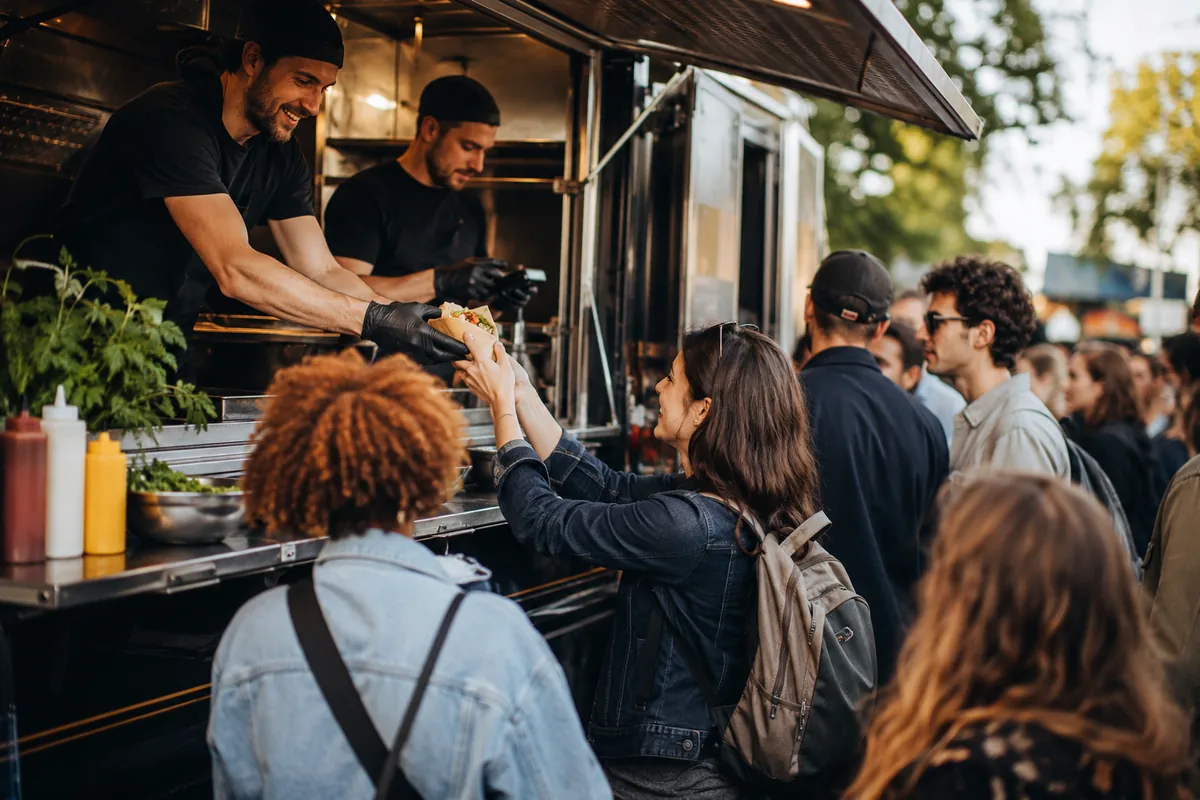
Acceptance and permits just get you in the gate. Cashing out is about throughput, because at a festival the make-or-break metric is transactions per hour, not how clever your menu is. Run a tight, fast board of four to six items engineered for speed, and pre-prep and par-cook everything you can so the only thing happening at the moment of the order is assembly. A sprawling menu that slows each ticket will cost you more in lost sales than it ever earns in variety.
Staff for speed and take every form of payment. A second register or a second assembly line can double your covers during the peak, and accepting cards plus cash and a mobile reader keeps the line moving instead of stalling on logistics. Crowd-friendly, high-margin items carry a festival, so a fast handful of dishes finished with a strong sauce, the kind of homemade BBQ sauce that makes a simple item memorable, plus a quick fryer-light snack along the lines of these crowd-pleasing snack ideas, move fast and price well. Bring backup inventory too, because selling out at hour three of an eight-hour festival is just leaving money in someone else’s field.
Festivals versus daily vending
Festivals are not a strategy by themselves, they are one stream in a healthy mix. Daily vending at breweries, office clusters, and busy spots costs little, lets you build a regular crowd, and gives you known economics. Festivals cost more and carry more risk and paperwork, but they deliver volume and exposure you cannot get on a curb. The strongest operators run both: reliable daily anchors for steady income, and a calendar of selected festivals for the big days.
Judge each festival on its own math before you commit. Take the fee model, your realistic sales per hour, and the permit and insurance costs, and ask whether the day clears comfortably above all of it. A festival that barely breaks even after a fourteen-hour day is worse than a quiet, profitable shift at your best brewery spot. Say yes to the festivals that pay and the exposure that matters, and let the curb carry the rest of your week. Used well, a few good festivals a season deliver the volume days and the new regulars that a steady route alone never could, which is exactly why they are worth the paperwork and the long hours when you choose them carefully.
Choosing which festivals to apply to
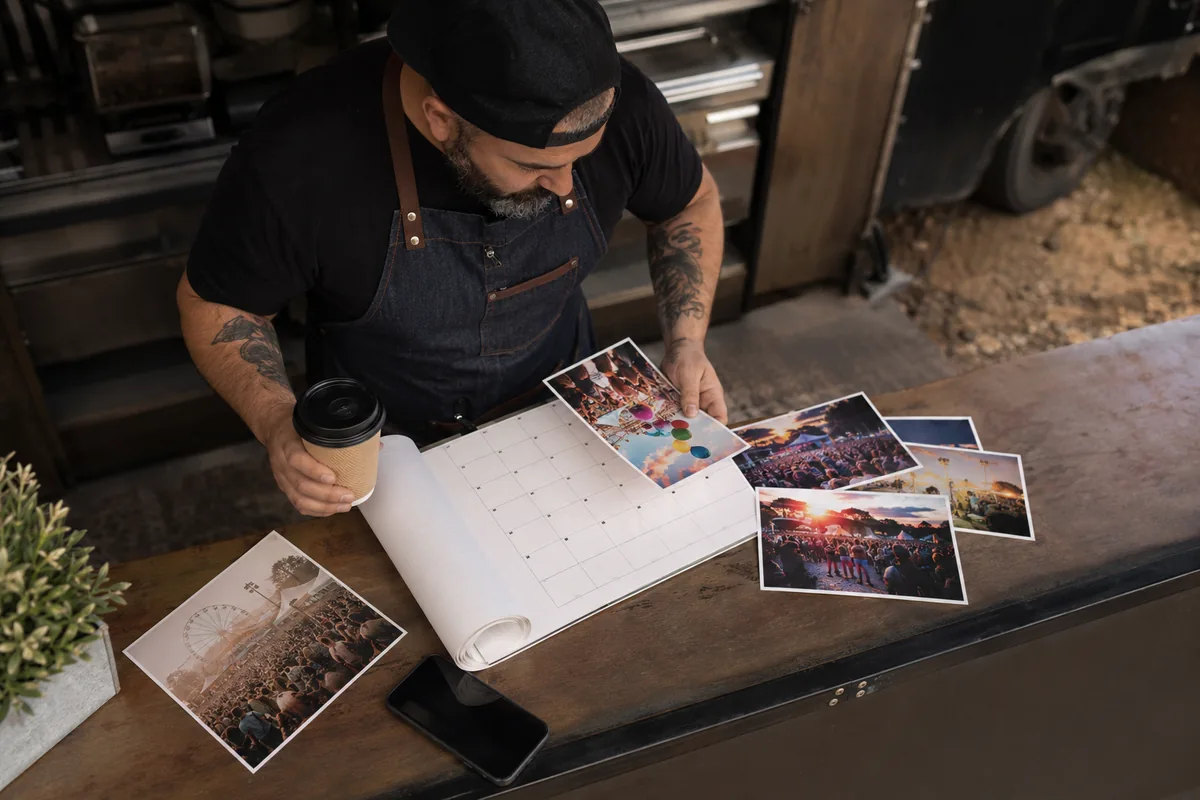
Not every festival is worth your booth fee and your fourteen hours, so be selective. A new event with no track record is a gamble, because the organizer’s projected attendance is a hope, not a guarantee, and you are betting your day on it. An established festival with years of strong turnout costs more to get into but carries far less risk, since the crowd is proven. Ask the organizer for last year’s attendance and vendor count, and talk to trucks that worked it before, because other vendors will tell you honestly whether a festival paid.
Match the festival’s crowd to your food, too. A craft-beer festival, a county fair, and a cultural food festival draw different audiences with different spending habits, and your concept will land better at some than others. A high-gate event where attendees already paid to get in often spends better than a free community event, though the booth fee usually reflects that. Weigh the fee against the realistic crowd and how well your menu fits it, and apply to the handful of events where the math and the audience both line up rather than scattering deposits across every festival that will take you.
A realistic festival day, start to finish
The festival listings make the day sound like a party, so here is the real shape of it. You start before dawn at the commissary, loading prepped food, filling water, and topping off propane, because a festival day is too long and too busy to prep on site. You arrive at your assigned spot in the load-in window the organizer set, level the rig, fire up, and bring everything to safe holding temperature well before the gates open. Miss the load-in window and you can lose your spot, so build in buffer for traffic and the inevitable confusion of a hundred vendors arriving at once.
Once the gates open, the day is a marathon of throughput. Lulls and surges alternate, and the surge after a main-stage act or at lunch is where you make your money or lose it to a slow line. Keep par-cooking through the lulls so you are never caught flat-footed when the rush hits, watch your inventory against the clock, and keep one person purely on order-taking and payment so the cooks never stop. At close you are not done: you break down, sanitize, log temperatures, and haul back to the commissary to clean and dump waste. It is a fourteen-hour day, and respecting that length in your staffing and your prep is the difference between a profitable festival and a miserable one.
Working with the organizer
The organizer is your landlord for the day, and a good relationship with them is worth more than any single sale. Read the vendor agreement closely before you sign, because it spells out the things that decide your day: load-in and load-out times, whether power and water are provided or you bring your own, your exact footprint, the cancellation and weather policy, and how and when you pay. Surprises here are expensive, so ask the questions the agreement leaves vague before the event, not at the gate.
Treat the organizer as a repeat customer, not a one-off. Show up on time, follow their rules, keep your spot clean, and report your sales honestly if you are on a percentage deal, because organizers talk to each other and curate their lineups partly on who is easy to work with. Honest numbers matter on your own books too, since festival income is self-employment income you report and pay tax on, and the IRS self-employed tax center covers the quarterly estimated-tax side that catches a lot of new vendors off guard. A vendor who makes the organizer’s job easier gets invited back to the good festivals and recommended to others, which over a season is worth far more than squeezing a single event. The festival circuit rewards reliability, and the organizer is the gatekeeper to all of it.
Frequently Asked Questions
How much does it cost to vend at a food truck festival?
It depends on the fee model. Community festivals often charge a flat booth fee around a hundred fifty dollars for a truck, while large branded events can run seven hundred to over a thousand, sometimes plus registration and a small county permit. Other festivals take a percentage of your gross sales, often five to ten percent. A useful rule of thumb is to aim to clear roughly ten times a flat fee in sales. Add per-event permit fees and your insurance, and judge each event on its own math.
What permits do I need to sell at a festival?
You almost always need a temporary food establishment permit from the local health department for that specific event, usually applied for a week or two ahead, plus your standard mobile food vendor and business licenses. Most jurisdictions require a certified food protection manager on site during service with a handwashing setup. Festivals also typically require a certificate of insurance showing a million dollars in general liability with the event named as additional insured. Your county health department is the final word.
How do I get accepted to a food truck festival?
Apply early through the event’s form or vendor portal. Organizers curate their lineup to balance cuisines, so acceptance is competitive, and they favor trucks with a clear concept, professional photos, and permits and insurance ready to go that fill a gap in their roster. A tight, recognizable concept beats a vague one. After acceptance you typically get an invoice or deposit and a deadline to upload compliance documents, so respond fast and have your paperwork prepared.
How do I maximize sales at a festival?
Throughput is everything, because the key metric is transactions per hour. Run a tight menu of four to six items built for speed, pre-prep and par-cook so orders are pure assembly, and staff up for a second register or assembly line during the peak. Accept cards and cash plus a mobile reader so the line never stalls on payment. Carry crowd-friendly, high-margin items, and bring backup inventory, since selling out early at a long festival just leaves money on the table.