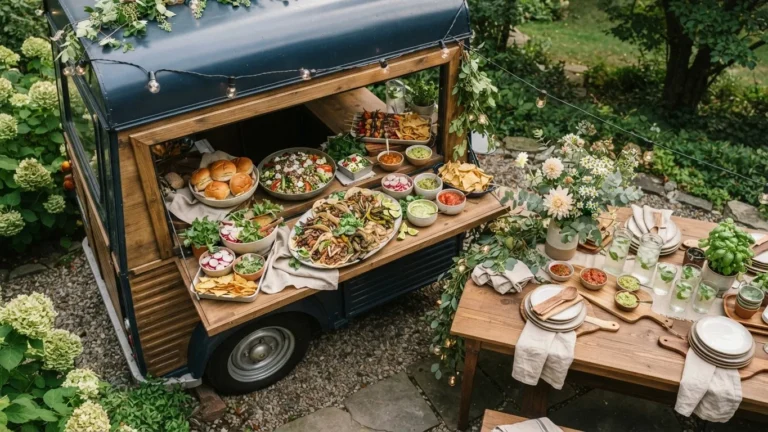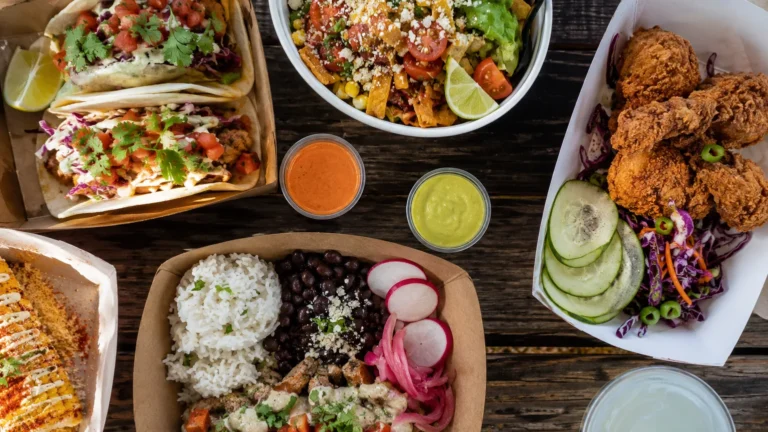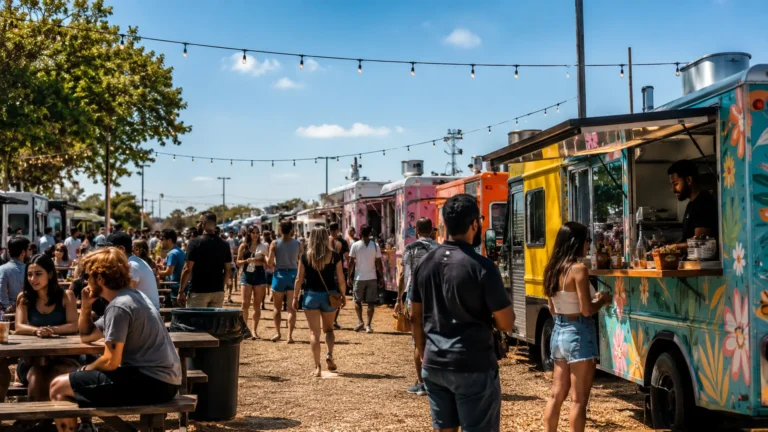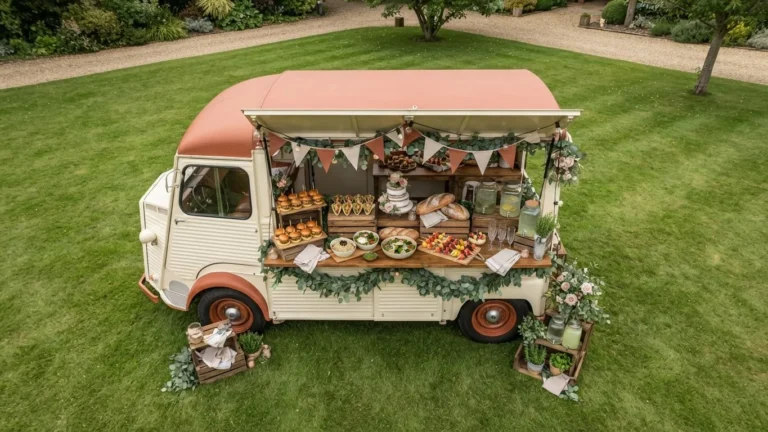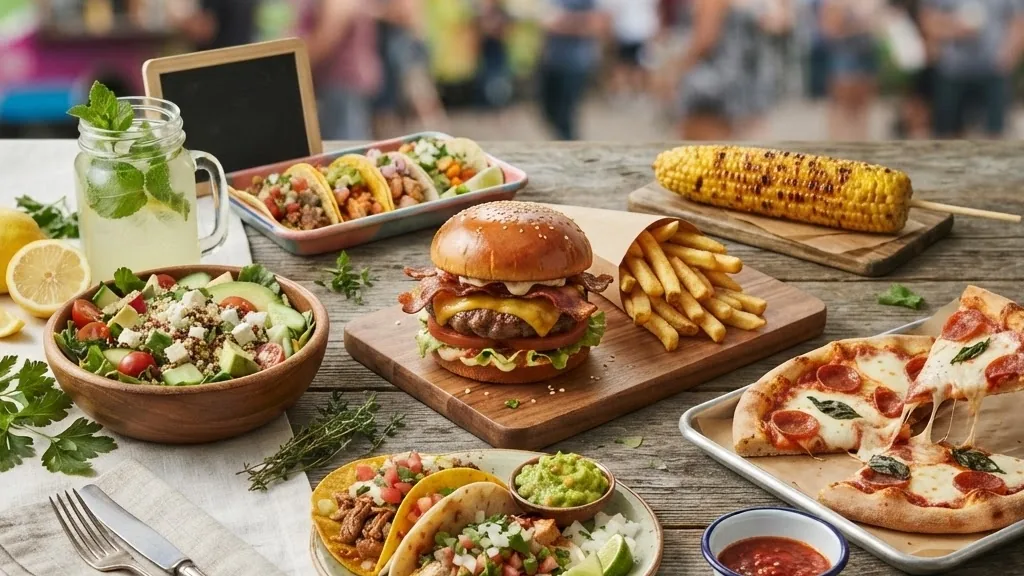
The Anoka food truck festival lands on Saturday, August 15, 2026, and it is the big one: more than 50 trucks rolling into downtown Anoka for a 10-hour service from 11 a.m. to 9 p.m., free to walk in, spread across Riverfront Memorial Park and the blocks around Anoka City Hall between Jackson and Harrison Streets. It closes out the MN Food Truck Festival summer series, which means every truck on that street is treating it like the season finale it is. I have worked festival lines on both sides of the window, and this guide covers both of them: how to eat a 50-truck event without wasting your appetite on the first line you see, and what a day like this demands from the crews cooking it.
Date, hours, location, cost: the 2026 basics
The facts first, according to the City of Anoka’s event page and the series organizer. Saturday, August 15, 2026. Service runs 11 a.m. to 9 p.m. The footprint is Riverfront Memorial Park plus the streets around Anoka City Hall, between Jackson and Harrison Streets in downtown Anoka, Minnesota. Admission costs nothing; you pay for what you eat. The city posts event details on its official page (anokamn.gov), and the state tourism office lists it on Explore Minnesota (exploreminnesota.com).
Two details in those basics matter more than they look. First, 10 hours is a long festival day, most truck events run 4 to 6 hours, so this one has distinct phases: a lunch rush, an afternoon lull, and an evening session with live music. Second, the riverfront-plus-downtown footprint means the event breathes better than a parking-lot festival. When one corridor jams up, you can loop a block and find the shorter lines on the far end.
Parking is street and municipal lot parking in a small historic downtown, and 50 trucks draw crowds from the whole metro. Arrive before 11 a.m. or expect a several-block walk, which, at this festival, is not a punishment: the walk in along the river is part of the day.
What 50+ trucks actually looks like
The organizer’s count is 50-plus trucks, a number confirmed in local coverage calling it the series’ final and biggest event of the summer. For scale: a strong weekly truck night in a metro suburb runs 6 to 12 trucks. This is four to eight of those events on one street, one day.
The range published for the 2026 edition reads like a map of where street food is right now: Maine lobster rolls, puffy tacos, Japanese hibachi, Spanish paella, acai bowls, and everything in the classic lanes, burgers, barbecue, mini donuts, tacos, coffee. Minnesota’s festival circuit has quietly become one of the better ones in the country for variety, and a series finale pulls the trucks that spent the summer earning their reputations.
A 50-truck field also changes how you should think about lines. At a 10-truck event, the popular truck has the long line and that is that. At 50, quality is spread wide, and line length tracks position and visibility as much as food. The truck parked by the main stage draws three times the line of an equal truck two blocks down. Use that.
How to eat this festival right
Ten hours, 50 trucks, one stomach. Every festival cook has watched people burn their whole appetite at the first window they hit at 12:15 p.m. Here is the better plan.
- Go at open or go at the lull. The 11 a.m. open has the shortest lines of the day. The 2 to 4 p.m. window is the sleeper: lunch crowd gone, dinner crowd not arrived, every truck still fully stocked.
- Walk the whole footprint before ordering. Fifteen minutes, end to end, riverfront to City Hall. You are scouting menus, line lengths, and where you will eat rounds two and three.
- Split everything. Two or more people means every order gets shared. Four smaller plates across four trucks beats two full meals at one.
- Hit the specialty items early. Lobster rolls and paella-scale dishes are prepped in fixed quantities. When they are gone, they are gone; the fryer items will still be there at 8 p.m.
- Cards work, cash is faster. Nearly every truck runs card readers now, but at peak crush, cash still moves a line quicker, and it saves you when a reader drops signal in a packed block.
- Stay for the evening. The 5:30 p.m. shift change, families out, music crowd in, is when the festival turns into a street party. Dessert trucks earn their spot after 7.
One more from the cook’s side of the window: order what the truck is known for. Festival menus get trimmed to what a crew can execute fast at volume. The truck’s signature item at a festival is the best version of that item you will get all year, because they have cooked nothing else for ten hours straight.
Beyond the food: the rest of the street
The 2026 edition is deliberately more than a food event. The organizer lines up retail-on-wheels alongside the kitchens: fashion and clothing trucks, a vintage record truck, a photo booth truck, and a truck for the dogs, because downtown Anoka on a summer Saturday is absolutely a dog crowd. Live music runs all day on the entertainment side, with the kind of add-ons that keep non-eaters busy, life-size Jenga and a mechanical bull included.
That mix matters for planning a group visit. A crew of five with two kids and somebody’s golden retriever can spend four hours here without anyone standing bored in a line, which is precisely the crowd design that keeps 50 trucks busy from open to close. The event listing on Eventbrite tracks the day’s schedule as it fills in closer to the date.
Why Anoka is a great festival town
Anoka calls itself the Halloween Capital of the World, it has run one of the country’s oldest Halloween parades since 1920, and the same downtown that hosts that parade hosts this festival: a genuine historic main-street district where the Rum River meets the Mississippi. Riverfront Memorial Park gives the event a green anchor with actual shade and river views, which most parking-lot festivals would kill for.
The town sits on the north edge of the Twin Cities metro, roughly a 30-to-40 minute drive from Minneapolis depending on traffic, with the Northstar commuter line’s Anoka station within walking distance of downtown on days it runs. For out-of-metro visitors, the festival makes a clean day trip: river walk, historic downtown, 50 kitchens, live music, home by ten.
The vendor side: what a 10-hour, 50-truck day demands
Now the part of this guide the tourism pages will never write, because this site is for the people cooking. A series-finale festival is the best and hardest booking of a truck’s summer, and the difference between a $4,000 day and a sell-out-by-2-p.m. disappointment is decided in prep, two days earlier.
Start with the math. Ten service hours with festival foot traffic means a strong window can push 400 to 700 tickets if the menu is built for speed. When I prep a crew for a day like this, the whole plan works backward from one question: what is our realistic tickets-per-hour ceiling, and is there enough product on the truck to feed it from open to close? A three-item festival menu at 80 tickets an hour needs batch quantities that look insane written down, and the mistake I see most from first-time festival crews is prepping for their best normal day and selling out before the evening crowd, the biggest-spending crowd, even arrives.
- Trim the menu to 3 or 4 items. Festival velocity comes from repetition. Every item should share the same station flow, and nothing on the board should take longer than 90 seconds of active cook time.
- Batch and hold like it is catering. Sauces, slaws, and proteins that hold well get made the day before at the commissary. The griddle and fryer are for finishing, not building.
- Staff one more body than feels necessary. Ten hours breaks a three-person crew. The fourth person floats: restock, window relief, generator and propane checks at hour six.
- Plan the 2-to-4 lull. That is when the crew eats in shifts, restocks the line, and preps the evening push. Trucks that treat the lull as downtime get buried at 5:30.
- Watch the sell-out decision. In my experience the evening session at a music festival crowd runs 30 to 40 percent of the day’s revenue. Rationing the last batches beats going dark at 7 p.m. with two hours of hungry crowd outside.
What I learned the hard way about riverside summer events: heat management is a revenue issue. August in Minnesota can hand you a 90-degree afternoon, and a truck interior over 110 degrees slows every cook in it. Shade the service side if your spot allows, ice the drinks deep, and rotate the window person hourly. The crews that look fresh at 8 p.m. planned for it; ours did not, the first time, and our ticket times showed it.
For the broader playbook on event service, our guide to working a food truck festival covers the booking-to-teardown cycle, and the batch-and-hold approach borrows straight from the food truck catering workflow, where fixed-quantity service is the whole job.
An hour-by-hour plan for festival day
If you want the full arc of the day without the burnout, here is how the 10 hours actually break down at a big single-day festival, and what to do in each phase.
10:30 to 11 a.m., arrival. Park once, ideally north of downtown where the walk back out is against no traffic. Trucks are finishing setup; the smell of 50 kitchens lighting up at once is legitimately the best moment of the day. 11 a.m. to noon, first round. Shortest lines of the day. Scout the footprint, then order the one item you came for, specialty and limited-quantity dishes first. Noon to 1:30 p.m., the lunch crush. Lines triple. If you are already eating, find shade in Riverfront Memorial Park and watch it happen. If you are arriving now, walk to the far ends of the footprint where lines run half the length of the center rows.
1:30 to 4 p.m., the lull. The festival’s best-kept secret. Crowds thin, trucks restock, and this is the window for round two plus the retail trucks, the record truck and the photo booth do not have lines at 2:30. Kids on the life-size Jenga, dog water bowls out, everybody resets. 4 to 5:30 p.m., the turn. Families head out, the evening crowd trickles in, and the music side of the event picks up. Coffee and dessert trucks start earning. 5:30 to 9 p.m., the party. Live music, densest crowds after the lunch peak, and the last call on anything that was prepped in fixed quantity. If a truck’s board says sold out on the item you wanted, that is the festival working as designed; the crews that rationed well are the ones still serving at 8:45.
What to bring, and the weather question
According to National Weather Service climate normals, mid-August in Minnesota averages highs around the mid-80s Fahrenheit with real humidity, and the festival runs rain or shine like nearly every event in the series. The short packing list, learned from a lot of long festival days: refillable water bottle, sunscreen, something with a hood if the radar looks mixed, cash as the backup for card readers at peak, and comfortable shoes because the footprint plus parking adds up to real walking. A blanket or packable chairs turn the park’s riverfront lawn into your table between rounds, and a small cooler left in the car beats carrying leftovers for three hours.
For dogs, and Anoka is a dog town, bring water and plan the afternoon lull for their lap of the festival; asphalt at 1 p.m. in August is hard on paws, and the crowd density at the lunch peak is no fun at knee height. Strollers do fine on the park side, tighter in the street rows at peak.
How trucks get a spot
Entry runs through the series organizer, MN Food Truck Festival (mnfoodtruckfestival.com), which books the lineup across its summer events and fills the Anoka finale from trucks that performed across the season, plus new applicants. The package is the standard festival stack: vendor application with menu, current health department permit for the operating counties, proof of insurance with the organizer named as additional insured, and the certificate of insurance filed by the deadline, not the load-in morning.
Two practical notes for crews eyeing 2027. First, series organizers book their finales early; applications sent in spring get real consideration, August inquiries get waitlists. Second, a 50-truck field means the organizer is curating categories, five taco trucks is four too many from their side, so the application that names a clear lane and a signature item reads better than the one that says we do a bit of everything. It is the same lesson as branding the truck itself: be the obvious answer to one craving.
The economics of a festival day, sketched honestly
Having spent enough festival seasons watching crews win and lose the same day, I can sketch what a booking like Anoka’s finale means on paper for a truck. Take a three-item menu at a $12 average ticket. If the crew sustains 60 tickets an hour through the two peaks and holds 30 an hour through the lull, the day lands somewhere near 500 tickets, roughly $6,000 gross before the organizer’s fee, product, fuel, and labor. Run the standard street-food math, food cost near 30 percent of menu price, three or four paid bodies for twelve hours including setup and teardown, and the day nets in the low thousands for a well-run truck. A crew that sells out at 2 p.m. cuts that gross nearly in half and still pays full freight on the fee and the labor.
The overlooked detail in festival economics is the second revenue line: a 50-truck finale is the best catering lead-generation day of the year. When I ran windows at events this size, the corporate inquiries, weddings, office lunches, a school’s fall event, came from festival customers who ate well and grabbed a card. I managed exactly that switch on a mid-size crew, we rebuilt the window as a marketing surface between two festival seasons, and the bookings followed. The trucks that treat the window as marketing, menu board readable from 30 feet, card-stock menus at the pickup shelf, a QR code that actually works, book their winters at their summers’ finales. That, more than the day’s gross, is why series finales fill their vendor lists by spring.
Weather risk cuts the other way and deserves one honest sentence: an August thunderstorm rolling up the Mississippi at 4 p.m. can erase the evening session, and rain-or-shine events do not refund vendor fees. Festival economics are a portfolio game across a season, per the same logic in our food truck menu engineering guide: price and plan so the great days carry the washouts.
Frequently asked questions
When and where is the Anoka Food Truck Festival in 2026?
Saturday, August 15, 2026, from 11 a.m. to 9 p.m., at Riverfront Memorial Park and around Anoka City Hall between Jackson and Harrison Streets in downtown Anoka, Minnesota. The City of Anoka’s official page carries the event details.
Is the festival free?
Yes, admission is free. Food, drinks, and some attractions are pay-as-you-go. Most trucks accept cards; cash speeds up peak-hour lines.
How many trucks will be there?
More than 50, per the organizer and local news coverage, spanning lobster rolls, puffy tacos, hibachi, paella, acai bowls, and the full classic street-food range, plus retail trucks, live music all day, and attractions like a mechanical bull.
What is the smartest eating strategy?
Arrive at the 11 a.m. open or during the 2 to 4 p.m. lull, walk the full footprint before ordering, share plates across multiple trucks, and hit limited-quantity specialty items early. Save dessert trucks for the evening music session.
How does a truck apply for the festival?
Through the MN Food Truck Festival organizer’s vendor application: menu, health permits, insurance naming the organizer as additional insured, and an early submission, spring beats summer, since the finale lineup fills from trucks that worked the whole series.
About the author and sources
Sal Bendetti cooks on food trucks and writes the operational guides on The Truck Chef, from batch prep to festival service. Event facts in this guide come from the City of Anoka’s official event page, Explore Minnesota’s listing, the MN Food Truck Festival organizer site, the festival’s Eventbrite listing, and Bring Me The News coverage of the 2026 series. Vendor-side guidance reflects festival service practice, not organizer policy; confirm application requirements with the organizer directly.
Event details are as published for the 2026 edition and can change; check the City of Anoka and organizer pages before traveling. Vendor requirements, health permits, insurance, fees, vary by organizer and county.