On Food Truck Pub’s free plan, the owner pays nothing and the customer eats a flat $1.25 convenience fee at checkout. That single sentence tells you more about choosing a food truck mobile app than any star rating does, because it answers the question every comparison skips: who actually pays. A “finder” app that helps a hungry person locate your window at lunch is a different product from the ordering platform that routes the money, and the three names that come up most – Truckster, StreetFoodFinder, and Food Truck Pub – are built for different people with pricing models that don’t line up side by side.
If you own the truck, you are shopping for onboarding, payment routing and booking tools. If you’re hungry, you want coverage and a map that isn’t empty. Below is how the pieces split, and why the permit office matters as much as the app store.
Quick answer: There is no single “best” food truck mobile app because the three leading ones serve different users. StreetFoodFinder and Truckster are mainly diner-side finders; Food Truck Pub is an ordering platform that’s free to owners and charges the customer $1.25 per order. For owners, cost structure is the deciding factor: free-to-owner with a visible customer surcharge, a monthly plan that lowers that surcharge, or Truckster’s owner pricing that isn’t published on its public pages. Before any of this matters, your city permit – not the app – is what legally lets you operate.
Finding trucks near you: what the consumer finder apps actually cover

For the person holding the phone, the job is simple: a truck that’s open and nearby, right now. Three apps answer that in different ways, and their store listings indicate how much to trust the map.
StreetFoodFinder is the strongest on the diner side by raw signal. Its store listings indicate a large, consistent sample of ratings and reviews. One caveat the listing itself raises: coverage runs across select cities, and many trucks close for winter – so an empty map in January is often seasonality, not a broken app.
Truckster’s consumer app holds a 4.0 out of 5 rating from 118 ratings on the Apple App Store. Food Truck Pub’s consumer-facing app sits at 3.5 out of 5 from 11 ratings. Don’t read those three numbers as a leaderboard. Eleven ratings is far too small a sample to compare against a much larger one – one bad week of reviews moves an 11-rating score several tenths of a point, while a large sample barely budges. Weight the big-sample score; treat the tiny one as noise.
The owner-side food truck mobile app: onboarding, booking, and who approves you
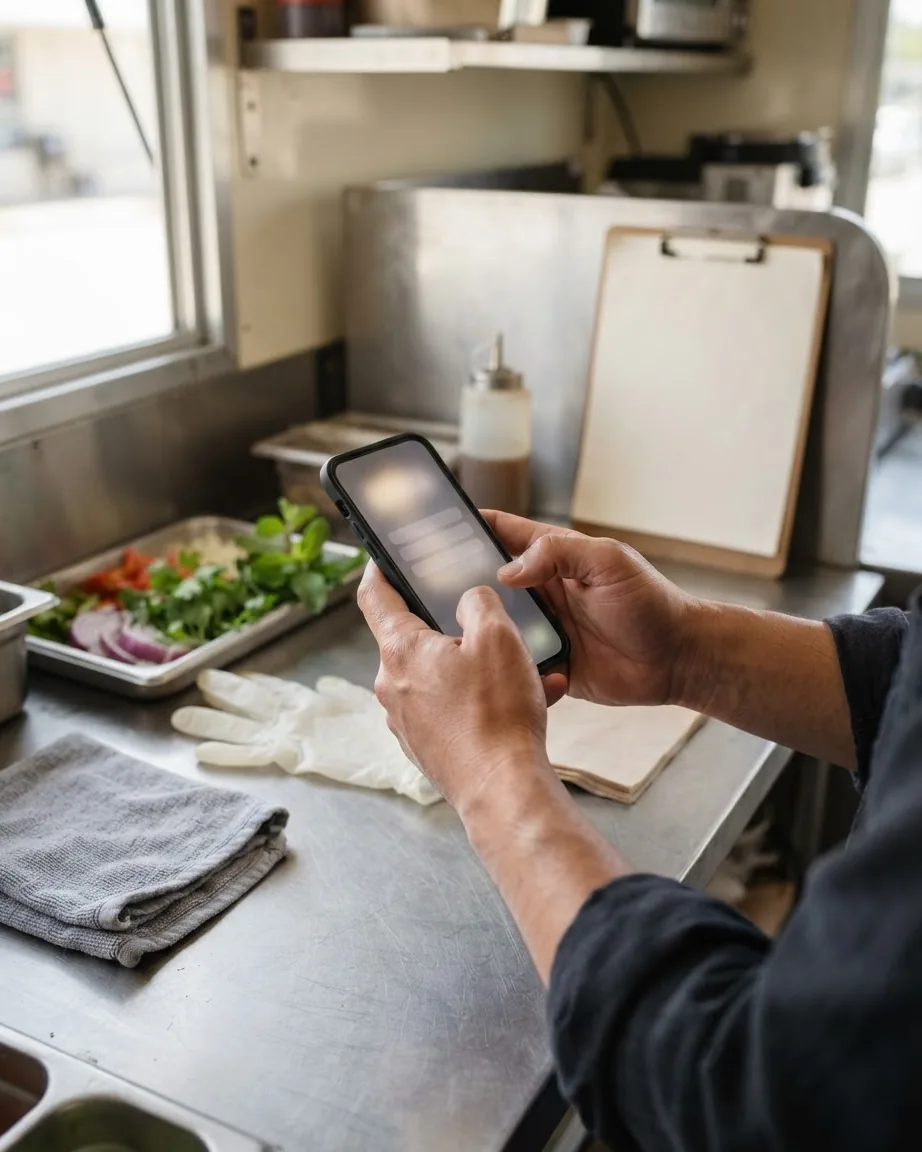
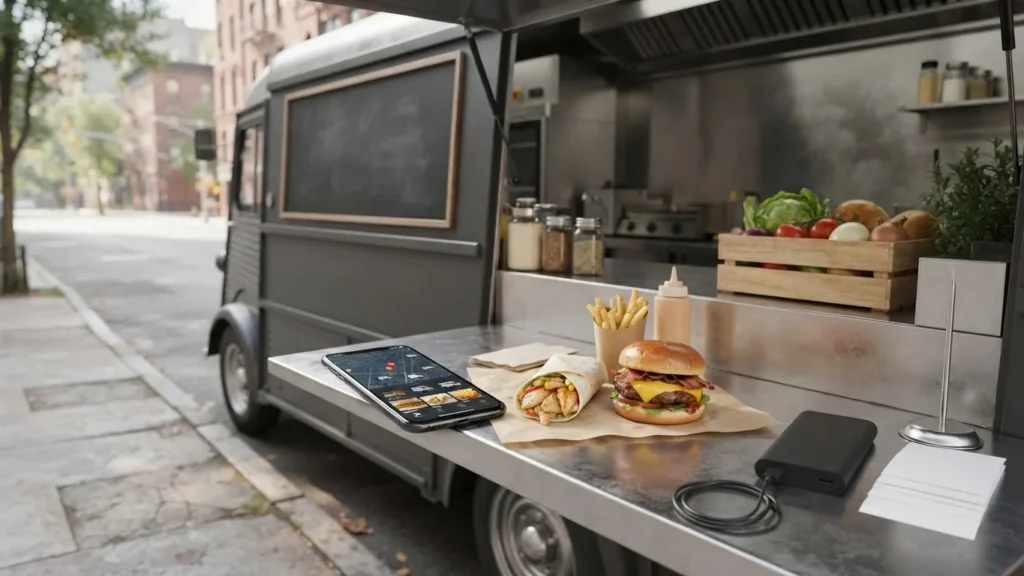
Flip to the owner side and the apps stop being maps and start being a business tool. A food truck mobile app on this side handles your menu, takes the order, and – the part that matters for cash flow – decides where the money lands.
StreetFoodFinder, which Food Truck Operator has reported on for its founding and its move into booking functions, positions itself as free to owners and layers in booking automation for locking down spots and events. Truckster runs an approval step: its owner-facing material on gotruckster.com describes an onboarding and approval process rather than instant self-signup, so a vendor doesn’t simply appear on the map the moment they download the app. Food Truck Pub leans on volume – its listing claims active food truck maps and over 12,000 registered food trucks – and routes orders through the owner’s own payment processor.
That last point is the quiet one. Onboarding software that asks only “what do you sell” misses the question your permit office will ask: do you prepare food on-site or hand over pre-packaged items? That answer changes your permit category and your fee, which is why the smartest workflows capture operating model up front rather than treating every truck as the same unit.
Cost and who pays: a flat fee, a monthly plan, and a price nobody publishes
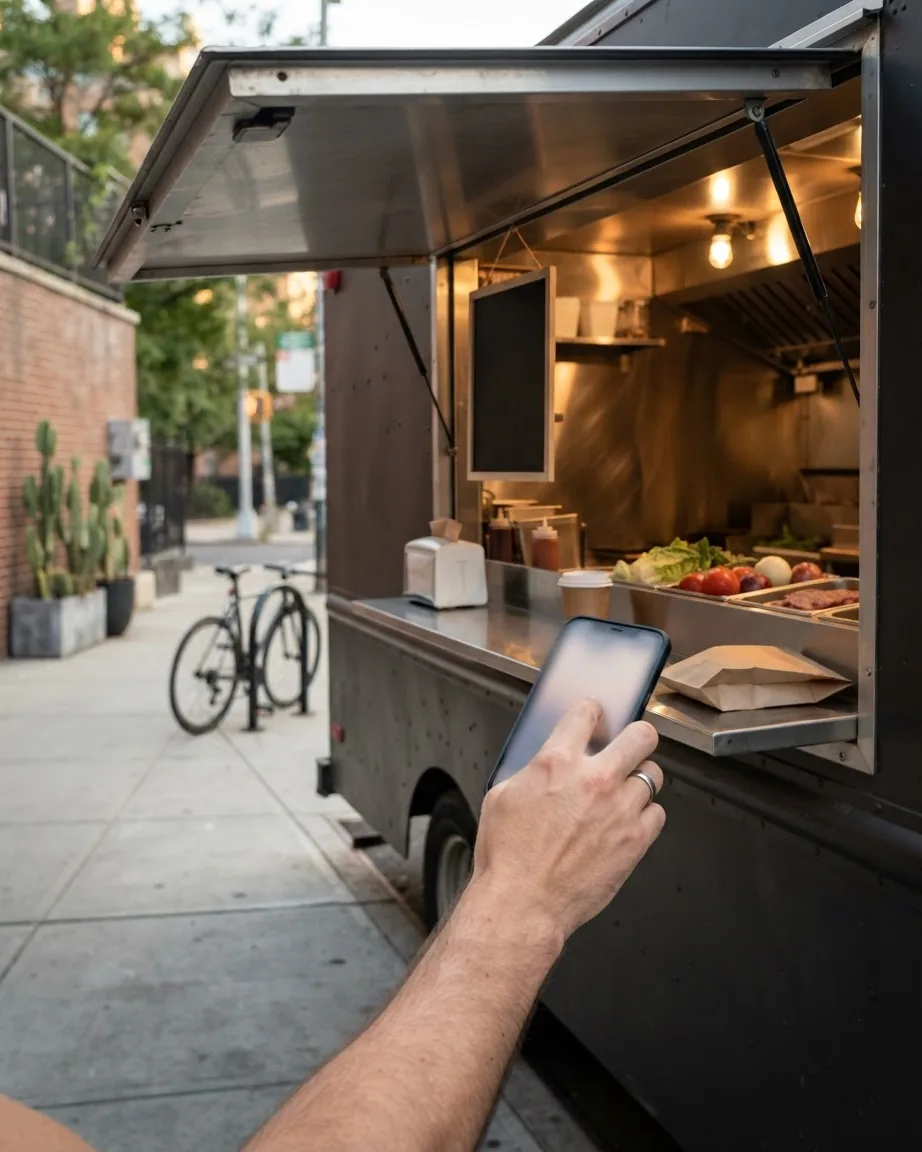
This is where “which app is cheapest” falls apart, because the three don’t charge the same party. Here’s the structure laid out plainly:
- Food Truck Pub (free plan): $0 to the owner. The customer pays a flat $1.25 convenience fee at checkout. According to Food Truck Pub’s own fee page, funds deposit directly into the owner’s Square, PayPal or Clover account.
- Food Truck Pub (Premium Plan): $29.00 per month when paid annually, no signup fee. The customer’s convenience fee drops to $0.60 for Square/PayPal and $0.85 for Clover. Premium also pays referring trucks $0.20 ongoing every month for each order to every truck they referred.
- StreetFoodFinder: stated as free to owners, with no diner-side fee published on the pages checked.
- Truckster: no owner-facing commission or subscription price appears on its public store or vendor pages. Treat the owner cost as unknown until you ask them directly.
Two decisions fall out of this. First, Food Truck Pub’s $1.25 is a flat per-order fee, not a percentage. So the fee becomes relatively painless as ticket size rises – a structural reason higher-average-ticket owners lose less to it than a percentage-commission platform would take.
Second, the Premium Plan’s math belongs to the customer, not your revenue. Run Premium if cheaper checkout drives enough extra orders to justify $29.00 a month, not because it pads your margin. Related guide: reading the numbers by scope.
Payment routing and privacy: where the money sits and what the app collects
Two store-listing details separate these apps in ways a feature grid won’t show you.
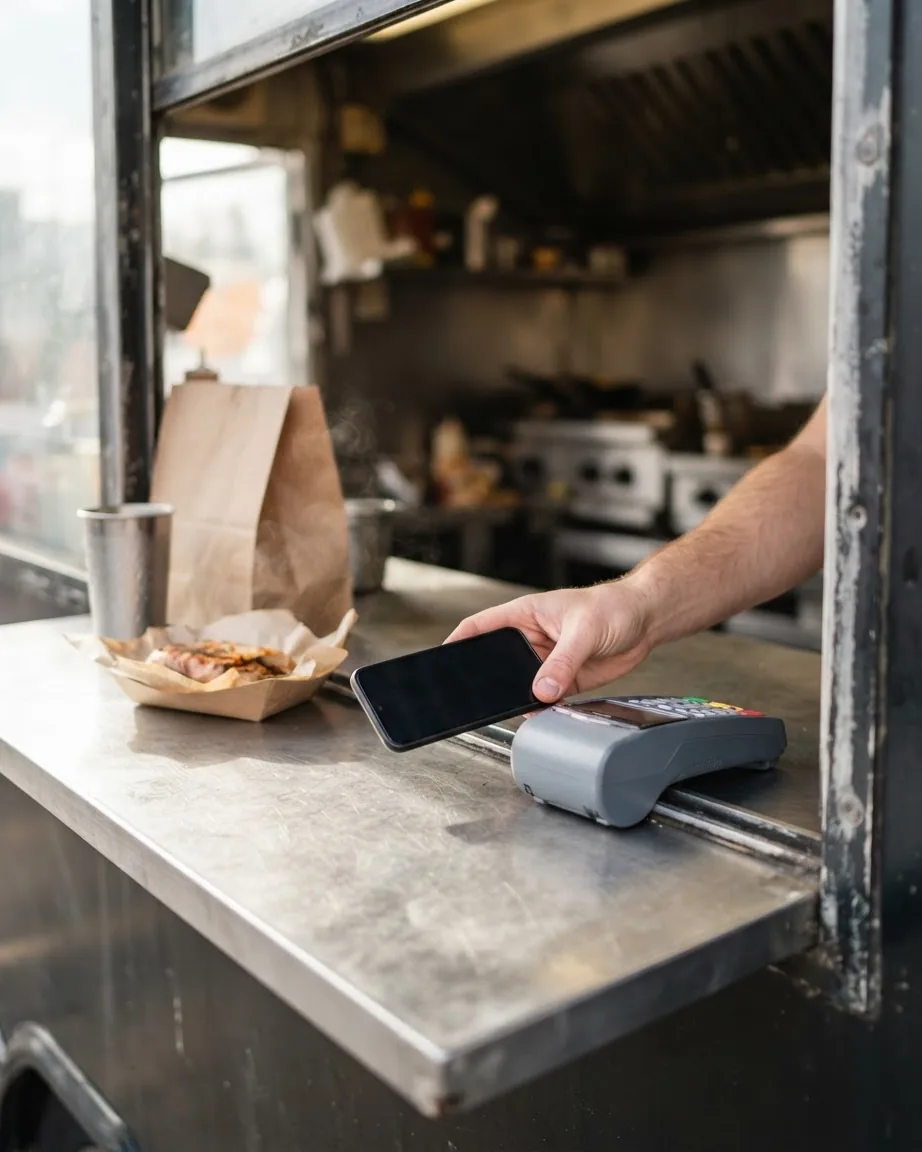
On payment, Food Truck Pub’s model deposits order funds directly into the owner’s own Square, Clover or PayPal account, and requires no dedicated POS hardware. That’s a cash-flow distinction from any platform that holds funds and remits them later – your money isn’t sitting in someone else’s account waiting for a payout cycle. If you already run Square at the window, the order routes to the same place your card sales do.
On privacy, the self-declared App Store labels diverge. Food Truck Pub’s listing is labeled as collecting no data. Truckster’s listing is labeled as collecting data linked to the user’s identity. Those labels describe only the app that declared them, and they’re self-reported – but for a diner choosing between finder apps, that’s a concrete basis for a decision rather than a vibe. If data minimalism matters to you, the labels point one direction.
The permit is the real precondition – and it isn’t an app feature
Here’s the trap that catches both first-time owners and the people building onboarding software: a listing on an app does not make a truck legal to operate. The binding rules come from your own city and county, and they stack in an order the app never shows you.
In Boston, the City food-truck permit application issued by the Public Works Department and Office of Small Business lists a $500 permit fee, and warns plainly that additional fees apply for vending on the public way plus those required by ISD, the fire department, and the Commonwealth of Massachusetts. That $500 isn’t the whole picture. The City’s guidance also notes that additional health and fire permits apply, and those health and fire permits come first in the sequence, not after.
New York draws a line that marketplace software routinely gets wrong: a licensed vendor is not the same as an authorized truck. Per the NYC Department of Health and Mental Hygiene, you need the Mobile Food Vending License before the unit permit. The full-term license runs two years, with a separate Mobile Food Vendor Food Protection Course fee that must be paid apart from the license application.
The unit permit then splits by how you handle food, depending on whether food is prepared or processed on-site versus pre-packaged or not prepared on-site. Those are mutually exclusive operating models – you pay one, not both – and the pre-packaged category is not a discount on the on-site one. NYC also requires the unit to pass inspection within six months of the application date, or the application becomes void. Any onboarding flow that stores a single generic “permit cost” field is already wrong for NYC. For the fuller stack, see our the stack nobody hands you guide.
Location monitoring: Boston’s GPS consent and Houston’s electronic-monitoring fee
Most people assume a food truck mobile app sources live locations only from vendors who opt in and tap “I’m open.” Two cities complicate that, and it’s worth understanding before you design or trust a live map.
Boston’s permit application expressly contemplates feeding GPS data to third-party developers for customer-facing apps. In other words, the live-location layer isn’t purely a vendor courtesy – in Boston it’s tied to the permit and to data consent at the municipal level. Houston goes further on cost. The City of Houston’s fee schedule, effective 01/01/2026, lists a $268.56 Mobile Food Unit electronic monitoring system fee, alongside a $718.40 Mobile Food Unit Medallion fee on the same effective date.
Read those as regulatory infrastructure, not optional app functionality. Whether Houston’s electronic monitoring works like GPS tracking isn’t confirmed on the pages checked, so don’t assume it mirrors Boston’s setup – and never treat either as a nationwide requirement. They’re two separate municipal systems. A $268.56 line item in Houston tells you nothing about what you’ll pay in Boston or anywhere else.
The FDA Food Code is a model, not a national checklist
Compliance-feature marketing sometimes implies there’s one federal rulebook an app can code against. There isn’t, quite. The FDA publishes the Food Code as a model – expressly not required nationwide. States and localities choose whether and when to adopt it, and which edition.
What’s new is worth flagging: the 2026 edition adds a mobile food establishment definition, which gives trucks a clearer place in the model text than they had before. But a definition in a model code only binds you once your state or city adopts that edition. So any app feature that claims to check you against “the Food Code” has to map to your jurisdiction’s actual adopted rules – the model text alone settles nothing about what your health inspector will enforce. Check local adoption before you treat any single provision as the rule you answer to.
Picking your lane: a decision frame for owners and diners
Pull it together by who you are.
If you’re a diner, weight StreetFoodFinder’s large-sample signal over Truckster’s 4.0-from-118 or Food Truck Pub’s 3.5-from-11, remember that a winter-empty map is usually seasonal, and let the privacy labels break a tie – Food Truck Pub declares no data collection, Truckster declares data linked to identity.
If you own the truck, the first filter is cost structure, not features. Choose free-to-owner with a visible $1.25 customer surcharge (Food Truck Pub, free plan) if you don’t want to pay monthly and your diners accept a small checkout fee. Pay $29.00 a month (Premium) if a lower $0.60 checkout fee wins you enough extra orders to cover it. Lean toward Food Truck Pub’s flat fee if your average ticket is high, since a fixed $1.25 shrinks as a percentage of a bigger order. And budget for the part no app charges you for: the $500 Boston permit stack, the NYC license-and-course entry, or the $718.40 Houston medallion that decides whether you can legally park and serve at all.
Different concept, same logic on the regulatory side: our ice cream truck license tier write-up and the wider equipment section are where the build and gear side of this picks up.
Is StreetFoodFinder’s higher rating a reason to trust it over Truckster?
Partly. Its score rests on a large, stable base of ratings and reviews, so the number is stable. Truckster’s 4.0 comes from 118 ratings – smaller but still meaningful. The gap you should ignore is against Food Truck Pub’s 3.5 from only 11 ratings, where a handful of reviews swings the whole figure.
Does Food Truck Pub’s Premium Plan make the owner more money?
No. The monthly cost lowers the customer’s convenience fee to $0.60 on Square/PayPal, so the benefit lands in diners’ pockets and possibly your order volume, not your deposit. Premium also pays $0.20 every month per order from each truck you referred, so referral activity is the only direct owner income it adds.
Why would two trucks in the same city pay different permit fees?
Operating model. In New York, a two-year unit permit differs for on-site food preparation versus pre-packaged items not prepared on the unit. Those aren’t tiers you upgrade between – they’re separate categories tied to how you handle food, which is also why app onboarding should record your prep method, not a flat fee.
Can an app legally show my truck’s live location without my say-so?
Jurisdiction decides. Boston’s permit application contemplates routing GPS data to third-party developers for customer apps, tying location sharing to the permit itself. Houston attaches a $268.56 electronic monitoring fee effective 01/01/2026. Elsewhere, live location usually comes only from vendors who opt in – so don’t assume either city’s model applies to yours.
What That Flat $1.25 Really Costs You: The Fee-as-Percentage Table
Food Truck Pub’s $1.25 convenience fee is a flat per-order charge, not a percentage – and that one design choice quietly decides whether the fee stings or disappears. Because the dollar amount never changes while the order total does, the effective surcharge falls as the ticket climbs. The pattern is plain: running the same flat $1.25 against larger order totals steadily shrinks its share of the bill.
The practical takeaway for an owner is that a flat per-order fee rewards higher average tickets. If your window sells mostly small-ticket items, that surcharge is working against conversion; if you push combos, catering and larger pre-orders, the same $1.25 fades toward irrelevance – a structural reason higher-average-ticket operators lose less to it than they would to a percentage-commission platform.