The scariest fact about food truck startup costs is that the published “typical” totals measure different things. One number is a rental scenario. One is a point-estimate average. One is a one-year regulatory bill. One is a single city’s fee stack. They don’t stack and they can’t be averaged, and if you line them up expecting one honest answer you’ll either over-raise or walk in short. This guide separates those scopes so you can decide which number actually applies to your situation – the truck you want, the city you’ll park in, and the runway you’ll burn before the window pays for itself.
Square puts the full range for average food truck startup costs anywhere from about $46,700 to $187,440, and that spread is not sloppiness – it’s the whole point about scope. Read on for where the money goes and which of those numbers is yours.
Quick answer: Food truck startup costs run from roughly $46,700 to $187,440, with the U.S. Chamber of Commerce (CO – ) citing about $55,000 as an average opening figure. A new made-to-order truck runs $75,000 to $150,000; a used truck runs $40,000 to $80,000. Permits, licenses, and legal compliance can hit $28,276 in a heavily regulated city over the first year. Kitchen equipment adds $10,000 to $50,000, a wrap adds $2,500 to $10,000, insurance adds $2,000 to $5,000 a year, and starting inventory adds $1,000 to $2,000. Where you operate moves the total more than almost any other single choice.
Which “Total” Is Actually Yours: Four Numbers That Don’t Mean the Same Thing
Four headline figures float around, and each answers a different question. Square’s $46,700 to $187,440 is a broad range that leans on a rental scenario rather than an outright purchase. The U.S. Chamber of Commerce (CO – ) reports it costs about $55,000 to open a food truck in the U.S., which is a single point-estimate average, not a floor or ceiling. The U.S. Chamber of Commerce Foundation’s Food Truck Nation study reports owners spend $28,276 on permits, licenses, and ongoing legal compliance – that is a one-year regulatory-only total, not the cost of a vehicle. And single-city fee totals (more on those below) measure only what one local government collects.
So before you trust a number, ask what it counts. A $55,000 average and a $28,276 regulatory bill are not competing estimates – one includes the truck and the other is only paperwork. Stacking them double-counts nothing and under-counts everything. Pick the scope that matches your plan: buying outright, leasing, or budgeting the regulatory year on its own.
Buying the Truck: New, Used, and the Emissions Rule That Can Void a Bargain
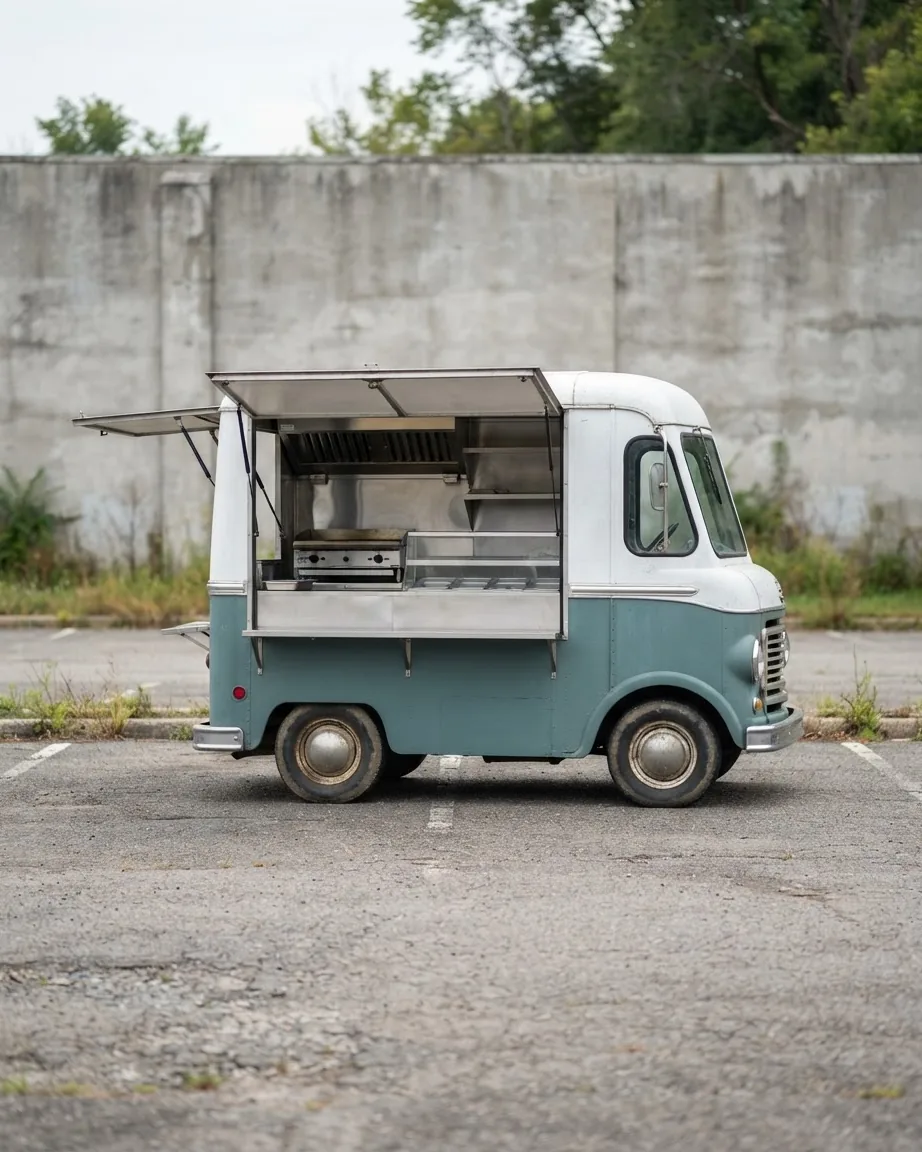
The vehicle is the biggest line, and the two main sources don’t fully agree on the band. Square lists a brand-new, made-to-order food truck at $75,000 to $150,000 and a used one at $40,000 to $80,000. Best Food Trucks runs higher on both ends, listing a new truck at $90,000 to $250,000 and used closer to $50,000 to $125,000. Neither states its methodology, so treat the lower source as a realistic floor and the higher one as what a loaded custom build can reach. If you want a working planning number, budget to the overlap and keep reserve for the high side.
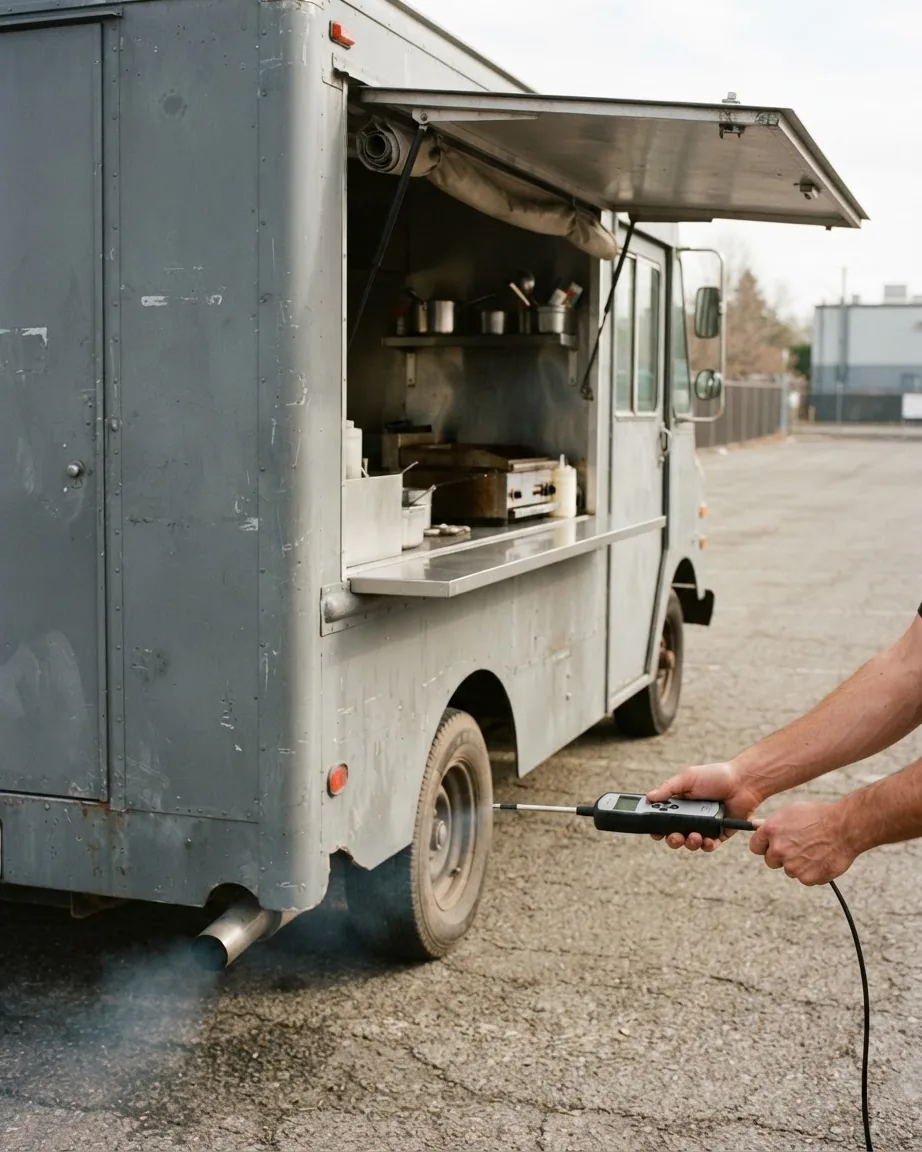
Here’s the catch a price-shopper misses: eligibility is not the same as affordability. Best Food Trucks notes that in some states, particularly California, older diesel trucks are no longer allowed due to emissions standards. A cheap out-of-state diesel can be a truck you legally cannot operate at home. Before you wire a deposit on a used unit, confirm it can be registered and run in your county – the emissions check belongs in the buy decision, not after it.
- New, made-to-order: $75,000 to $150,000 (Square) up to $90,000 to $250,000 (Best Food Trucks).
- Used: $40,000 to $80,000 (Square) up to $50,000 to $125,000 (Best Food Trucks).
- Eligibility check first: confirm emissions compliance for your state before buying used diesel.
The Trailer Option and the Tow Vehicle Nobody Budgets
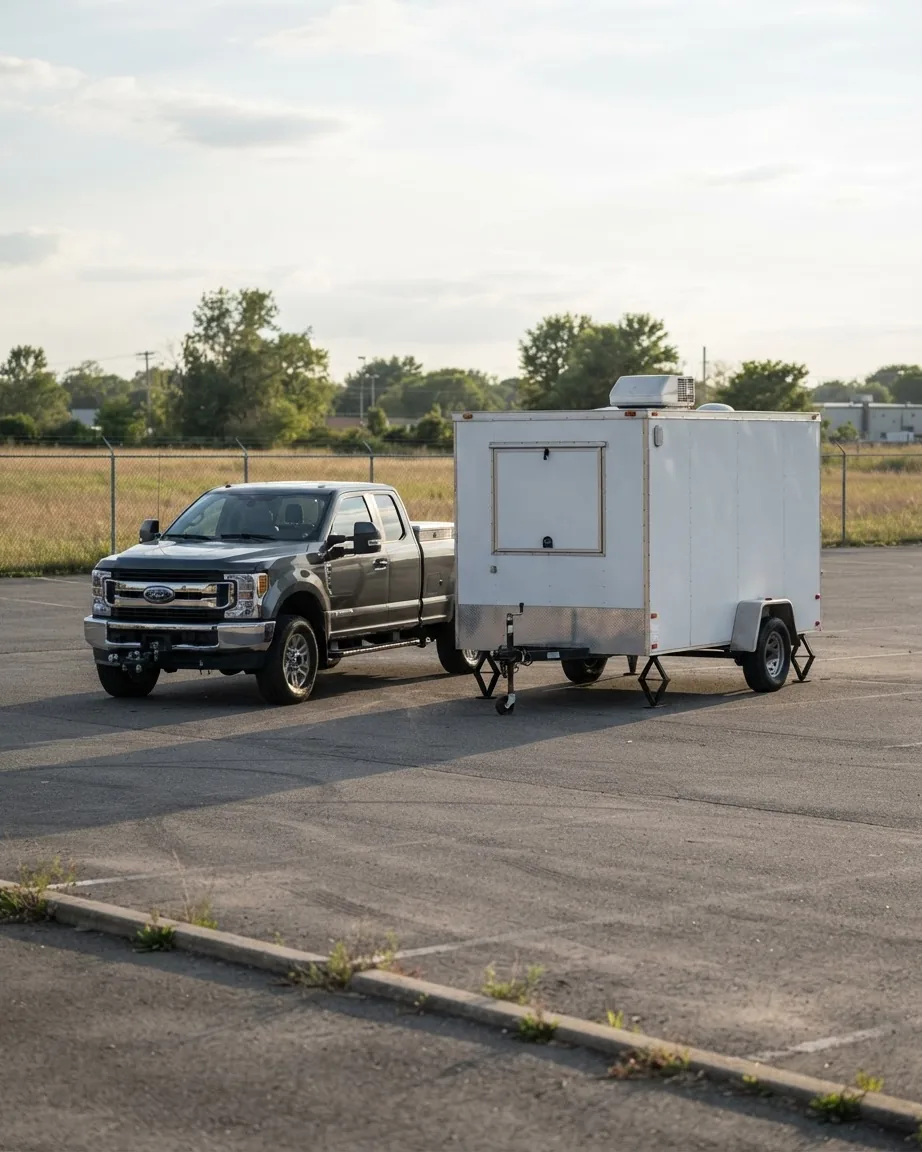
A towable trailer looks cheaper on the sticker, and sometimes it is. Best Food Trucks puts a fully equipped food trailer at $15,000 to $100,000, depending on size and equipment. But a trailer doesn’t drive itself. The same source adds a tow vehicle at $20,000 to $50,000, depending on the truck’s power and reliability – a second asset that a trailer buyer routinely leaves off the spreadsheet.
The trailer wins when you already own a capable tow vehicle or when a strict emissions state pushes you toward a newer tow unit you’d buy anyway. It loses when you’re pricing the trailer alone and forgetting the thing that moves it. If you’re weighing a single-SKU concept where the trailer math leans favorable, our Mini Donut Food Truck breakdown is worth a look.
Equipment, Wrap, POS, and the First Load of Inventory
Past the vehicle, four lines decide whether your truck can actually serve. Best Food Trucks puts kitchen equipment at $10,000 to $50,000 – the range between a simple griddle-and-fryer line and a full hot/cold build. A wrap and branding runs $2,500 to $10,000 depending on design complexity, per the same source. For the register, Sage lists a cash register or POS system at $200 to $1000. And Square pegs starting inventory – cooking oil, spices, and the rest of your opening pantry – at $1,000 to $2,000.
Where the money pays off: the equipment and the POS earn back fast because they directly limit how many orders you can push through the window during a rush. The wrap matters, but a $10,000 wrap is a want, not a need, in month one – a $2,500 design gets you legible and recognizable. Starting inventory is small enough ($1,000 to $2,000) that under-buying to save cash just means an emergency restocking run on day two.
- Kitchen equipment: $10,000 to $50,000.
- Wrap and branding: $2,500 to $10,000.
- POS or register: $200 to $1000.
- Opening inventory: $1,000 to $2,000.
Permits and Licenses: Free, Fixed, and Jurisdiction-Set

Permit pricing breaks into three groups, and confusing them wastes money. Some costs are genuinely free. The Internal Revenue Service issues an Employer Identification Number at no charge – you can get an EIN for free directly from the IRS in minutes by applying online. Toast confirms the same: EINs are free to businesses. If a service offers to “get your EIN” for a fee, that fee is for the typing, not the number.
Other permits carry broad national ranges. Toast lists a business license at around $50 up front plus $25 to a few thousand dollars annually, a food service license at $100 to $1,000, and a liquor license – if you serve alcohol – anywhere from $75 to $6,000. A catering permit can range from $0 for 503C organizations to $200, depending on establishment size and permit type. These are planning bands, not quotes.
The binding numbers come from your own city and county. Treat the national ranges as a sanity check, then call the local health department and fire marshal for the figures that actually apply. For a fuller walk-through, see our guide to food truck permits.
What Specific Cities Actually Charge: Texas, New York, and Austin
National ranges hide how wide local fees swing. Three jurisdictions publish exact numbers worth planning around.
In Texas, statewide mobile food vendor licensing takes effect beginning July 1, 2026, administered by the Texas Department of State Health Services. Its mobile food vendors fee schedule lists a Type III permit – full on-site food preparation, which covers most cooking trucks – at $876, with a $500 figure alongside it. A new vendor cannot operate until the pre-licensing inspection is completed, and the resulting license expires one year after that successful inspection. Budget the cash-runway gap between paying and passing.
In New York City, the DOHMH requires a Mobile Food Vending License plus a food protection course. The City of New York lists a $53.00 Mobile Food Vendor Food Protection Course fee, payable separately from the license application.
In Austin, local fire compliance survives the statewide change. One state license does not erase local fire and health obligations; those are enforced where you park.
Where the Regulatory Bill Lives: Boston Versus the Rest
City choice may move your first-year total more than any equipment decision. The U.S. Chamber of Commerce Foundation’s Food Truck Nation index makes the gap concrete, and its own framings differ by scope – which is the point, not a flaw.
Owners complete 45 separate government-mandated procedures over the course of 37 business days in a heavily regulated market. On fees paid to a single city government, Food Truck Nation reports owners pay approximately $17,066 to Boston city government. Square’s city-fee data lines up: Indianapolis lowest at $590, Boston highest at $17,066, with Seattle next at $6,211.
Widen the scope and the number grows again. Food Truck Nation puts annual regulatory operating costs as high as $37,907 in Boston and as low as $5,410 in Portland. Those three Boston figures – $17,066 in city fees, $28,276 in first-year permits and compliance, and $37,907 in annual regulatory operating cost – are not contradictions; they count different things across different populations. Don’t pick the scariest one and don’t average them. Find the scope that matches your plan.
- Single-city fees: Indianapolis $590, Seattle $6,211, Boston $17,066.
- First-year permits and compliance: $28,276 across 45 procedures.
- Annual regulatory operating cost: $5,410 (Portland) to $37,907 (Boston).
Insurance: $2,000 to $5,000 a Year, With One Source Capping Lower
Insurance is a required annual line, and two sources land close but not identical. Best Food Trucks expects $2,000 to $5,000 per year for comprehensive coverage. Sage calls it necessary and a bit costly at about $2,000 to $4,000 for annual premiums. Same floor, different ceiling.
The honest read: budget $2,000 at minimum and plan for up to $5,000 if you carry a loaded truck, serve alcohol, or work high-exposure events. The lower $4,000 cap from Sage reflects a simpler operation; the higher $5,000 cap reflects fuller coverage. Neither is wrong – your risk profile decides where you land inside the band. Don’t under-insure to save a few hundred dollars when a single engine claim dwarfs the premium.
Monthly Burn: The Runway That Outlasts the Sticker Price
Opening costs get the attention; monthly burn is what closes trucks. Best Food Trucks puts monthly essentials at $3,000 to $10,000. Within that, a commissary kitchen runs $400 to $1,200 monthly (Sage), and Square separately estimates monthly expenses around $2,000 to $3,000 for a leaner operation. Leasing instead of buying shifts cost to the monthly column: Best Food Trucks lists leasing or renting at $2,500 to $4,500 a month.
Then the repairs that budgets skip. Best Food Trucks notes engine repairs can easily cost $12,000 or more, while kitchen equipment repairs range from $3,000 to $6,000. A generator must be serviced once every 500 hours, with generator maintenance running $300 to $600. And event access takes a cut off the top – fees range from 10% on a daily lunch location to 50% at a huge festival.
That last one reshapes revenue math. Half your festival sales can go to the organizer before you’ve paid for propane. Before you book, price the cut into the plate. Our rundown of food truck events gets into the booking side.
- Monthly essentials: $3,000 to $10,000.
- Commissary: $400 to $1,200 monthly.
- Lease/rent a truck: $2,500 to $4,500 monthly.
- Engine repair: $12,000 or more. Equipment repair: $3,000 to $6,000.
- Generator service: every 500 hours, $300 to $600.
- Event cut: 10% (daily lunch) to 50% (festival).
The Non-Fee Constraints: Timing, Waiting Lists, and Daily Commissary Returns
Paying the fee does not buy you the right to open tomorrow. Food Truck Nation’s 45 procedures over 37 business days is a timeline, not a formality, and applications may take several months. You can have the cash and still not have a path to operate.
There are also standing obligations fee-only budgets miss. The City of New York requires trucks and carts to be stored at the facility when not in use and returned to the facility at least once each day for cleaning and maintenance – a commissary-type requirement that adds both cost and daily logistics. In Texas, the DSHS inspection gate means you’re carrying overhead before a dollar comes in. Plan a cash runway that covers the gap between application and first service, because that gap is where thin budgets break.
Is the $55,000 average a safe number to plan around?
It’s a midpoint, not a target. The U.S. Chamber of Commerce (CO – ) cites roughly $55,000 as an average U.S. opening figure, but a loaded custom build pushes toward $187,440 while a lean used-truck launch can sit well below. Use $55,000 to gut-check a plan, then rebuild the total from your actual truck, city fees, and runway rather than defaulting to the average.
Does the new statewide Texas license mean I skip local permits?
No. Local fire and health rules are enforced where you operate, so confirm city and county requirements separately from the state permit – assuming one covers the other is a common and expensive miss.
Should I pay a service to get my EIN?
No reason to. Both Toast and the Internal Revenue Service confirm an EIN is free to apply for online, usually issued in minutes. Any charge you see is a middleman fee for filling out a form you can complete yourself. Keep that cash for inventory or your insurance premium, where it actually buys you something.
Why do published startup totals vary so wildly?
Because they measure different scopes. Square’s $46,700 to $187,440 leans on a rental scenario, the $55,000 figure is a point-estimate average, the $28,276 is permits and compliance only for one year, and single-city fee totals count just local government charges. They answer separate questions, so comparing them head-to-head produces confusion rather than a budget.
Dollar figures for regulatory cost don’t tell you whether they’ll sink you – a percentage of revenue does. Food Truck Nation’s base case assumes a truck that generates $250,000 a year, and the study reports annual regulatory operating costs as high as $37,907 in Boston and as low as $5,410 in Portland. Divide one by the other and the sticker turns into something you can actually weigh against your margin:
- Put another way: $37,907 / $5,410 = Boston costs 7.0x what Portland does to stay compliant each year.
The city line isn’t a permit fee you pay once; it’s a recurring tax on your top line, and it’s the single number worth settling before you shop for a truck.