Texas just moved the goalposts: beginning July 1, 2026, every mobile food vendor in the state has to be licensed with the Texas Department of State Health Services before serving a single plate. That single rule change tells you most of what you need to know about food truck permits – they are not one document you buy once, and the people who set them keep rewriting them. What you actually assemble is a stack: a food-safety permit from a health agency, a city or county vendor license, a fire sign-off, and usually a commissary agreement. Miss one layer and you are parked, legal on paper, and still unable to sell.
Below is what each layer costs where real figures exist, which agency answers for it, and the two or three costs that catch first-year operators who budgeted for the headline fee and nothing else.
Quick answer: A food truck permit is a stack of several approvals, not one license. In Texas, the state DSHS application runs $309 for a Type I truck and $876 plus a $500 pre-licensing inspection for a Type III. New York City charges $50 for a two-year Mobile Food Vending License and $53 for the required food protection course. Generic permit fees range from $100 to over $1,000 depending on your city, and a one-time plan review adds $100 to $755 on top. Budget several months of lead time – applications are slow, and some layers run on their own clock.
Why a food truck permit is a stack, not a single license
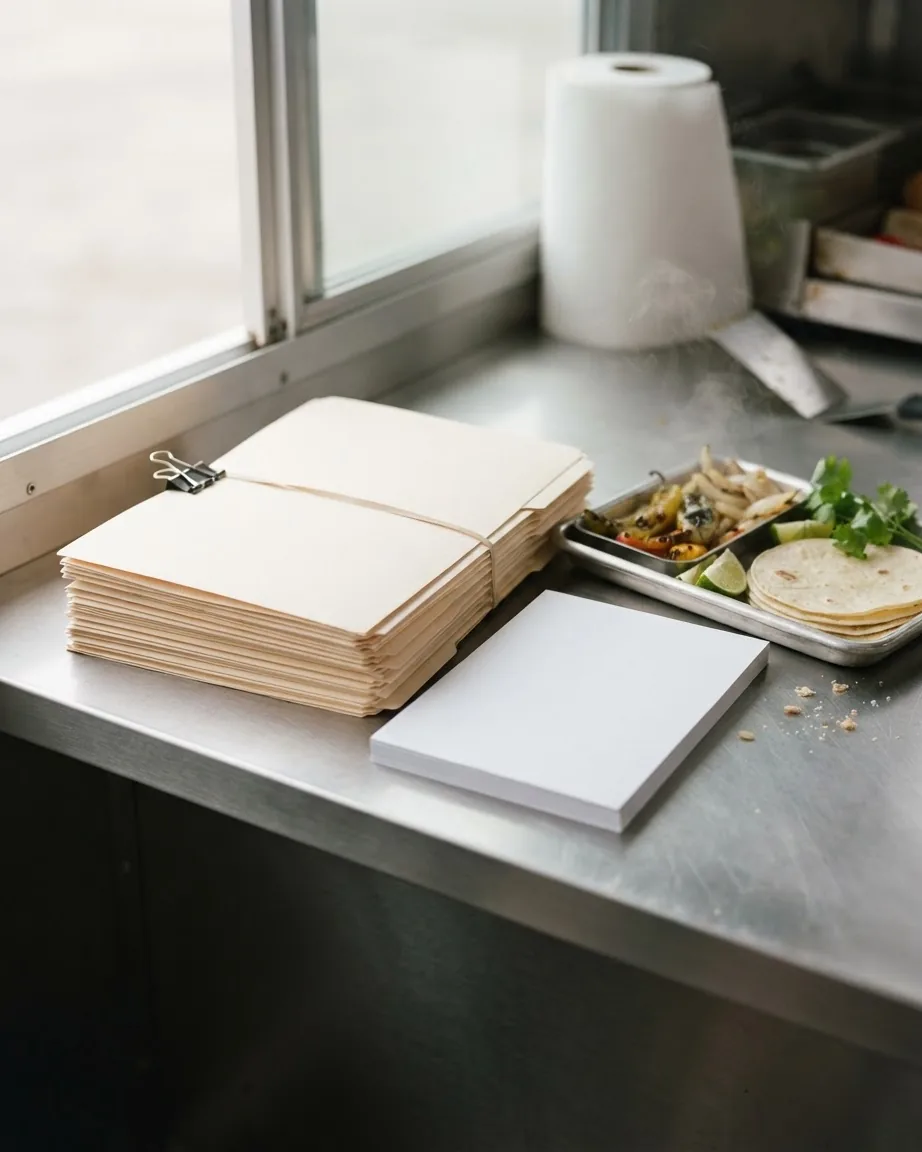
The word “permit” does a lot of hiding. In most places you are collecting four separate things, each from a different office. The food-safety permit comes from a state agency, a county health department, or a regional health district, and it is usually the largest single fee. On top of that sits a municipal business or vendor license, which runs from nothing at all to a few hundred dollars a year. Then the fire department signs off on your suppression system and propane setup. And almost everywhere, you need a commissary agreement – not a permit, but a required, recurring cost.
Some states treat the license and the operating permit as two different documents. The distinction matters because you can hold the license and still lack the thing that lets you actually park and sell. New York is the clearest example: the license is the cheap, straightforward part, and the unit permit is the real bottleneck, with a long waiting list that the fee alone does not get you past.
Massachusetts pushes the fragmentation further. Under the state’s Food Protection Program, a mobile operator needs a separate permit in every municipality where they operate, plus a permit tied to the unit itself. If your weekend route crosses three towns, that is three permitting relationships, not one. The binding rules in any of this come from your own city and county – state and national guides tell you the shape of the stack, but the office that can shut you down is local.
How much food truck permits cost: the real 2026 numbers

There is no honest single answer to “what does a food truck permit cost,” because the published figures describe different layers in different places and cannot be added up or ranked against each other. What follows are the verified numbers from the agencies that actually charge them.
The national guide from Toast, Inc. puts a generic food truck permit at $100 to over $1,000, depending on location, zone, and time of year. That same guide lists a different band for a separate type of permit – $0 for 503C organizations up to $200 for things like a catering permit – which is why you cannot treat “the permit cost” as one number. They measure different layers of the stack.
For state-issued fees, Texas gives you exact figures. According to the Texas Department of State Health Services, the Type I application fee is $309 with no pre-licensing inspection fee, while a Type III truck – full food handling – pays $876 plus a $500 pre-licensing inspection. The license then expires one year from the date you pass that inspection, so renewal timing hangs on the inspection date, not the application date.
In New York City, the published numbers are small and the paperwork is the hard part. The MyCity Business portal lists the full-term Mobile Food Vending License at $50, valid for two years, and requires passing a Food Protection Course for Mobile Food Vendors at $53 before the license is issued. Those two figures are the whole published license cost – and still not enough to get you selling, because the unit permit sits behind a capped waiting list.
If you are weighing where to base, our breakdown of the numbers that go in each blank puts these permit lines next to the rest of your fixed costs.
The hidden costs: plan review and the 6-month fire interval
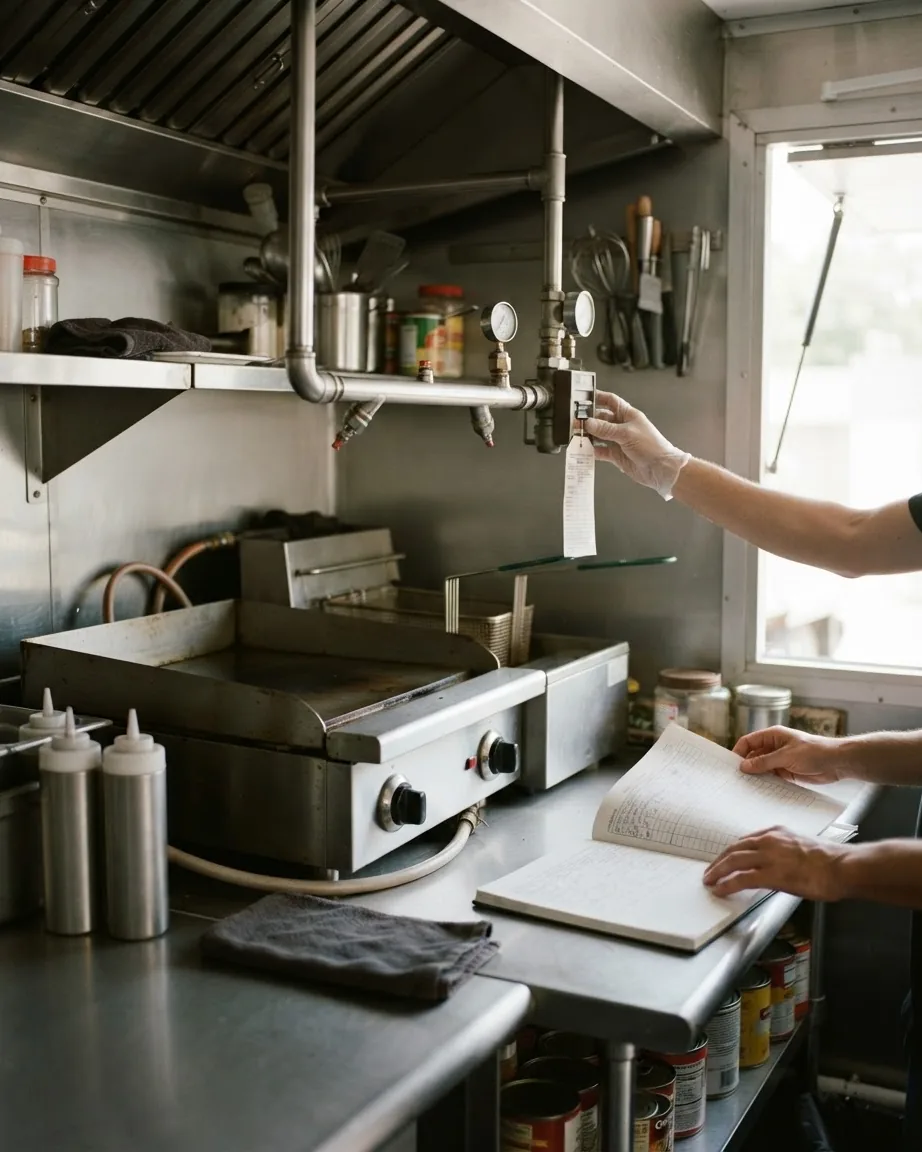
The fee that ends careers before they start is not the license – it is the one-time plan review nobody mentioned. Industry builder Zion Foodtrucks, which compiled 2026 cost layers across the Mountain West, puts it bluntly: the plan review “catches people who only budgeted for the headline license.” It ranges from about $100 in Idaho to $755 in Salt Lake County. That is a one-time charge, but it lands during your most cash-strapped stretch, before you have sold anything.
The second ambush is the fire suppression interval. Many operators assume their suppression system gets serviced annually, the way a home extinguisher inspection feels like it should. The actual code interval is every 6 months, not annual, which Zion Foodtrucks notes “catches a lot of operators out.” Budget two service visits a year, not one, and keep the written report and logbook entry – the fire marshal will ask to see them.
Both of these are worth flagging on your own calendar the day you start, because neither one runs on the same clock as your license renewal. The plan review is a prerequisite to opening; the fire interval is a recurring compliance deadline that can quietly lapse.
Do you need a commissary? It depends on what you cook
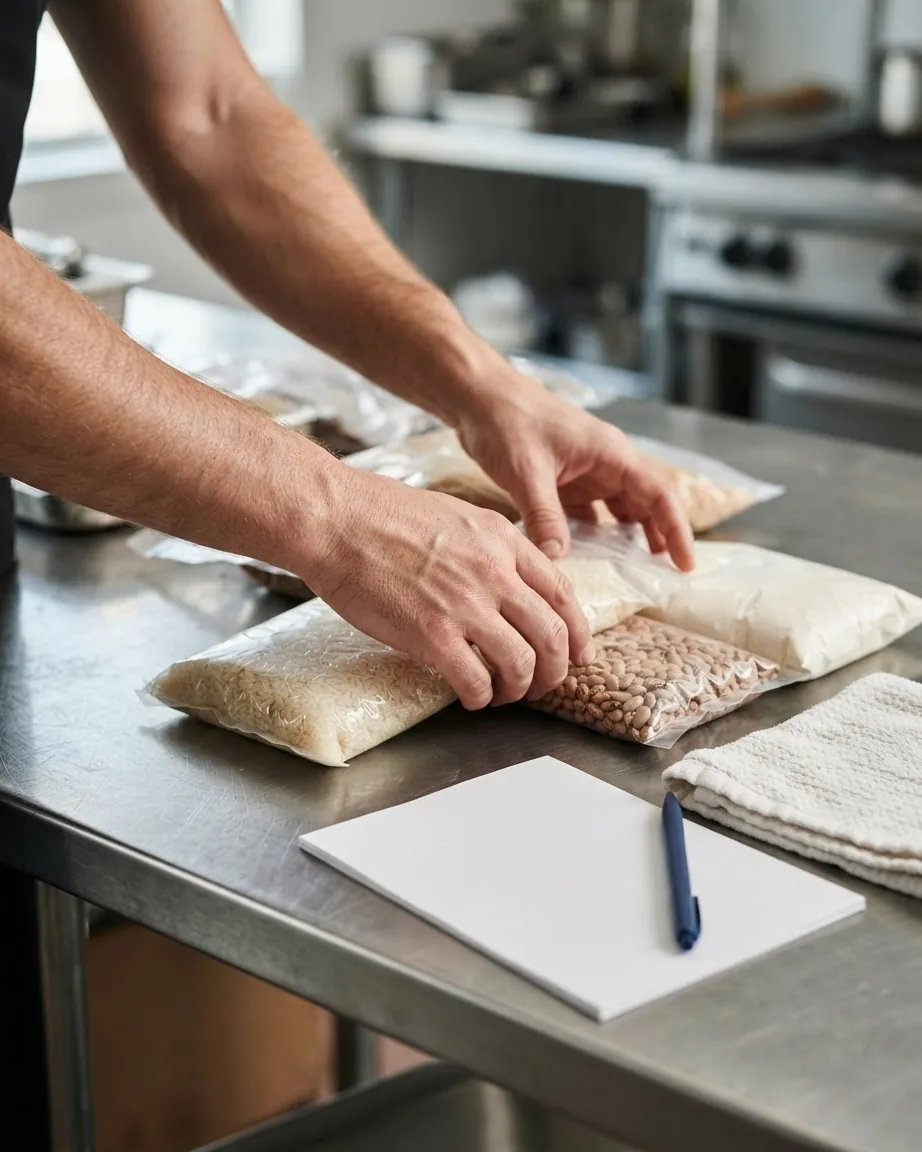
A commissary is a licensed commercial kitchen where you prep, store, and service the truck off the vehicle. The common claim that you “need one almost everywhere” is only half true – it depends entirely on what is on your menu.
The dividing line is TCS food: time/temperature control for safety items, the hazardous foods that can grow bacteria if held wrong. If your truck handles and cooks TCS food, a commissary is almost always required. If you sell only prepackaged, non-TCS items, you may be exempt. The Florida Department of Agriculture and Consumer Services builds this exemption directly into Florida’s structure for prepackaged, non-TCS operations. Massachusetts draws a similar line, with exemptions for non-TCS-only vendors.
Florida adds a wrinkle worth knowing before you apply anywhere: the state splits mobile food regulation between two agencies. FDACS handles prepackaged and non-TCS trucks; the Department of Business and Professional Regulation handles prepared, cooked, hazardous-food trucks. So “the Florida permit” is not one thing – it depends on your menu, and applying to the wrong agency wastes weeks. Classify your own menu first, honestly, before you file anything.
- Non-TCS, prepackaged only – possible commissary exemption; often the lighter permit path.
- Cooked, held, or hazardous (TCS) food – commissary agreement almost always required, and the stricter regulating agency applies.
Food handler certification and the paperwork that runs on its own clock
Nearly every jurisdiction wants someone on the truck to hold a food handler or food protection certification, and the New York Food Truck Association treats it as a baseline across its permit guidance. New York City bakes it into licensing outright – that $53 Food Protection Course has to be passed before the Mobile Food Vending License is issued, so it is a gate, not an afterthought.
One item that trips up first-timers is the EIN. If you do not already have an Employer Identification Number from the IRS, the NYFTA notes it usually takes about 4 weeks to arrive – and you often need it before you can complete other applications. That is four weeks sitting in front of everything else, running in the background whether you are ready or not.
Allergen warning
For allergen and cross-contact handling on the line, follow your local health department’s requirements; those are enforced locally and vary by jurisdiction.
Alcohol, ice cream, and seafood: the permits your concept adds
Your base stack covers a straightforward food truck. Certain menus bolt extra permits onto it. A liquor license is the big one – Toast, Inc. puts the range for a food truck at $75 to $6,000, which is a wider swing than any other single line in the permit picture and depends heavily on your state and local rules.
Frozen and cold concepts carry their own route and event rules on top of the food-safety permit, and cold-holding temperatures are enforced locally – check your health department’s exact figures rather than relying on a general number. If a dessert truck is the plan, our look at ice cream truck popsicles sits next to this permit question.
Concept-specific permits are also where free paths show up. Toast’s $0-to-$200 band applies to 503C organizations, and Florida’s FDACS structure includes free-permit provisions in defined cases. If you run a brick-and-mortar already, or qualify as a nonprofit or under a veteran provision, ask the issuing agency directly whether a fee waiver applies before you pay – these are easy to miss because the default assumption is that every layer costs money.
One statewide license or one per town? The reciprocity decision
Whether you deal with one permit or many is the question that most changes your budget, and the answer splits cleanly by state model. Texas is consolidating: as of July 1, 2026, the DSHS license covers the state. A handful of other states have reciprocity too, where one health permit works statewide – which is real money saved for anyone who travels to events, because you are not re-permitting at every stop.
Massachusetts runs the opposite model. Its Food Protection Program requires a separate permit per municipality plus a per-unit permit, so a route across towns multiplies your permitting relationships rather than consolidating them. The Commonwealth of Massachusetts also sets build specifics that travel with the permit – handwashing sinks must be easily accessible, within 25 feet, for vendors handling exposed, processed foods.
Neither model is “better” in the abstract. It is a route-and-budget decision: if your events cluster in one reciprocal state, you win on fees; if they cross municipal lines in a per-town state, you pay – and plan – for each. Decide your route first, then price the permits against it, not the other way around. Our write-up on the minimum-spend trap runs parallel math for private bookings.
Lead time: start the paperwork months before you cook
The permits are slow, and they do not all run on the same clock, so the operators who open on schedule are the ones who started the paperwork early. Toast, Inc. warns that initial permit and license costs can exceed $1,000 and the application process may take several months – which is why early planning matters more here than in almost any other part of the build.
Florida sets a concrete floor: FDACS asks that a food permit application be submitted 21 days prior to opening. Treat that 21-day window as a minimum, not a target, because anything the application depends on – the 4-week IRS wait for an EIN, the one-time plan review, a scheduled pre-licensing inspection like the one Texas requires for a Type III – stacks in front of it. For a sense of the full timeline, a builder like Zion Foodtrucks turns a custom truck around in 6 to 8 weeks for most builds, and your permitting should be running in parallel with that, not after it.
Sequence it roughly like this, with the slowest items first:
- Week one: file for your EIN (about 4 weeks at the IRS) and classify your menu as TCS or non-TCS to pick the right agency.
- Early: submit the plan review ($100 to $755 one-time) – it is a prerequisite to opening, not a formality.
- Mid: apply for the state or county food-safety permit and complete any required food protection course.
- At least 21 days out (Florida) or per your local rule: submit the food permit application and schedule the pre-licensing inspection.
- Before opening: secure the city vendor license, fire sign-off, and commissary agreement if required.
Which agency do I apply to first?
Classify your menu before anything else. If you cook or hold TCS food, you fall under the stricter regulator – in Florida that’s DBPR, not FDACS, and in Texas you’re likely a Type III at $876 plus the $500 inspection. Prepackaged non-TCS trucks take the lighter path. Filing with the wrong office costs you weeks you can’t get back near an opening date.
Is the NYC license really all I pay?
No. The $50 license and $53 course are just the published, entry-level figures. The operating bottleneck is the separate unit permit, which sits behind a capped waiting list rather than a simple fee. Plenty of people hold the license and the course certificate yet still cannot legally park and vend, because the unit permit – not the license – is what gates the street.
Can a permit ever cost nothing?
Yes, in narrow cases. Toast, Inc. documents a $0 fee for 503C organizations, and Florida’s FDACS structure carves out free-permit provisions for qualifying operators. Some cities have also dropped their separate municipal vendor license entirely. Always ask the issuing agency whether a waiver applies to nonprofits, veterans, or existing brick-and-mortar owners before assuming every layer carries a charge.
How often does the fire system need servicing?
Every 6 months, not once a year – the mistake that lands operators with a lapsed system at inspection. Mark both service dates at the start of the year and keep the written report plus the logbook entry on the truck. The fire marshal checks the paperwork, not just the canister, so a serviced system with no documentation can still fail you.
What the Permit Actually Costs to Walk Out the Door (Not the Sticker Price)
The headline fee is never the number you pay. Run the arithmetic on the figures the agencies actually publish and the real entry cost looks different – sometimes more than double – because the mandatory add-ons are quoted on a separate line from the application.
- Texas Type III, the full food-handling tier: the $876 application is only part of it. Add the $500 pre-licensing inspection that Type III can’t skip, and the real first-license cost is $876 + $500 = $1,376. The inspection alone inflates the sticker by 57%.
- The tier jump is the budget killer: Type I runs $309 with no inspection fee, while a Type III pays $876 plus a $500 pre-licensing inspection. Your menu, not your city, decides this number.
- NYC’s $50 license is a half-truth: you can’t be issued it without first passing the $53 Food Protection Course. The real entry cost is $50 + $53 = $103 before you touch the capped unit-permit waiting list that actually lets you park and sell.
None of these totals can be added across the three columns – different states, different layers – but inside each jurisdiction the math is exact, and it’s the number to put in your spreadsheet instead of the one on the brochure.