Under 50 guests, a food truck charges you about $26 a head. At 200 to 299 guests, that drops to $15 a head. Same food, same window, nearly half the per-person price – and nobody planning a backyard birthday expects that, because the obvious assumption is that a smaller crowd is the cheaper one. It isn’t, and knowing why changes how you book. A food truck rental for a party runs on a minimum spend, not a sliding headcount, and the whole budget bends around that floor. Food Truck Club puts the per-head figures at $26, $17, and $15 across those guest bands, drawn from its paid bookings. This guide walks the real cost ladder, the deposit and lead-time terms, the throughput math, and the permit question most hosts never ask until it’s too late.
Quick answer: A food truck rental for a party averages around $1,541, with most packages landing between $800 and $2,500. Food Truck Club reports a median of $18 per person before sales tax across 1,425 paid bookings, with the middle half of events between $14 and $24. Below roughly 75 guests, the truck’s minimum spend – commonly $750 to $1,500 – sets your bill, not your headcount, so small parties pay more per head. Taco trucks run about $10 to $15 per person; burger, BBQ, and pizza run $15 to $25. Book early: strong event trucks fill weekends up to a year and a half out.
What a food truck rental for a party actually costs by guest count
Start with the spread, because a single national number hides more than it tells. Roaming Hunger publishes its party catering cost breakdown. That’s the shape of the thing. Now the per-head detail.
Food Truck Club, reporting across 1,425 paid bookings, lands a median of $18 per person before sales tax, with the middle half of events between $14 and $24. Translate that to totals and the guest bands look like this: about $1,109 for 50 to 74 guests, $1,950 for 100 to 149, and $2,739 for 150 to 199.
Here’s the part that trips hosts up. Per-head cost falls as the crowd grows:
- Under 50 guests: about $26 a head
- 100 to 149 guests: about $17 a head
- 200 to 299 guests: about $15 a head
The reason sits in the next section.
Why a small party costs more per head (the minimum-spend floor)
A truck doesn’t price your event by the plate when the plate count is low. It prices by its minimum spend – the floor it needs to make driving out, prepping, and staffing the window worth the day. Food Truck Club finds most verified trucks set a minimum around $750, with the middle half between $600 and $850. Best Food Trucks puts the private-catering range higher, at $800 to $1,500. Those two figures aren’t a contradiction; they’re different populations – one is a platform-wide median across all booking types, the other is private-catering specifically. Expect the higher end when it’s a closed event at your home.
Run the floor against a small crowd and the math is unforgiving. A $900 minimum over 35 guests is roughly $26 a head whether the food costs that or not. Spread the same minimum over 150 guests and the per-head number collapses toward the food cost itself. That’s the mechanism behind the $26-to-$15 slide above: below about 75 guests, the minimum sets your bill, not your headcount.
What to do with that: if you’re near a guest band’s upper edge, inviting a few more people often costs you nothing extra per head and can even lower it, because you’re already paying the floor. Padding a 40-person party to 55 rarely moves the total much.
Drop-off vs. full-service: the $1,108 vs. $2,584 lever
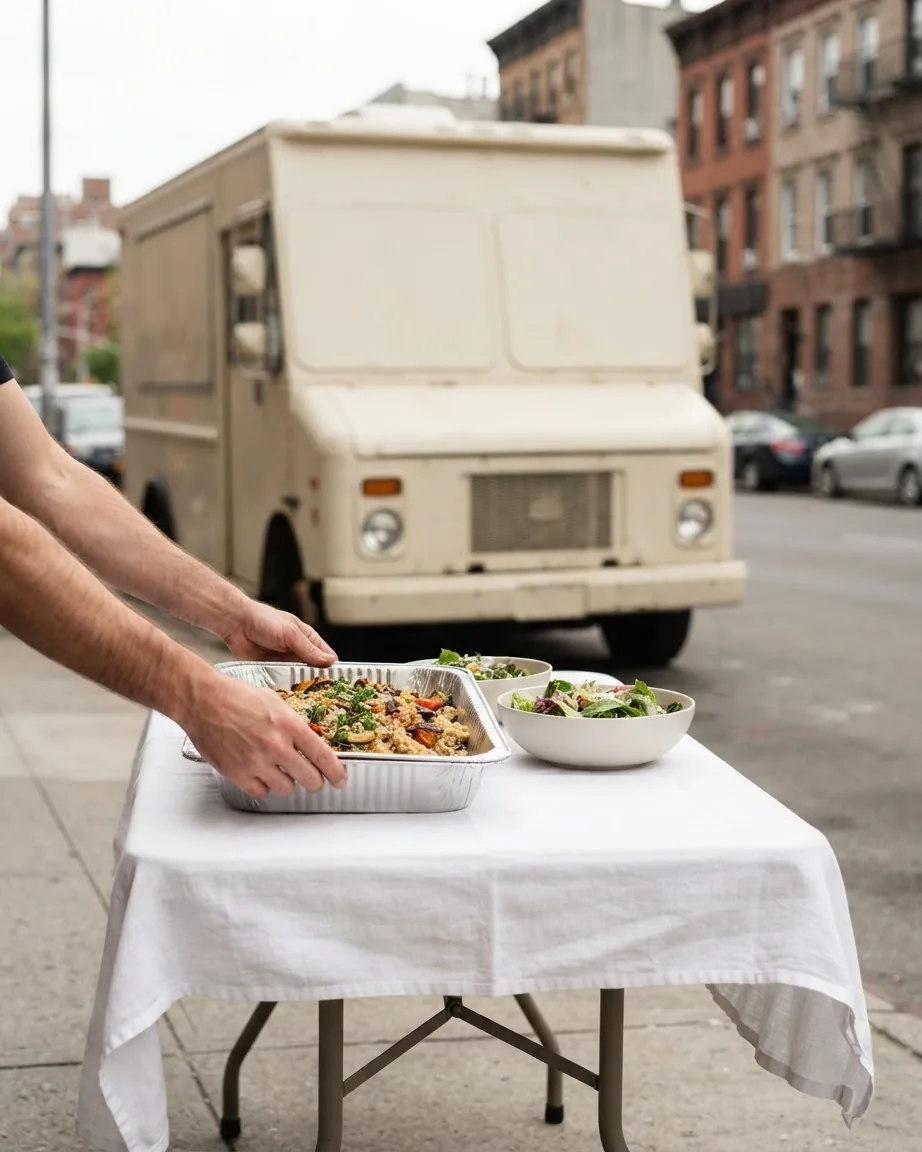
This is the single biggest cost switch most hosts never get offered in plain terms. Best Food Trucks reports that drop-off events average around $1,108, versus $2,584 for full-service. That’s more than double, and the difference is staffing and service time, not food quality.
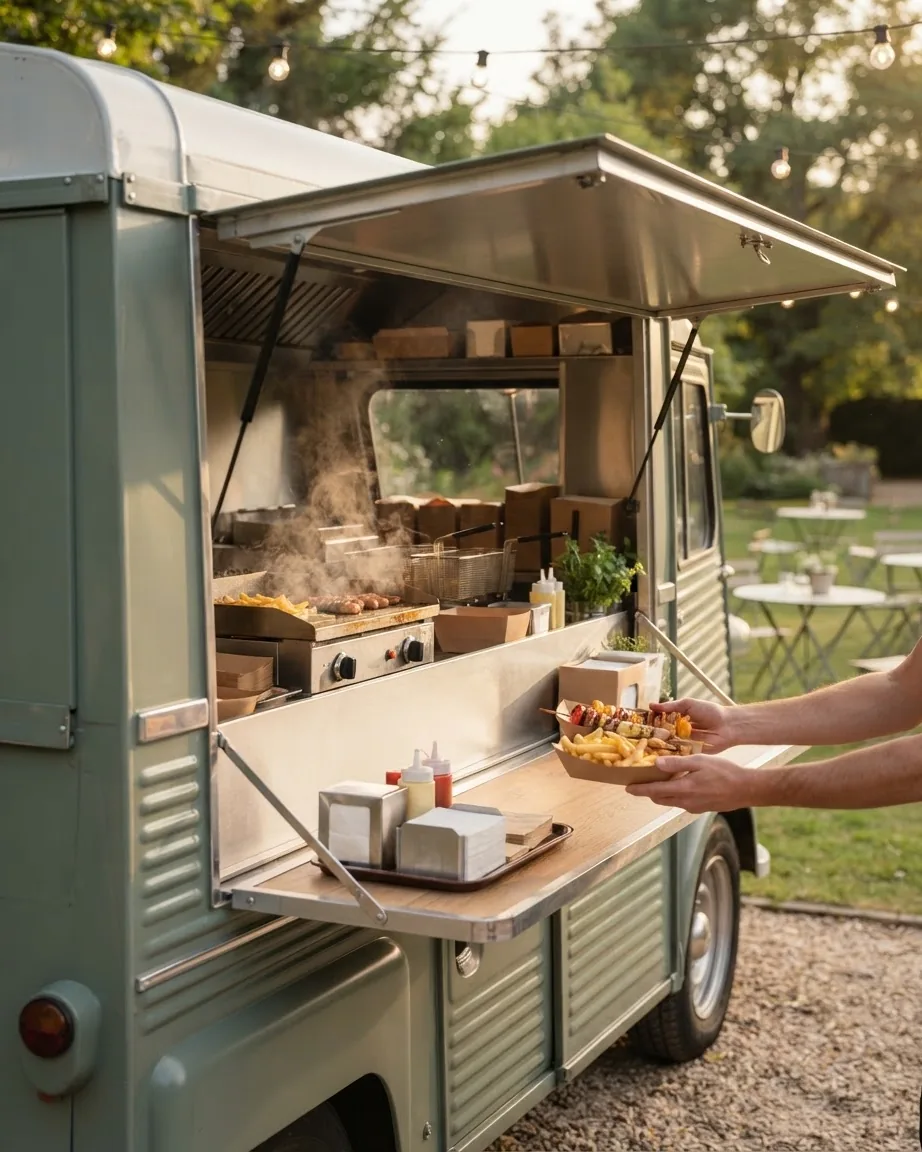
Drop-off means the truck delivers prepared food, sets it, and leaves – fast. Some setups are fully self-contained and ready to serve in under 15 minutes. Full-service means the crew cooks on-site, runs the window through your whole event, and handles the line. For a casual graduation party where guests graze, drop-off can carry the day. For a wedding reception where the truck is the meal and the entertainment, you’re paying for the window to stay open.
Before you default to full-service because it sounds nicer, price both. If your crowd is under 60 and you don’t need a live window, the drop-off number may cover your event with room to spare.
How cuisine and service window move the bill
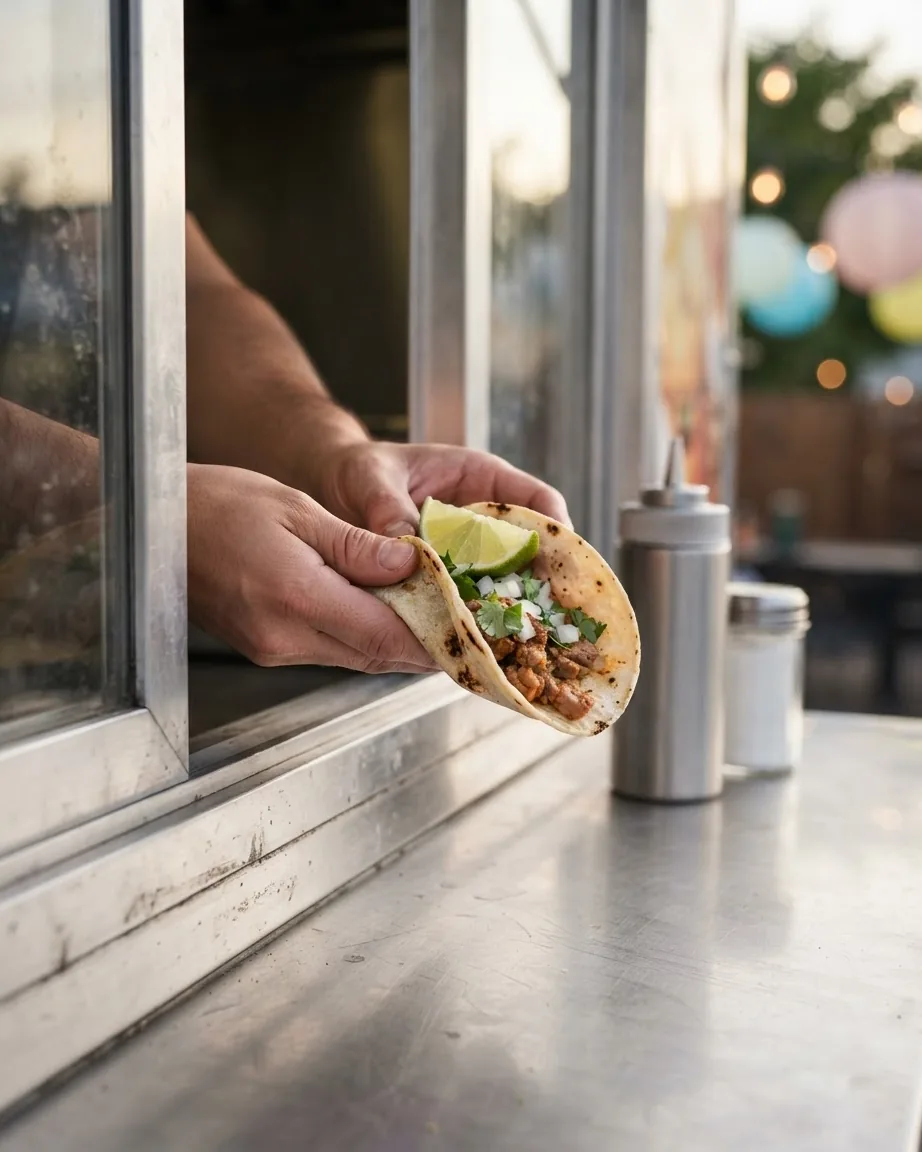
Roaming Hunger is blunt that cuisine affects the cost of your food truck catering more than any other single factor. Its historical booking data breaks down like this:
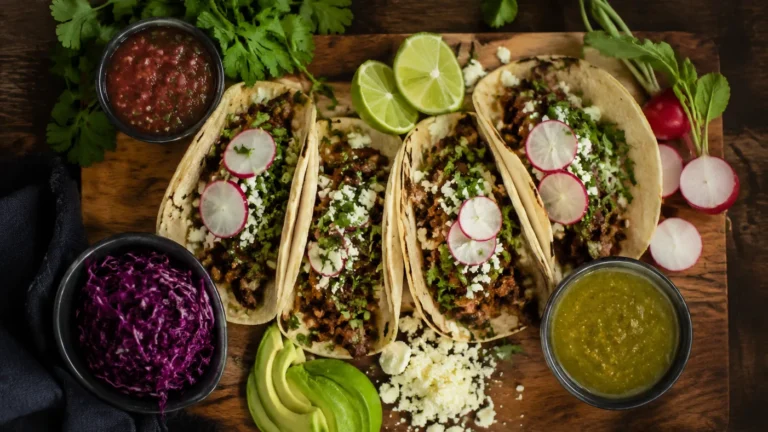
- Taco trucks: about $10 to $15 per person
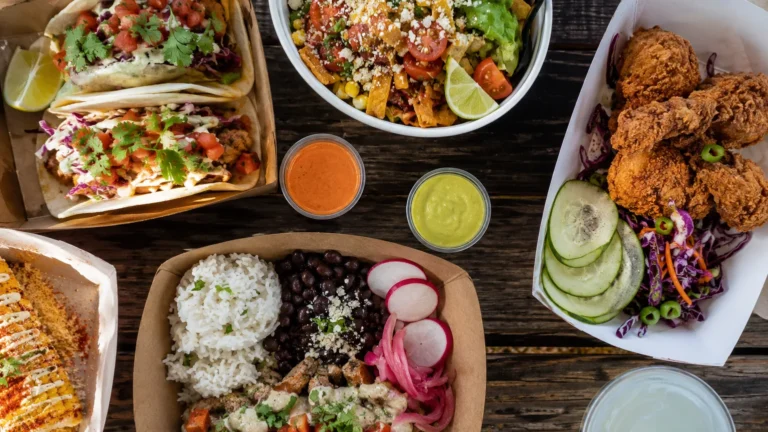
- Burger, BBQ, and pizza trucks: about $15 to $25 per person
Event type pulls the number too. Best Food Trucks finds birthday parties carry the highest per-person cost at $38 on average, with wedding receptions and holiday parties at $31 to $36 – these are full-service event averages, which is why they sit well above Food Truck Club’s $18 all-booking median. Both figures are real; they’re measuring different things.
Then there’s time at the window. A typical party service runs 2 to 3 hours. Food Truck Club’s window pricing: a one-hour window books for about $1,200, two hours for $1,349, three hours for $1,913, and four or more for $2,378. Roaming Hunger frames extra hours as straight added cost; Food Truck Club frames longer windows as costing more because they feed more people. Both are true – a longer window either means more guests served or more staff hours, and sometimes a higher minimum spend. Interestingly, Food Truck Club reports no weekend or seasonal premium in its data; the binding constraint on a Saturday isn’t price, it’s whether a good truck is still free.
If you’re weighing a taco setup against a heavier menu, our taco truck for parties guide sits in the same per-person territory. For the build-out side of a taco menu, see our taco food truck menu notes.
Food truck vs. traditional caterer: the full-bill comparison
Plate price is where people stop comparing, and it’s the wrong place to stop. Best Food Trucks puts food truck catering at $22 to $38 per person for full service, against traditional restaurant catering at $25 to $80 per person. On the sticker alone, the truck usually wins.
But the structural costs differ in a way that matters more than the spread. A full-service caterer typically adds an 18 to 22 percent service charge to the bill – and per Food Truck Club’s tipping guidance, that charge is not a tip. It’s a line item that lands on top before you’ve decided to reward anyone. A truck’s price is closer to all-in, with a gratuity you choose. Factor that service charge into the caterer’s number and a $50-a-head quote isn’t really $50.
The truck’s hidden adds are smaller and more predictable: a travel fee if you’re outside the normal radius, possibly a higher minimum. Weigh the real totals, not the two headline per-head ranges.
Deposits, lead time, and how booking actually runs
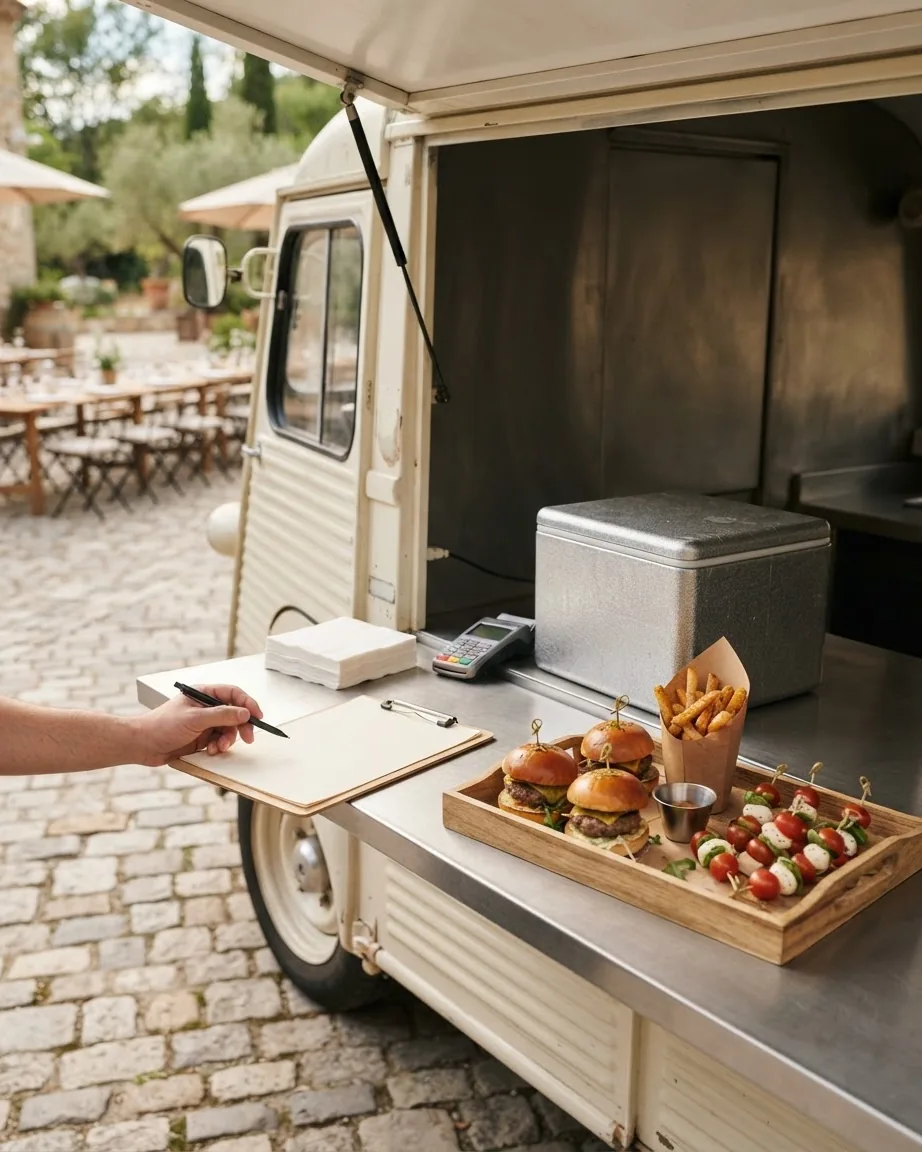

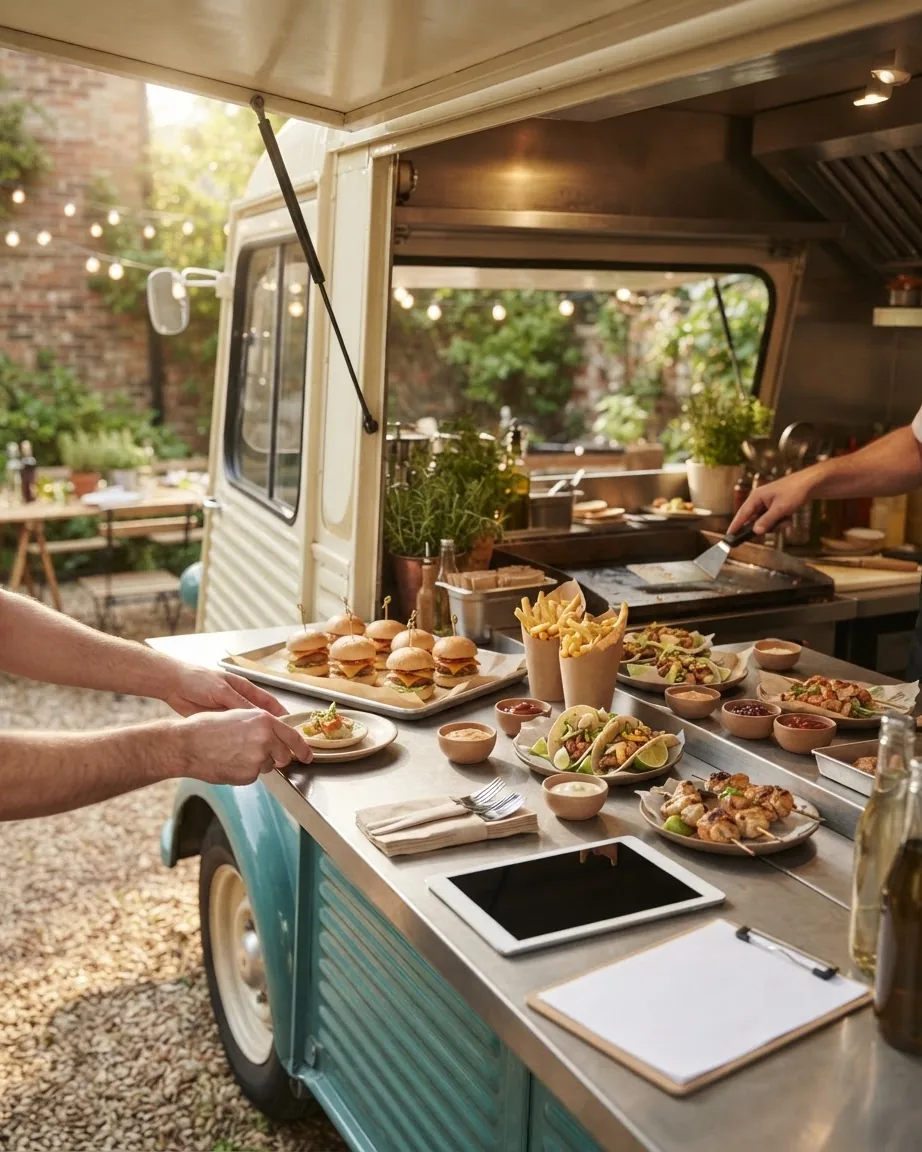
The booking itself is simpler than the budgeting. You submit event details – date, location, guest count, budget – and trucks come back with proposals. Best Food Trucks says you can receive proposals from trucks in your area within 24 to 48 hours; FoodtruckBooking.us describes the same request-and-book flow. In smaller markets, expect up to 24 hours just to see the menu list for your region.
On money: Best Food Trucks describes a deposit paid upfront, typically 25 to 50 percent of the total, with the balance due before or at the event. Read that deposit line for refundability before you sign, because of the permit timing in the next section.
Lead time is the quiet dealbreaker. Heritage Food Truck Catering, an operating event truck out of Malden, Massachusetts, warns that high-quality event trucks book up to a year and a half ahead. If your date is fixed – a wedding, a milestone birthday – the number that decides your options isn’t price, it’s how early you call.
Throughput: how fast the line moves and when you need a second truck
A truck can only hand out so many plates an hour, and a stalled line turns a party sour faster than any menu complaint. Best Food Trucks’ operational guidance puts a truck at 60 to 100 people per hour with a limited event menu. “Limited” is doing real work there – a short, fast menu is what hits the top of that range. A sprawling menu drags you toward the bottom.
Do the arithmetic against your window. One truck at 80 guests per hour over a 2-hour window serves about 160 people comfortably. Push 250 guests through one window and the back of the line waits over an hour, cold and annoyed.
That’s when a second truck enters – but understand what it is and isn’t. Food Truck Club reports one truck at about $1,388 at the median, two at $3,343, three at $5,142. A second truck is a crowd decision past roughly 150 guests, not a way to save money. You add it to keep the line moving, not to cut your bill.
Site logistics: power, water, and access on the day
The booking can be perfect and still fall apart in your driveway. Trucks are largely self-contained – they bring generators – but many prefer to plug in. Best Food Trucks’ event guidance notes trucks typically need two 110-volt, 20-amp circuits if they’re drawing from your power instead of running the generator. Know which your truck plans to do, and whether your outlets can carry it without tripping.
Beyond power, walk the approach before the date. Confirm the truck can physically reach the serving spot – gate width, overhead clearance, a surface it won’t sink into. Nail down where it parks relative to the guest flow, and whether the window faces the crowd or a fence. These are the details that don’t show up in any quote and ruin the ones that ignore them.
Permits for a private-property party: who’s responsible, and lead time
Here’s the angle the cost guides skip: whether a food truck at your private party needs a permit depends entirely on your city, and venue consent is not the same as a food-service permit. The rules below are not interchangeable – treat them as examples of how much jurisdictions diverge, then check your own.
Heritage Food Truck Catering notes that some towns require permitting from as many as three departments – Board of Health, fire, and police – while in many cases no permit is required at all for a private function. That’s the whole range, in one operator’s words.
The city-by-city picture backs that up:
- Chandler, Arizona: the City of Chandler reports there’s no charge for a TSPE permit, but the application must be in no later than 15 days before the event. Catering with no money exchanged can be exempt, while a private TSPE can require a permit.
- New York City: the Department of Health and Mental Hygiene treats a temporary event as one lasting no longer than 14 consecutive days and requires that you notify the Health Department 30 days before the event begins. Public-facing events need permitted vendors; private functions where the public isn’t invited can be exempt.
- Milwaukee: the Department of Neighborhood Services requires each food peddler vehicle to return to its operational base every 24 hours for food, water, supplies, or cleaning – unless it’s at a licensed temporary event with on-site facilities or granted a variance.
- San Diego and Cambridge: the City of San Diego Development Services Department publishes zoning and permitting rules for mobile food trucks, and the City of Cambridge Inspectional Services Department administers mobile food truck food and sanitary permitting – both separate from any consent the property owner gives.
Two practical takeaways. First, the permit is almost always the operator’s responsibility, not yours – but confirm the truck carries current food-service permits before you pay, because your venue’s blessing doesn’t cover that. Second, the lead times are the reason to verify before a nonrefundable deposit: Chandler wants the application 15 days out, NYC wants notice 30 days out. If your deposit is sunk and the truck can’t permit in time, that’s your problem. Whatever city you’re in, the binding rules come from your own local health, fire, and licensing offices – call them, don’t assume.
For the wider picture on booking trucks for events, our catering section collects the rest of it.
Tipping a food truck crew without double-paying
Tipping confuses people precisely because the caterer model trained them wrong. Food Truck Club’s tipping guidance puts the usual range at 15 to 20 percent of the total catering bill for food truck catering at private and corporate events, paid directly to the crew.
Contrast that with the caterer’s 18 to 22 percent service charge – which, again, is not a tip and often doesn’t reach the staff at all. With a truck, the gratuity is yours to decide and goes to the people who cooked. Budget 15 to 20 percent on top of the quote and you’ve covered it. Don’t assume a service charge is baked in the way it is with a banquet hall; with most trucks, it isn’t.
Do food trucks charge extra to travel to my event?
Often, yes. Roaming Hunger notes trucks may apply a per-mile fee once your location falls outside their normal travel radius, which it pegs at 20 to 30 miles. Inside that zone, travel is usually folded into the quote. If you’re hosting well out of town, ask for the mileage charge in writing before booking so it doesn’t surprise you on the final invoice.
Is a weekend or summer date more expensive?
Food Truck Club’s booking data shows no weekend or seasonal price premium – the rate holds across the calendar. What changes is supply. Popular trucks lock Saturdays and warm-weather dates far ahead, so the real cost of waiting isn’t a higher quote, it’s a shorter list of trucks still available. Secure your date early rather than hoping prices dip off-season.
Can I lower the per-head price by inviting fewer people?
Usually the opposite. Because a minimum spend of $600 to $1,500 sets the bill below roughly 75 guests, trimming the list often leaves your total unchanged while raising what each plate costs you. If you’re already paying the floor, a handful of extra guests can ride along at little added cost. Cut only if you’re well above the minimum threshold.
How far ahead should I book for a Saturday wedding?
For in-demand event trucks, plan on reserving up to 18 months out for a fixed Saturday, especially in peak months. Proposals themselves arrive fast – often within 24 to 48 hours of your request – but a confirmed, well-reviewed truck for a specific date is the scarce resource. Send your request the moment your date and venue are locked, not after the save-the-dates go out.
Can one truck feed your crowd? The service-window capacity ceiling
Price tells you what a truck costs; throughput tells you whether one truck can physically do the job. A single truck serves 60 to 100 guests per hour on a limited event menu, and a typical party runs a 2-to-3-hour window. Multiply the two and you get the real capacity ceiling – the number that decides whether you book one truck or two, before cost ever enters the picture.
- Conservative 2-hour window: 60 guests/hour x 2 hours = 120 guests. If your custom or slower menu runs at the low end of the rate, this is your safe ceiling for a two-hour party.
- Typical 2-hour window: 100 guests/hour x 2 hours = 200 guests. A fast, limited menu over the most common window tops out here.
- Full 3-hour window, fast menu: 100 guests/hour x 3 hours = 300 guests. The absolute upper bound a single truck can handle in a long party window.
This is why a second truck becomes a crowd decision past roughly 150 guests, not a way to save money: a 150-person party already sits above the conservative 120-guest floor and leans on the fast end of the serving rate to stay on one truck. If your menu is slower than the high rate, or your window is only two hours, 150 guests is the point where a single window starts leaving people in line – and the math, not the quote, is what tells you so.