Taco truck for parties pricing swings from $8 to $28 per person depending on guest count, menu, and how long the window runs, which is exactly why hosts get blindsided at booking. One truck feeds a crowd fast, but “fast” has a ceiling, and the outdoor setup that makes the food fun is also the setup most likely to leave carnitas sitting in the temperature range where bacteria can double every 20 minutes. The good news: the numbers that matter are knowable, and the safety rules come straight from federal agencies rather than a vendor’s sales page.
This guide pulls the money math, the guests-per-truck ceiling, and the hold-temperature rules into one place so you can plan the event instead of hoping the truck handles it.
Quick answer: A taco truck for parties usually costs $10 to $28 per person, with a common minimum spend of $1,000 to $1,500 and a per-truck booking fee on top. One truck comfortably feeds 150 to 250 guests across a 2-hour service window at roughly one taco per minute per line. The host’s real job is site prep and food safety: hold hot food at or above 140 degrees Fahrenheit, keep cold food at or below 40 degrees Fahrenheit, and never let perishable food sit out longer than 2 hours, cut to 1 hour once it climbs above 90 degrees Fahrenheit outside.
What a party taco truck actually is versus a cart, bar, or drop-off
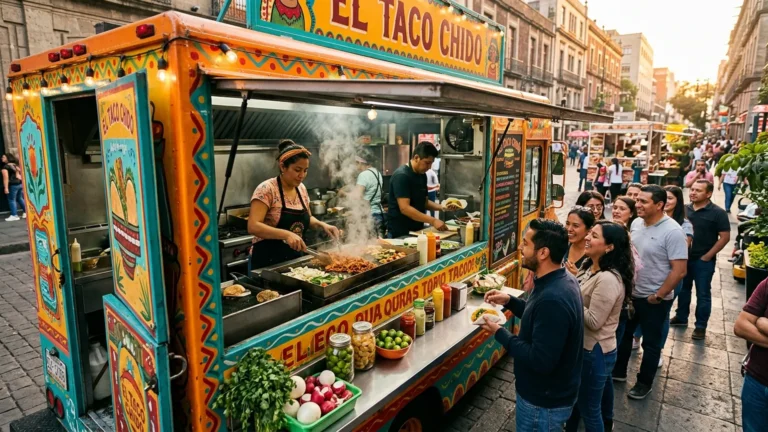
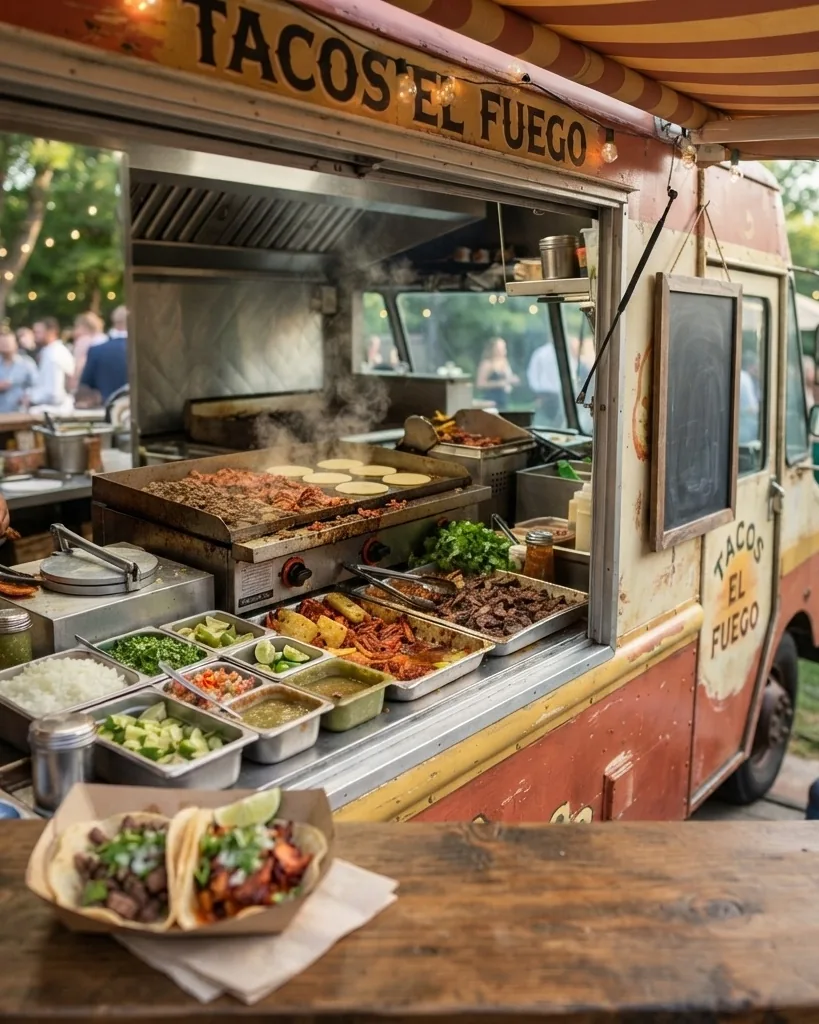
A taco truck for parties is a fully equipped mobile kitchen that cooks and serves on site, which separates it from three cheaper cousins hosts often confuse it with. A taco cart is a smaller push or tow unit with limited cooking capacity, better for tight footprints and lower headcounts. A taco bar is a stationary spread, sometimes staffed, sometimes not, where guests build their own without a truck present. Drop-off catering is trays delivered cold or hot with no on-site cooking at all. The truck sits at the top of that ladder because it brings its own power, its own griddle, and its own line staff.
Why the distinction matters for your wallet and your timeline:
- Cooking on site means fresher tacos but a larger parking and power footprint you have to supply.
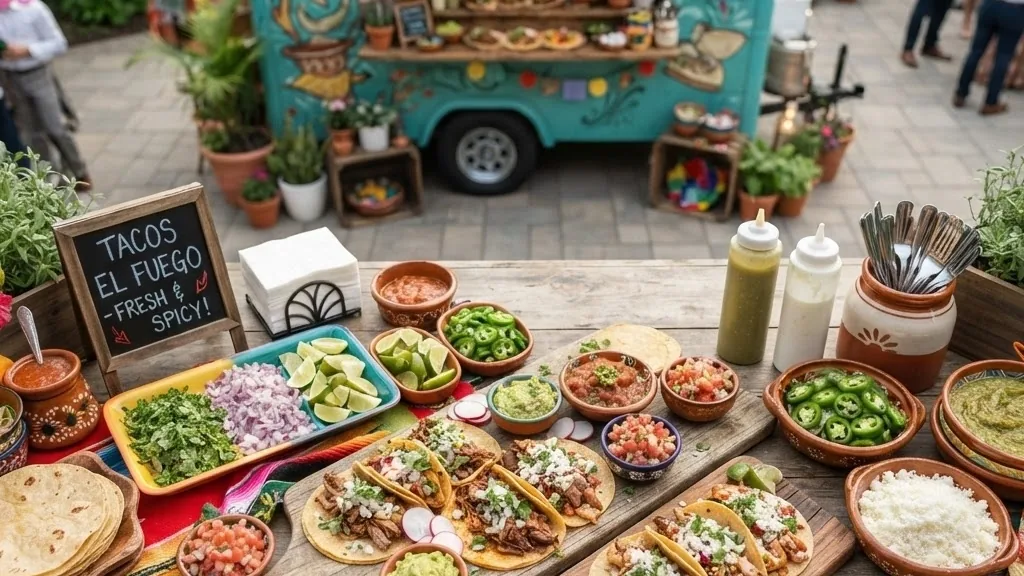
- A taco bar or drop-off can be cheaper per head but shifts holding-temperature responsibility onto you, the host.
- A cart works for 30 to 50 guests where a full truck would be overkill.
If you are still deciding on the food concept itself before you book anyone, the taco food truck menu build-sheet with yields and costed proteins breaks down the protein splits and per-taco math that vendors quote against.
How much a taco truck for parties really costs, line by line
Expect a per-person rate plus a stack of fees that rarely appear in the headline number. Roaming Hunger reports a common estimate of $10 to $15 per person with a minimum of roughly 100 eaters per 2 hours and a typical minimum spend of $1,000 to $1,500. Food Truck League reports a higher band of $15 to $28 per person plus a per-truck booking fee. Those ranges do not contradict each other so much as reflect different markets, menus, and service lengths. Per-person figures diverge widely across the industry, from $8 to $28, so treat any single quote as a starting point tied to your guest count.
The line items that inflate a quote past the sticker price:
- Per-truck booking fee charged on top of the per-head rate, separate from the food itself.
- Travel fee scaled to distance from the truck’s home base.
- Gratuity for the line staff, often added or expected.
- Weekend and peak-season premium, since Saturday in wedding season prices differently than a Tuesday in winter.
What usually comes standard: the truck, staff, a set menu, paper goods, setup and teardown, and trash from the service line. Add-ons that cost extra frequently include churros or dessert, a full topping and salsa bar, extended service hours, and a second protein beyond the base two. The cheapest way down is the same as it is for any mobile vendor. Book off-season, book a weekday, hit the guest-count breakpoint where the per-head rate drops, and consider a cart instead of a truck when your headcount is small. Financing the event this way is a different discipline than financing the truck itself, and the food truck insurance cost and coverage guide explains where the certificate-of-insurance line fits into what you are paying for.
Guests per truck, service window, and when to add a second truck
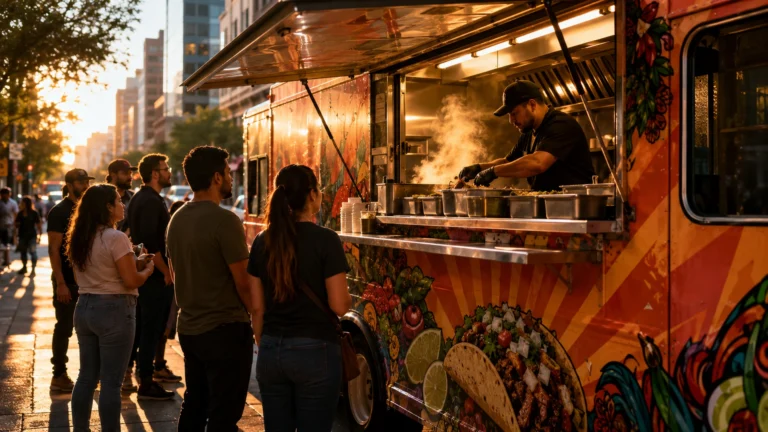
One taco truck typically handles 150 to 250 guests over a 2-hour service window, and that single figure decides whether your event needs one truck or two. Food Truck League puts the capacity there for a standard 2-hour window. One operator, The Roaming Coyote, reports serving roughly 1 taco per minute and handling events of 30 to 250 people. That per-minute rate is the throughput number planners never get quoted, and it is the one that tells you whether a single line will clear your crowd before the food cools or the window closes.
Run the arithmetic against your headcount. At one taco per minute over a 120-minute window, a single line produces about 120 tacos in the first hour and the same in the second, so 240 tacos across the full 2 hours from one line. If your guests each eat closer to three tacos, that same line realistically feeds fewer people than the 250-guest ceiling suggests, which is why the top end assumes lighter eaters or a second serving point.
- Under 150 guests: one truck, one line, comfortable.
- 150 to 250 guests: one truck, but tighten the menu and consider a second server on the line.
- Over 250 guests or under a 2-hour window: add a second truck or a second service point.
Power and parking are the physical limits behind those numbers. A cooking truck needs flat, accessible parking and its own electricity, and undersized power is the fastest way to stall a line. If your venue cannot supply a hookup, the food truck generator sizing and code guide covers what the truck actually draws under load.
Keeping party tacos out of the USDA Danger Zone outdoors
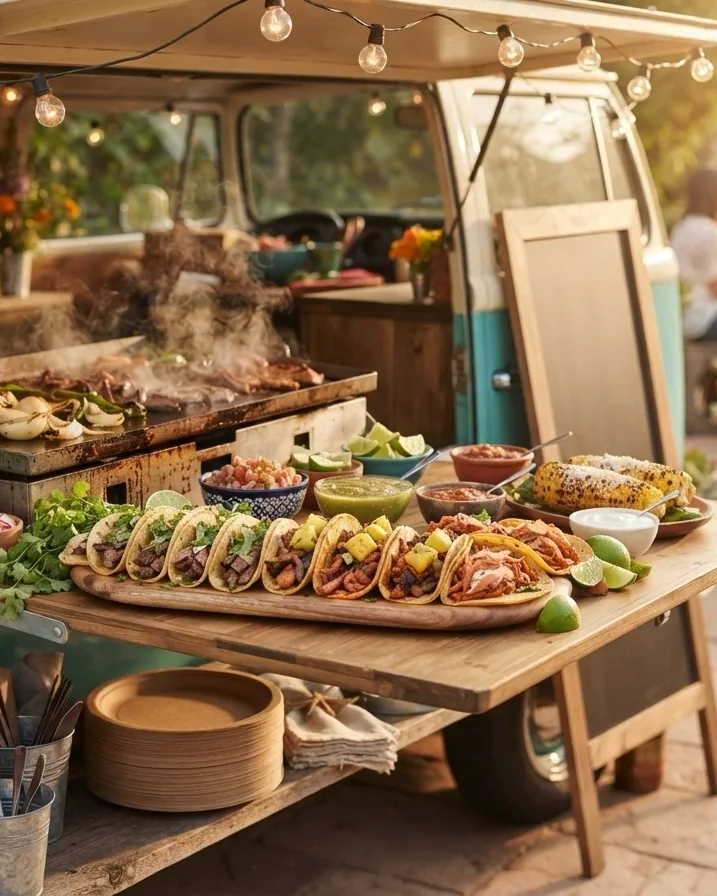
The single rule that governs every outdoor taco party is the Danger Zone: the U.S. Department of Agriculture Food Safety and Inspection Service defines it as 40 degrees Fahrenheit to 140 degrees Fahrenheit, the range where bacteria can double in number in as little as 20 minutes. Hold hot food at or above 140 degrees Fahrenheit and cold food at or below 40 degrees Fahrenheit during service. The U.S. Food and Drug Administration adds the outdoor timer: never leave perishable food out over 2 hours, and cut that to 1 hour once the temperature climbs above 90 degrees Fahrenheit, which describes most summer parties.
Those two numbers, 2 hours and 1 hour, are the ones hosts break without realizing it, because a taco spread that sits out for guests to graze is exactly the scenario the rule was written for. The truck holds its proteins hot on the line, but the topping bar, the shredded cheese, and the crema you set out on a folding table are yours to manage.
Cook temperatures matter just as much as holding temperatures. FSIS lists safe minimum internal temperatures of 160 degrees Fahrenheit for ground beef, 165 degrees Fahrenheit for all poultry, and 145 degrees Fahrenheit for whole cuts of beef, pork, and lamb with a 3-minute rest. Color is not a doneness indicator, and the agency’s own data shows why that warning exists: only about 6 percent of home cooks use a food thermometer for hamburgers and 10 percent for chicken breasts. You can read the temperature reference directly on the FSIS Doneness Versus Safety page, and the outdoor timing rule on the FDA guide to handling food safely while eating outdoors.
Leftovers close the loop. FSIS says leftovers must be reheated to an internal 165 degrees Fahrenheit and refrigerated within 2 hours of cooking or holding. If your party runs long, that 2-hour clock on the leftovers is separate from the 2-hour clock on the service table, and both are ticking.
A short field checklist that keeps you inside the rules:
- Two thermometers minimum: one for the hot line, one for the cold table.
- Small batches out, not the whole tray: refill the topping bar rather than dumping it all at once.
- Ice baths under cold items so crema and pico stay at or below 40 degrees Fahrenheit.
- A visible timer set to 2 hours, or 1 hour if it is over 90 degrees Fahrenheit.
The permits, health inspection, and insurance the host must verify
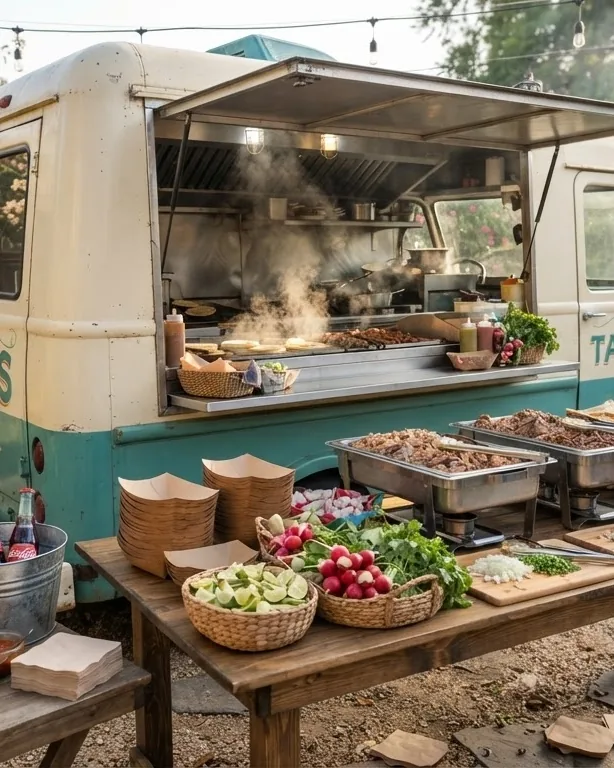
The truck usually carries the permits, but “usually” is not “always,” and the host who fails to verify is the one left explaining an unlicensed vendor to a venue or a health inspector. The FDA Food Code is the model regulation that governs retail and mobile food units, adopted by state and local health departments. That code is what a truck’s health permit is measured against, so a valid permit means the truck met those standards at inspection.
How the regulatory bodies split up, in plain terms. The USDA Food Safety and Inspection Service governs federal food-safety guidance and defines the holding and cook temperatures above. The FDA writes the Food Code that state and local departments enforce. FoodSafety.gov, run by the Department of Health and Human Services, publishes the consumer-facing meat and poultry cook-temperature charts. The Centers for Disease Control and Prevention tracks the foodborne illness those rules exist to prevent. For a concrete example of how mobile-unit rules work at the state level, the Massachusetts Department of Public Health Retail Food Code Standards for Mobile Food Establishments spell out requirements like a designated person-in-charge, time-and-temperature-controlled-for-safety controls, and a servicing area.
What to confirm in writing before you pay the deposit:
- Current health permit for the jurisdiction your event is in, not just the truck’s home county.
- Certificate of insurance naming your venue if the venue requires it.
- Parking and power plan agreed with the venue, including the truck’s footprint.
- Grease and trash handling, so the line’s waste does not become your problem.
You can review the model regulation itself on the FDA Food Code page. If you are weighing whether to hire a truck or eventually run your own, the sourced guide to food truck startup costs and permits shows the operator side of the same paperwork.
Event-type playbooks: backyard birthday to wedding reception
The right setup changes with the event, and matching the format to the crowd is what separates a smooth line from a 40-minute wait. A backyard birthday for 30 to 50 guests is cart or single-truck territory with a build-your-own bar, since casual grazing suits the format and the 2-hour window is rarely the binding constraint. A corporate lunch runs tighter on time, so a ticketed or plated format keeps the line moving inside a fixed break. A wedding reception is the high-stakes case: bigger headcount, longer lead time, and the most pressure on both throughput and holding temperature.
Lead time scales with the event’s formality. Bites by Braxtons puts casual bookings at 2 to 4 weeks out, and weddings at 3 to 6 months, with minimum guest counts commonly in the 30 to 50 range. Book a wedding on a casual timeline and you are choosing from whoever is left.
- Backyard birthday: build-your-own bar, one truck.
- Corporate lunch: ticketed or plated service to fit a fixed window.
- Wedding reception: book 3 to 6 months out, plan for a second service point above 250 guests.
- Morning event: a breakfast-taco format shifts the menu to eggs and chorizo.
Menu planning follows the format. A base of two proteins, commonly carne asada and al pastor or chicken tinga, covers most palates, and a vegetarian or vegan option plus a gluten-free tortifla covers the dietary bases without a custom kitchen. Naming and branding the event’s vibe is a smaller concern than the food, but if the truck is part of a themed party the guide to taco truck names and trademarks is a fun rabbit hole.
Vetting the truck: reviews, tastings, and the questions that reveal a pro
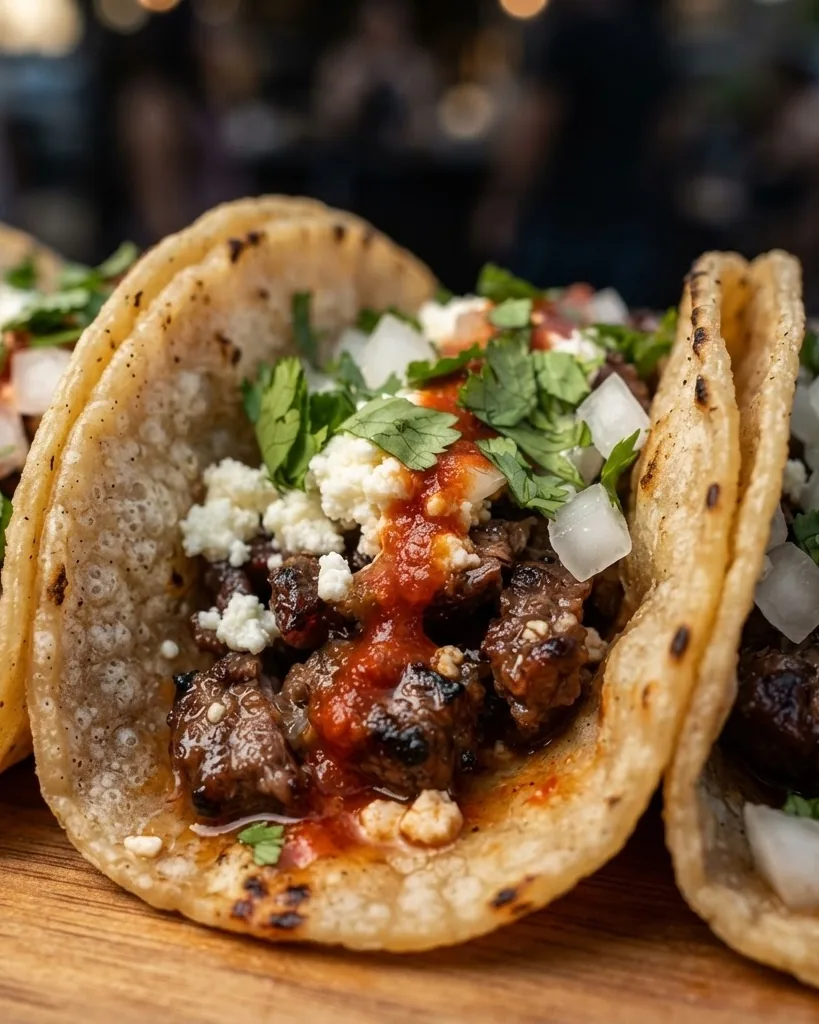
A good vendor answers throughput and safety questions without flinching, and how they answer tells you more than the menu photos. Ask how many guests they realistically serve per hour, not just per event, and cross-check the answer against the one-taco-per-minute benchmark. Ask how they hold proteins during service and listen for the 140-degree-Fahrenheit number. Ask to see the health permit and the certificate of insurance rather than taking “we’re fully licensed” on faith.
The signals that separate a professional from a weekend hobbyist:
- Offers a tasting or has verifiable reviews from events your size.
- Quotes fees transparently, including travel, booking fee, and gratuity up front.
- Flexes the menu for dietary needs instead of a rigid single option.
- Talks holding temps unprompted, a sign the kitchen respects the Danger Zone.
Flexibility on the menu is worth probing because it reveals kitchen capacity. A truck that can add a vegan protein or swap in a gluten-free tortilla is a truck with organized prep, and organized prep is what keeps the line at one taco per minute when your 200 guests all arrive at once.
Frequently asked questions
How much does a taco truck for a party cost?
Plan for $10 to $28 per person depending on market, menu, and service length, with a common minimum spend of $1,000 to $1,500. Add a per-truck booking fee, a travel fee scaled to distance, and gratuity for staff. Weekend and peak-season dates cost more than weekday off-season ones. Get every fee itemized in writing before you sign.
How many tacos should I plan per person?
Most planning runs on two to three tacos per guest, though appetites vary with time of day and whether tacos are the only food. Throughput matters as much as count: at roughly one taco per minute per line, a single truck produces about 240 tacos across a 2-hour window, which is why heavy eaters push you toward a second serving point.
How far in advance should I book a taco truck?
Book casual parties 2 to 4 weeks out and weddings 3 to 6 months out, per industry lead-time guidance. Popular trucks fill weekend and peak-season dates first, so the more formal or larger the event, the earlier you should lock a deposit. Confirm the health permit and certificate of insurance at booking, not the week of.
Can a taco truck handle vegetarian, vegan, and gluten-free guests?
Most established trucks offer a vegetarian option, and many add vegan proteins and gluten-free corn tortillas on request. Corn tortillas are naturally gluten-free, but confirm no shared fryer or wheat-flour cross-contact if a guest has celiac disease. Ask the vendor to flex the menu at booking rather than assuming coverage on the day.
Is one taco truck enough for 200 guests?
One truck typically handles 150 to 250 guests over a 2-hour window, so 200 is inside the range but near the top. At one taco per minute per line, a single server may struggle if guests eat three tacos each and arrive at once. Add a second server or a second service point to keep the line moving and the food hot.
Who is responsible for permits and food safety at the party?
The truck usually carries its own health permit and insurance, measured against the FDA Food Code that state and local departments enforce. The host is responsible for verifying that paperwork for the event’s jurisdiction and for any food set out on a self-serve table, where the FDA’s 2-hour outdoor limit, cut to 1 hour above 90 degrees Fahrenheit, applies.
Food safety is the differentiator most vendor pages skip, and it is a sensitive one: if anyone at your event has a compromised immune system, is pregnant, elderly, or very young, hold the temperature rules tighter and lean on the sourced guidance from the USDA and FDA rather than eyeballing it.
Reference: USDA FSIS, FDA, FoodSafety.gov, and the CDC publish the food-safety standards cited throughout this guide, and the Massachusetts Department of Public Health illustrates how mobile-unit rules apply at the state level.