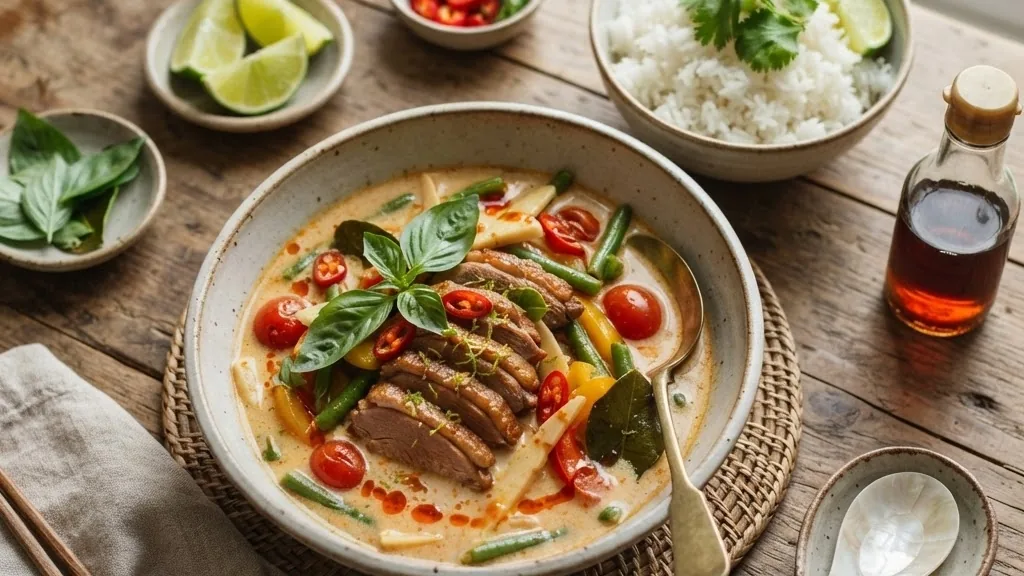
Thai red curry recipe construction begins with understanding how aromatic pastes interact with fat and liquid. Balancing the distinct notes of galangal, lemongrass, and dried chilies requires specific thermal techniques rather than simple boiling. Cooks must sequence proteins correctly to hit federal safety markers while managing vegetable textures across varying simmer times. This technical breakdown covers the chemical logic behind the sauce, the exact ingredient ratios used by commercial manufacturers, and the cold storage science needed to handle leftovers safely. Operators evaluating the costs of a mobile Asian kitchen rely on these precise protocols to maintain quality.
Quick answer: A proper thai red paste curry recipe relies on frying a concentrated spice paste in oil or reduced coconut cream to release fat-soluble aromatics. The base requires balancing savory elements like fish sauce against the natural sweetness of coconut milk and the heat of dried red chilies. Poultry additions must reach an internal temperature of 165 degrees Fahrenheit for safety. Adjusting the final dish involves managing the delicate timing of tender ingredients, ensuring items like Thai basil and fresh citrus leaves are introduced only at the very end of the cooking process to preserve their volatile oils.
Core Components of Authentic Thai Red Paste
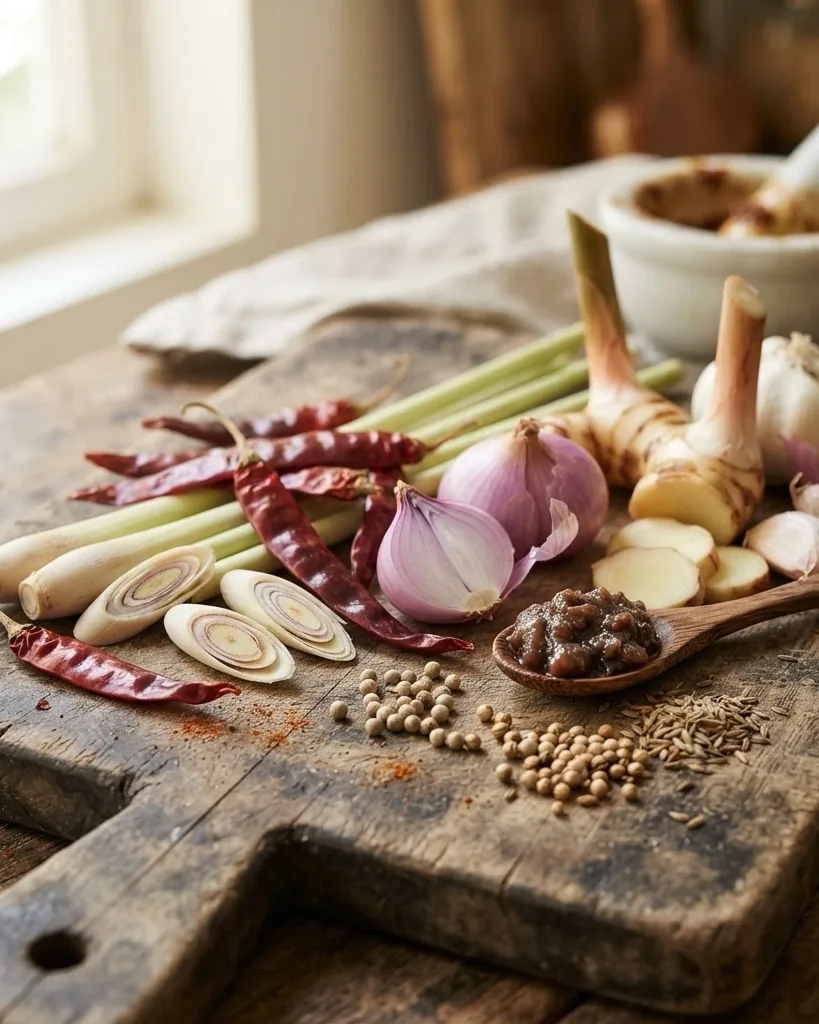
Establishing a functional baseline for the sauce requires defining the precise ingredients that distinguish this specific culinary profile. The Royal Thai Government Ministry of Commerce operates the Thai SELECT program to certify authentic culinary standards and ingredient references worldwide. According to the official Thai SELECT documentation, traditional red curry paste components heavily feature dried chiles, galangal, and lemongrass as the primary structural aromatics. These roots and pods deliver the fundamental heat and earthy fragrance that define the dish. Commercial producers replicate this flavor profile using similar dry and fresh elements ground into a dense format. Cooks building their own base from scratch must balance these raw ingredients to achieve the correct moisture content and flavor intensity. The choice between a manufactured product and a mortar-pounded base dictates the subsequent cooking sequence, as raw aromatics require longer initial heat exposure to mellow their harshness compared to processed commercial blends.
Many home kitchens rely on manufactured pastes for efficiency and consistency. The manufacturer A Taste of Thai details its paste specifications publicly, listing ingredients that include red chili, salt, lemongrass, onion, garlic, galangal, dextrose, kaffir lime peel, cumin powder, paprika oleoresin, and coriander. These standardized formulations offer predictable heat levels for daily cooking.
A Taste of Thai lists its specific physical measurements for cooks relying on their product. Knowing these baseline numbers helps prevent over-seasoning the final broth.
A Taste of Thai Red Curry Paste Specifications
- Serving Size: 1 teaspoon (7 g)
- Yield: 7 servings per package
- Sodium: 220 mg per serving
- Refrigeration: 3 months after opening
When searching for a taste of thai red curry paste recipe, readers must distinguish between utilizing the commercial product and compounding a version entirely at home. The manufacturer provides its exact ingredient list but does not supply a homemade copycat formula. Relying on a documented scratch formula remains the only way to recreate the traditional profile manually.
Culinary instructor Pailin Chongchitnant at Hot Thai Kitchen provides a traditional mortar-and-pestle method. Her formulation uses 20 grams of mild dried red chiles combined with 10 grams of spicy dried red chiles. The author reports roughly 16 minutes of pounding for that batch in a 3-cup mortar after soaking the dried chiles for at least 30 minutes.
This physical processing yields about 2/3 cup of paste. Hot Thai Kitchen describes this output as enough for two batches of a four-serving curry. Making paste manually extracts oils through crushing rather than slicing, producing a deeply integrated flavor base.
Frying the Aromatics and Coconut Milk Technique
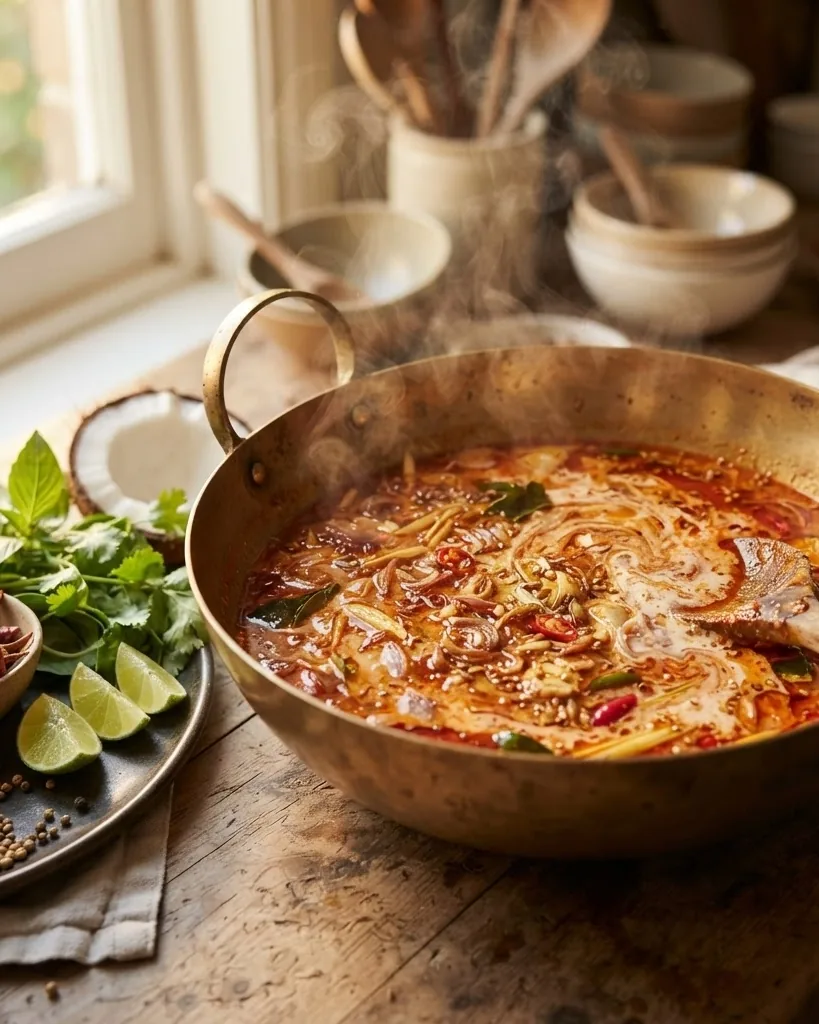
Proper execution of the sauce demands active frying rather than passive simmering to activate the complex spice matrix. Dropping cold curry paste directly into a large volume of watery liquid results in a raw flavor profile because the spices require concentrated heat to bloom. The traditional method involves boiling full-fat coconut milk until the water evaporates and the natural oils separate from the solids. Cooks then fry the aromatic paste directly in this rendered coconut fat, stirring constantly to prevent the garlic and shallot components from scorching. When time is restricted, a shortcut approach substitutes neutral cooking oil or refined coconut oil to saute the paste before introducing the liquid elements. The transition point occurs when the mixture becomes highly fragrant and the color deepens significantly. This thermal step permanently alters the chemical structure of the ingredients, unlocking the essential oils trapped within the dried chilies and pulverized galangal root.
Understanding visual cues during this stage prevents cooks from incorrectly diagnosing a broken sauce. A small amount of visible oil floating on the surface of the finished dish represents a stylistic norm rather than a technical failure. The fat acts as a carrier for the fat-soluble flavor compounds extracted from the chilies.
If the mixture appears too thick during the frying stage, cooks must add small splashes of coconut milk to prevent burning. Scorched aromatics will impart an irreversibly bitter flavor to the entire pot. Constant motion with a spatula ensures the dense paste receives even heat distribution.
Sauce consistency ultimately depends on the fat content of the chosen coconut milk and the subsequent reduction time. Full-fat canned coconut milk produces a highly viscous, clinging sauce. Light coconut milk contains a higher percentage of water, resulting in a thinner broth that behaves more like a soup.
Simmering the liquid intentionally evaporates excess moisture, concentrating both the texture and the seasoning. Conversely, if the base becomes overly thick and paste-like, adding unsalted vegetable or chicken stock will correct the viscosity without introducing unwanted sweetness. The final liquid should coat the back of a spoon while remaining entirely fluid.
Animal Proteins and the Crucial Temperature Endpoint
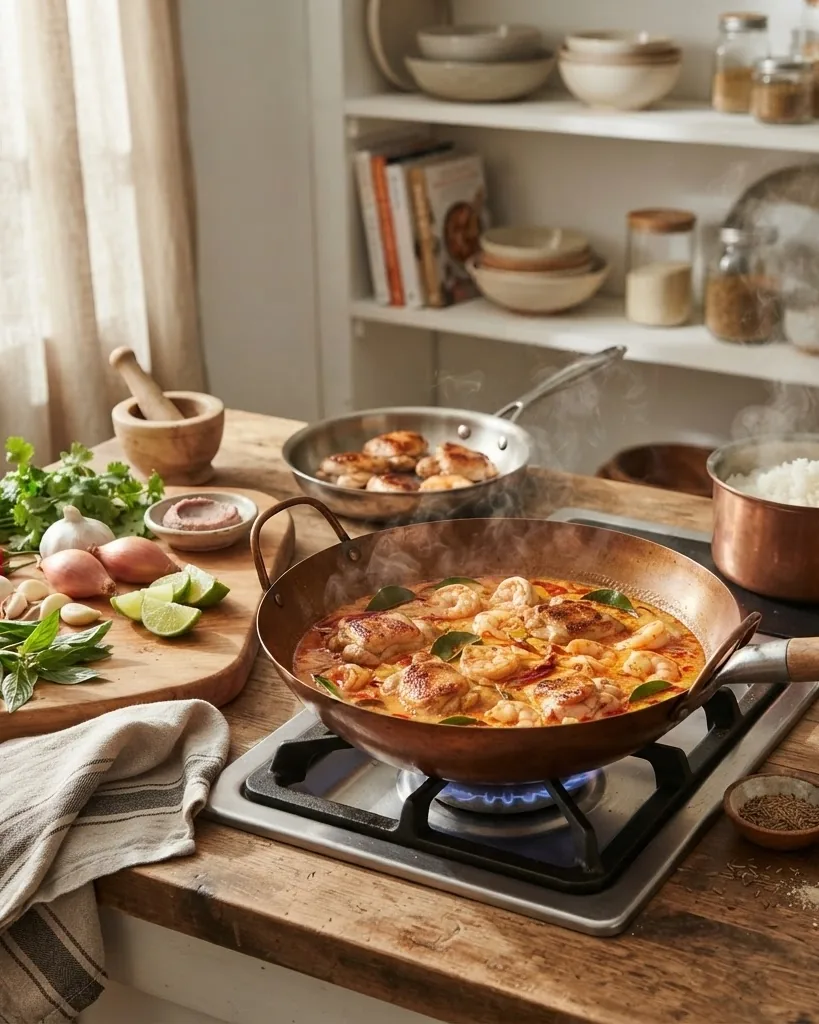
Integrating meat into the simmering broth requires strict adherence to federal safety parameters to prevent foodborne illness. Chicken is the standard protein for many variations, but different cuts react uniquely to prolonged heat exposure within a liquid environment. Thigh meat contains higher amounts of connective tissue and fat, allowing it to withstand longer simmering times without becoming completely desiccated. Breast meat requires brief, precise cooking and will rapidly turn chalky if left boiling in the sauce for extended periods. Regardless of the specific cut chosen, the USDA Food Safety and Inspection Service governs the mandatory thermal endpoints for all poultry products. Cooks must verify that the meat reaches a safe minimum internal temperature of 165 degrees Fahrenheit (74 degrees Celsius) as measured with a calibrated food thermometer. Relying on visual cues alone, such as the color of the meat juices or the opacity of the flesh, fails to guarantee that harmful pathogens have been effectively neutralized during the cooking process.
Executing a taste of thai red curry chicken recipe according to commercial guidelines provides a reliable baseline for timing. The manufacturer A Taste of Thai publishes an official Red Curry Chicken recipe detailing exact ratios. This specific formulation uses 1 tablespoon of paste, 1 pound of chicken breast, and one 13.5 ounce can of coconut milk.
The commercial recipe also requires 1/2 cup of loosely packed basil, lists 25 minutes total time, and yields 2 to 4 servings. Following this blueprint requires cutting the chicken into uniform pieces to ensure thermal energy penetrates all pieces at exactly the same rate.
When utilizing alternative proteins, the sequencing logic must adapt entirely to the ingredient. Cooks cannot swap shrimp for beef and maintain identical simmer times. Shrimp requires only a few minutes of heat and should enter the pan just before service.
Beef cuts need rapid searing followed by brief heating, or prolonged braising if using tough connective cuts. Pork behaves similarly to chicken thighs, benefiting from moderate simmering to break down internal fats. Standardizing these cooking times based on the chosen protein remains a critical operational step.
Using a thermometer eliminates guesswork completely. The guideline from FoodSafety.gov clearly specifies 165 degrees Fahrenheit (74 degrees Celsius) as the safe minimum internal temperature for chicken and other poultry. Dropping below this metric presents severe health risks.
Crafting a True Vegan and Allergy-Conscious Variation
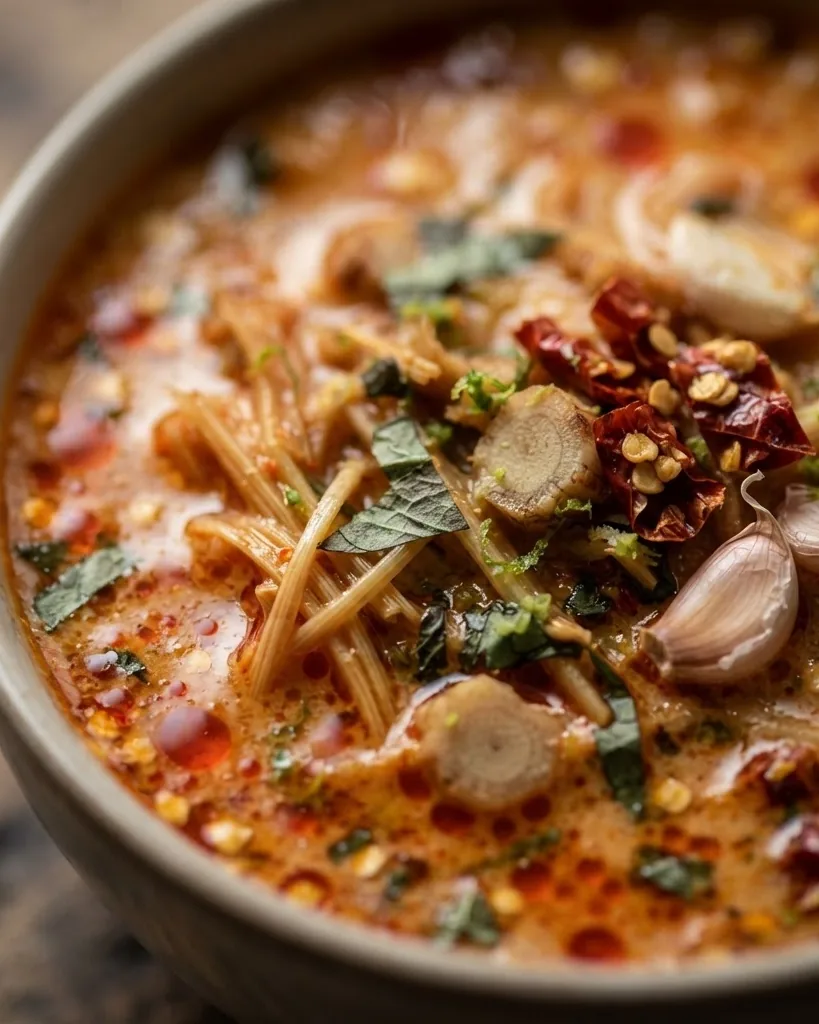
Developing a fully plant-based version demands careful auditing of both the commercial paste and the finishing seasonings to eliminate hidden animal derivatives. Many standard curry formulations rely heavily on fermented shrimp paste for their underlying savory depth, instantly disqualifying them for vegetarian diets or those with specific seafood sensitivities. The U.S. Food and Drug Administration regulates ingredient transparency and identifies crustacean shellfish, fish, and soy among the nine major food allergens in the United States. Cooks must meticulously inspect labels, as fish sauce is the default salting agent in traditional Thai preparations. To build a robust flavor profile without these components, the kitchen must introduce alternative sources of glutamates. Replacing fish sauce with a high-quality soy sauce or tamari provides the necessary sodium and umami, though it introduces soy as a new potential allergen. Replacing chicken stock with a deeply simmered vegetable broth maintains the liquid volume without compromising the ethical or dietary parameters of the dish.
For those searching for a taste of thai red curry paste vegetarian recipes, the manufacturer provides distinct pathways. The official A Taste of Thai website features a Red Curry Noodle Bowl that is explicitly vegan. This application utilizes tofu, coconut milk, vegetable broth, and soy sauce to replace the traditional meat elements.
The brand also highlights an Eggplant Curry Stir-Fry as another meat-free application for their red paste. These official formulations prove that the commercial paste can function effectively without animal-based additions.
When constructing a vegan base entirely from scratch, the traditional shrimp paste must be swapped out entirely. Hot Thai Kitchen specifically suggests utilizing miso and/or finely grated dried shiitake mushrooms as functional vegan alternatives to shrimp paste in their homemade guide. These fermented and dried ingredients replicate the pungent baseline required to anchor the volatile aromatics.
Executing a thai red curry chicken recipe replacement without animal products requires textural planning. Tofu needs pressing to remove excess water before it can absorb the complex flavors of the coconut broth. Hearty vegetables like chickpeas can also serve as the primary protein structure.
The goal remains achieving the same balance of salt, heat, and richness found in the traditional meat-based versions. Ensuring the final product feels complete requires aggressive seasoning with soy and lime juice.
Vegetable Sequencing and Thai Basil Dynamics
Introducing produce into the simmering liquid requires a staggered timeline based entirely on the cellular density of each specific vegetable. Tossing all ingredients into the pot simultaneously guarantees a textural failure, yielding either crunchy potatoes or completely disintegrated zucchini. Dense, starchy items such as pumpkin, kabocha squash, potatoes, and thick carrot slices must enter the hot broth immediately after the liquids are combined. These robust structures require prolonged heat to soften their internal matrices. Conversely, delicate components like bell peppers, green beans, bamboo shoots, and snap peas need only brief exposure to the thermal environment. They should be integrated during the final minutes of the cooking process to retain their structural integrity and bright colors. Proper execution demands that cooks evaluate the expected simmer time of their chosen protein and map the vegetable additions backward from the target finishing moment. This logistical planning prevents the tragic outcome of overcooked, mushy greens floating in a perfectly seasoned broth.
The aromatic finish relies heavily on the introduction of fresh herbs, specifically the distinctive anise-like notes of Thai basil. The exact quantity required remains highly subjective across different culinary authorities. Thai-basil quantities among established four-serving recipes vary materially based on the author’s preference.
The recipe site RecipeTin Eats uses 12 leaves for a standard batch. The site The Modern Proper instructs using 1/2 cup of Thai basil. The quick red curry guide on Hot Thai Kitchen calls for a full 1 cup of Thai basil leaves.
This documented variation proves there is no single mandatory measurement. A baseline of 1/2 cup loosely packed leaves is a defensible starting point for a four-person yield. Cooks must add these leaves, alongside any makrut lime leaves, at the absolute end of the cooking process.
Boiling these delicate herbs destroys their volatile compounds, stripping the dish of its intended fresh, highly aromatic finish. If makrut lime leaves are entirely unavailable, cooks should avoid substituting lime juice as a direct replacement. Acidity fundamentally alters the pH of the sauce, whereas the leaf provides purely aromatic oils.
Troubleshooting Heat Levels and Sauce Consistency
Correcting structural and flavor imbalances requires understanding the mechanical relationship between the salt, the fat, and the chili concentration. When a batch tastes excessively flat or bland, the solution rarely involves adding more raw curry paste, which will introduce an unpleasant uncooked flavor. Instead, cooks must elevate the savory notes by incorporating precise increments of fish sauce or standard salt. If the liquid becomes overly salty, diluting the mixture with additional unseasoned coconut milk or plain water restores the equilibrium, provided the cook also adds more unseasoned solid ingredients to absorb the excess sodium. Excessive chili heat presents a difficult challenge once the capsicum is fully distributed throughout the fats. The only mechanical fix involves expanding the total volume of the dish with more liquid and vegetables, effectively lowering the percentage of chili per serving. A sauce that feels too watery simply requires a longer period of uncovered boiling to evaporate the excess moisture and tighten the consistency.
Addressing sweetness requires particular caution. Many commercial pastes already contain dextrose or sugar. If the final balance tilts too far into the sweet spectrum, adding salty and acidic components like fish sauce and a few drops of lime juice will help mask the sugar.
Adding more paste to combat sweetness often compounds the error by introducing even more manufactured sugars. Balancing the matrix requires opposing flavors, not merely more volume.
If the paste itself tastes raw and powdery on the palate, the cook failed to fry the aromatics sufficiently in the initial stage. There is no rapid fix for this once the full volume of liquid is boiling. The cook must allow the entire pot to simmer longer, hoping the extended heat eventually cooks out the raw garlic and shallot notes.
Prolonged boiling risks overcooking the proteins, making this an unfavorable compromise. Understanding this matrix allows operators to salvage batches that drift away from the target profile early in the process.
Refrigeration and Food Safety Protocols for Leftovers
Handling cooked batches requires strict temperature management to prevent rapid bacterial proliferation within the rich, moisture-heavy environment of the sauce. Leaving pots of coconut-based stews at room temperature creates an ideal breeding ground for pathogens. The federal authority FoodSafety.gov dictates that perishable leftovers must be refrigerated within 2 hours of cooking. If the ambient temperature of the kitchen or dining environment rises above 90 degrees Fahrenheit (32 degrees Celsius), that safe window drops drastically to a single hour. Cooks must transfer the hot liquid into shallow, airtight containers to facilitate rapid cooling, ensuring the core of the mass drops through the danger zone quickly. Storing massive, deep pots directly in the refrigerator insulates the center, allowing dangerous bacteria to multiply before the cold can penetrate fully. Proper sanitation and immediate temperature reduction represent the only reliable methods for preserving the integrity and safety of the cooked dish for subsequent service.
Once properly chilled, the lifespan of the dish remains strictly limited. FoodSafety.gov lists soups and stews containing meat or vegetables at 3 to 4 days in a refrigerator maintained at 40 degrees Fahrenheit (4 degrees Celsius) or below.
For long-term preservation, the same federal guidelines allow storing these stews for 2 to 3 months in a freezer held at 0 degrees Fahrenheit (-18 degrees Celsius) or below. The manufacturer A Taste of Thai specifically notes that an opened inner envelope of their commercial paste can be resealed and refrigerated for up to 3 months.
When pulling finished batches from cold storage, the reheating process must be aggressive. Leftovers must be reheated to 165 degrees Fahrenheit (74 degrees Celsius) before consumption. Consumers should also note that while the sauce and meat freeze exceptionally well, delicate vegetables will suffer severe cellular damage.
Freezing destroys the rigid cell walls of items like zucchini and bell peppers, turning them entirely mushy upon thawing. Professionals designing mobile protein yield sheets must account for this textural degradation if planning to freeze large batch yields.
Frequently Asked Questions
Why is my sauce separating and showing pools of red oil?
A slight oil separation is traditionally intentional and perfectly normal for this style of cooking. It occurs when the coconut milk is reduced sufficiently to release its natural fats, which then carry the colored oils of the fried chilies to the surface.
Can I use light coconut milk instead of the full-fat version?
You can use light coconut milk, but the resulting texture will be significantly thinner and lack the characteristic rich mouthfeel. Light coconut milk contains a much higher percentage of water, which alters the balance and requires a longer reduction time to thicken.
How do I fix a batch that is way too spicy?
Once the heat is in the pot, you cannot remove it. The only effective strategy is dilution. Add more unsalted coconut milk and incorporate extra unseasoned vegetables or proteins to distribute the chili concentration across a much larger total volume of food.
Is all commercial curry paste safe for a shellfish allergy?
Absolutely not. Many traditional pastes rely on fermented shrimp paste as a foundational ingredient. You must meticulously check the manufacturer label for crustacean shellfish warnings. Always source explicitly vegan pastes if cooking for someone with a diagnosed seafood allergy.