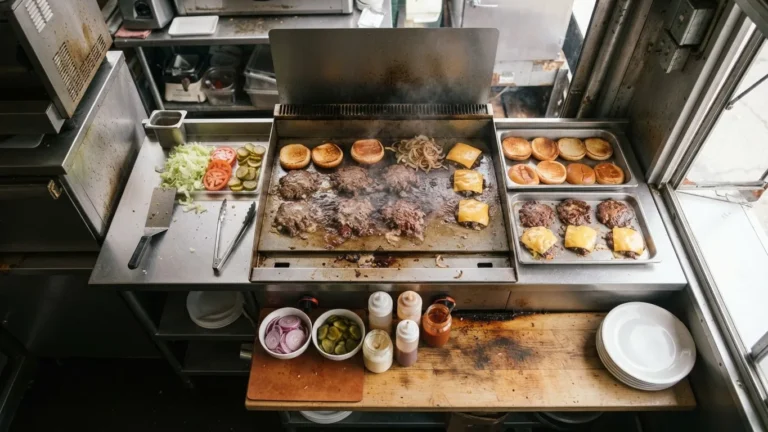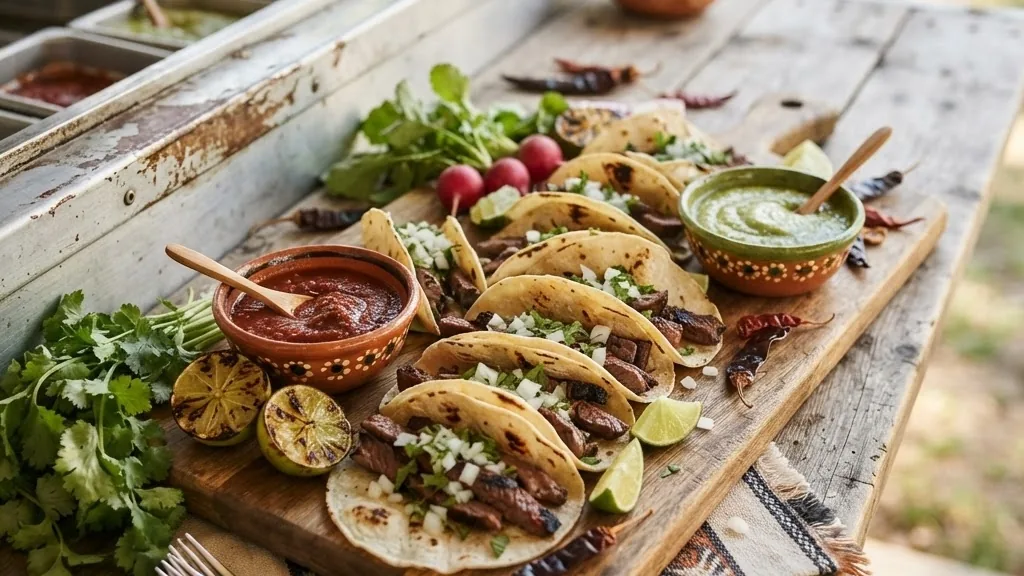
Taco truck catering is the easiest yes I ever get at the window, because tacos make a crowd happy, feed a mixed group without drama, and turn a parking lot into a party. After years catering events off a truck, I can tell you the pricing is not the mystery people think it is; it runs on a per-person rate and a minimum, and once you understand both you can budget an event without guesswork. This guide lays out the real 2026 numbers, the formats, and the booking timeline, from someone who has quoted a lot of these.
The first wedding I catered, I underbid because I quoted a flat number and did not protect myself with a real per-head minimum, and I lost money feeding a bigger crowd than I planned for. The operators who quote you a firm minimum and a per-person rate are not padding the bill; they are pricing the way that keeps a truck solvent. In my experience, the smoothest catering bookings happen when the host understands that structure going in, so let me put you on the inside of it.
Every rate, minimum, and lead time below is checked against what caterers are actually charging this season, on both sides of the window.
Quick answer: Taco truck catering generally runs $10-$25 per person, with most trucks landing at $12-$25 depending on menu and location. On top of that, expect a minimum booking fee of $1,200-$2,500 just to roll the truck out, and a minimum guest count usually around 30-50 people. The price typically includes the truck, the staff, the equipment, and a set menu. Book weddings 3-6 months ahead, because good trucks fill their prime dates early. Premium proteins, travel, and add-ons move the number up; a lean menu and a local venue bring it down.
What taco truck catering actually delivers
Before the prices make sense, know what you are actually buying. Taco truck catering gets you a truck that shows up, a crew that cooks and serves on-site, the equipment, and a set menu built around a few proteins, tortillas, salsas, and a toppings bar. You are not just renting food; you are renting a working kitchen and a team that turns your event into a hot, made-to-order meal and then drives away when it is done.
The reason tacos win as a catering format is the mix of speed, crowd-pleasing, and flexibility. A taco bar handles dietary diversity better than almost any plated meal, because guests build their own from proteins, vegetarian options, and toppings, so vegetarians, picky kids, and gluten-avoiders all find something without a special order. That is a big part of why taco wedding catering is one of the fastest-growing reception formats. A typical spread runs two or three proteins, carne asada, al pastor, chicken, or carnitas, with warm corn and flour tortillas, a few salsas from mild to hot, rice and beans, and often churros to finish; my breakdown of a full taco truck menu shows how those pieces fit together for a crowd.
How the pricing works
Taco truck catering is priced on two numbers stacked together, and understanding both is the whole key to reading a quote. The first is the per-person rate: $10-$25 a head, with most trucks landing at $12-$25 depending on the proteins, the number of courses, and your location. The second is the minimum booking fee, often $1,200-$2,500, which is what it costs to roll the truck out regardless of headcount, before the per-head food is even added.
Those two numbers work together with a minimum guest count, usually around 30-50 people, though some operators set it at 50-75. Here is what that means in practice: if your event is smaller than the minimum, you still pay for the minimum, because the truck’s costs, fuel, staff, prep, do not shrink just because your guest list did. So a 20-person party often costs the same as a 40-person one. If your headcount is comfortably above the minimum, the per-person rate is what drives your total, and the minimum fee simply folds into it.
This is why the smartest move for a smaller event is to get your headcount up to the minimum rather than under it. If you are hosting 25 people and the minimum is 40, you are paying for 40 regardless, so you might as well invite the extra guests or bump the menu to use the value you already bought. I have watched hosts agonize over trimming a guest list to save money on catering when the minimum meant they were paying the same either way. Know your floor before you cut anyone.
| Event size | What drives the price | Typical total |
|---|---|---|
| Under the minimum (20-30 guests) | Minimum booking fee | $1,200-$2,500 |
| Mid-size (50-75 guests) | Per person, $12-$25 | $1,500-$2,500+ |
| Large (100+ guests) | Per person + travel/add-ons | $2,500-$5,000+ |
| Wedding, premium menu | Per person, premium proteins | Toward the high end |
If you are comparing a taco truck to a full mixed-menu food truck for the same event, know that the broader food-truck event rental runs higher, roughly $1,500-$5,000 in a market like New York. Tacos tend to sit at the friendly end of catering because the core inputs are affordable and the line moves fast. My wider guide to food truck catering puts taco pricing next to other concepts so you can see where it lands.
What drives the total up or down
Five levers move every taco truck catering quote, and knowing them lets you shape the event to your budget instead of just accepting the first number. A good caterer will walk you through each one if you ask how it changes the price.
Headcount is the first, and above the minimum it is the biggest single driver on a per-person model. Menu is the second and the one you control most: premium proteins like carne asada and al pastor cost more than chicken or beans, and a three-protein spread with dessert prices higher than a two-protein taco bar. Duration is the third, since a longer service window means more staff time and product. Travel is the fourth, because a truck driving two hours to a rural venue is priced differently than a local booking. Staffing and add-ons, extra servers, a churro cart, a margarita or agua fresca station, are the fifth.
The lever most hosts overlook is the menu. You can usually bring an event back into budget by choosing two solid proteins over three premium ones, and most guests will be just as happy with a great chicken and carnitas bar as with a fancier spread. When I work with a host on a tight budget, trimming the protein count and holding a clean two-hour service is almost always where we find the savings, not haggling the base rate.
Travel is the lever hosts underestimate most in dollar terms. A caterer local to your venue prices very differently than one driving two hours each way, because that windshield time is staff hours and fuel you are paying for whether you see it on the invoice or not. If you have two comparable quotes and one truck is local, the local one will almost always come in cheaper on travel alone. When your venue is remote, ask up front how travel is charged, because a distant booking can add several hundred dollars that has nothing to do with the food itself.
Truck vs cart vs taco bar
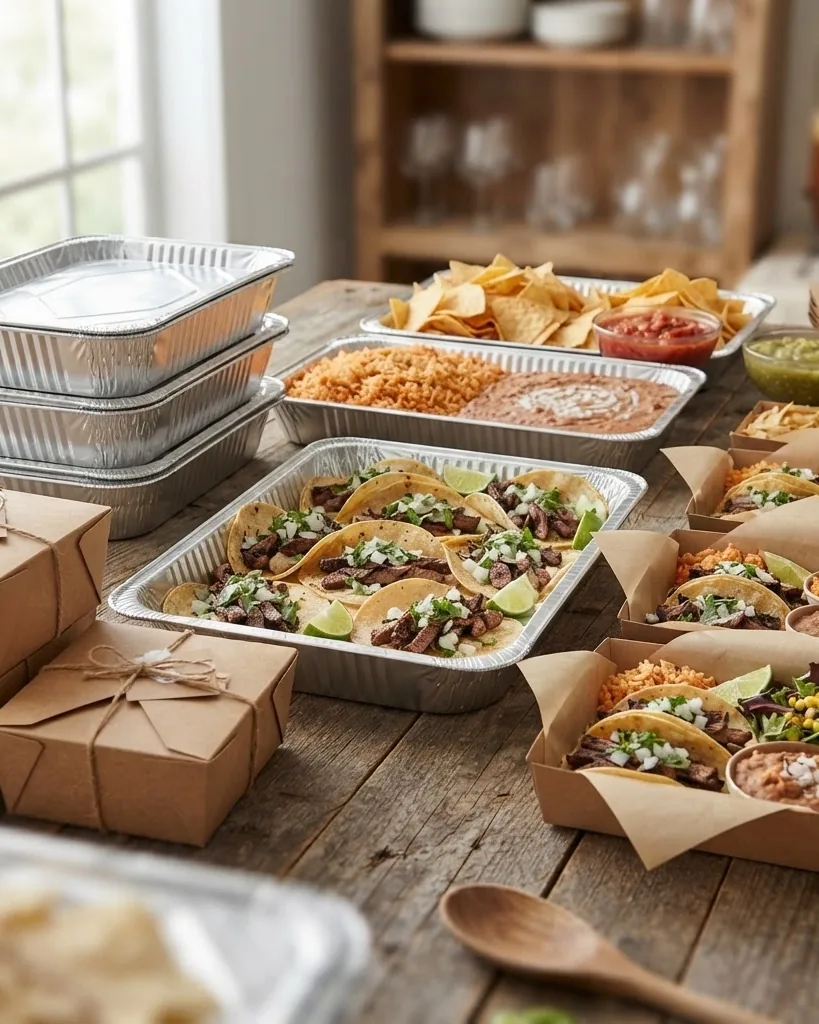
Not every taco catering job needs a full truck, and matching the format to your event is a real money decision. There are three common formats, and they are priced and experienced very differently. A full taco truck cooks on-site, brings the most capacity and the classic presence, and sits at the top of the price range. A taco cart is smaller and often cheaper, better for tight venues or smaller headcounts. A drop-off taco bar, where the food arrives set up for guests to build their own, is usually the most affordable because it uses the least on-site labor.
Pick by your venue and your headcount. A big outdoor wedding or a corporate lot with 150 guests wants the truck, both for capacity and for the experience. A 40-person backyard party might be perfectly served by a cart or a taco bar at a lower number. Paying full truck rates for a small indoor gathering is the same mistake as renting a party bus for two people; the format should match the event, not your imagination of it. If your event is a wedding specifically, my notes on a food truck wedding cover how the truck fits into a reception timeline and budget.
Booking lead time and why weddings book early
Timing is part of the price, because the best trucks are a scarce resource on peak dates. For a wedding, book 3-6 months in advance, and for a prime summer or fall Saturday, lean toward the longer end of that window. A good taco caterer in a busy market fills their best weekend dates early, and by the time you are a month out from a popular date, you are choosing from whatever is left rather than the truck you actually wanted.
Corporate lunches and weekday events are the opposite story: operators often have open weekday calendars and more flexibility on rate and menu, because a booked Tuesday beats an empty one. If your date has any give, ask the caterer when their slow windows are and whether a weekday or off-season booking earns a better number. I have given real breaks to hosts who were flexible on timing, simply because filling a quiet week is worth more to me than holding out for full price on a date I might not book anyway.
Tip: Lock your date with a signed agreement and a deposit as early as you can for a wedding, and get the headcount minimum, the menu, and the travel fee in writing at the same time. The cleanest catering jobs I have ever run were the ones where all of that was settled months ahead, so the only thing left to do on the day was cook.
What is included, and what to confirm
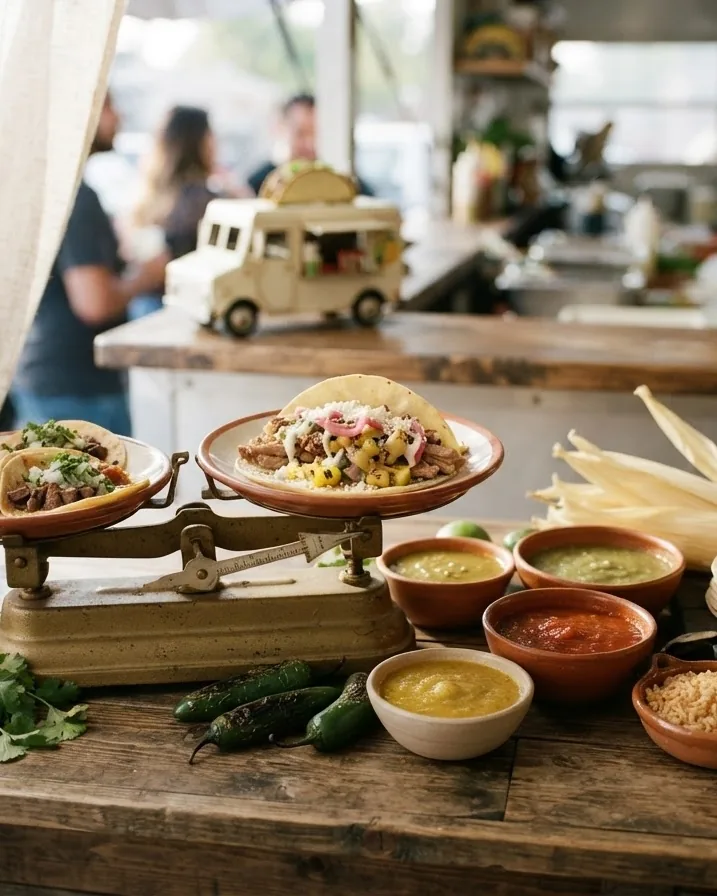
A standard taco truck catering package includes the truck, the cooking and serving staff, the equipment, and a set menu for your event. That covers most of what you picture. But several things vary by operator, and confirming them before you book is how you avoid a tense conversation on the day of your event.
Here is what to nail down in writing before you pay a deposit:
- The exact per-person rate and what proteins and sides it includes, plus the cost of adding a third protein or dessert.
- The minimum guest count and the minimum booking fee, so you know your floor.
- Whether travel to your venue is included or added on for distance.
- How long the service window is, and what an extra hour costs.
- Whether the truck needs power or parking accommodations, and whether the operator carries the permits and insurance your venue requires.
On that last point, a legitimate taco caterer works under the same Food Code framework the U.S. Food and Drug Administration maintains, which covers safe hot-holding temperatures and service, so a real operator will have their health permitting in order and be able to show it. Venues often require proof of insurance too, so ask early rather than the week of the event.
Pricing it from the operator’s side
If you are reading this to price your own catering gigs rather than book one, the economics are worth understanding, because catering is some of the best revenue a taco truck can chase. The reason is simple: the minimum plus per-head model locks your revenue before the truck ever rolls, unlike street vending where you gamble on the crowd that shows up. You know your number when you sign, which makes catering the most predictable money on the truck.
The math still has to hold. Target a food cost of 25-35 percent of revenue, blended 28-33 percent, with premium proteins running 32-38 percent and sides pulling the average down. Keep labor at 20-30 percent, and use the 30-30-30 rule as your benchmark: roughly a third to food, a third to labor, a third to overhead. The formula I run on every menu is ingredient cost times a waste factor, plus packaging and labor, divided by my target food cost percentage. Set your per-person rate off that, not off the caterer across town. If you want to build catering into a real business, the U.S. Small Business Administration is the right first stop for structure and funding, and the IRS lays out how catering income and deductions work at tax time. For the leap from event gigs to a full operation, my guide to food truck rental covers testing the concept before you buy.
Building the menu for a crowd
The menu is where a taco truck catering job is won or lost, and the trick is not variety, it is balance. A crowd is easiest to feed when you give them two or three well-run proteins, a vegetarian option, and a toppings bar deep enough that everyone builds the taco they want. That structure handles the picky eater, the vegetarian, the kid, and the person avoiding gluten with corn tortillas, all without a single special order. It is exactly why tacos feed a mixed group better than a plated entree ever could.
My default spread for an event is carne asada and chicken as the crowd-pleasers, carnitas or al pastor if the budget allows a third, and a hearty vegetarian option like grilled peppers or a bean-and-rice base so nobody stands at the truck with nothing to eat. Then a real toppings bar: two or three salsas from mild to genuinely hot, onions, cilantro, lime, cheese, and crema. Rice and beans on the side stretch the meal and cost you very little, which is why they show up on nearly every catering menu and quietly improve your margin at the same time. Churros or a small dessert close it out and photograph well, which matters more at a wedding than people admit when they are picking a caterer.
The mistake I see hosts make is asking for too many proteins, thinking more choice means a better event. It usually means a slower line, more waste, and a bigger bill. Two proteins run well beat four proteins run thin every time. If you want to see how a full board comes together for both service speed and crowd appeal, my taco truck menu guide lays out the proteins, sides, and toppings that actually earn their place on a catering line.
Frequently asked questions
How much does taco truck catering cost per person?
Most taco trucks charge $10-$25 per person, with the majority landing at $12-$25 depending on the proteins, the number of courses, and your location. On top of the per-head rate, expect a minimum booking fee of $1,200-$2,500 to roll the truck out. Premium proteins like carne asada and al pastor, plus dessert or a drink station, push the per-person number toward the high end.
Is there a minimum for taco truck catering?
Almost always. Most operators set a minimum guest count around 30-50 people, and some require 50-75. There is also usually a minimum booking fee of $1,200-$2,500. If your event is smaller than the minimum, you typically still pay the floor, because the truck’s costs do not shrink with your guest list. Confirm both minimums before you book.
How far ahead should I book a taco truck for a wedding?
Book 3-6 months in advance for a wedding, and lean toward the longer end for a prime summer or fall Saturday. Good trucks fill their best weekend dates early. Weekday and corporate events have more flexibility and shorter lead times, and a flexible date can earn you a better rate because operators would rather fill a quiet day than hold out for full price.
What is included in taco truck catering?
Typically the truck, the cooking and serving staff, the equipment, and a set menu of proteins, tortillas, salsas, sides, and a toppings bar. What varies is the exact per-person menu, whether travel is included, the length of the service window, and power or parking needs. Get all of it in writing before you pay a deposit so there are no surprises on the day.
Taco truck, cart, or taco bar: which is cheaper?
A drop-off taco bar is usually the most affordable because it uses the least on-site labor, a taco cart sits in the middle, and a full taco truck is the priciest but brings the most capacity and the classic experience. Match the format to your venue and headcount; paying full truck rates for a small indoor party is money spent on presence you do not need.
Why is there a minimum booking fee?
Because rolling a truck out has fixed costs, fuel, prep, staff, and equipment, that do not shrink for a small crowd. The $1,200-$2,500 minimum ensures the caterer covers those costs even if your headcount is modest. It is not padding; it is what keeps a truck able to say yes to smaller events at all. Above the minimum, the per-person rate takes over as the main driver.
The bottom line
Taco truck catering is priced on two numbers, a per-person rate of $10-$25 and a minimum booking fee of $1,200-$2,500, working together with a guest-count minimum around 30-50. Match the format to your event, choose a truck for capacity and experience or a cart or taco bar to save, and trim the protein count before you haggle the base rate. Book weddings 3-6 months ahead, and get the minimum, the menu, the travel, and the service window in writing before you pay. Do that and you will feed a happy crowd, handle every dietary curveball, and land a fair price on one of the easiest catering formats there is.