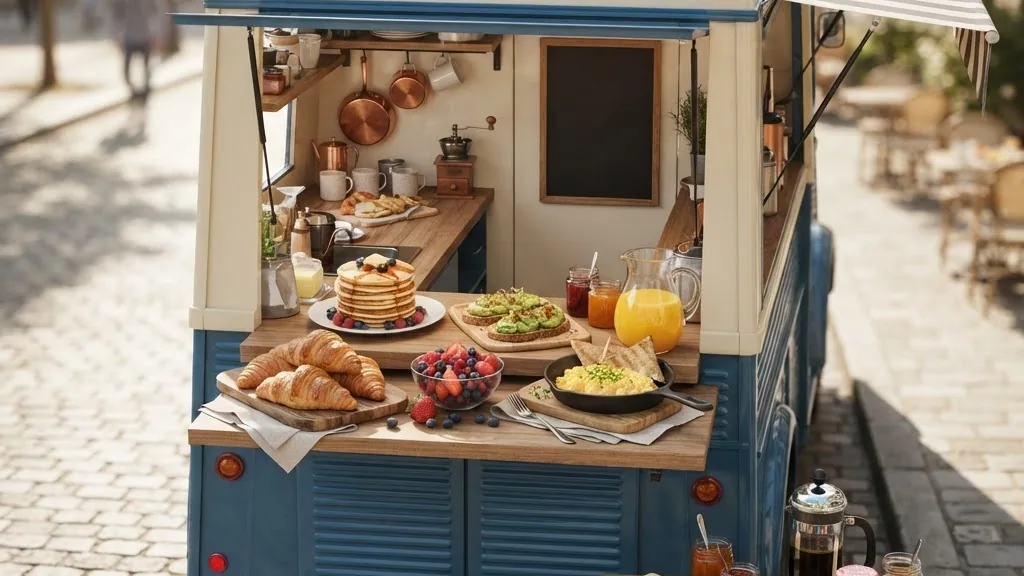
A breakfast food truck is the quietest good idea in street food. Everyone fights for lunch corners and festival slots while the 6 to 11 a.m. window, five hours of commuters who eat the same thing every day and pay for it without blinking, goes mostly uncontested. The ingredients are the cheapest in the kitchen: eggs, flour, potatoes, bacon. The margins run 60 to 70 percent gross when the menu is built right, and the coffee alongside it costs pennies a cup and sells for $3 to $7.
I have cooked the morning window and the lunch window both, and mornings are the shift I would build a business on. This guide lays out the whole case: the margin math, the coffee program, the menu, the pre-dawn operating day, and where to park it.
Why breakfast is the sleeper concept
Three structural advantages stack up for breakfast, and none of them depends on your cooking being famous.
First, ingredient cost. According to Toast’s menu profitability data, traditional breakfast items, eggs, waffles, bagels, hash, carry some of the lowest food costs in food service, which is what makes the industry-standard target of about 33 percent food cost per item easy to hit and often beat. A breakfast burrito is a tortilla, two eggs, potatoes, cheese, and salsa; the raw build costs a fraction of a smash burger’s beef.
Second, demand shape. Morning customers are the most habitual buyers in the business. Lunch crowds browse; breakfast crowds repeat. The same electrician orders the same burrito at 6:40 every weekday, and fifty of him is a business. Batch-friendly food meets predictable volume, which is the combination every truck chases and breakfast gets for free.
Third, the uncontested window. Most trucks do not want to start prep at 4 a.m., so the morning corners, transit stops, office parks, gym lots, have a fraction of the competition a lunch corner carries. In my experience the hardest part of a lunch route is winning the spot; the hardest part of a morning route is just waking up for it. One of those problems is solvable with an alarm clock.
The margin math, with the numbers attributed
Run the standard economics. Successful trucks target 60 to 70 percent gross margins on menu items, per Toast’s 2025-2026 profitability guidance, which corresponds to the classic 30 to 35 percent food cost band. Breakfast clears that bar with room to spare on almost every core item.
Cost a breakfast burrito honestly at 2026 grocery-wholesale prices: large tortilla, two eggs, seasoned potatoes, shredded cheese, salsa, foil and wrap. The build lands around $1.60 to $2.20 depending on your suppliers and whether bacon or sausage joins the party. At a $9 menu price, food cost sits near 20 to 24 percent, comfortably better than the 33 percent standard. A pancake stack is cheaper still: batter is flour, eggs, milk, and butter, and it sells for $8 with toppings that cost quarters.
| Item | Build cost (2026) | Menu price | Food cost % |
|---|---|---|---|
| Breakfast burrito (eggs, potato, cheese, salsa) | $1.60 – $2.20 | $9 | 20 – 24% |
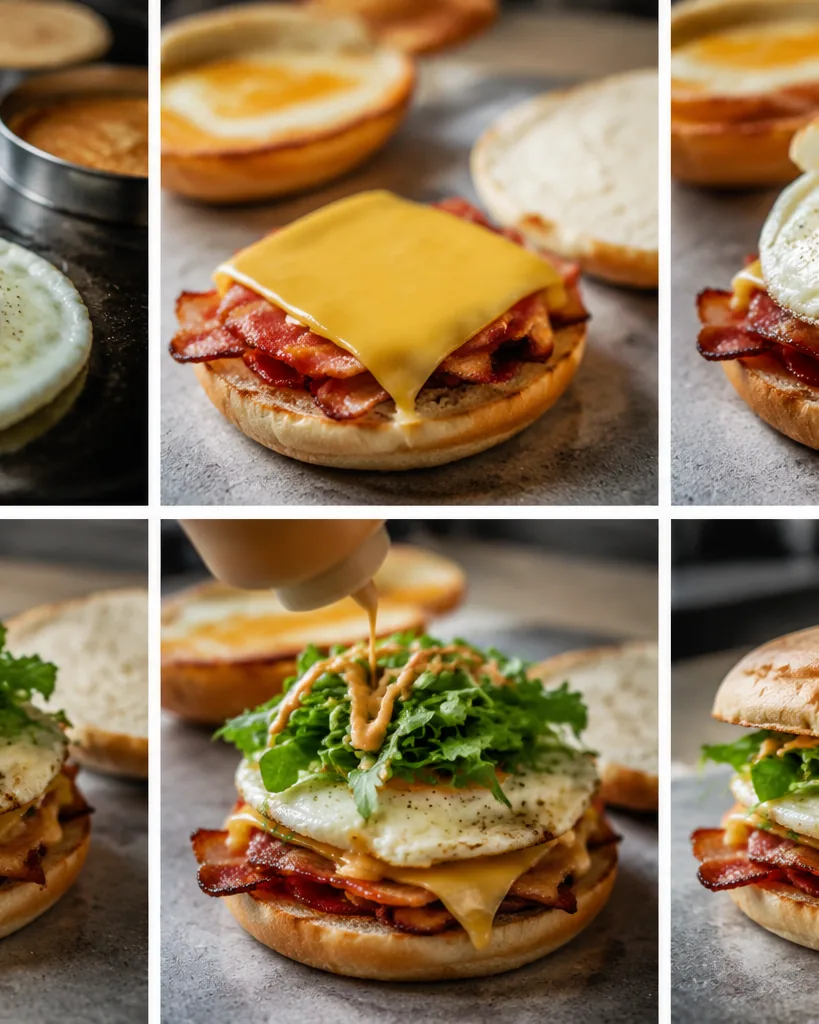
| Bacon-egg-cheese sandwich | $1.40 – $1.90 | $8 | 18 – 24% |
| Pancake stack with toppings | $0.90 – $1.30 | $8 | 11 – 16% |
| Loaded hash bowl | $1.50 – $2.10 | $9 | 17 – 23% |
| Drip coffee, 16 oz | $0.35 – $0.60 | $3.50 | 10 – 17% |
| Combo (burrito + hash + coffee) | $3.45 – $4.90 | $16 | 22 – 31% |
The aggregate benchmarks frame what the concept can earn. Industry income data collected by MenuTiger puts the average truck near $346,000 in annual revenue, roughly $950 per operating day, with net margins between 6 and 15 percent depending on whether the owner works the window or pays someone to. Breakfast’s cheap ingredients push a well-run morning truck toward the top of that net band, and the coffee program pushes it past it.
Coffee: the profit engine bolted to the griddle
If the food pays the bills, the coffee buys the second truck. Coffee carries the best margin structure in the industry: beans cost pennies per brewed cup, drinks sell from $3 for a drip to $7 for a specialty pour, and margins run 70 to 80 percent, the range Toast reports for coffee programs generally. No food item on the truck touches that.
The play is the combo. A burrito alone is a $9 ticket. A burrito, hash, and large coffee bundle at $15 to $18 raises the ticket 70 to 90 percent, and the added cost of goods is mostly the cup and the milk. When I ran the numbers on morning services I worked, the batches with a real coffee program did not just earn more per ticket, they moved faster, because a combo is one decision instead of three, and the morning customer is buying speed as much as food.
Keep the coffee program honest about its complexity, though. Drip and cold brew scale beautifully from a truck: batch-brewed, self-serve-fast, no barista bottleneck. Espresso drinks are a second station and a second skill, and a 6-per-hour latte queue can strangle a 60-per-hour burrito line. Start with excellent drip, batch cold brew in summer, and add espresso only when the revenue justifies a dedicated pair of hands. The full drinks-first version of this business is its own concept, covered in our coffee truck guide.
Menu architecture: handhelds first, 8 to 12 items, one signature
Breakfast menus fail by ambition. The winning architecture is narrow, fast, and built around what one griddle and one pair of hands can push during a 45-minute rush.
- Handhelds lead. Burritos and breakfast sandwiches eat one-handed in a truck cab or on a train platform. That is not a detail; it is the product. Plated items slow the line and the customer both.
- 8 to 12 items, no more. The standard menu-size guidance holds hardest at breakfast, where speed is the brand. Three burrito builds, two sandwiches, a pancake or waffle option, hash, and drinks is a complete menu.
- Batch everything batchable. Pancake and waffle batters, seasoned hash, salsas, and sauces are made the afternoon before at the commissary. Morning service is assembly and griddle finish, not cooking from zero.
- One signature item. The thing people drive past two coffee shops for: a chile-smothered burrito, a stuffed French toast, a regional thing done right. The signature sets the social media photo and the reason to choose you over the drive-through.
- Price for the combo. Anchor items at $7 to $10, combos at $15 to $18, and let the coffee margin carry the bundle discount.
Egg safety gets one non-negotiable line: according to USDA guidance, egg dishes cook to 160 degrees Fahrenheit and hot-held items stay above 140, and a breakfast truck lives on eggs, so the health inspector will check exactly that. Build the batch-and-hold plan around those temperatures from day one. For the broader menu-design toolkit, our food truck menu ideas guide covers costing and station flow in depth.
The operating day, hour by hour
Nobody publishes the breakfast truck schedule, so here it is, the honest version. This is the day I ran, give or take thirty minutes by market.
4:00 to 5:15 a.m., commissary. Load the truck: batters mixed yesterday, hash par-cooked, proteins portioned, coffee ready to brew on site. Start the drive. This is also when you learn that the person who preps the night before beats the person who preps at 4 a.m., every single time.
5:15 to 6:00 a.m., setup. Park, level, fire the griddle, brew the first coffee, post the window. The first customers arrive before the posted open, always, and at breakfast they are your best regulars, feed them.
6:00 to 8:30 a.m., the commuter push. This is the revenue. Two waves inside it: the trades and early shifts at 6, the office crowd from 7:15. Sixty-plus tickets an hour is achievable with a tight menu, and the line must move, morning customers give you ninety seconds of patience, not ten minutes.
8:30 to 11:00 a.m., the long tail. Gym crowd, parents post-drop-off, remote workers. Volume halves but tickets rise, more combos, more specialty drinks. Restock the line during the gaps.
11:00 a.m. to 1:00 p.m., the decision. Teardown and done by early afternoon, or roll into a lunch service if the spot supports it. Having spent seasons trying both, I recommend new operators end at 11: the double shift burns crews fast, and the morning-only schedule is the recruiting advantage of the whole concept, evenings and weekends mostly free is a sentence no lunch truck can say.
Location strategy by daypart
Breakfast location logic is commuter logic: park where the morning already flows, and be there before it starts.
- Weekday core: commuter corridors and transit. Park-and-ride lots, train stations, the last turn before the industrial park. Arrive by 5:45; the 6:00 wave does not wait.
- Office parks, 7:30 to 10. A recurring weekly schedule, same lot, same days, builds the habit loop that breakfast lives on. Property managers often welcome a reliable truck as a tenant amenity.
- Gyms and studios. The post-6-a.m.-class crowd buys protein-forward items and specialty coffee at full price.
- Weekends: farmers markets and youth sports. Market organizers love a strong breakfast truck because it feeds their vendors too. Tournament mornings at sports complexes are captive-audience gold.
- Event mornings. Races, charity walks, car shows, early festival load-ins: every event that starts before noon has a breakfast gap most trucks ignore.
The overlooked detail in morning routes is permission timing. Commuter-corridor spots often sit on private lots whose owners are asleep when you would be serving; lock those agreements in writing during business hours, weeks ahead. City rules on transit-adjacent vending vary block by block, and the health and parking permits that govern any truck govern the 6 a.m. version too.
Winter, rain, and the seasonality question
Morning revenue is more weather-sensitive than lunch revenue, and pretending otherwise is how first-winter operators get surprised. A cold rain at 6:30 a.m. can cut a commuter corner’s volume by half; the same rain at noon barely dents an office-park lunch line, because lunch customers are already out of the house and committed to eating.
Having spent winters on both ends of that trade, I keep the seasonal playbook to three moves. First, chase covered and indoor-adjacent spots for the cold months: parking structures near transit, covered market halls, the leeward side of big buildings, anywhere the line can wait without weather on it. Second, shift the menu with the thermometer, hot drinks and griddle-heavy comfort items carry winter, cold brew and lighter handhelds carry August. The coffee program earns double in January; a hot drip in a gloved hand is half the reason the line formed.
Third, book the indoor season early. Corporate breakfast catering, office meetings, training days, holiday crews, is the winter revenue that does not care about sleet, and the morning truck’s batch-and-hold workflow is already built for it. What I noticed across the cold months I worked was simple: the trucks that treated winter as catering season with occasional street days kept their crews and their margins; the trucks that fought the weather five days a week burned both.
Equipment that earns its space
The breakfast build is mercifully simple, which also means the startup budget runs lighter than protein-heavy concepts. The flat-top griddle is the entire kitchen: eggs, pancakes, hash, bacon, and toasted buns all live on it, so buy the largest one the truck’s hood and power plan support. Around it: refrigeration sized for eggs and dairy, hot holding that keeps hash and proteins above 140 degrees, a two-burner range for sauces, and the coffee rig, batch brewers and airpots first, espresso later if ever.
What you get to skip matters as much: no fryer means simpler fire suppression and less hood load in many builds, no smoker means no overnight cooks, and batter-based items need prep containers, not equipment. Our full food truck equipment guide covers the buy-used-versus-new decisions line by line; the short version for breakfast is that the griddle and the refrigeration are the two places not to save money.
The business numbers, assembled
Pull the pieces into one sketch for a five-day-a-week morning truck. Assume 130 tickets a day at a $11.50 average, a realistic blend of $9 items and $16 combos, which grosses about $1,495 a day, ahead of the $950 industry average day precisely because the combo structure lifts the ticket. Call it $370,000 across a 250-day year, in line with the $346,000 average annual revenue MenuTiger’s aggregate reports, with upside from catering and event mornings.
Costs run the standard stack: food near 25 to 30 percent for a breakfast menu, labor for a two-to-three person crew, commissary rent, fuel, insurance, permits, and the coffee program’s consumables. The morning concept’s structural edges, cheap ingredients, batchable prep, a five-hour service window that caps labor hours, are what push the net toward the top of the industry’s 6 to 15 percent band. The honest risks: weather hits mornings hard, the 4 a.m. start filters staff fast, and a truck that oversleeps its corner twice hands the habit loop to the coffee chain across the street.
Frequently asked questions
Is a breakfast food truck profitable?
The economics favor it strongly: 60 to 70 percent gross margin targets per Toast data, food costs on core items often beating the 33 percent standard, and a coffee line at 70 to 80 percent margins. Net results still depend on volume and labor, within the industry’s 6 to 15 percent net band, but breakfast’s cost structure starts the math ahead.
What time does the day start?
Commissary at 4:00 a.m., parked and set by 5:45, serving 6 to 11, torn down by early afternoon. The compensation is the schedule’s other half: evenings and most weekend nights free, which no dinner concept offers.
What sells best from a breakfast truck?
Handheld burritos and sandwiches, hash, one waffle or pancake option, and coffee, sold hard as $15 to $18 combos. One signature item carries the brand; eight to twelve items total keeps the line at commuter speed.
Do I need an espresso machine?
Not to start. Batch drip and cold brew capture most of the coffee margin at none of the bottleneck. Add espresso when volume justifies a dedicated drinks station, or leave that lane to the dedicated coffee trucks.
Where does a breakfast truck park?
Commuter corridors and transit lots at 6 a.m., office parks mid-morning, gyms after early classes, farmers markets and tournament mornings on weekends. Lock private-lot permissions in writing ahead of time and carry the same health and vending permits as any truck.
About the author and sources
Sal Bendetti cooks on food trucks and writes the operational guides on The Truck Chef, from batch prep to route strategy. Figures in this guide are attributed to Toast’s menu profitability data (margin and food cost benchmarks), MenuTiger’s aggregate income data ($346,000 average annual revenue, $950 average day), FoodTruckEmpire’s breakfast menu research, and USDA food-safety temperature guidance. Operating-day and route detail reflects morning service practice; your market moves the numbers.
Revenue and margin figures are published industry benchmarks and operating ranges, not guarantees. Permits, health rules, and vending laws vary by city and county; verify locally before building the route.