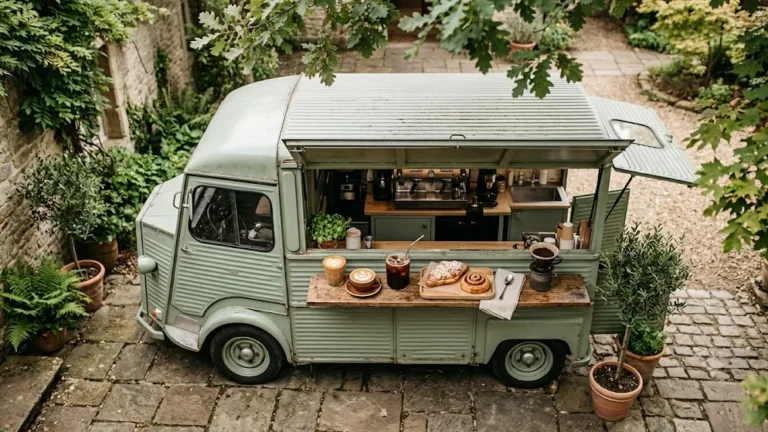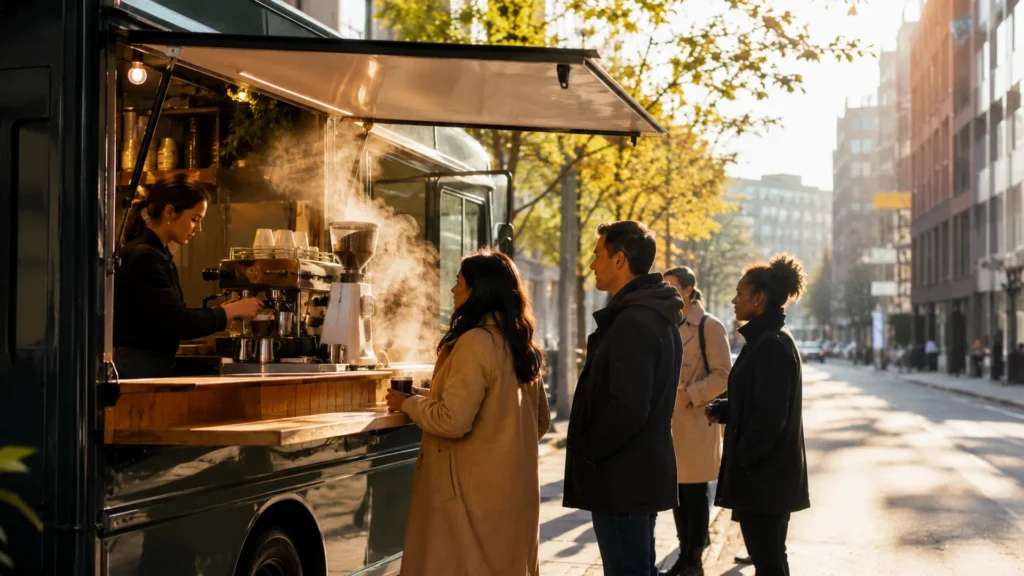
A coffee truck is the closest thing to a cheat code in mobile food, because coffee is the rare product where pennies of ingredient turn into a five or six dollar sale. I have watched operators who could never make a full kitchen pencil out run a tidy living off espresso and a generator, and the reason is entirely in the math. This guide is about the coffee truck as a business: what it costs to start, why the margins are so forgiving, the equipment and power realities nobody warns you about, and how events quietly become the profit center. The numbers here are typical ranges, not promises, and your city and setup will move them.
I will be straight about the economics the way the franchise sites are not. Coffee is high margin, but high margin is not the same as easy money, and the things that bite a coffee truck, power, water, and slow foot traffic, are specific and avoidable if you plan for them. Let me walk through how the business actually works before you fall in love with a shiny espresso machine.
Why coffee margins are so good
The whole case for a coffee truck starts with the cost of a cup. The coffee, milk, and a paper cup in a five or six dollar drink cost a fraction of the price, which is why gross margins on coffee commonly run around sixty-five to seventy percent, and an espresso cart with almost no overhead can push gross margins near ninety. That gap between cheap inputs and a strong price is the engine, and it is why a coffee operation can survive on volumes that would starve a full food truck carrying expensive proteins and a fryer.
Net margins are lower than gross, of course, once you pay for the generator fuel, the commissary, insurance, and your own time, and they typically land somewhere in the ten to twenty-five percent range for a well-run truck. But the point stands: coffee is forgiving. A slow day still sells some cups at a strong markup, where a slow day on a full kitchen means spoiled inventory. That forgiveness is the reason mobile coffee works where a heavier concept would not.
What a coffee truck costs to start
Your startup cost depends almost entirely on which format you choose, and the range is wide. A used truck with a basic build can come together under sixty thousand dollars, while a new custom build runs ninety to a hundred fifty thousand or more. A trailer is cheaper, often ten to thirty thousand all in, and an espresso cart is the cheapest entry of all, with the smallest footprint. The format decision is the single biggest lever on your budget, so make it deliberately rather than defaulting to a truck because it looks the part.
| Format | Typical startup | Best for |
|---|---|---|
| Espresso cart | Lowest, smallest footprint | Indoor spots, events, tight budgets |
| Trailer | $10,000 – $30,000 | Towable, more space, cheaper than a truck |
| Used truck (basic build) | Under ~$60,000 | Self-contained mobility on a budget |
| New custom truck | $90,000 – $150,000+ | High volume, full branding, daily routes |
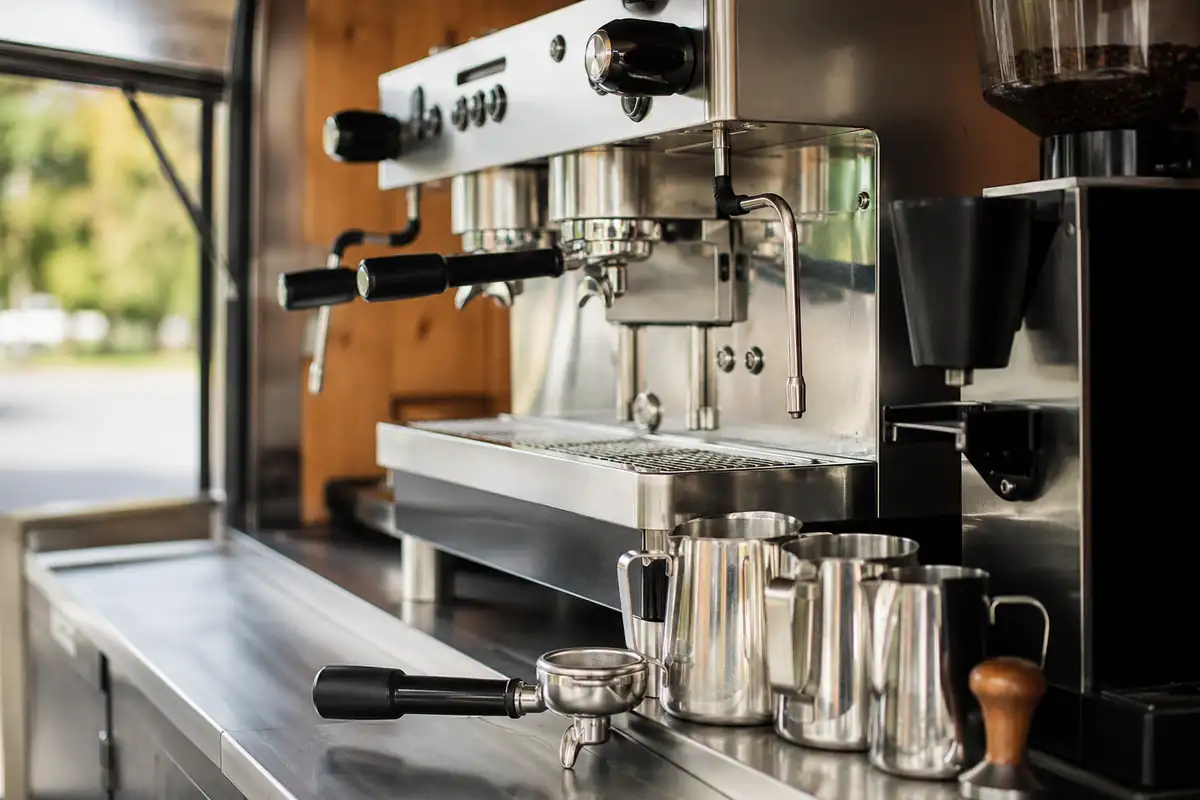
Whichever format you pick, the equipment list is short but not cheap. The espresso machine is the anchor, commonly five to twenty thousand dollars depending on whether you run a compact single-group or a high-volume commercial machine, plus a quality grinder at several hundred to a couple thousand. Refrigeration for milk, water filtration, and a generator round it out. If you want the broader thinking on concepts and what sells from a window, the food truck cuisines and concepts hub is where those ideas live.
The power and water problem
Here is the reality the brochures skip: a coffee truck is an electrical and plumbing challenge wearing a friendly face. An espresso machine and a grinder running together pull serious amperage, and an undersized generator will trip at the worst possible moment, mid-rush, with a line out the window. Most serious coffee operators size their generator with real headroom, commonly a two to ten thousand dollar piece of equipment, because power is the single most common thing that takes a coffee truck offline.
Water is the quiet partner to power. Espresso quality depends on filtered water, and your fresh and gray tanks have to be sized to get through a full service plus cleaning, since health codes set minimums and inspectors check them. Plan the power and water systems before you buy the machine, because the most beautiful espresso setup in the world is a paperweight if your generator cannot feed it. This is the part of the build that rewards spending money up front and punishes cutting corners.
The cup economics, shown not asserted
Let me show the math instead of just claiming it. The strength of a coffee truck is volume at a high markup, and the daily picture comes down to cups sold times your average price. The table below sketches rough scenarios operators report; treat them as planning illustrations, not guarantees, since your spots and hours decide where you land.
| Cups per day | At ~$6 average | Rough monthly (26 days) |
|---|---|---|
| 80 cups (slow) | $480/day | ~$12,000 |
| 120 cups (steady) | $720/day | ~$18,700 |
| 200 cups (strong) | $1,200/day | ~$31,000 |
Average monthly revenue for many coffee trucks lands in the six to nine thousand dollar range, with stronger operators well above that at events and busy routes, and reported payback often falls somewhere between six and eighteen months. The reason those numbers work on low ingredient cost is the markup. A pastry or a cookie at the window lifts the ticket further at almost no extra labor, and a tray of cookies to pair with the coffee or a warm breakfast pastry turns a two-dollar add-on into pure margin on top of an already strong cup.
Events are the real profit center
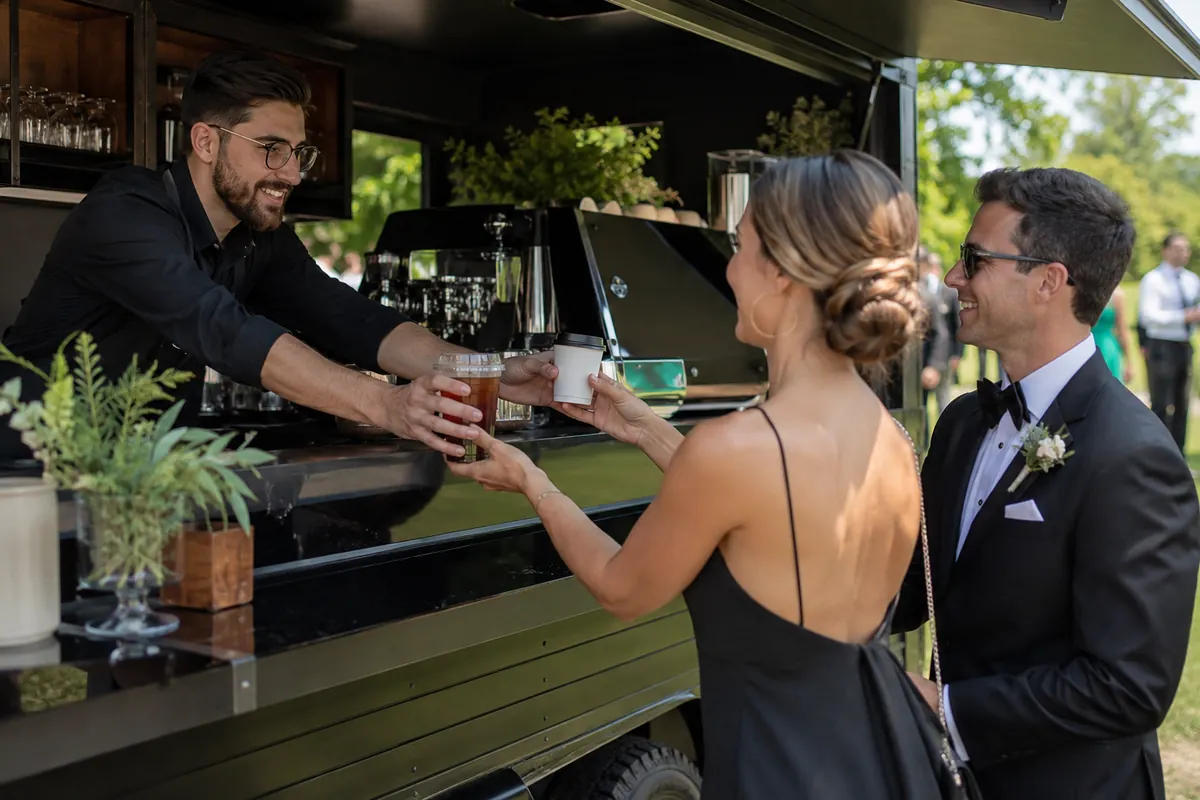
If you take one strategic lesson from this guide, make it this: a coffee truck makes its best money at events, not waiting for foot traffic. Weddings, corporate mornings, conferences, film and TV sets, school and hospital functions, these book a known headcount at a flat or per-head rate you agree on in advance, which removes the guesswork that makes street vending nerve-racking. One booked corporate morning or wedding can equal several ordinary route days, and you know the money before you brew the first cup.
Build a simple events menu and a per-head package off your existing setup, and chase those bookings hard. Street and brewery spots are good for building a regular crowd and a brand, but the calendar of booked events is what smooths out the slow weeks and the bad weather. The operators who treat catering as the core of the business, rather than a bonus, are the ones who turn a high-margin product into a stable income instead of a hopeful one. The broader playbook for pricing and running booked gigs lives in the catering, events, and rentals hub, and it applies cleanly to coffee.
Building the menu beyond espresso
A coffee truck that sells only espresso leaves money on the counter. The core menu is simple, espresso drinks, drip, and a few cold options, but the smart additions are where the average ticket climbs. Cold brew and iced lattes are summer money. A seasonal syrup or two lets you charge a premium for a drink that costs you pennies more. Tea, hot chocolate, and a kid-friendly option capture the people in the group who do not drink coffee, which matters because you are usually selling to a cluster of people, not an individual.
Food add-ons are the other lever, and they ride the same low-labor, high-margin logic as the coffee itself. A pastry, a cookie, or a breakfast item turns a single-drink stop into a larger sale without slowing the line, because the customer is already standing there. Keep the food simple and shelf-stable or easy to hold, since you are not running a kitchen, you are running a window. The goal is to lift the average ticket from one drink to a drink plus something, which on a high-margin product is the difference between a thin day and a good one.
Where coffee trucks find customers
A coffee truck lives or dies on being where people want caffeine at the hour they want it, which is a different rhythm from a lunch or dinner truck. Mornings are your gold: commuter corridors, office clusters, transit hubs, gyms, and weekend farmers markets all concentrate caffeine demand early. Construction sites and business parks can be quietly excellent because the crowd is captive and habitual, and habit is everything in coffee. A regular who knows you are parked at the same corner every weekday morning is worth more than a dozen one-time festival sales.
Build a repeatable schedule and post it the same way every day so your regulars can plan around you, because consistency beats cleverness for a business people fold into their morning routine. Scout spots on foot, confirm vending is legal where you want to park, and lock in a few reliable anchors before you chase the glamorous event circuit. The strongest coffee operations pair a steady weekday-morning route with booked events, so the route builds the brand and the habit while the events deliver the volume days.
Permits, health, and franchise versus independent
A beverage-focused operation is generally lighter on health requirements than a full hot kitchen, but it is not exempt. You still need a mobile food vendor permit, a commissary agreement in most cities, and commercial auto insurance, and you still answer to your local health department, which enforces the retail and mobile food rules. Licenses and permits commonly run a few hundred to several thousand dollars depending on your jurisdiction. The CDC’s plain-language guidance on food safety covers the handling fundamentals, and the SBA’s overview of the steps to start a business orients you before you call city hall. Register the business and get a tax ID through the IRS guide to getting an EIN.
One more fork in the road: franchise or independent. The coffee truck space is full of franchises that sell you a proven system, a brand, and support in exchange for fees and a cut. Buying in lowers the learning curve and the marketing burden; building your own keeps all the margin and all the control. Neither is wrong, but be honest about which you want, because the high margins that make coffee attractive are exactly what a franchise takes a slice of in return for the easier path.
The honest downsides
The margins are wonderful, but a coffee truck is not free money, and the operators who last are the ones who went in clear-eyed. The work is early and physical: you are up before dawn to catch the morning rush that makes the business, and the morning rush is when coffee sells, so there is no sleeping in. The repetition is real, hundreds of nearly identical drinks pulled with consistency shot after shot, because a regular comes back for the same drink tasting the same way, and consistency under pressure is a skill, not a given.
The equipment is also a demanding partner. An espresso machine that goes down takes your whole business offline until it is fixed, and the power and water systems that feed it need maintenance and attention. Weather and foot traffic still swing your day, and the slow winter months in a cold city test your cash cushion the same as any truck. None of this makes the coffee truck a bad business, it makes it a real one, and going in expecting steady mornings, mechanical headaches, and a genuine grind is what separates the operators who build something from the ones who burn out by the second winter.
Used versus new, and starting lean
For most first-time coffee operators, the smart money starts lean. A used truck or a trailer with a solid espresso machine gets you earning while you learn your spots, your volume, and whether you even like the pre-dawn life, all without the six-figure commitment of a new custom build. The beauty of coffee’s low overhead is that you do not need a fancy rig to make the margins work, you need a reliable machine, a generator that does not quit, and a good morning route.
Graduate to a bigger or newer build once you know your numbers and have a route and an events calendar that justify it. Plenty of strong coffee operations started as a cart or a modest trailer and scaled only when the demand was proven, which is the opposite of sinking a hundred fifty thousand into a custom truck before you have sold a single latte. Let the business earn its way into a better rig. The coffee margins reward patience, and starting lean keeps your risk small while you figure out whether this is the life you want.
Frequently Asked Questions
How much does it cost to start a coffee truck?
It depends heavily on format. An espresso cart is the cheapest entry with the smallest footprint, a trailer commonly runs ten to thirty thousand dollars, a used truck with a basic build can come together under sixty thousand, and a new custom build runs ninety to a hundred fifty thousand or more. The espresso machine alone is five to twenty thousand, plus a grinder, refrigeration, water filtration, and a generator. These are planning ranges, so get real local quotes before committing.
Are coffee trucks profitable?
They can be, because coffee is a high-margin product. Gross margins commonly run sixty-five to seventy percent, and an espresso cart with low overhead can approach ninety, while net margins after fuel, commissary, insurance, and labor typically land in the ten to twenty-five percent range. Many coffee trucks gross six to nine thousand dollars a month, with stronger operators well above that at events. The low ingredient cost per cup is what makes the model forgiving compared to a full kitchen.
What equipment does a coffee truck need?
The anchor is the espresso machine, commonly five to twenty thousand dollars depending on single-group versus high-volume, paired with a quality grinder. Add refrigeration for milk, water filtration for espresso quality, and a generator sized with real headroom, since an espresso machine and grinder together draw heavy amperage and an undersized generator will trip during a rush. Power and water are the two systems most operators underestimate, so plan them before you buy the machine.
Should I run a coffee cart, trailer, or truck?
Choose by budget, volume, and where you will work. An espresso cart costs the least, has the highest gross margin, and suits indoor spots and events but limits volume. A trailer is cheaper than a truck at ten to thirty thousand, towable, and roomier. A truck costs the most and carries the most overhead but is fully self-contained for daily routes. If events and tight budgets drive your plan, start with a cart or trailer; if you want high-volume daily mobility, a truck makes sense.