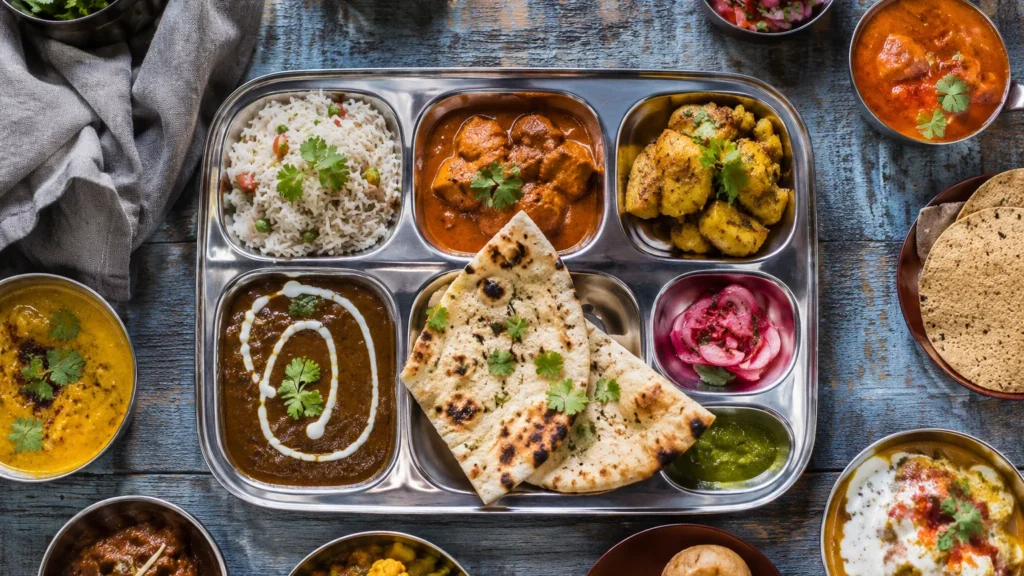
Quick answer: An Indian food truck is one of the smartest concepts in mobile food because its core, slow-cooked curries, holds hot and delicious for an entire service, shares a handful of cheap base ingredients across the whole menu, and offers a deep vegetarian lineup that wins catering jobs. The hard part isn’t the food; it’s the naan. Solve the bread, keep the menu to a few curry bases plus proteins, and you have a truck with low food cost and a line that doesn’t quit.
I run a food truck in Austin, and the Indian truck two lots over from mine is one of the smartest operations I’ve watched. While my grilled items have a short window before they suffer, I noticed their curries hold hot all service long without quality dropping. That single fact, that the food gets better sitting in a warmer instead of worse, is why this concept fits a truck almost perfectly.
This guide looks at the Indian food truck the way an operator does: not as a list of recipes, but as a business. Why the cuisine works on wheels, what belongs on the board, how to handle the one real equipment problem, and the economics that make it pay. The numbers come from the lot, not a fantasy spreadsheet.
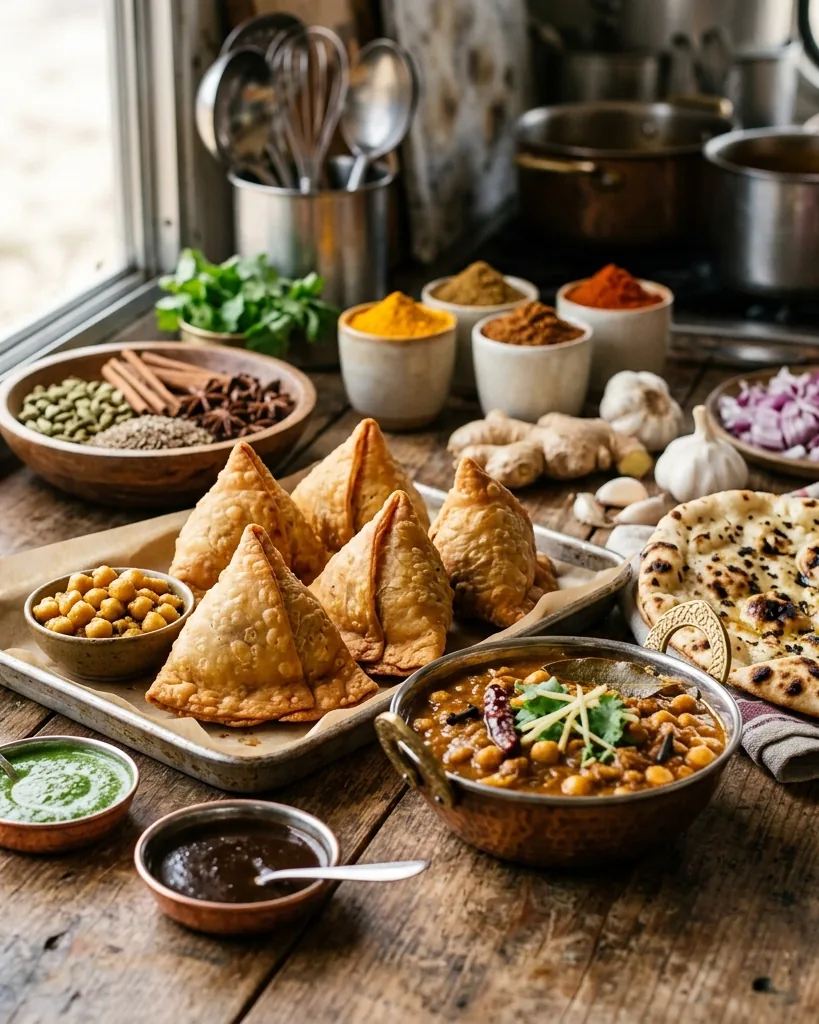
Why Indian cuisine is built for a truck
Most cuisines fight the truck. Grilled and fried foods have a narrow serving window, fragile plates fall apart in a hot, bumpy window, and cooking to order chokes the line. Indian food does the opposite of all three, and that’s the whole secret.
- It holds. Curries, dals, and braised dishes are designed to be cooked slowly and held, and they only deepen in flavor sitting in a warmer. Under FDA Food Code rules you hold hot food at 135 degrees Fahrenheit or above, and curry does that happily for hours, which is exactly what a long service demands.
- It shares ingredients. A common onion-tomato gravy, a few spice blends, rice, lentils, and chickpeas form the base of a dozen dishes. Almost nothing is single-use.
- It serves fast. When the curries are already built, an order is mostly assembly: ladle, plate, bread, go. That’s the speed a truck lives on.
- It stands out. Bold, aromatic flavor cuts through a crowded lot of burgers and tacos. The smell alone pulls a line.
The menu that sells
Keep it tight, the same six-to-eight-item rule that governs any good truck, and build it from a few bases. The proven sellers on Indian trucks across the country are remarkably consistent:
- Chicken tikka masala and butter chicken, the gateway dishes that bring first-timers in, served over rice or with naan.
- Samosas, the perfect handheld: crispy, cheap to make, and a high-margin add-on or snack.
- Garlic naan, the draw that finishes every plate (more on the bread below).
- Biryani, a fragrant one-bowl meal that travels and holds well.
- Chana masala, dal, and other vegetable curries, the vegetarian backbone.
- Fusion items like naan tacos and kati rolls, which turn the same fillings into a fast, Instagram-friendly handheld.
Notice how much of that comes from overlapping parts: the tikka sauce, the rice, the naan, and a couple of proteins recombine into most of the board. That’s the same shared-ingredient discipline I cover in our food truck menu ideas guide, and Indian food does it more naturally than almost any cuisine.
The naan problem (and how to solve it)
Here’s the part the dreamy “start an Indian truck” articles skip. What I didn’t expect, watching the truck near me, was how much the naan was the real bottleneck, not the curry. A traditional tandoor, the clay oven that makes proper naan, is heavy, runs blistering hot, and simply doesn’t fit, or pass inspection, in most trucks.
Operators solve it a few ways, and you’ll need to pick one before you build:
- A tabletop tandoor or high-heat oven. Smaller electric or gas units can fit a truck and approximate the real thing; the operator near me runs one and par-bakes through the day.
- Par-bake and finish. Bake naan ahead at the commissary, then finish and warm it to order on the flat-top or in the oven, fast and consistent.
- Buy quality pre-made naan. Less romantic, but it frees your equipment budget for the warmers and refrigeration that actually drive the menu.
However you do it, respect the bread. It’s still what pulls the line, even though the curry is what makes the money.
The economics: why the food cost works
This is where the concept really shines. The base ingredients of Indian cooking, rice, lentils, chickpeas, onions, tomatoes, and spices, are some of the cheapest in any kitchen, and spice turns them into something people happily pay restaurant prices for. That gap is your margin.
The target is the same as any truck: keep food cost between roughly 28 and 35 percent of the menu price, aiming near 30 percent, the benchmark the National Restaurant Association and every working operator uses. Indian concepts hit it easily. I talked to the owner near me once during a slow afternoon, and what I learned stuck with me: she preps three curry bases in bulk at the commissary, then every dish on the board is one of those bases plus a different protein or vegetable. Her food cost is the envy of the lot because almost nothing is single-use.
Put real numbers on it and the appeal is obvious. Say a plate of tikka masala over rice costs you about $3.50 in ingredients and sells for $12. That is a food cost right around 29 percent, squarely in the target zone, and the same curry base also fills a $9 wrap and a $14 thali combo without a single new ingredient. Run three bases like that across an eight-item board and your whole menu shares one shopping list. Compare that to a grill truck juggling a dozen separate proteins and toppings, and you can see why the Indian operator near me consistently turns a healthier margin on a smaller cart.
The overlooked detail is that this concept also keeps your startup lean. A food truck already runs roughly 30 to 35 percent of the cost of a comparable brick-and-mortar restaurant, and an Indian menu leans on inexpensive ingredients and bulk prep rather than a wall of expensive a-la-minute equipment. The U.S. Small Business Administration’s guidance on managing your finances is worth a read before you build, because the trucks that last are the ones that know these numbers cold.
Vegetarian and vegan as a money-maker
In my experience the veg and vegan side is underrated money. When I started keeping a meatless option on my own truck I booked more catering gigs, and an Indian truck’s all-day vegetarian menu does the same thing on a much bigger scale. Every office order with one vegetarian in the group comes to the truck that can feed everyone.
Indian cuisine has one of the deepest naturally vegetarian and vegan repertoires in the world, chana masala, dal, aloo gobi, chickpea and lentil dishes, plus paneer for vegetarians, and almost none of it feels like a compromise. That breadth is a genuine competitive advantage for catering, where a single dietary restriction in a group can decide who gets the booking. Lean into it on purpose; don’t treat it as an afterthought.
Running the day: bulk prep and the line
The rhythm of an Indian truck is different from a grill truck, and that’s the point. Most of the work happens before the wheels stop. You build your curry bases, cook your rice, prep your proteins and vegetables, and par-bake your bread at the commissary in the morning. Service itself is assembly: hold everything safely hot or cold, and combine to order in seconds.
That front-loaded structure is what lets a small crew push a big lunch rush. It also means refrigeration and warmers, not a fancy cooktop, are your most important equipment. Hold hot curries at 135 degrees Fahrenheit or above and cold components like raita and chutneys at 41 degrees Fahrenheit or below, and you stay both safe and consistent through a four-hour rush. Get the prep and the holding right, and the line takes care of itself.
Standing out in a crowded lot
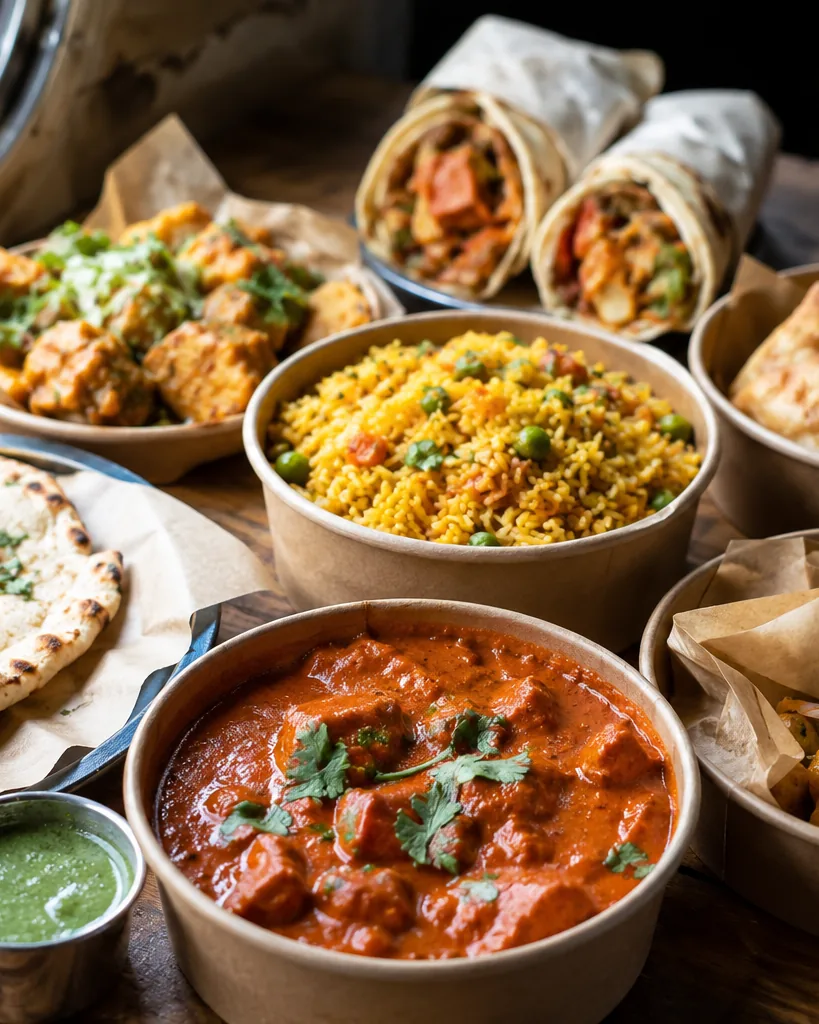
The flip side of a popular concept is competition: in a busy market you might park next to two other trucks chasing the same lunch crowd. Indian food gives you three natural ways to stand apart. The aroma does marketing no sign can match, drifting across a lot and pulling people before they have read a word. A signature, whether it is a particular butter chicken or a craveable naan taco, gives regulars a reason to seek you out by name. And a genuinely deep vegetarian board means your truck is the one that can feed an entire mixed group, which is how you win the office order while the burger truck gets the one person who eats meat. Pick a lane on all three, smell, signature, and inclusivity, and you are not just another truck on the row.
Food safety and permits, the truck reality
Because an Indian truck lives and dies on holding food hot for hours, food safety isn’t paperwork here, it’s the core of the operation. Curries, rice, and dals are what FDA and USDA guidance call TCS foods, time and temperature control for safety, which means they must be kept out of the danger zone or they grow bacteria fast. The rules are specific and worth memorizing: hold hot food at 135 degrees Fahrenheit or above, keep cold components at 41 degrees Fahrenheit or below, and never let anything sit between those for more than the limited window the code allows.
Two more compliance pieces shape an Indian truck specifically. First, most jurisdictions require at least one Certified Food Protection Manager (a CFPM) on staff, and given how much hot-holding you do, that training pays for itself. Second, any truck with high-heat cooking, including a tabletop tandoor or a fryer for samosas, typically needs a fire-suppression system meeting NFPA standards, which inspectors check closely. Build these into your plan and budget from day one. They aren’t optional, and discovering them after you’ve spent on the build, the way I learned the permit map by getting turned away from a lot, is the expensive route.
Mistakes to avoid
The mistake I see new operators make with this concept is trying to cook everything to order like a restaurant. I recommend leaning into what Indian food does best on a truck: bulk-prepped, slow-built flavor that holds, served fast. Beyond that, watch for these:
- A menu that’s too big. Twenty curries sounds generous and cooks like a nightmare. Pick a few bases and recombine.
- Ignoring the bread plan. Deciding how you’ll make naan after you build the truck is backwards. Solve it first.
- Underpricing the value. Cheap ingredients tempt operators to underprice. Your spice, technique, and hold time are worth restaurant money; charge for them.
- Treating veg as a sideline. It’s a catering engine. Build it out.
If you’re still choosing between concepts, weigh it against the others in our food truck ideas guide and the Mexican food truck breakdown, which wins for many of the same hold-and-share reasons.
Frequently asked questions
Is an Indian food truck profitable?
It can be very profitable, because the base ingredients (rice, lentils, chickpeas, onion-tomato gravy) are cheap, the spice adds high perceived value, and bulk-prepped curries keep food cost near the 30 percent target. The keys are a tight menu built from shared bases and pricing that reflects the value, not just the ingredient cost.
What sells best on an Indian food truck?
Chicken tikka masala and butter chicken are the gateway dishes that bring first-timers in, while samosas, garlic naan, and biryani round out the top sellers. Fusion handhelds like naan tacos and kati rolls draw crowds and serve fast.
How do you make naan on a food truck without a tandoor?
Most operators use a tabletop tandoor or high-heat oven, par-bake naan at the commissary and finish it to order, or buy quality pre-made naan. Any of these works; the important thing is to choose your bread method before you build the truck, since it shapes your equipment.
How much does it cost to start an Indian food truck?
A food truck generally runs about 30 to 35 percent of the cost of a comparable brick-and-mortar restaurant, and an Indian concept stays on the lean end because it relies on inexpensive ingredients and bulk prep rather than costly cook-to-order equipment. Your biggest spends are the truck build, refrigeration, and warmers.
Do I need a big menu for an Indian food truck?
No, the opposite. Keep it to about six to eight items built from two or three curry bases plus different proteins and vegetables. A focused board cooks faster, wastes less, and is far easier to run consistently from a small kitchen.
The bottom line
The Indian food truck works because the food itself is on your side: curries hold hot and improve through a long service, a handful of cheap shared ingredients build the whole menu, and a deep vegetarian lineup wins the catering jobs other trucks can’t. Solve the naan, keep the board tight, price for the value rather than the cost, and lean into bulk-prepped flavor instead of cooking to order. Watching the truck two lots over from mine, that’s the formula, and it’s why, in a sea of burgers and tacos, the Indian truck so often has the longest line. Get those few things right, and you are not opening a restaurant on wheels so much as building a small, focused machine that turns cheap, bold, make-ahead food into one of the better margins on the whole lot.
Sources: National Restaurant Association, industry food-cost and menu guidance; FDA Food Code, hot- and cold-holding standards; U.S. Small Business Administration, managing your finances.