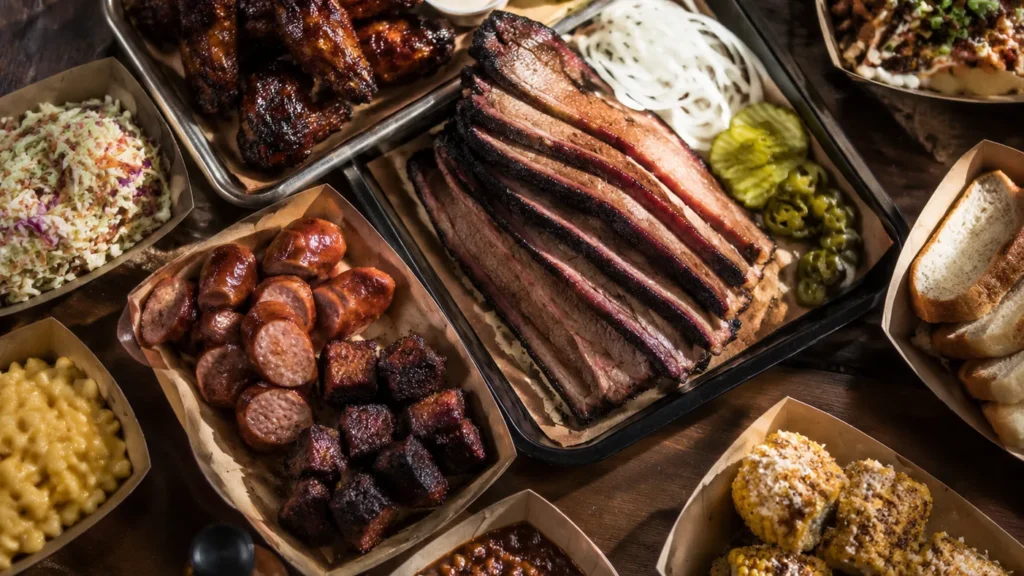
A bbq food truck is the only concept on the street where the kitchen runs while you sleep. The smoker sets the schedule, brisket and pork shoulder want 8 to 14 hours at 225 to 275 degrees Fahrenheit, and everything else in the business bends around that clock: the prep, the staffing, the sell-out-by-seven marketing, the margins. Done right, the numbers beat the industry: concept benchmarks (FoodTruckProfit, 2025) put BBQ trucks at 12 to 22 percent net against the 6 to 10 percent truck average, on $15 to $20 plates. I have tended smokers through more nights than I can count, and this guide covers what the pretty startup pages skip: the cook clock, the plate math, and the fire marshal.
Why BBQ is a different truck business
Every other concept cooks to order; BBQ cooks to inventory. The meat that sells at noon went on the fire the previous evening, which changes three things about the business before the first customer arrives.
First, capital: the smoker is a second kitchen, priced at $5,000 to $20,000 for commercial units that handle truck volume. Second, labor shape: someone owns the overnight cook, on-site, remote-monitored, or split-shifted, and that labor exists whether Tuesday sells 60 plates or 160. Third, and in the concept’s favor, the ticket: smoked meat commands $14 to $22 average tickets, the top of the street-food range, and customers queue for it in a way griddle food rarely earns.
The trade is inflexibility. A burger truck that misjudges a slow day grinds less beef tomorrow; a BBQ truck that misjudged put twelve briskets through a fourteen-hour cook for a crowd that did not come. That single asymmetry explains the sell-out model, the catering line, and most of what follows.
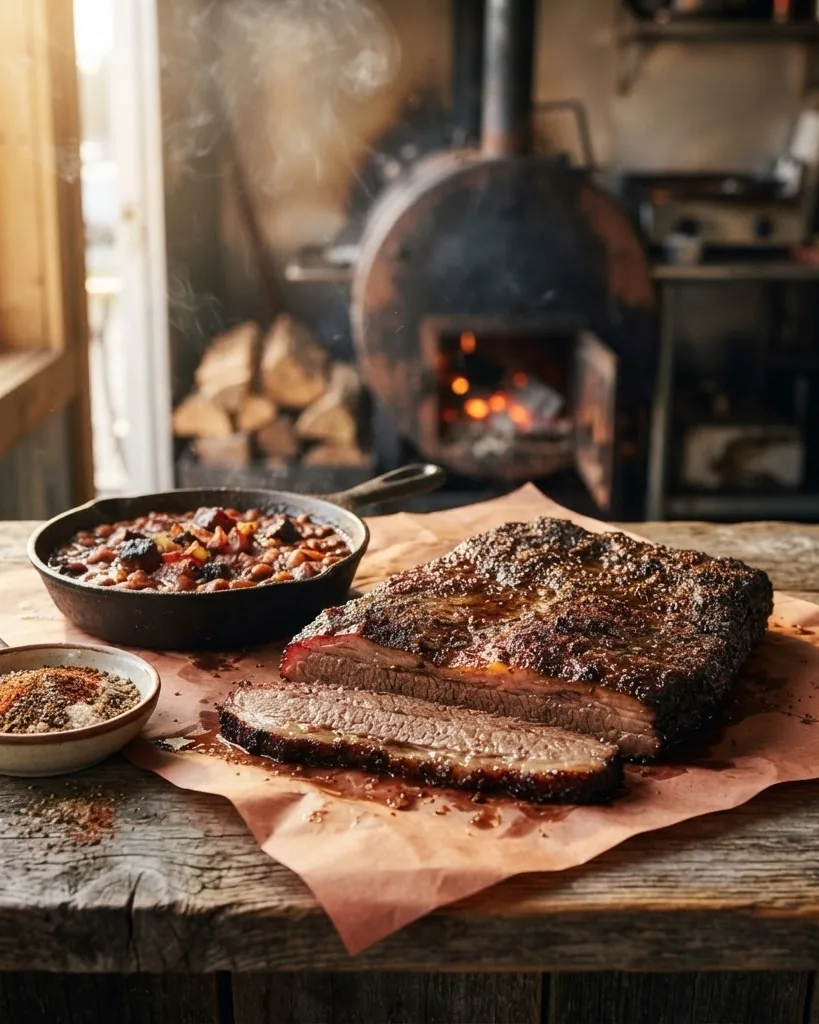
Startup costs, smoker included
The budget runs the standard truck stack plus the fire. Industry benchmarks for 2026, including Upmetrics’ BBQ startup breakdown, put the pieces in these ranges.
| Line | 2026 range | Notes |
|---|---|---|
| Used truck, fitted | $40,000 – $80,000 | New builds run $75,000 – $150,000 |
| Commercial smoker | $5,000 – $20,000 | Offset, pellet, or rotisserie cabinet |
| Other kitchen equipment | $10,000 – $50,000 | Holding, slicer, refrigeration, ventilation |
| Permits and licenses | $1,000 – $3,000 | Health, fire, registrations; varies by city |
| Realistic total | $50,000 – $200,000 | Most BBQ builds land near the middle |
Beyond the smoker, the equipment line skews toward holding rather than cooking: insulated hot boxes, Cambro-style, that keep finished meat above the USDA’s 140-degree Fahrenheit hold line for hours, a meat slicer that pays for itself in portion consistency, and refrigeration sized for raw protein in bulk. A trailer-mounted smoker towed behind the truck is the common capacity answer, and it doubles as the best advertising in the business: nothing sells barbecue like smoke you can see from the road.
Choosing the smoker: offset, pellet, or rotisserie
The smoker decision is a labor decision wearing equipment clothes. Three families cover the market.
- Offset stick burners. Wood-fire flavor at its fullest and the pitmaster theater customers love, at the cost of constant tending: an offset wants fuel and attention every 45 minutes, all night. Cheapest to buy at a given size, most expensive to staff.
- Pellet smokers. Thermostat-controlled, auger-fed, stable enough to run overnight with remote monitoring. The flavor argument against them has faded at commercial scale; the consistency argument for them decides most truck purchases. Mid-priced, low labor.
- Rotisserie cabinets. Gas-assisted wood smokers that pack the most capacity into the smallest footprint, the answer when volume outgrows everything else. Top of the $5,000 to $20,000 band and beyond, lowest per-pound labor.
Having spent nights feeding an offset and mornings unloading a pellet unit that ran itself, my honest advice for a first truck is the pellet smoker: the overnight stability converts directly into sleep, and sleep converts into service quality at the window. Buy the offset when the brand is established enough to charge for the theater.
The operating clock: a day that starts at 6 p.m.
Here is the schedule nobody publishes, the one the smoker writes. It is the real reason BBQ trucks feel different to run.
6:00 to 8:00 p.m., fire and load. Trim and season tomorrow’s briskets and shoulders, bring the pit to temperature, load, and stabilize. The cook runs 225 to 275 degrees Fahrenheit from here to morning. Overnight, the pellet rig monitors itself with alarms; the offset gets checked every 45 minutes by whoever drew the short straw. 6:00 to 10:00 a.m., the finish window. Meats come off as they hit 195 to 205 internal, the tenderness range, wrap, rest, and go into the hot boxes above 140. Ribs, which want only 5 to 6 hours, go on now for lunch. Sides get built: the mac, the slaw, the cornbread, the beans.
11:00 a.m. to sell-out, service. Slice to order, plate, repeat until the board says gone, mid-afternoon on a normal day, 90 minutes into a great one. After close: clean the pit, log what sold against what cooked, and start the next trim.
The overlooked detail in this clock is that it makes BBQ the best catering concept on wheels: the food is already cooked-to-inventory, so a 200-person corporate drop is the same workflow as a street day, and our food truck catering guide shows why that second line often out-earns the window.
Plate costing and the sides that rescue margin
BBQ margins live and die on the plate build. The benchmark food cost for the category runs about 30 percent of menu price, and the rib plate at $15 to $20 is the reference product. Cost one honestly at 2026 wholesale prices.
| Component | Spec | 2026 cost |
|---|---|---|
| Ribs, half rack | St. Louis cut, post-shrink | $3.20 – $4.30 |
| Two sides | Slaw + beans, 4 oz each | $0.60 – $0.95 |
| Bread, pickles, onion | Service standard | $0.30 – $0.45 |
| Tray, cutlery, wrap | Packaging | $0.35 – $0.50 |
| Total build | $4.45 – $6.20 |
At $17.50 mid-band pricing, that build sits at 25 to 35 percent food cost, right on the category benchmark. Brisket runs tighter: raw packers lost weight to trim and a 35-to-40 percent cook shrink before the first slice sells, which is why brisket plates price at the top of the band and why the category’s margin risk is the beef market itself.
Brisket deserves its own arithmetic because it is the category’s prestige item and its margin trap at once. A 13-pound raw packer loses roughly 2 pounds to trim and 35 to 40 percent of the rest to the cook, so the sliceable yield lands near 6.5 to 7 pounds. At 2026 wholesale beef prices that puts the cost of a 6-ounce sliced portion at $3.40 to $4.60 before the plate is built, which is why brisket plates price at $18 to $22 and why every point of beef-market movement shows up on the menu board within a season. Pork shoulder runs the same math at half the raw cost, which is why pulled pork is the workhorse plate on most trucks and brisket is the headline.
The rescue squad is the sides bench. Cornbread, slaw, beans, and loaded mac and cheese cost cents per serving, sell for $3 to $9, and attach to most tickets. When I managed plate economics through a brisket price spike, the sides were what held the truck’s month: meat margins compressed 10 points and the loaded mac, at something like 15 percent food cost, quietly refilled the gap. Build the menu so every plate wants a side and every side carries margin the meat cannot.
The sell-out model: waste control as marketing
BBQ’s inventory problem has one clean answer: cook a fixed quantity, sell until it is gone, and let gone be the brand. The sell-out model is why the concept’s net margins reach 12 to 22 percent while the industry averages 6 to 10, waste on a cooked-to-inventory product is margin death, and zero leftover is zero waste.
Running it well is a numbers discipline. Log every service: plates cooked, plates sold, time of sell-out. Cook to the trailing average, not the hopeful day, and let two consecutive early sell-outs, not one, justify adding a brisket to the fire. The scarcity does real marketing work, a truck that posts sold out at 1:40 p.m. trains its market to come early, but only if the earliness is real; padding the count to chase one more hour of sales is how the model quietly dies and the waste returns.
Live fire, health codes, and permits
BBQ trucks carry every standard permit, health department, commissary, fire inspection, plus the live-fire question, and the answer changes city by city. Some jurisdictions treat a wood-fired smoker as open flame with specific clearance, extinguisher, and placement rules; some require the smoker to sit separate from the truck; a few urban cores restrict solid-fuel cooking outright. The fire marshal conversation happens before the smoker purchase, not after, and in my experience marshals reward the operator who shows up with spec sheets and a site plan before being asked.
The health side centers on temperatures, and the USDA’s numbers (fsis.usda.gov) are the inspection standard: hot holding above 140 degrees Fahrenheit, cooling and reheating logged, and the long-cook, long-hold workflow documented in your HACCP-style plan. Inspectors see fewer BBQ trucks than griddle trucks; a binder with your temp logs converts that unfamiliarity from friction into trust. Budget the $1,000 to $3,000 permit line and treat the paperwork as part of the pitmaster job.
Catering: the second line that smooths the smoker’s math
Every structural weakness of street BBQ, fixed overnight labor, cook-to-inventory risk, weather exposure, disappears in catering, which is why mature BBQ trucks run it as a co-equal revenue line rather than a sideline. A 150-person corporate lunch is one cook, one delivery, zero window labor, and a check that would take a very good street day to match. The workflow is already yours: the smoker does not care whether the brisket goes into hot boxes for a street corner or a wedding.
Booking it is mostly a matter of catching the leads the window already generates. A catering card at the pickup shelf, a form on the site, and a same-week reply habit convert festival customers into event clients through the fall and winter, exactly the months the street calendar thins. Price catering off the same plate math with a service premium, deposit up front, headcount locked a week out, and the category’s waste problem inverts: catering cooks are the only cooks where the quantity is guaranteed sold before the fire is lit.
The first season: proving the clock before scaling it
The rookie-season plan that protects the investment runs small and measured. Open with two street days and one brewery night a week, cook counts set deliberately short, selling out early while the crew learns the pit’s real capacity and the market’s real appetite. Log every service: pounds on, plates sold, sell-out time, weather. By week six the trailing averages, not optimism, set the cook counts, and the fire only grows when two straight weeks of early sell-outs say so.
What I noticed the season I ran this ramp was that the discipline compounds: short cooks meant zero waste, zero waste meant the margins matched the category’s 12-to-22 percent promise from month two, and the sold-out posts built the following that filled month four’s calendar. The trucks that skip the ramp, twelve briskets on opening week for a crowd that has never heard of them, spend their first quarter feeding the trash can and doubting a concept that was never the problem.
The business numbers, assembled
The assembled picture, sources attached. Startup: $50,000 to $200,000 with the smoker at $5,000 to $20,000 inside it, per industry benchmark ranges. Revenue: well-positioned BBQ trucks report $20,000 to $50,000 per month in season. Margins: 12 to 22 percent net at concept level, per category benchmarks, versus 6 to 10 percent for trucks generally, provided the sell-out discipline holds and catering fills the calendar’s gaps. Tickets: $14 to $22, the strongest in street food, on plates costed near 30 percent.
The risks worth writing into the plan: brisket and pork price volatility, which the sides bench and menu pricing must absorb; the overnight labor that burns out undermanned crews; and the live-fire permitting that can veto a location the market loved. A written plan that prices all three, our food truck business plan template holds the framework, is what turns the category’s excellent averages into your own numbers, and our food truck equipment guide covers the holding-and-slicing bench that makes the clock workable.
Frequently asked questions
How much does a BBQ food truck cost to start?
Between $50,000 and $200,000 all-in: used trucks at $40,000 to $80,000, new at $75,000 to $150,000, the commercial smoker at $5,000 to $20,000, other equipment at $10,000 to $50,000, and permits at $1,000 to $3,000. Most working builds land mid-range.
What margins does a BBQ truck make?
Category benchmarks report 12 to 22 percent net for well-run BBQ trucks against the 6 to 10 percent industry average, on $14 to $22 tickets and roughly 30 percent food cost. The sell-out model’s waste control is what makes the difference; protein price spikes are what threatens it.
How long do the meats cook?
Brisket and pork shoulder run 8 to 14 hours at 225 to 275 degrees Fahrenheit to a 195-to-205 internal finish, then rest and hold above 140 per USDA guidance. Ribs want 5 to 6 hours. The overnight cook is the concept’s defining logistics problem and its moat.
Which smoker should a first truck buy?
A pellet smoker, in most cases: thermostat stability makes the overnight cook survivable for a small crew, and the flavor gap versus offsets has narrowed at commercial scale. Choose the offset when the brand can charge for wood-fire theater, and the rotisserie cabinet when volume outgrows both.
Do cities allow wood smokers on trucks?
Most do with conditions, clearances, extinguishers, sometimes a separate trailer, but rules vary widely and a few urban cores restrict solid fuel. Have the fire-marshal conversation with spec sheets in hand before buying the pit, and keep USDA-standard temperature logs for the health side.
About the author and sources
Sal Bendetti cooks on food trucks and writes the operational guides on The Truck Chef, from batch prep to smoker schedules. Figures in this guide are attributed to 2026 industry benchmark ranges for BBQ startup costs and category margins (Upmetrics, FoodTruckProfit, financing-industry guides), payments-industry cost data for truck ranges, and USDA/FSIS temperature guidance. Plate costs are operating ranges from service practice; your suppliers and market move them.
Costs, revenues, and margins are published benchmarks and operating ranges, not guarantees. Fire codes, health rules, and vending laws vary by city and county; verify locally before buying equipment or committing to a route.