Search for food truck ideas and you will drown in listicles. Forty-one concepts here, thirty-five there, a scroll of cuisines with a photo and a sentence each. They are fun to browse and useless for the only question that matters: which of these will actually make money on a truck. A great concept on paper can die on wheels because it preps too slow, needs equipment that does not fit, or competes with three identical trucks already working your city. I am going to give you the ideas, but more importantly, I am going to give you the scorecard to judge them.
The food truck business in the U.S. is real and growing, worth around two point eight billion dollars with more than ninety thousand trucks operating and the field still wide open because it is so fragmented that no operator holds even five percent of the market. There is room for a good concept. The trick is knowing what makes a concept good before you spend a dollar building it. The numbers here are typical ranges, not promises, but the framework is the part to keep.
The five-lever test for any food truck idea
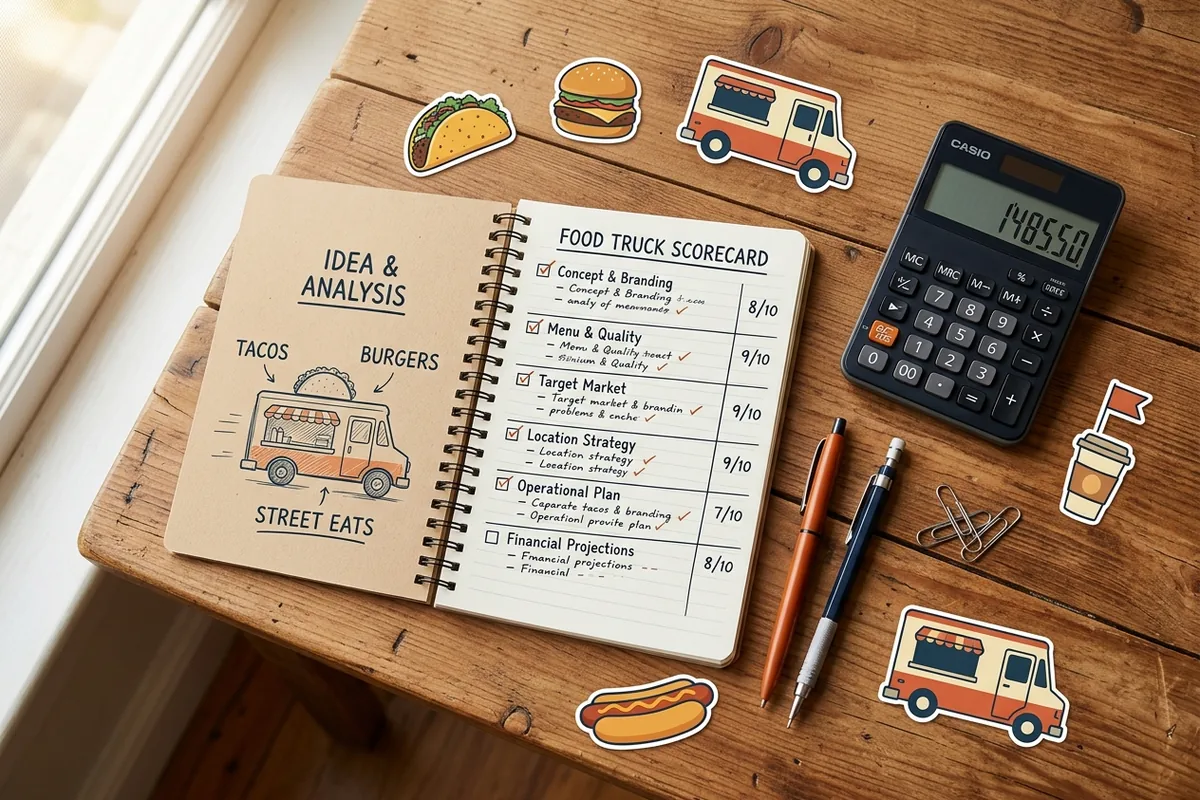
Before you fall in love with a concept, run it through five filters. These are the levers that decide whether an idea works on a truck, and the listicles never mention them. An idea that scores well on all five is worth pursuing. An idea that fails two or three of them is a trap no matter how trendy it looks. Learn to score ideas this way and you stop chasing concepts and start choosing them, which is the difference between an owner who lasts and one who learns an expensive lesson in their first season.
First, food cost. The strongest concepts keep their cost of goods in roughly the twenty-eight to thirty-five percent range, and the very best lean on items with low ingredient cost and high markup. Second, prep and service speed. A truck makes money on throughput, so a concept you can assemble fast from prepped components beats one that cooks every order from scratch. Third, equipment fit. Your truck has limited power, water, and floor space, so a concept that needs a rare or heavy appliance is a concept fighting your own kitchen.
Fourth, local competition. Scout your actual market on foot and online before you commit, because the best cuisine in the world loses to three established trucks already serving it. Pick a gap. Fifth, margin and price ceiling. Street customers will pay only so much, so your signature items need to clear thirty percent margin within that ceiling. Score every idea below against these five, and the right concept for your city and budget rises to the top.
| Lever | What to check | Green flag |
|---|---|---|
| Food cost | Ingredient cost vs menu price | 28 – 35% COGS, high-markup items |
| Service speed | How fast you assemble an order | Built from prepped, shared parts |
| Equipment fit | Power, water, footprint needed | Fits a standard truck build |
| Competition | Trucks already doing it locally | An open gap in your market |
| Margin ceiling | What customers will pay | Signatures clear 30% margin |
High-margin concepts that reward the math
Some concepts win mostly because the margins are forgiving. Coffee and espresso lead this group, with very low ingredient cost against what customers happily pay, plus fast service and small equipment footprint. Lemonade and specialty drinks are similar, cheap to produce and easy to price up, especially at events. Loaded and gourmet fries, grilled cheese, and mac and cheese all share the same trait: humble, inexpensive bases dressed up into high-perceived-value menu items that hold a strong margin.
Desserts belong here too. Ice cream, donuts, churros, and cookies carry low food cost and high impulse appeal, and a dessert truck or a dessert-forward window does quiet, steady business. The lesson across this group is that a high-margin core lets you survive slow days and bad weather in a way a thin-margin concept cannot. If you want a concept built around a sweet, repeatable product, the steady demand behind classic chocolate chip cookies shows how a single simple item can anchor a whole menu.
Proven cuisine concepts that work on a truck
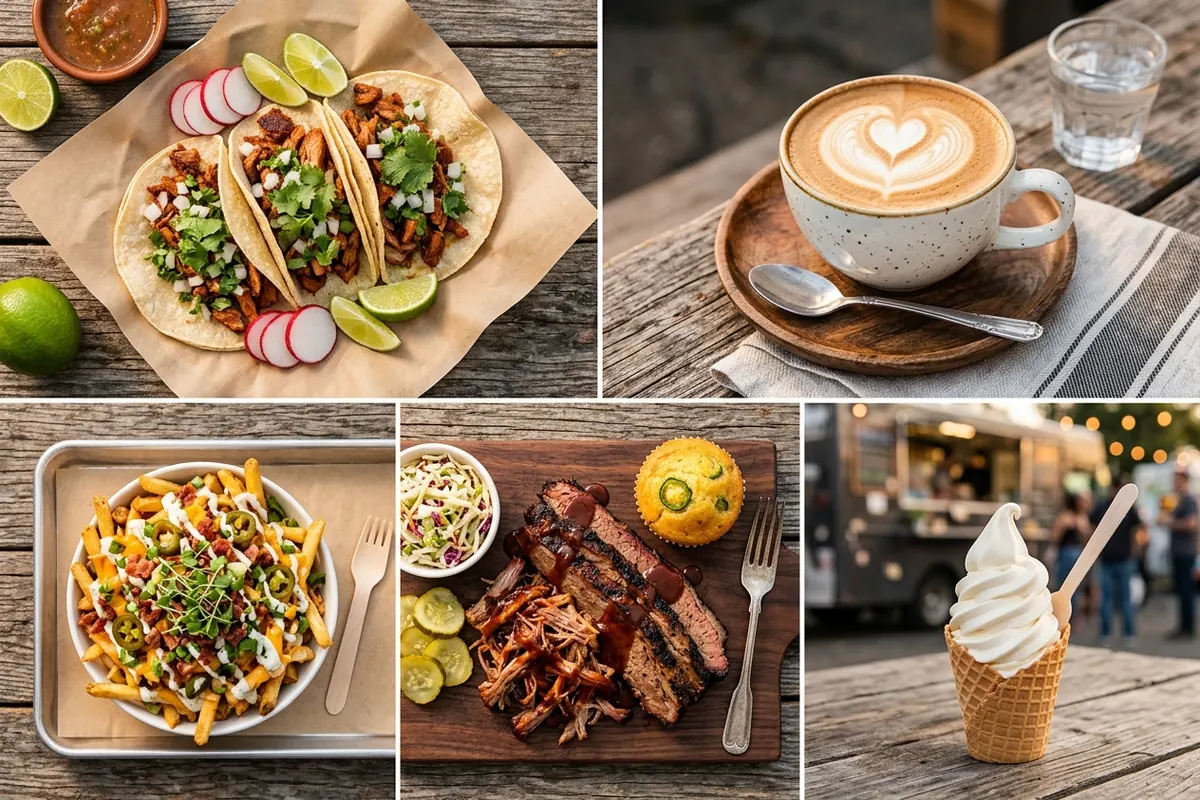
Then there are the cuisine concepts with a track record. Tacos and Mexican food sit at or near the top, because the shared-component economics keep food cost low and the line fast. Barbecue draws crowds and commands good prices, though it demands smoker space and long cook times you have to plan around. Wood-fired or personal pizza, wings, and breakfast or breakfast burritos all have strong, repeatable demand. These are not exotic, and that is the point: proven demand lowers your risk.
Loaded fries and gourmet versions of cheap comfort food keep appearing on profitable-concept lists for a reason, they marry low cost with high appeal. The trick with any proven concept is differentiation, since proven also means popular and popular means competition. You win not by inventing a new cuisine but by being the clearly best, most focused version of a known one in your specific market. A short menu of one thing done extremely well beats a long menu of many things done adequately.
| Concept | Why it works | Watch out for |
|---|---|---|
| Tacos / Mexican | Low food cost, fast tickets, broad demand | Crowded, needs differentiation |
| Coffee / espresso | Very high margin, fast, small footprint | Equipment and power reliability |
| BBQ | Crowd draw, strong prices | Smoker space, long cook times |
| Loaded fries / comfort | Cheap base, high perceived value | Fryer capacity, holding quality |
| Desserts / ice cream | Low cost, impulse appeal | Seasonality for frozen items |
Niche and differentiation ideas
If your market is already crowded with the proven concepts, your opportunity is a niche the local trucks ignore. Specialty-diet positioning is one of the strongest, since vegan, keto, paleo, and allergen-free menus command a premium and build fierce loyalty among customers who are usually underserved. A well-built plant-based truck does not just feed vegans, it feeds the whole group deciding where to eat when one person cannot have meat. Ideas for hearty meatless mains that satisfy translate well to a truck, and the air-fryer snack recipes approach shows how to get very good texture without a wall of deep fryers.
Fusion and mashups are another lane, Korean-Mexican, Indian-Mediterranean, the sushi burrito, concepts that feel fresh while still leaning on familiar flavors. Underserved cultural cuisine, authentic food that your city lacks, can build a devoted following. And the single-item specialist, the truck that does one thing, grilled cheese, baked potatoes, waffles, better than anyone, is a powerful position because focus drives speed, consistency, and word of mouth. Differentiation is not about being weird, it is about being the obvious choice for a specific craving.
Turning an idea into a menu
Once you have a concept, the menu is where it lives or dies, and the rule is the same across every successful truck: keep it small. Start from a hero item, the thing people will line up for, then build three to five variations off shared components so your prep list stays short. Add one or two high-margin extras, a drink, a dessert, a side, that lift the average ticket. The whole board should fit on a single sign and come off a kitchen one or two people can run during a rush.
A tight menu is not a limitation, it is the strategy. It speeds your line, cuts your waste, simplifies your inventory, and makes you better at the few things you sell. The sprawling fifteen-item board feels generous and quietly bleeds money through slow tickets and spoilage. For more on costing items and designing a board that actually moves, the food truck menus and ideas hub goes deeper, and the broader cuisines and concepts hub is worth browsing once you are weighing specific directions.
Scout your market before you commit
The fastest way to kill a good idea is to launch it where three trucks already do the same thing. Scouting your local market is free, it takes a few weekends, and almost nobody bothers, which is exactly why it is an edge. Start online: pull up the food trucks in your city, note what cuisines are saturated and what is missing, and read their reviews to find the complaints customers keep repeating. A gap in the market often hides in plain sight inside one-star reviews of the trucks that already exist.
Then go in person. Visit the breweries, office parks, festivals, and busy intersections where trucks actually work, at the hours they work them, and watch. Which trucks have lines and which sit idle? What are people actually buying? Talk to the operators when they are not slammed, because most will tell you more about the realities of the local scene than any article can. You are looking for two things: a cuisine or niche that is underserved, and a set of reliable locations where your concept would have hungry customers at the right time of day.
Scouting also grounds your numbers. Seeing real prices on real menus tells you what your market will pay, which feeds straight into the margin-ceiling lever. Watching how fast a busy truck moves its line shows you the throughput you need to match. The concept you end up choosing should be the one your specific market has room for, not the one that looked best in a listicle, and the only way to know the difference is to go look.
Match the idea to your budget and kitchen
Every concept carries a different price of entry, and being honest about your budget narrows the field fast. Some ideas are genuinely lean: a coffee or lemonade setup, a single-item specialist, or a dessert window can launch with a modest build because they need little equipment and little space. Others, a full barbecue rig with a smoker, a pizza truck with a deck oven, are equipment-heavy and push your startup cost and your power and water demands up sharply. Pick a concept your budget can actually build well, because a cheap, undersized build of an ambitious concept serves no one.
Your own skills belong in the equation too. A concept you can execute consistently at speed beats one that looks impressive but slows you down or wanders in quality from one service to the next. If you are not a trained cook, a tightly focused menu built from a few reliable components is a smarter bet than a sprawling board that demands range you do not have yet. The single-item specialist exists partly because focus makes consistency achievable for a small team in a tiny kitchen.
Once you have weighed budget, equipment, and skill against the five-lever test, the layout of the kitchen that serves your concept is the next thing to get right, since the wrong build fights your menu every shift. The starting and running a food truck hub walks through the costs and build decisions that turn a chosen concept into a working truck. Choose the idea that fits all three, your market, your money, and your hands, and you have done the hard part most aspiring owners skip entirely.
From idea to launch
An idea is the start, not the business. Once you have scored a concept and sketched a menu, the next steps are the unglamorous ones that decide whether you ever serve a customer: a written business plan, funding, the right truck and equipment, and the permits. The SBA’s guidance on how to write a business plan is genuinely useful for forcing your idea to confront real numbers, and the IRS overview of starting a business covers the tax and registration side you cannot skip.
The market data backs up taking this seriously. With the U.S. food truck industry around two point eight billion dollars and growing, tracked by firms like IBISWorld, the demand is there for a well-chosen, well-run concept. What it is not is a guaranteed win, because the trucks that make it share habits, not luck: a focused concept that passes the five-lever test, a tight menu, scouted locations, and a real plan. Pick the idea your market actually has room for, build it lean, and you give yourself the best odds this business offers.
One last reframe worth carrying with you: the idea is the cheapest part of this business and the part people overweight. Two operators can run the exact same concept and one thrives while the other folds, because execution, location, speed, and consistency decide far more than the cuisine on the sign. That should be encouraging, not discouraging. It means you do not need a brilliant, never-seen-before idea to win. You need a sound one your market has room for, scored against the five levers, built within your budget, and run with discipline day after day. Get those right and a plain idea outperforms a clever one every time.
Frequently Asked Questions
What is the most profitable food truck idea?
There is no single answer, but the most profitable concepts share traits: low food cost, fast service, equipment that fits a truck, and a price customers will pay. High-margin concepts like coffee, lemonade, loaded fries, and desserts reward the math, while proven cuisines like tacos and Mexican food win on low cost and broad demand. The best idea for you is the one that passes the five-lever test in your specific market, not the trendiest one on a list.
How do I choose a food truck concept?
Run each idea through five filters: food cost (aim for twenty-eight to thirty-five percent), service speed (built from prepped, shared components), equipment fit (works within a truck’s power, water, and space), local competition (find an open gap), and margin ceiling (signatures clear thirty percent at a price customers will pay). An idea that scores well on all five is worth pursuing. One that fails several is a trap regardless of how appealing it looks.
What food truck concepts have the highest margins?
Drinks and simple dressed-up comfort foods tend to carry the best margins. Coffee and espresso, lemonade and specialty drinks, loaded and gourmet fries, grilled cheese, mac and cheese, and desserts like ice cream, donuts, and churros all pair low ingredient cost with high perceived value. A high-margin core helps you survive slow days and weather, which is why many operators anchor their menu with at least one of these even when their concept is something else.
Should a food truck have a big or small menu?
Small, almost always. Start from a hero item and build three to five variations off shared components, then add one or two high-margin extras. A tight menu speeds your line, cuts waste, simplifies inventory, and makes you better at the few things you sell. A sprawling board feels generous but bleeds money through slow tickets and spoilage. The whole menu should fit on one sign and run off a kitchen one or two people can handle during a rush.