Taco food truck menu decisions are usually treated as a taste question, but the smarter operators treat them as an arithmetic one, because the number of hot-held proteins you can legally carry is fixed before a single creative choice gets made. Tacos are the single most-reported Mexican food among U.S. adults aged 20 and over, at 39 percent of all Mexican-food reports, according to the USDA Agricultural Research Service dietary data brief. That one figure should shape the whole board. What follows is a working document: yields, cook temperatures, holding limits, permit costs, and a shared-prep grid, all pulled from named federal and industry sources rather than repeated from other blogs.
Quick answer: A strong taco food truck menu runs 5 to 10 tacos across three price tiers, built from 12 to 14 shared prepped components, plus a few high-margin add-ons and drinks. Your protein count is capped by hot-holding capacity, since the FDA Food Code 2022 requires Time/Temperature Control for Safety foods held at 135 degrees Fahrenheit or above. Lead with tacos, because federal survey data puts them at 39 percent of Mexican-food reports, then extend the same mise en place into burritos, quesadillas, and bowls to widen sales without widening prep. Before styling anything, read your Food Insurance and permit obligations.
What a Real Taco Food Truck Menu Actually Contains
A real taco truck board is a small, deliberate list, not a taqueria wall of thirty items. The canonical structure is a tight protein set of five to ten tacos, two to four sides, three to six drinks, and a handful of paid modifiers. Federal survey work backs the emphasis on tacos: they draw 39 percent of Mexican-food reports among adults, ahead of burritos at 23 percent, quesadillas at 11 percent, nachos at 7 percent, and enchiladas at 5 percent, per the USDA Agricultural Research Service. Those ratios are your menu ratios. Build the taco section deep, then let burritos and quesadillas ride the same prepped ingredients.
Three board sizes cover most operators:
- Minimum viable (about 6 items): three tacos, one side, two drinks. Fastest line, smallest cold-chain footprint, easiest first permit inspection.
- Standard (about 12 items): five to six tacos, two or three sides, a burrito or quesadilla, three drinks. This is where most trucks settle.
- Catering (20-plus items): the standard board plus a taco-bar buffet format, per-head pricing, and clear allergen labeling for corporate and wedding events.
The eater googling what a taco truck serves and the operator building the board want the same thing here: a legible list where naming is unambiguous and every item pulls from a shared prep set. If you are still choosing a brand identity to sit above that board, the guide to choosing a taco truck name pairs directly with menu design.
Why Holding Capacity Caps Your Menu Before Taste Does
Menu size is a physics problem, not a preference. The FDA Food Code 2022, section 3-501.16, requires Time/Temperature Control for Safety foods to be held at 57 degrees Celsius (135 degrees Fahrenheit) or above when hot, or 5 degrees Celsius (41 degrees Fahrenheit) or below when cold. The 2022 edition is the 10th edition of the model code, adopted by state and local health departments. A truck has a finite number of steam-table wells and cold-rail pans. Each hot-held protein consumes a well. So your protein count is fixed by hardware before any creative decision arrives.
Work it backward. Count your wells, subtract one for consomé or a braise, and the remainder is your ceiling on simultaneously hot-held proteins. Everything else must be cooked to order or dropped. The U.S. Food and Drug Administration publishes the full code text at its Food Code 2022 page, and the holding rule is the single most useful line in it for menu planning.
This reframes the standard advice. Competitors say “keep it to six to ten items” as if it were taste. It is capacity. A four-well steam table with one well reserved for braise gives you three hot proteins, full stop.
The shared-prep matrix is how you get variety anyway. Twelve prepped components can generate roughly eighteen sellable items:
- Three or four proteins, held hot, feed tacos, burritos, quesadillas, and bowls.
- Two or three salsas and a garnish set (white onion, cilantro, lime, radish) dress every format.
- Cheese, crema, and a slaw turn the same protein into a different SKU.
- Chips plus queso or guacamole become sides and nacho bases from stock you already hold.
Design the grid first. The three menu sizes above are then outputs of that grid rather than separate lists, which keeps your cold-chain and prep labor flat as the board grows. Getting the wells, rails, and stations to physically fit is its own discipline, covered in the dimensioned food truck layout guide.
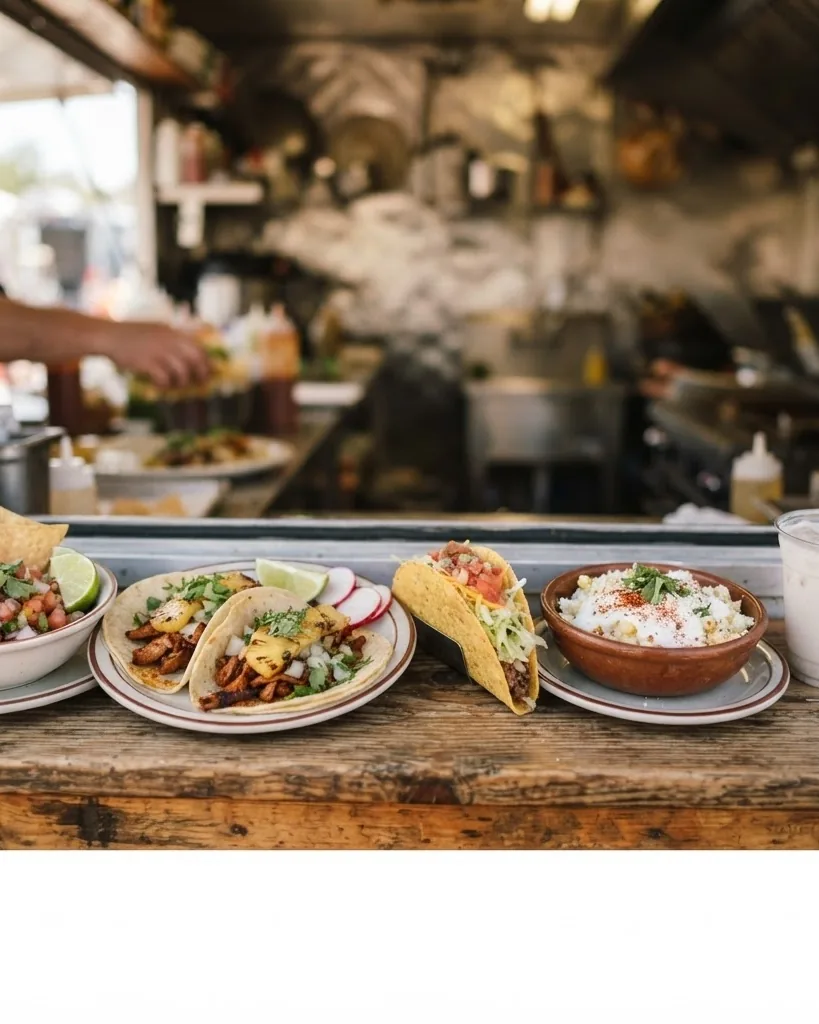
The Eight Core Proteins: Yields, Temps, and Build Behavior
This is where a cooking site earns its keep, because none of the ranking business blogs publish a build spec. Cook temperatures are not negotiable, and they come from the USDA Food Safety and Inspection Service. Ground beef, pork, lamb, and veal cook to 160 degrees Fahrenheit (71.1 degrees Celsius). All poultry, including ground, cooks to 165 degrees Fahrenheit (73.9 degrees Celsius). Whole-muscle beef, pork, veal, and lamb steaks, roasts, and chops cook to 145 degrees Fahrenheit (62.8 degrees Celsius) with a 3-minute rest. Those numbers assign directly to the proteins below.
Map each protein to its rule:
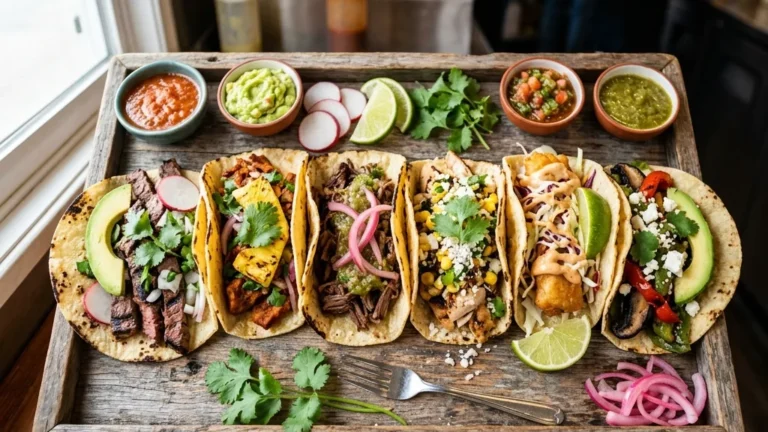
- Carne asada: whole-muscle beef, 145 degrees Fahrenheit with a 3-minute rest, then chopped hot. Marinate, char hard on the flattop, chop to order for texture.
- Pollo asado: poultry, 165 degrees Fahrenheit. Marinate in achiote and citrus, hold pulled or chopped.
- Chorizo: ground pork, 160 degrees Fahrenheit. Renders its own fat; pairs with potato for a breakfast daypart.
- Picadillo: ground beef, 160 degrees Fahrenheit. The value-tier workhorse.
- Carnitas: braise or confit pork, then crisp on the flattop to order. Holds well across a service.
- Al pastor: plancha adaptation of the trompo, achiote-marinated pork with pineapple.
- Birria: braised beef with a consomé program for dip service; the biggest operations burden because it needs its own well.
- Fish or shrimp: grilled or battered, cooked to order; changes your allergen plan and cold-chain because crustacean shellfish and fish are major allergens.
The FSIS temperature chart is the authority to print and post in the truck; it lives on the FSIS safe temperature page. One more thing the service pushes back on: color is not a doneness indicator. A gray interior does not mean safe, and a pink one does not mean raw. FSIS spells this out in its doneness-versus-safety guidance. Use a thermometer, every time, especially on ground proteins where 160 degrees Fahrenheit is the line.
For portion sizing, lean on consumption data. When adults eat tacos, the mean energy contribution is 713 kilocalories per consumer, while a single small beef-and-cheese corn tortilla taco is 261 kcal and a chicken-and-cheese flour tortilla taco is 231 kcal. Divide it out and the average customer eats roughly three tacos, which is exactly why the three-taco plate is the industry default. Size your combo to that number rather than guessing.
A vegetarian and vegan lane costs almost nothing to add and widens your reachable market: nopales, roasted mushrooms, rajas, soy chorizo, or jackfruit all ride the same flattop and garnish set. For an idea of how well plant-forward taco formats travel, this sweet potato chickpea taco salad shows the flavor architecture that keeps meat-free orders from feeling like an afterthought. Sturdy high-protein fillings pull double duty across dayparts, and the ideas in this high-protein recipes collection translate cleanly to a taco build.
Tortillas, Salsas, and the Gluten-Free Advantage
The tortilla is a portion-economics decision, not just a texture one. Street tacos run 4 to 4.5 inches, taquero size around 5 inches, and flour tortillas come in 6, 8, and 12 inch formats. Smaller corn rounds cost less per taco and support the three-taco plate that consumption data implies. The double-tortilla convention is structural, not decorative, on wet proteins like birria and asada; a single street tortilla tears under juice and salsa. Hold tortillas in a towel-lined warmer off the comal so they stay pliable through service.
Corn tortillas hand you a clean gluten-free position almost for free, which is a real market advantage as long as your prep flow stays uncontaminated. That means a dedicated warmer and no shared flour-dusted surface. For the flour side of the board, this walkthrough of gluten-free wraps built for taco night shows how to keep a soft format without wheat when a customer needs it.
The salsa program communicates heat on a ladder so customers self-select:
- Roja: mild to medium, the default table salsa.
- Verde: bright, tomatillo-based, medium.
- Habanero: the hot end, labeled clearly.
- Macha: oil-based, nutty, and a sesame allergen flag if you use sesame seeds.
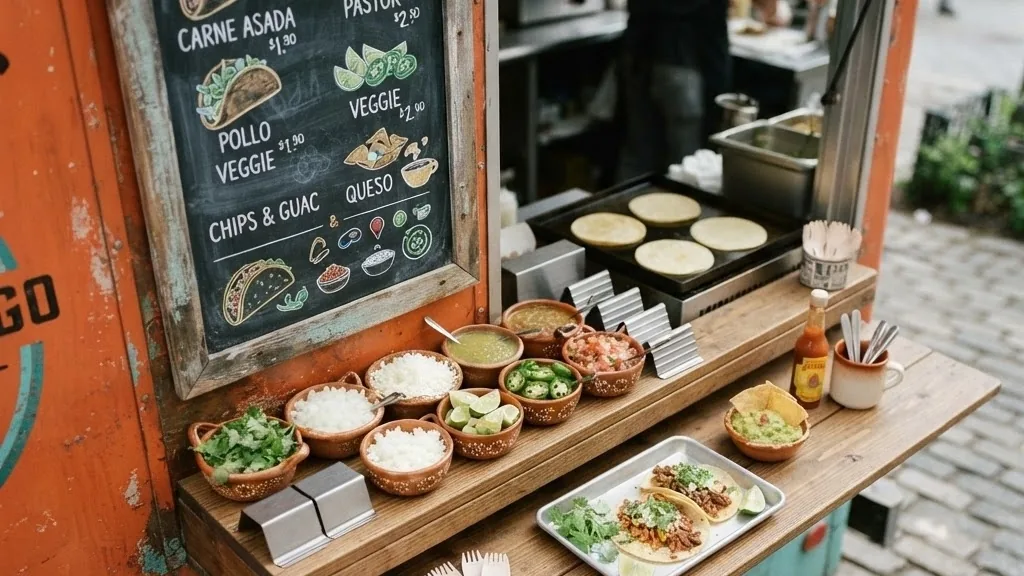
Garnish to the standard: white onion, cilantro, lime, and radish, with crema, cotija, pickled onion, and cabbage slaw as format variations. A self-serve salsa bar lifts throughput but raises food-safety exposure at the counter; pre-dressed is slower but safer. Choose based on your line speed and your health inspector’s tolerance.
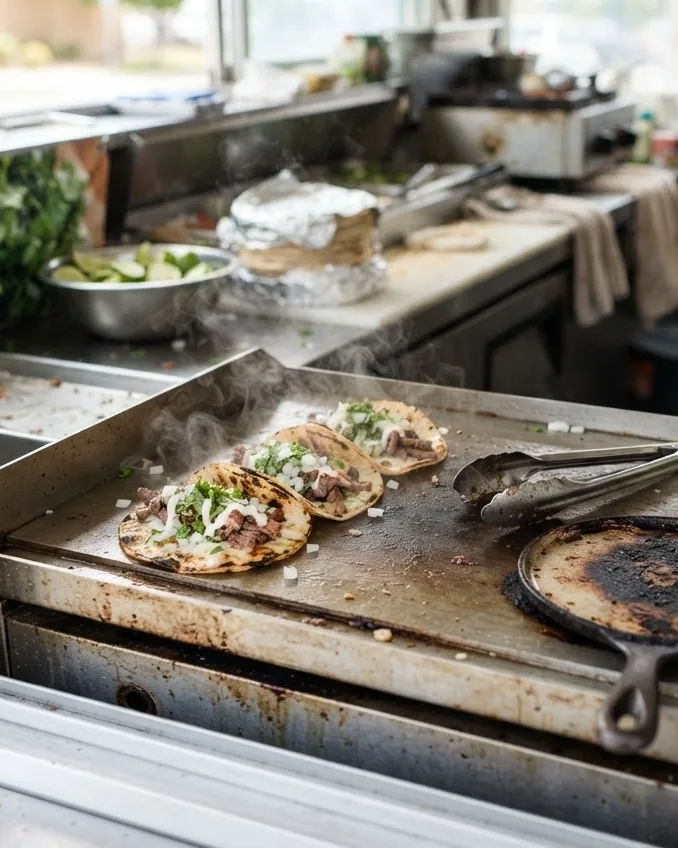
Permits, Inspections, and Food-Safety Compliance: What It Actually Costs
Compliance is the layer the ranking blogs skip entirely, and it is where real money and menu limits live. In Texas, the largest taco-truck state after California, the Department of State Health Services charges 258 dollars per unit for initial mobile food unit applications, renewals, and change of ownership, and 125 dollars for amendments. A mobile food unit also requires a separately permitted and inspected Central Preparation Facility, and an initial inspection must be passed before the permit issues. That commissary requirement, not the menu, is often the true startup gate. The full fee schedule sits on the Texas DSHS permitting page.
Several federal and standards bodies govern what you can serve and how:
- The U.S. Food and Drug Administration writes the model Food Code that states adopt, including the 135 degrees Fahrenheit hot-hold and 41 degrees Fahrenheit cold-hold limits that cap your protein count.
- The USDA Food Safety and Inspection Service sets the cook temperatures every protein must hit and publishes the doneness-versus-safety guidance.
- The National Fire Protection Association governs your cooking hardware. NFPA 1 section 50.7 and NFPA 96 Chapter 17 cover mobile and temporary cooking operations, and NFPA 58 Chapter 16 in the 2024 edition was added specifically for LP-gas in mobile food facilities. The association also publishes a Food Truck Safety Fact Sheet with an inspection checklist.
- PHMSA, part of the U.S. Department of Transportation, covers propane cylinder qualification and inspection.
The fire code has a direct menu consequence. Running a fryer for battered fish or loaded fries triggers hood, suppression, and extinguisher requirements you can otherwise avoid. Deciding to serve one deep-fried item can add a whole compliance and equipment burden, so cost it against the sales that item will actually bring. Consult NFPA’s food truck fire safety resources before you commit to a fryer.
Allergens are the last piece. Sesame became the ninth major food allergen effective 1 January 2023 under the FASTER Act, joining milk, eggs, fish, crustacean shellfish, tree nuts, peanuts, wheat, and soybeans, per the FDA. Salsa macha, sesame-crusted items, and bakery-sourced tortillas all put sesame on your board. A shared flattop also means cross-contact between fish, shellfish, and everything else, so a catering client will expect an allergen matrix. FoodSafety.gov, nutrition.gov, and the CDC round out the public guidance operators lean on, and the commissary and insurance obligations tie together in the food truck insurance and compliance guide. If your propane and cooking load are pushing your electrical needs, the generator sizing guide covers the other half of that power picture.
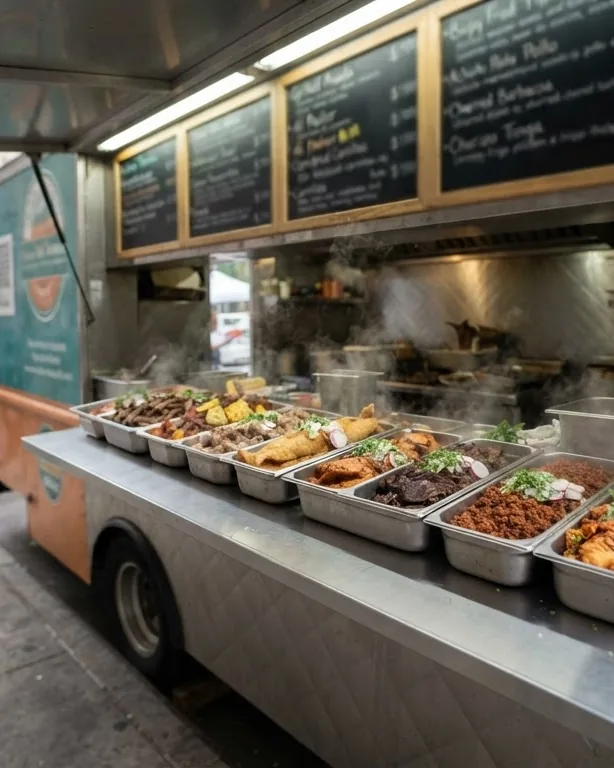
Pricing, Margin, and the Add-Ons That Carry the Ticket
Price a taco menu around three tiers and let modifiers do the margin work. The tiers are a value taco, a signature, and a premium item such as birria or seafood. Cost each recipe to the gram using edible yield rather than as-purchased weight, then set the tier price against your target food-cost percentage. The exact percentage varies by operator, but the discipline is fixed: know the trimmed and cooked yield of every protein before you print a price, because a beef cut that loses weight in trim and rendering costs more per portion than the raw price implies.
Add-ons are the cheapest ticket lift on the board. Extra protein, guacamole, queso, a double tortilla, and drinks all attach to an order the customer has already decided to place. Aguas frescas like horchata, jamaica, and tamarindo, plus bottled Mexican Coke and canned water, carry strong margins and slow no line. Treat the drink attach rate as free money you are leaving on the counter if you skip it.
Watch your packaging cost per ticket, which operators routinely ignore. Containers, napkins, and utensils are a real per-order expense that eats into a taco’s thin absolute margin. Reprice against commodity swings in beef, avocado, and tortilla on a regular cadence rather than holding a price through a spike. Menu-engineer the board like any restaurant: identify your stars, plowhorses, puzzles, and dogs across the ten items and cut or reposition the dogs.
Catering changes the math to a per-head model. A taco-bar buffet is priced by guest count and service duration, and the roughly three-tacos-per-person figure from the 713 kcal mean gives you a defensible portioning baseline. Weddings and corporate events also demand the allergen labeling that walk-up service can skip, and booking that work well is its own skill set covered in the guide to booking a truck for a reception.
What the Data Says Americans Actually Order
Let federal survey data set your menu ratio instead of your intuition. Among U.S. adults aged 20 and over, tacos draw 39 percent of Mexican-food reports, burritos 23 percent, quesadillas 11 percent, nachos 7 percent, and enchiladas 5 percent, and tacos are the top reported type across every demographic group analyzed by the USDA Agricultural Research Service. On any given day, 13 percent of adults eat at least one Mexican food, split 48 percent at dinner, 30 percent at lunch, 15 percent at breakfast, and 7 percent as a snack. That breakfast slice is a real second daypart argument for egg, potato, and chorizo tacos.
The market is bigger and flatter than the stale blog claims suggest. IBISWorld’s July 2025 data puts the U.S. food truck market at 2.8 billion dollars in 2025, with growth of negative 0.2 percent that year and a 13.2 percent compound annual growth rate across 2020 to 2025. Several ranking competitors still repeat a “2.5 billion and growing 10 percent a year” figure that no longer holds. Employment tells a stronger growth story: U.S. mobile food services employment reached 44,119 in 2024, up 906.6 percent from 4,383 in 2000, against 20.4 percent growth for total private industry over the same period, according to the U.S. Bureau of Labor Statistics.
Geography matters for what customers expect. Pew Research Center found that 11 percent of all U.S. restaurants serve Mexican food, 85 percent of U.S. counties have at least one, and California at 22 percent and Texas at 17 percent together hold about 40 percent of them, from a dataset of 788,018 U.S. restaurants collected 23 March 2023. In those two states, authenticity is the expectation; elsewhere you have more room for Tex-Mex or fusion. The National Restaurant Association’s 2026 What’s Hot Culinary Forecast, from a survey of culinary professionals conducted in October 2025, names comfort, value, local sourcing, and global flavors as the defining themes, which favors a value-tier taco and a signature that travels on social feeds. A rolling billboard helps that signature spread, which is the case made in the guide to wrapping your food truck.
The lab-style read from these numbers, kept plain:
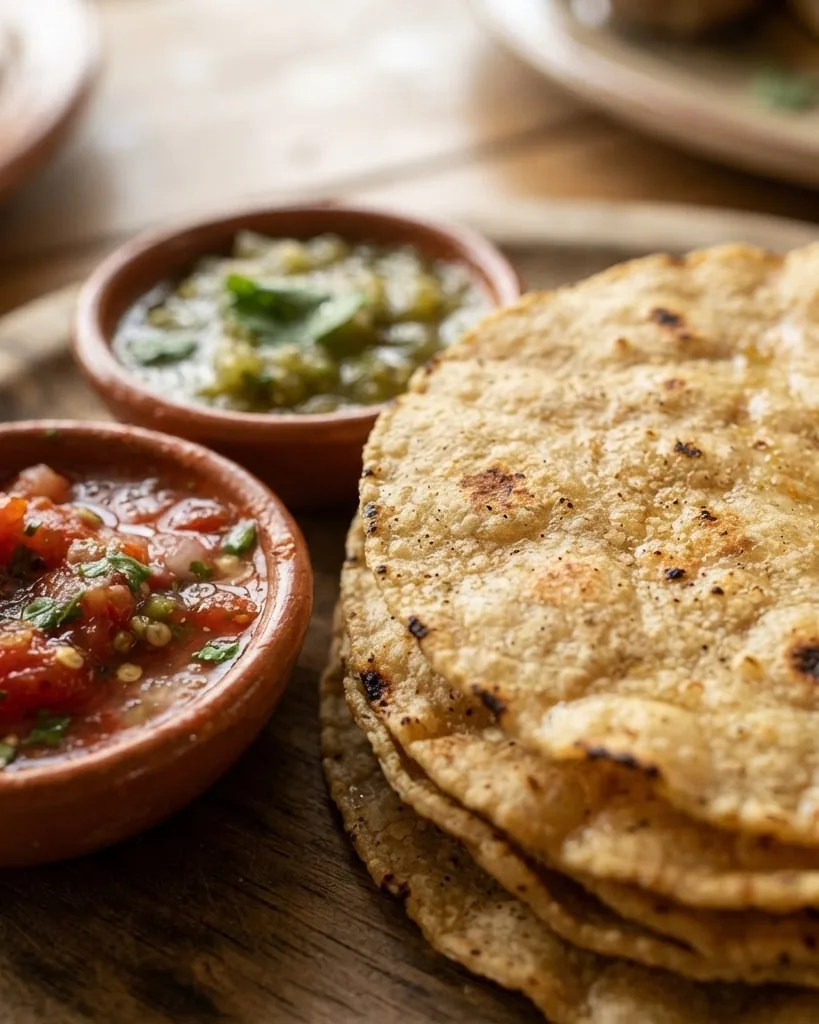
Extending the Menu Without Extending the Prep
Format extensions are how you add sales without adding cold-chain load, because a burrito, quesadilla, bowl, torta, nacho plate, and loaded fries all draw from the same proteins, salsas, and garnishes already on your rail. The rule is simple: if a new item needs a new held ingredient, it costs you a well or a pan and should clear a high bar. If it only recombines what you already prep, it is nearly free margin. This is the discipline that separates a legible board from a sprawling one.
Cross-utilization also controls waste. End-of-service protein that will not survive another hot-hold window rolls into a staff meal or a next-day braise base rather than the bin. Seasonal limited-time offers rotate on top of the fixed core without touching it, so your prep list stays stable while the board feels fresh.
Street-food formats travel well when you want a limited-time hook, and the crossover thinking in this crispy samosa chaat shows how a global snack can slot into a taco truck’s specials without upending the core prep.
Frequently Asked Questions
How many tacos should a food truck menu list?
Aim for five to ten tacos across a value, signature, and premium tier. The real ceiling is your hot-holding hardware, since the FDA Food Code 2022 requires TCS food held at 135 degrees Fahrenheit or above, and each hot protein consumes a steam-table well. Count your wells first, then build the list to fit that number rather than to fit ambition.
How many tacos does an average customer eat?
Roughly three. USDA Agricultural Research Service data shows a mean energy contribution of 713 kilocalories per taco consumer, and a single small beef-and-cheese corn taco runs about 261 kcal. Dividing those figures lands near three tacos per sitting, which is exactly why the three-taco plate is the default combo across most trucks and a sound catering portioning baseline.
What cook temperatures does a taco truck have to hit?
Per the USDA Food Safety and Inspection Service, cook ground beef, pork, and chorizo to 160 degrees Fahrenheit, all poultry to 165 degrees Fahrenheit, and whole-muscle cuts like carne asada to 145 degrees Fahrenheit with a 3-minute rest. Color is not a reliable doneness signal, so use a thermometer on every batch, especially on ground proteins.
Do I need a commissary to run a taco truck?
In most jurisdictions, yes. Texas, for example, requires a separately permitted and inspected Central Preparation Facility for every mobile food unit, and the initial inspection must pass before the permit issues. Budget for the commissary as a fixed startup gate rather than an afterthought; it frequently costs more and takes longer to arrange than the truck permit itself.
What does a taco truck permit cost?
It varies by state, but Texas offers a clear benchmark: the Department of State Health Services charges 258 dollars per unit for initial applications, renewals, and change of ownership, and 125 dollars for amendments. Those fees sit on top of your commissary permit and any local health department charges, so treat the 258 dollars as a floor rather than the full compliance cost.
Is a fryer worth adding to a taco menu?
Often not. A fryer for battered fish or loaded fries triggers hood, suppression, and extinguisher requirements under NFPA 96 and related standards, adding equipment and inspection burden. Weigh that against real projected sales for the fried item. Many trucks skip the fryer entirely and keep every protein on the flattop, which simplifies both the fire-code plan and the line.
Building It Into a Business
A taco board is a profit-and-loss instrument disguised as a food list. Lead with tacos because the data does, cap your proteins at what the wells and rails can legally hold, extend into burritos and quesadillas off the same mise, and let modifiers and drinks carry the ticket. Post the FSIS temperatures, keep your gluten-free corn flow clean, and cost every portion to its edible yield. If you are weighing a different concept entirely, the economics of an ice cream truck startup and the playbook for a Filipino food truck show how the same discipline applies across cuisines. For pantry-building at the commissary, this pantry basics reference and this take on air fryer frozen foods help stock a lean prep list, while the numbers behind a taco soup nutrition breakdown are a useful model for costing and labeling your own bowls.
Note: food-safety and permitting rules change and vary by locality. Verify current cook temperatures, holding limits, and fees with the FDA, USDA FSIS, NFPA, and your state and local health department before you open, since specific requirements differ by jurisdiction and edition.