By Sal Bendetti, food truck owner | Published June 28, 2026
What’s inside this guide
A taco truck menu can look like a wall of unfamiliar Spanish words, but it follows a clear pattern once you know the parts. Pick a meat, pick a format, add salsa, grab a drink. This guide decodes every item you will see, gives real 2026 US prices, shows a sample menu, and then explains how vendors build and price a menu that actually makes money. Whether you are ordering at the window or planning your own truck, you will leave knowing exactly what each line means.
Here is the short version. A typical taco truck menu is built around five or six grilled or braised meats, served in tacos, burritos, quesadillas, and a few other formats, with salsas, sides, and Mexican drinks. As of June 2026 street tacos usually cost $3 to $5 each, burritos run $8 to $12, and aguas frescas or sodas land around $3 to $5. The best trucks keep the list tight, around 6 to 10 items, so every dish comes out fast and consistent.
If you are researching the business side, this pairs well with our deeper look at the taco truck model and at Mexican food truck concepts.
From the operator: Having spent years behind my own flat-top, I learned the hard way that a long menu is a slow menu, and when I launched my truck my board had too many items and my Saturday line backed up until I cut it to a tight handful of proteins that share prep. Everything below is written from behind the flat-top.
The meats on a taco truck menu, explained
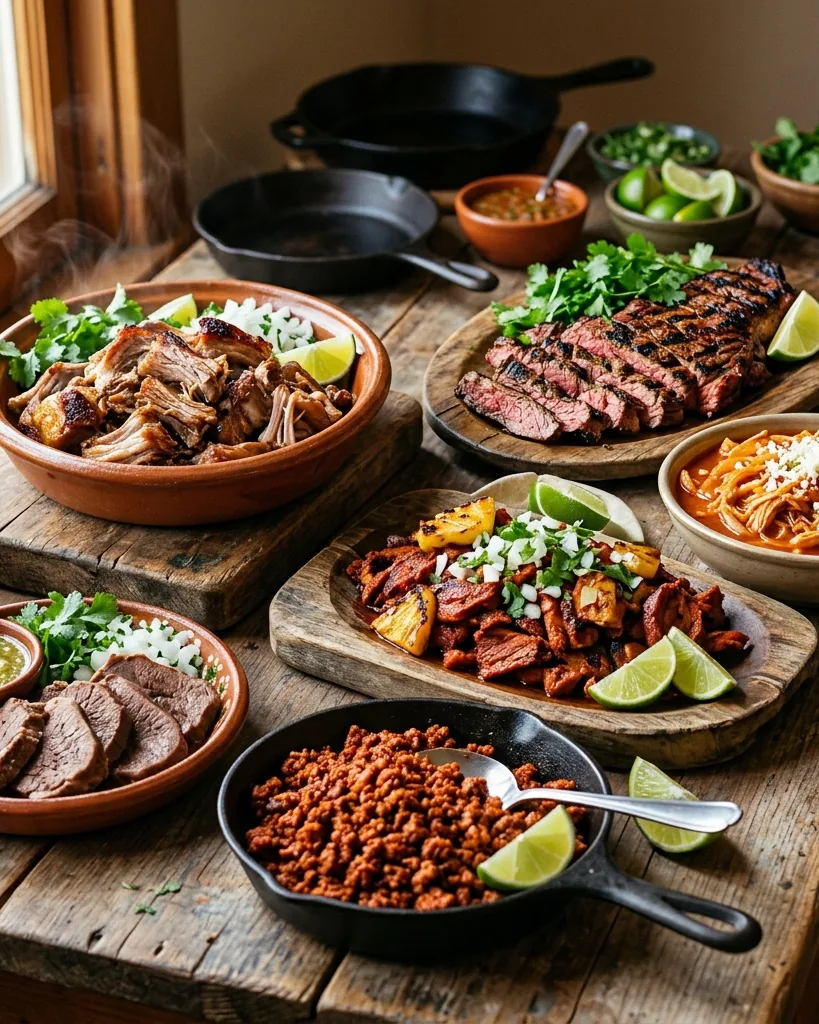
The meat is the heart of the order, and most of the menu’s mystery lives here. These are the proteins you will see most often, with what they are and how they are cooked.
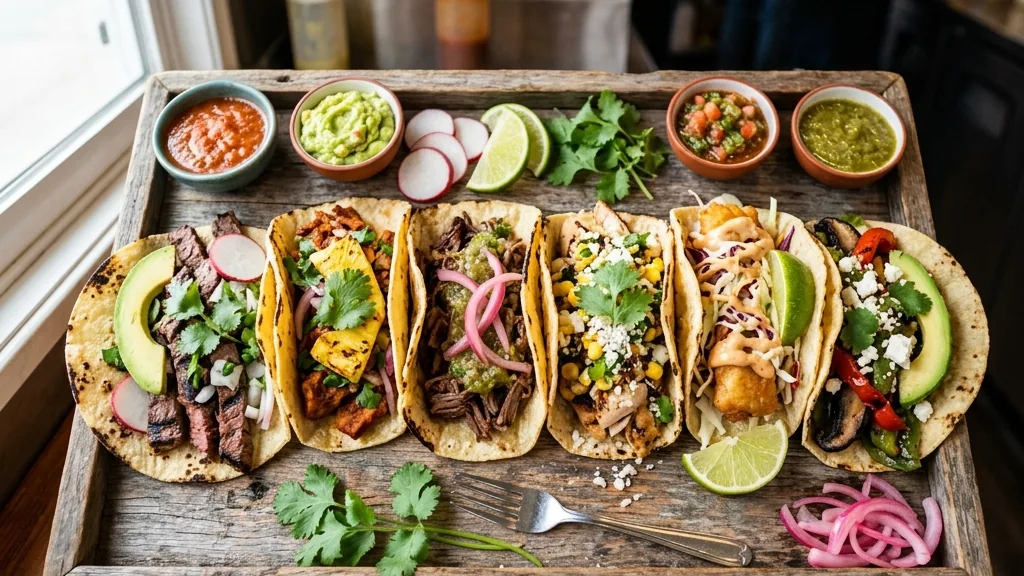
- Carne asada: grilled and chopped beef steak, usually skirt or flank. The default for many first-timers.
- Al pastor: pork marinated in adobo and achiote, stacked on a vertical spit called a trompo and shaved off, often with a bit of pineapple.
- Carnitas: pork shoulder slow-cooked in its own fat until tender, then crisped at the edges.
- Pollo: grilled or stewed chicken, the mild crowd-pleaser.
- Chorizo: spiced fresh pork sausage, crumbled on the griddle.
- Barbacoa: beef slow-cooked or steamed until it shreds.
Then come the specialty cuts, the ones that signal a serious, traditional truck. Lengua is braised beef tongue, prized for its softness. Suadero is a thin cut from between the belly and the leg. Buche is pork stomach, slow-cooked until rich. Cabeza is tender meat from the cow’s head, and tripa is crisped beef tripe. Ordering one of these is the quickest way to eat like a regular instead of a tourist.
You can often judge a truck by its meats before you taste a thing. A spinning trompo of al pastor with a pineapple on top means the truck takes its pork seriously. A long list that includes lengua, suadero, and cabeza points to a kitchen cooking the traditional way rather than playing it safe. If the meats look freshly griddled to order instead of sitting in a pan, you are usually in good hands.
Tacos, burritos, and the rest
Once you have a meat, you choose how it is served. The format changes the size, the price, and the experience, so it helps to know the lineup.
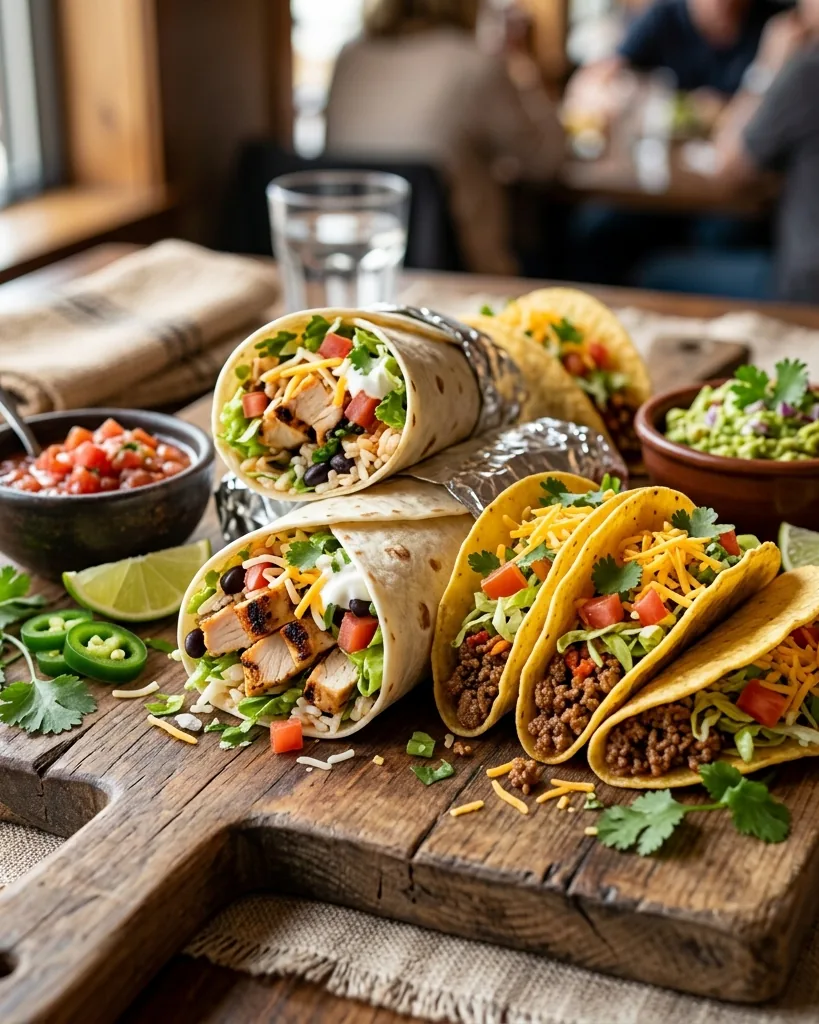
- Taco: two small corn tortillas with meat, raw onion, and cilantro. The purest, cheapest way to taste a meat.
- Burrito: a large flour tortilla wrapping meat plus rice, beans, and cheese. A full meal in one hand.
- Quesadilla: a folded tortilla with melted cheese, with or without meat.
- Torta: a Mexican sandwich on a soft bolillo or telera roll.
- Sope: a thick fried masa base topped with beans, meat, lettuce, crema, and cotija.
- Mulita: meat and cheese pressed between two tortillas, griddled like a small sandwich.
- Vampiro: a mulita on crisped, almost toasted tortillas.
- Tostada: a flat, crisp fried tortilla piled with toppings.
Tortilla choice shapes the dish too. Traditional tacos come on corn tortillas, doubled up so they hold the filling without tearing, while burritos and many quesadillas use a large flour tortilla. Corn brings more flavor and keeps tacos gluten-light; flour brings softness and size. Northern Mexican trucks lean flour, while central and southern styles lean corn, so the tortilla on your plate is a small clue to the truck’s roots.
One item now appears on nearly every modern truck: quesabirria, also called birria tacos. These are cheese-and-beef tacos griddled in the meat’s red fat and served with a cup of consomme for dipping. They went from regional specialty to national trend in just a few years, and many trucks now build their reputation on them.
Sides, salsas, and drinks
The supporting cast rounds out the meal and is where margins quietly improve. The overlooked detail most menu guides skip is how much of the profit hides in these sides and drinks. Sides usually include Mexican rice, refried or whole beans, and elote or esquites, the grilled street corn served on the cob or in a cup. Chips with guacamole are common too.
Elote deserves a special mention because it is a signature street item. The corn is grilled, then slathered with crema or mayo, dusted with cotija cheese and chili powder, and finished with lime. Served off the cob in a cup, it becomes esquites, easier to eat while standing in line. Beans, meanwhile, come two ways: refried (refritos) or whole in their broth (de la olla), and the choice can change the feel of a whole plate.
Salsa is not an afterthought. A good truck offers a range, from a mild salsa de aguacate (creamy avocado) and bright pico de gallo to a smoky salsa roja and a sharp salsa verde, plus pickled onions, jalapenos, radish, and lime. Ask where a salsa lands on the heat ladder before you pour.
A quick word on heat, since it trips up newcomers. Salsa verde is often tangy and medium, salsa roja tends to be smoky and hotter, and a chile de arbol or habanero salsa can be genuinely fierce. If you are unsure, ask the cook which is mild and start there, then add more. Onion, cilantro, and a squeeze of lime are standard and free; radish and pickled jalapenos are common extras that cut through the richer meats.
For drinks, aguas frescas are the signature: horchata (cinnamon rice milk), jamaica (hibiscus), tamarindo, and lime are the classics. You will also find Jarritos in several fruit flavors, Mexican Coca-Cola made with cane sugar, sparkling Topo Chico, and bottled water. Drinks are some of the highest-margin items on the truck, which is why the board always offers them. I recommend leaning on them hard, because what I didn’t expect when I started was that switching to proper aguas frescas and bottled sodas did more for my daily take than any new item I added.
Taco truck menu prices in 2026
Prices vary by city and by truck, but the ranges below reflect what US customers pay in 2026. Use them to sanity-check a menu before you order or to set your own.
| Item | Typical 2026 price |
|---|---|
| Street taco | $3.00 – $5.00 (often $4.00) |
| Birria / premium taco | $6.00 – $8.00 |
| Burrito | $8.00 – $12.00 |
| Quesadilla | $8.00 – $12.00 |
| Torta | $9.00 – $13.00 |
| Sope / tostada | $4.00 – $6.00 |
| Specialty plate (chilaquiles, combos) | $12.00 – $15.00 |
| Sides (rice, beans, elote) | $3.00 – $5.00 |
| Aguas frescas / Jarritos / soda | $3.00 – $5.00 |
Notice how the cheap, fast taco anchors the menu while burritos, plates, and drinks raise the average ticket. That spread is deliberate, and it drives how a smart vendor designs the board.
A sample taco truck menu
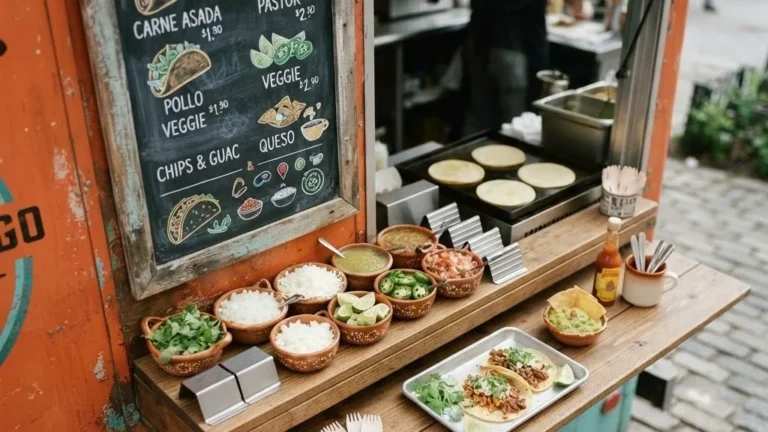
Here is what a tight, well-built taco truck menu looks like in practice. It is short enough to run fast and varied enough to please a mixed crowd.
- Tacos ($4 each): carne asada, al pastor, carnitas, pollo, chorizo
- Specialty ($7): quesabirria with consomme
- Burritos ($11): any meat, with rice, beans, cheese, salsa
- Quesadilla ($10): cheese, add any meat
- Sides ($4): rice and beans, or elote
- Drinks ($4): horchata, jamaica, Jarritos, Mexican Coke
That is roughly ten lines. A customer can read it in seconds, the kitchen can hold every ingredient on a small truck, and almost every order is some mix of the same prepped proteins, salsas, and tortillas.
The same menu also builds easy combos. A two-taco-plus-drink deal, or a burrito with a side of elote, nudges the average ticket up while making the price feel fair to the customer. Because the ingredients overlap, adding a combo costs the truck almost nothing in extra prep. That is the quiet logic behind a good board: a short list of parts that recombine into many orders, each one fast to make and priced to protect the margin.
Regional Mexican styles
There is no single taco truck menu, because Mexican food is regional. Knowing the styles helps you read a truck’s roots and order its best dish.
Tijuana and Baja California are known for carne asada and fresh fish tacos with cabbage and creamy sauce. Mexico City, or D.F., is the home of al pastor on the trompo, plus suadero and the mixed campechano taco. Jalisco gave us birria and Michoacan-style carnitas. The Yucatan brings cochinita pibil, pork marinated in achiote and sour orange, slow-roasted until it falls apart. Sonora, in the north, leans on flour tortillas and grilled beef. A truck that does one region well usually beats one that tries to do everything.
For a vendor, picking a region is also a branding decision. A Baja fish-taco truck, a Mexico City al pastor specialist, and a Jalisco birria truck each tell customers exactly what to expect and what to order. That focus makes prep simpler, sourcing tighter, and the menu easier to remember, which matters far more than offering every style at once. The most crowded trucks usually stand for one thing and do it better than anyone nearby. In my experience you have to pick one style and own it, because I have seen the trucks around me that try to cook every region at once run out of prep and patience by the dinner rush.
Vegetarian and vegan options
Meat-free eaters have real choices on a good truck, though it pays to ask how things are cooked. Tacos de nopal use grilled cactus paddles, which are tender and slightly tangy. Rajas con crema are roasted poblano strips in cream. Hongos are sauteed mushrooms, papa is seasoned potato, and calabacita is squash. Beans and rice make any taco or burrito filling without meat.
One honest caveat: some trucks cook beans or vegetables in lard or on the same griddle as meat, so strict vegetarians and vegans should ask before ordering. A truck that labels its plant-based options clearly is doing its customers a favor and widening its own market.
Food safety on a taco truck
Behind every good menu is a safety system, and the rules are not optional. According to USDA guidance from its Food Safety and Inspection Service (USDA FSIS), the safe minimum internal cooking temperatures are: ground beef and pork to 160 degrees Fahrenheit, all poultry to 165 degrees, and whole cuts of beef and pork to 145 degrees with a three-minute rest. You can check the full chart at FoodSafety.gov.
The cold chain matters as much as the grill. Raw proteins ride in a refrigerator at or below 41 degrees, prepped salsas and dairy stay chilled until service, and anything held hot on the flat-top or in a warmer must stay at 135 degrees or above. A busy truck moves food through this cycle fast, which is the safe way: cook to temperature, hold hot or cold, and never let food drift through the danger zone for long. Good operators check temperatures with a probe thermometer throughout service rather than guessing.
Holding temperatures matter just as much on a busy truck. According to FDA Food Code rules, hot food must be held at or above 135 degrees Fahrenheit and cold food at or below 41 degrees, with the range in between known as the danger zone. Food reheated for hot holding should reach 165 degrees. The FDA publishes the model code that local health departments enforce, available through the FDA Food Code resources.
Safety note: A mobile food permit, a commissary kitchen, and equipment certified by NSF International are usually required to operate, but the exact rules are set by your county or city health department. Confirm them locally before you serve the public, and keep a food handler or manager certification such as ServSafe current.
How to build and price your own taco truck menu
If you are designing a menu, the winning move is restraint. A focused board of 6 to 10 items serves faster, wastes less food, and is far easier to price than a sprawling list. Build around a handful of batch-friendly proteins you can cook in volume, then let formats (taco, burrito, quesadilla) multiply the options without adding new ingredients.
Pricing starts with food cost. Most operators aim to keep ingredient cost between 28 and 32 percent of the menu price, in line with the 25 to 35 percent range common across foodservice. A taco with two to three ounces of protein typically costs about $0.85 to $1.30 in ingredients, which is why a $4 to $5 taco leaves a healthy margin. Drinks and sides, with their low cost and high markup, pull the average up further. The mistake I see new operators make is ignoring food cost, and I found that keeping it near 28 to 32 percent was the difference between making rent and not.
Worked example – pricing a taco: Say a carne asada taco costs you $1.20 in beef, tortillas, onion, and cilantro. Price it at $4.00 and your food cost is 30 percent, leaving $2.80 of gross margin. Sell 100 tacos on a service day and that is $280 of gross profit from one item before sides and drinks. A mid-tier truck often breaks even around 75 to 110 tacos a day, so every sale past that point is where the real money starts.
Treat the menu as a living document. Launch with a short list, watch which items sell and which sit, and time how long each order takes during a rush. The dishes that move fast and earn their margin stay; the slow movers get cut or rotated to a weekend special. Seasonal additions, like a cold agua fresca flavor in summer or a heartier plate in winter, keep regulars curious without bloating the core board. The best operators trim and refine every season based on what the line actually buys.
Know the business reality too. Starting a taco truck runs roughly $50,000 to $200,000, with a used truck at $20,000 to $50,000 and a new custom build at $100,000 to $175,000. Average annual revenue lands near $346,000, but net margins are thin, often 6 to 9 percent, and recurring costs add up: a commissary at $250 to $3,000 a month, insurance at $2,500 to $5,500 a year, and permits at $500 to $3,000 a year. Roughly 60 percent of food trucks close within the first year, so a tight menu and disciplined pricing are survival tools, not just style choices. The U.S. Small Business Administration (SBA) offers planning help at sba.gov, and our food truck business plan guide turns these numbers into a roadmap.
Frequently asked questions
How much does a taco cost at a taco truck?
Street tacos usually cost $3 to $5 each, with $4 being the common price in 2026. Premium or birria tacos run $6 to $8. Burritos land at $8 to $12 and drinks at $3 to $5, so a filling order often totals $12 to $20 per person.
What meat should I order at a taco truck?
Al pastor and carne asada are the safe, popular picks. If you want to eat like a regular, try carnitas or a specialty cut like suadero or lengua. Birria tacos with consomme are the current crowd favorite and a good way to judge a truck’s skill.
How many items should a taco truck menu have?
Most successful trucks keep it to 6 to 10 items. A short menu means faster service, less waste, and more consistent food, since a few prepped proteins and salsas combine into many dishes through different formats.
Are taco trucks safe to eat at?
Yes, when they follow the rules. Look for a posted health permit, hot food held at 135 degrees or above, cold items kept at 41 degrees or below, and a clean, organized setup. A high inspection grade and a busy line of regulars are both good signs.
Reading the board with confidence
A taco truck menu rewards the curious. Once you know the meats, the formats, and the salsas, the wall of words becomes a short, friendly list, and you can order with confidence at any truck in the country. For aspiring vendors, the same menu is a profit tool: keep it tight, price from food cost, lean on high-margin drinks and sides, and respect the safety rules that keep customers coming back. If a truck is part of your plan, browse more concepts in our roundup of food truck ideas before you commit. The trucks that last are rarely the ones with the longest menus; they are the ones that pick a style, price it with discipline, cook it safely, and serve it fast enough to keep the line moving and the regulars coming back.