Quick answer: The best food truck menu ideas aren’t about the most exciting dish, they’re about a short, fast, profitable lineup. Keep it to roughly 6 to 8 items, build them around one signature item plus a few variations, share ingredients across the whole board so nothing goes to waste, and price every item to hit a food cost near 30 percent. Get those four things right and almost any concept can work; get them wrong and the best recipe in town still won’t pay your rent.
I run a food truck out of Austin, and I learned every rule below the expensive way. The mistake I made when I opened was pricing my first menu too low to make rent. People loved the food and I still couldn’t cover the generator and the commissary fees. So before we talk concepts, understand this: a food truck menu is a business document first and a love letter to your cooking second.
This guide gives you both halves: the framework that decides whether a menu makes money, and nine concrete concepts that fit a truck’s tiny kitchen and tight clock. Every number here comes from running the window, not from a spreadsheet someone imagined.
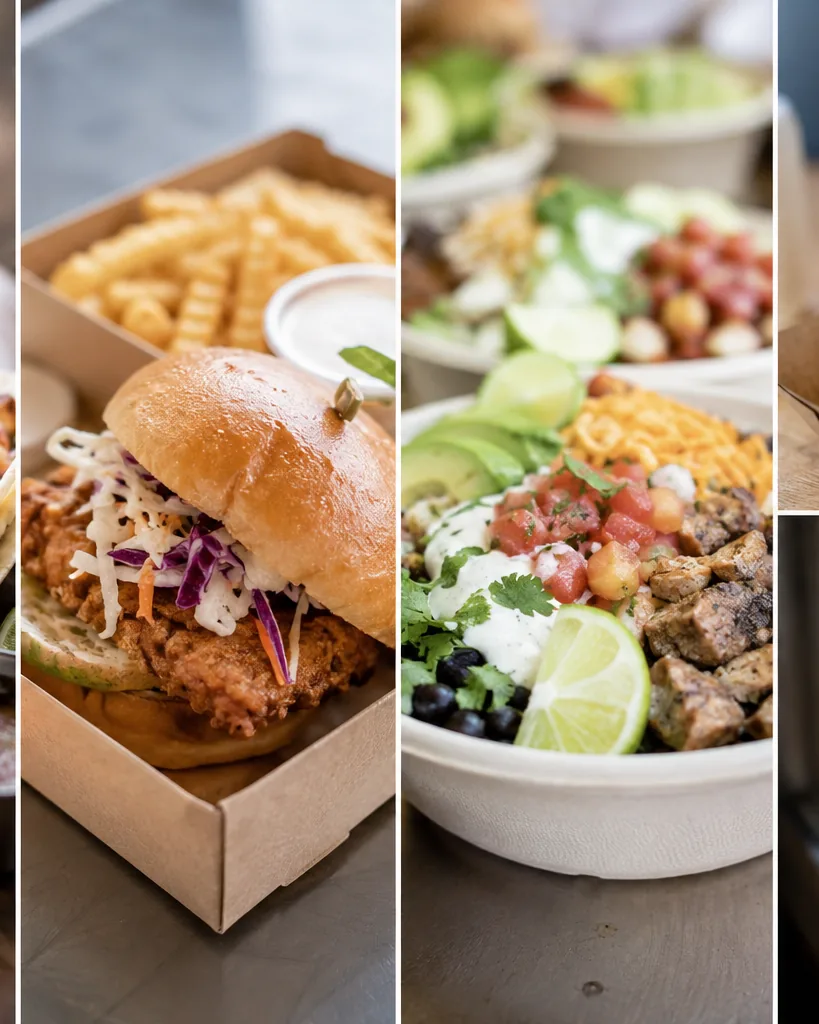
The four rules every truck menu lives by
Before any concept, the structure has to be right. Having run the window for years now, I can tell you these four rules matter more than what you actually cook.
1. Keep it small. My build couldn’t keep up with a Saturday rush, so I cut my menu from 14 items down to 6, and my Saturday sales actually went up because the line moved. A shorter board sells more, not less. Six to eight items is the sweet spot for most trucks: enough choice to feel like a real menu, few enough to cook fast and consistently out of one small kitchen.
2. Build around a signature. My best months came when I had one signature item people drove across town for, plus a few easy variations on it, instead of a scattered board trying to please everyone. Pick the one thing you want to be known for, then let the rest of the lineup orbit it.
3. Share your ingredients. This is the rule nobody tells you. When I rebuilt the menu so six dishes came from the same eight ingredients, my food waste dropped and my food cost finally landed near 30 percent instead of bleeding me. Every new ingredient is another thing to buy, prep, store cold, and throw away. Make your slaw, your sauce, and your protein pull double duty.
4. Price for overhead, not applause. Your price has to cover the generator, the commissary, the permits, the propane, and your labor, not just the cost of the food on the plate. I learned to price for rent, not for compliments. We’ll put real numbers on this below.
9 food truck menu ideas that make money
Now the fun part, with the rules above baked in. These nine concepts all share the same truck-friendly traits: fast to assemble, forgiving to hold, and built from overlapping ingredients.
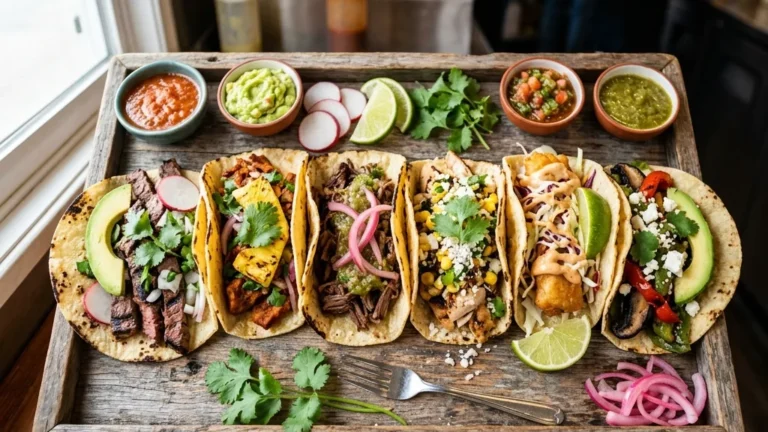
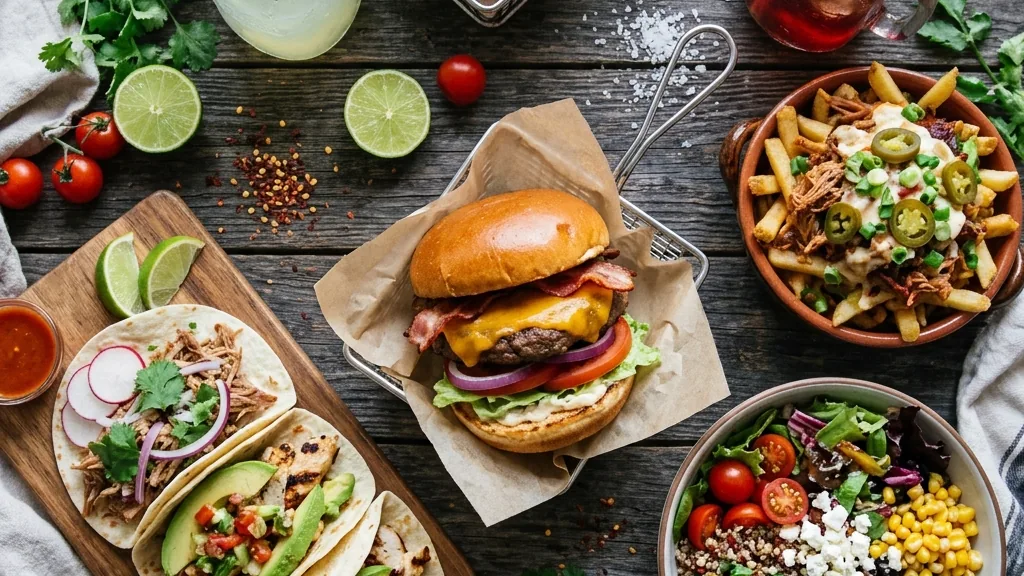
- Tacos and birria. The king of truck food for a reason: a few proteins, tortillas, and shared toppings flex into a dozen menu items. Birria, in particular, lets you sell tacos, quesabirria, and a consomme dip, all from one braise.
- Loaded fries. A fryer and a few toppings turn one base into endless variations. Margins are excellent because potatoes are cheap and the toppings are the same proteins you already prep.
- Smash burgers. Fast on a flat-top, universally loved, and easy to upsell with bacon, a second patty, or a combo. One patty mix, a handful of cheeses and sauces, done.
- Gourmet grilled cheese. Low food cost, quick on the griddle, and endlessly variable with a few cheeses, breads, and add-ins. A comfort-food crowd-pleaser.
- Rice and grain bowls. A base of rice, a couple of proteins, and shared veg and sauces build a healthy, customizable line that travels well and serves fast.
- Crispy chicken sandwiches. A single fried chicken cutlet anchors a spicy version, a classic, and a deluxe. High perceived value, strong margins.
- Barbecue. Smoke off-site, assemble fast on the truck. Pulled pork or brisket becomes sandwiches, plates, and loaded sides from one cook.
- Mini donuts and desserts. Cheap ingredients, high markup, and a smell that sells itself, a strong stand-alone concept or a high-margin add-on.
- Specialty coffee. If your lot has morning traffic, espresso drinks carry some of the best margins in mobile food, with a tiny footprint.
Notice the pattern: every one of these is a small set of ingredients rearranged, not a sprawling cookbook. For help choosing between them, our guide to picking a food truck concept goes deeper on matching an idea to your market.
The food-cost math, in plain numbers
Here’s the number that decides whether any of those concepts actually pays you. The industry rule of thumb, the one the National Restaurant Association and just about every operator uses, is to keep your food cost between roughly 28 and 35 percent of the menu price. Most trucks aim for about 30 percent.
In practice that means if a dish costs you $3 in ingredients, you price it around $10. That $7 difference isn’t profit, it’s what pays the generator, the propane, the commissary kitchen rent, your permits, and your labor before a single dollar reaches you. This is exactly where I went wrong early: I priced off the food cost alone and watched a busy truck still come up short on rent. The overlooked detail most new operators miss is that labor and overhead, not ingredients, are what actually eat the margin, which is why the U.S. Small Business Administration’s guidance on managing your finances is worth reading before you set a single price.
The other half of the math is throughput, the number of orders you can push through the window per hour. A short, shared-ingredient menu is faster, and on a truck speed is revenue: serving 80 customers in a lunch rush instead of 50, at the same prices, changes everything. That’s the real reason the small-menu rule isn’t just about simplicity, it’s about money.
When I launched my truck, I did something most operators skip: I tracked every single ticket for a month, item by item. The pattern was brutal and clear. My top three sellers, all built from the same shared ingredients, drove about 70 percent of revenue, while the bottom four items, each with its own separate prep, generated almost nothing but ate most of my prep time and cold-storage space. Having managed that menu through a full season since, I’d put it bluntly: your menu is a portfolio, and a handful of items carry it. According to the National Restaurant Association, food and labor together typically consume around 60 to 65 percent of a restaurant’s revenue, and on a truck, where space and time are even tighter, an unfocused menu pushes you past that line fast. The data from my own window said the same thing the industry benchmarks do: concentrate, don’t scatter.
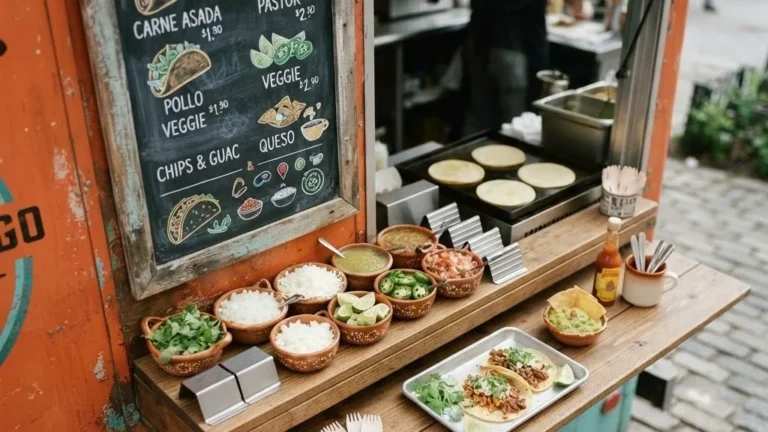
Designing the menu board
Your physical menu board is a sales tool, not just a list. A few principles make it work harder:
- Show fewer choices, clearly. A board a customer can read and decide on in 10 seconds keeps the line moving. Overwhelmed customers slow everything down.
- Anchor with your signature. Put your best, highest-margin item where the eye lands first.
- Sell combos and add-ons. A drink, a side, or an extra protein raises the average ticket with almost no extra prep. This is the easiest money on the truck.
- Make it legible from a distance. People decide what they want while they’re still in line. Big, clear, well-lit wins.
The board and the truck’s whole look work together; our guide to building the food truck menu framework covers how the board ties into pricing and flow.
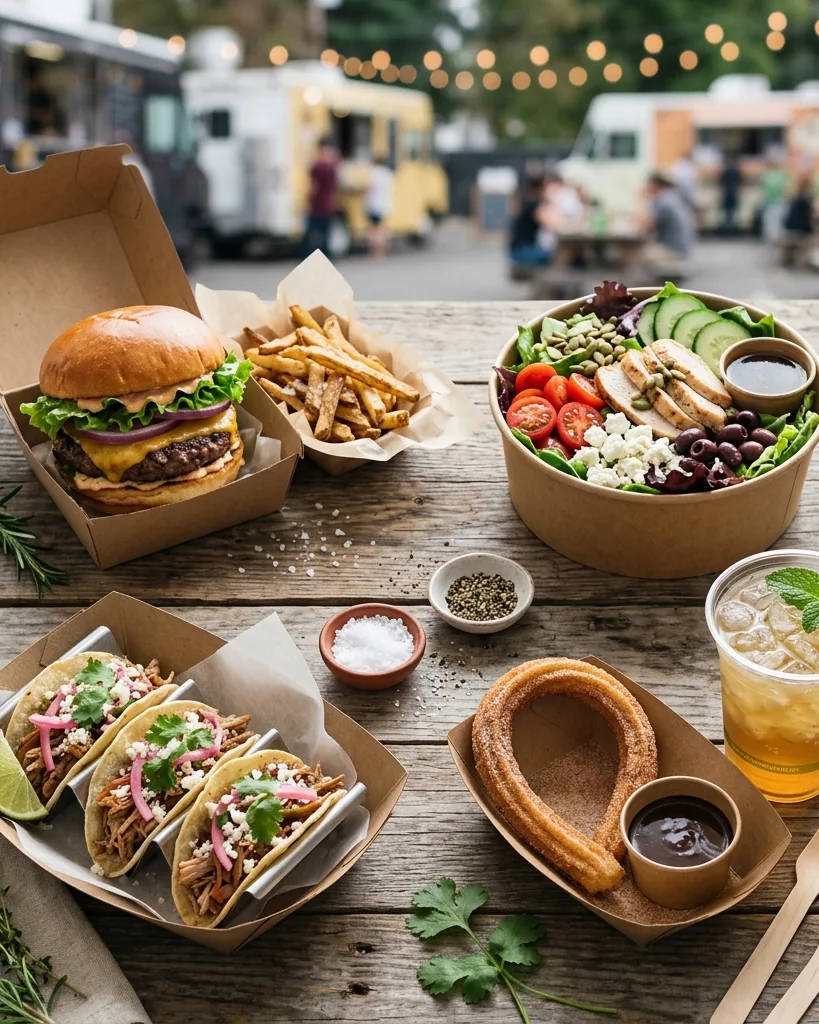
The items that quietly sink you
Just as important as what to add is what to cut. In my experience the items that kill you are the ones with a separate prep nobody else uses. I recommend every new operator audit their board for the one dish that needs its own pan, its own sauce, and its own cooler space, and cut it.
Watch for these menu traps:
- The orphan dish: a single item that shares no ingredients with anything else. It triples your waste and prep for a few sales.
- The slow item: anything that has to be cooked to order from raw and holds up the whole line.
- The fragile item: a dish that doesn’t survive a hot, bumpy service window and comes back as complaints.
- The low-margin trap: a popular item priced too cheap that keeps you busy without paying. Re-price it or cut it.
Cutting these isn’t shrinking your menu, it’s concentrating it. Every item you remove makes the rest faster and more profitable.
Adapting the menu to events and catering
One menu rarely fits every situation, and smart operators run a couple of versions of the same core lineup. For a daily lunch lot, speed rules: trim to your fastest four or five sellers so the line never stalls. For a festival, where you’re slammed for hours, cut even further to two or three items you can make in your sleep, because consistency under pressure beats variety.
Catering flips the logic. For a private event you can offer a slightly broader, higher-priced menu with dietary options, because you know the headcount in advance and can prep for it. Keeping a vegetarian option that uses your existing ingredients, a grain bowl without the meat, say, lets you say yes to more bookings without adding prep. The point is that your menu is a set of dials, not a fixed list. Our taco truck menu breakdown shows how one concept stretches across all these settings.
One more lesson from the road: track your own numbers from day one. According to repeated industry surveys, the trucks that survive past year one are almost always the ones that know their per-item profit cold, not the ones with the flashiest concept. I keep a simple running tally of what each item costs me and what it earns, and I revisit it every season. That habit, more than any single menu idea, is what turned my truck from a busy hobby into a business that pays me.
Keep the menu safe on a hot truck
A menu idea is only good if it holds up safely through a long, hot service, and on a truck that is harder than in a restaurant. The single most important habit is temperature control. According to the FDA Food Code, the standard most local health departments follow, you hold hot foods at 135 degrees Fahrenheit or above and cold foods at 41 degrees Fahrenheit or below, with the danger zone in between. You can read the current standard in the FDA Food Code.
This shapes your menu more than people expect. Dishes that have to sit lukewarm, or that need fast cooling and reheating, are a food-safety headache in a cramped truck with limited refrigeration. The concepts I recommended above all win partly because they hold safely: a braise stays hot, fried items cook to order, and cold components live in a reach-in until the moment they hit the plate. When you design your lineup, ask of every item, can I keep this above 135 or below 41 through a four-hour rush? If the honest answer is no, it is the wrong item for a truck, no matter how good it tastes.
Frequently asked questions
How many items should a food truck menu have?
For most trucks, about 6 to 8 items is the sweet spot. It’s enough to feel like a real menu but few enough to cook fast and consistently from a small kitchen. For high-volume events, trimming to 2 to 4 items keeps the line moving and quality high.
What food sells best from a food truck?
Handheld, fast-to-assemble foods built from shared ingredients sell best: tacos, smash burgers, loaded fries, grilled cheese, chicken sandwiches, and bowls. The winner is less about the cuisine and more about whether you can serve it quickly at a healthy margin.
How do I price my food truck menu?
Price so your food cost lands around 28 to 35 percent of the menu price, aiming near 30 percent. That markup has to cover your overhead, the generator, propane, commissary, permits, and labor, not just the ingredients. Don’t price off ingredient cost alone, or a busy truck can still lose money.
What’s the most profitable food truck menu item?
Items with cheap bases and high perceived value have the best margins: loaded fries, mini donuts, specialty coffee, and grilled cheese. The most profitable item for you is one with a low food cost that you can make fast and that shares ingredients with the rest of your menu.
Should I change my menu seasonally?
Small, smart changes help, but don’t overhaul a working menu. Swap a special or a sauce to keep regulars interested, while keeping your signature item and core lineup steady. Stability is what makes you fast and consistent, which is what makes you money.
The bottom line
The best food truck menu ideas all obey the same quiet rules: keep the board short, build around a signature, share your ingredients, and price for your overhead, not for compliments. Pick a concept from the nine above that fits your market and your equipment, run the food-cost math honestly, and ruthlessly cut the orphan dishes that triple your prep for a handful of sales. I learned all of this by getting it wrong first, with a too-cheap menu and a kitchen that couldn’t keep up. You don’t have to. A focused, fast, well-priced menu is the difference between a truck people love and a truck that actually pays you.
Sources: National Restaurant Association, industry food-cost and menu guidance; FDA Food Code temperature standards for hot- and cold-holding; food-cost figures reflect standard restaurant and mobile-vendor benchmarks (about 28 to 35 percent).