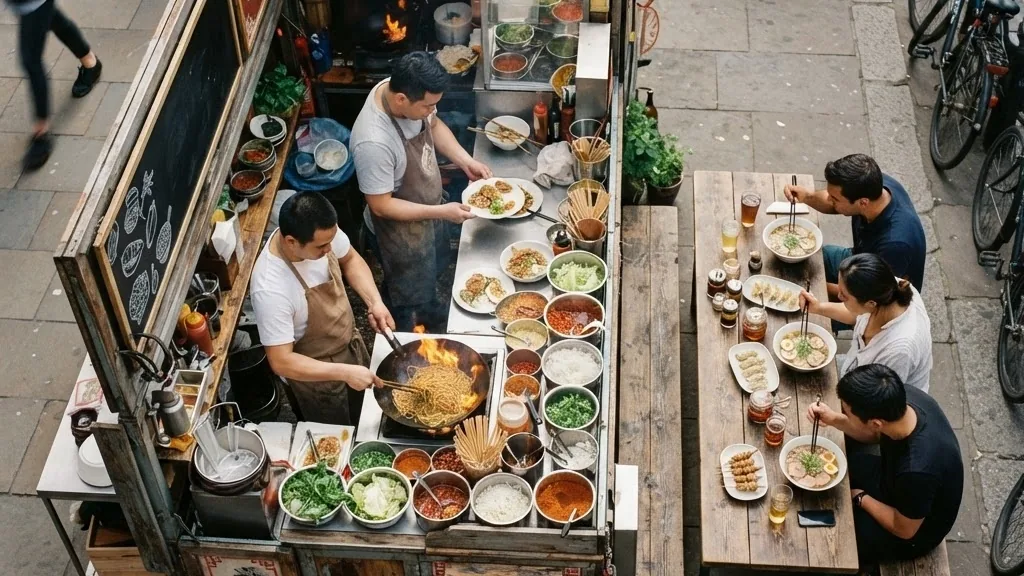
Asian food truck dreams die on the math, not the menu, and I learned that the hard way my first summer parked outside a brewery in Austin. I had a killer bulgogi recipe and a wok that could scorch eyebrows, and I still lost money for six weeks because I priced my plates like a cook instead of an owner. This is the guide I wish someone had handed me: real 2026 numbers, the gear that survives a Saturday rush, and the honest food-cost reality behind Korean tacos, banh mi, pad thai, and everything in between. Even now, from my 8 years running trucks, I still write every new menu with that first summer in mind.
Quick answer: Opening an Asian-focused truck in 2026 runs $50,000-$250,000 all-in, with most sensible builds landing at $85,000-$120,000. A used rig alone costs $60,000-$85,000, up 15-20 percent since 2022. Budget a wok range at 90,000-150,000 BTU per burner, a flat-top at $2,000-$6,000, and a fryer at $1,500-$4,000. Aim for a blended food cost of 28-33 percent, a ticket average of $14-$22 per customer, and expect $5,000-$12,000 a month in net income at 15-25 percent margins once you find your spots. The concept sells. The spreadsheet decides.
I refresh these numbers every season, and this pass reflects this year’s prices at the register and the equipment yard.
What an Asian food truck actually costs in 2026
The all-in number to open ranges from $50,000 on the scrappy end to $250,000 for a decked-out custom build, and in 2026 the honest middle sits around $85,000-$120,000. That range covers the truck, the cook line, the health permit, insurance, and your first stack of inventory. The single biggest line is the vehicle. A used truck that would have cost me $50,000-$70,000 back in 2022 now runs $60,000-$85,000, because used prices climbed 15-20 percent and commercial kitchen equipment is up roughly 12 percent in the same window. I built my first truck at that scrappy low end and would not repeat it.
Then come the recurring costs nobody puts on the exciting Instagram post. Your local health permit runs $300-$600 a year in most places, though I have seen it as low as $100 in Boston and as high as $600-$900 in parts of California. Business insurance, meaning both commercial auto for the vehicle and general liability for the cooking, lands at $2,000-$4,000 a year. And unless you own a licensed kitchen, you owe a commissary $350-$900 a month for prep space and overnight parking. Most cities will not issue your permit until you show a signed commissary agreement, so line that up before you spend a dime on wraps.
The U.S. Small Business Administration has a straight, jargon-free walkthrough on writing a plan and finding startup financing, and I point every new operator there first. According to the SBA, undercapitalization is one of the top reasons small businesses fail in year one, and food trucks are not exempt. Read the money section twice. For a look at how a full menu drives those numbers, our breakdown of a smart food truck menu layout pairs well with the budget here.
Most new operators underestimate working capital far more than they underestimate the menu, and in my experience, that gap between the two is what actually closes trucks, not bad food or a slow location. It matters more than the menu ever will, because according to SBA data, undercapitalization remains the single most common reason small businesses run out of runway before they ever find their rhythm.
Wok, rice, and flat-top: the gear that decides your menu
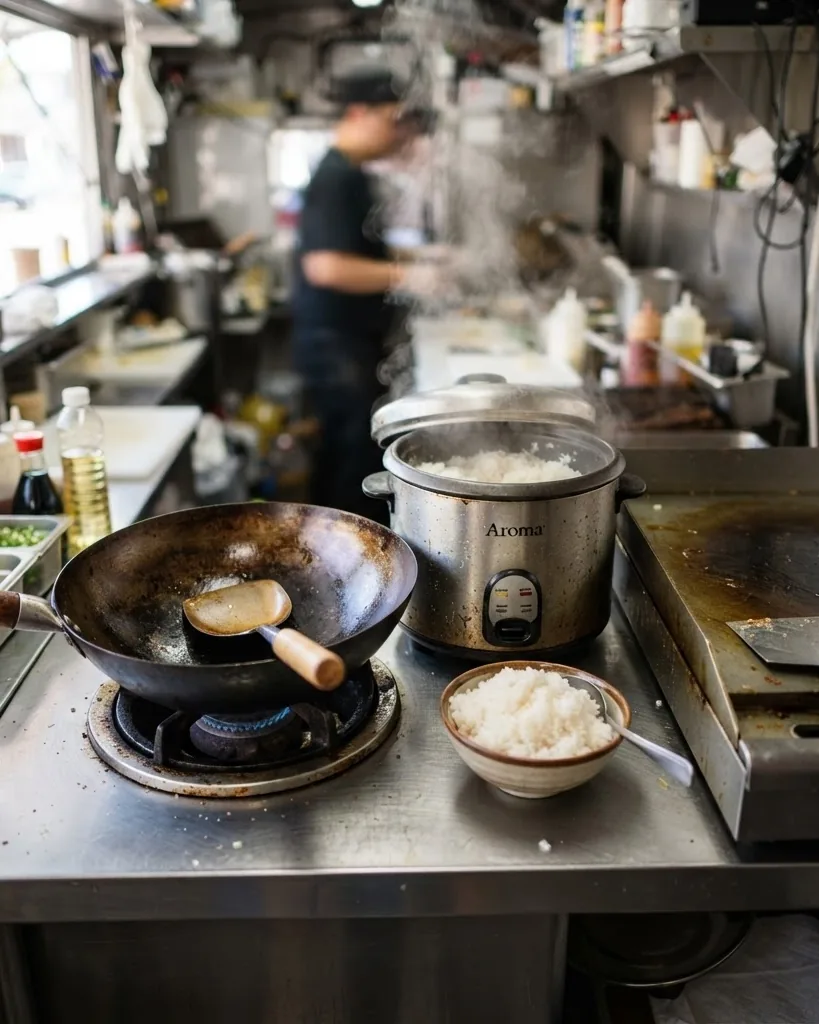
Asian cooking lives and dies on heat, and this is where a general food-truck guide will steer you wrong. A wok wants power. Commercial wok ranges push 90,000-150,000 BTU per burner, with entry units starting near 90,000 BTU. In a truck you are usually working a 24-inch gas burner around 50,000 BTU or, if you have the width, a 36-inch station north of 100,000 BTU. That flame is what gives you wok hei, the smoky char that separates a real stir-fry from sad steamed vegetables.
Gas is not your only path. Induction wok stations pull 3.5-5 kW at 24 inches and 8-12 kW at 36 inches, and a countertop induction wok weighs about 45 pounds and drops right into a standard truck line. Induction throws less ambient heat, which matters when your box hits 110 degrees in July, but it needs serious electrical capacity and a generator that will not blink mid-rush. Mine quit on me once during a Saturday market surge, and I sold cold rice bowls to a line of thirty people. Never again. Size your power for peak, not average.
Round out the line based on your concept. A flat-top griddle costs $2,000-$6,000 for a 36-inch unit, or $800-$3,000 at taco scale, and it handles bulgogi, banh mi proteins, and smash-style dumplings. A deep fryer runs $1,500-$4,000 and pays for itself on lumpia and crispy chicken alone. Do not skip the hood: a ventilation system with fire suppression adds $5,000-$10,000, and NFPA 96 fire code makes it non-negotiable over a wok flame. According to NFPA, any commercial cooking line producing grease-laden vapors needs a compliant suppression system, full stop. Skimp there and the fire marshal will red-tag you before you serve a single plate.
Whatever your reason for cutting a corner, inspectors do not bend on this rule, and according to NFPA data, a missing or lapsed suppression system alone is grounds for an on-the-spot shutdown, no grace period and no exceptions for a new operator.
Gas versus induction comes down to your generator, not your ego: pick the one your electrical panel can actually feed on a packed Saturday.
| Cook line piece | Typical 2026 cost | Output / spec | Best for |
|---|---|---|---|
| Gas wok range (24 in) | $1,500-$4,000 | ~50,000 BTU/burner | Stir-fry, fried rice, wok hei |
| Gas wok range (36 in) | $3,000-$7,000 | 100,000+ BTU/burner | High-volume Chinese, Thai curries |
| Induction wok station | $2,000-$5,000 | 3.5-12 kW, ~45 lb unit | Low-heat boxes, tight electrical |
| Flat-top griddle (36 in) | $2,000-$6,000 | Even surface heat | Bulgogi, banh mi, dumplings |
| Deep fryer | $1,500-$4,000 | Single or dual well | Lumpia, karaage, spring rolls |
| Hood + fire suppression | $5,000-$10,000 | NFPA 96 compliant | Required over any live flame |
Tip: Do not forget the rice. A stir-fry truck can run a jasmine or short-grain program off two or three commercial rice cookers holding 20-40 cups each, cycled from your commissary. Rice is your cheapest plate-filler and your most reliable upsell, and cold or gummy rice will sink your reviews faster than a bad protein.
The Kogi story and why Korean tacos cracked the code
You cannot talk about this lane without Kogi. Kogi Korean BBQ launched in 2008 in Los Angeles, built by chef Roy Choi with partners Mark Manguera and Caroline Shin-Manguera. The whole idea was almost an accident. Manguera, a Filipino-American who married into a Korean family, went hunting through Koreatown one night for carne asada tacos, could not find them, and thought, why not put Korean barbecue on a tortilla. That question started a movement.
The signature short-rib taco was warm corn tortillas, Korean barbecue beef, cilantro-onion-lime, and a spicy-soy slaw. Simple, cheap to make, and unlike anything on the street in 2008. What made Kogi historic was not only the flavor. Choi broadcast the truck’s next location on Twitter and drew crowds that would wait an hour, which is the playbook every mobile vendor still runs today. Food and Wine named him a Best New Chef in 2010, the first food-truck operator ever to win it. That is the heritage you are standing on.
Here is my operator takeaway from studying Kogi for years: the winning move was fusion built on real technique, not gimmick. Choi could actually cook, and the Mexican format made an unfamiliar cuisine feel approachable to a line of strangers. If you are chasing the same lightning, borrow the structure, not the recipe. Take one thing your customers already order without thinking, and pour a cuisine they are curious about into it.
Sub-styles and menu ideas that sell
Asian is not one menu, it is a dozen. Pick a lane you can execute cleanly under pressure, then keep the board tight. A truck window is not a sit-down kitchen, and every extra SKU is another prep list, another spoilage risk, and another slow ticket. What most guides get wrong is treating every sub-style as interchangeable, when each one demands its own gear, its own prep rhythm, and its own margin math. Here is how the main sub-styles play out from the window.
More often than not, the pattern I see with new builds is a menu that tries to cover three cuisines at once because the operator can cook all of them, and a prep list that eats the whole morning before service even starts.
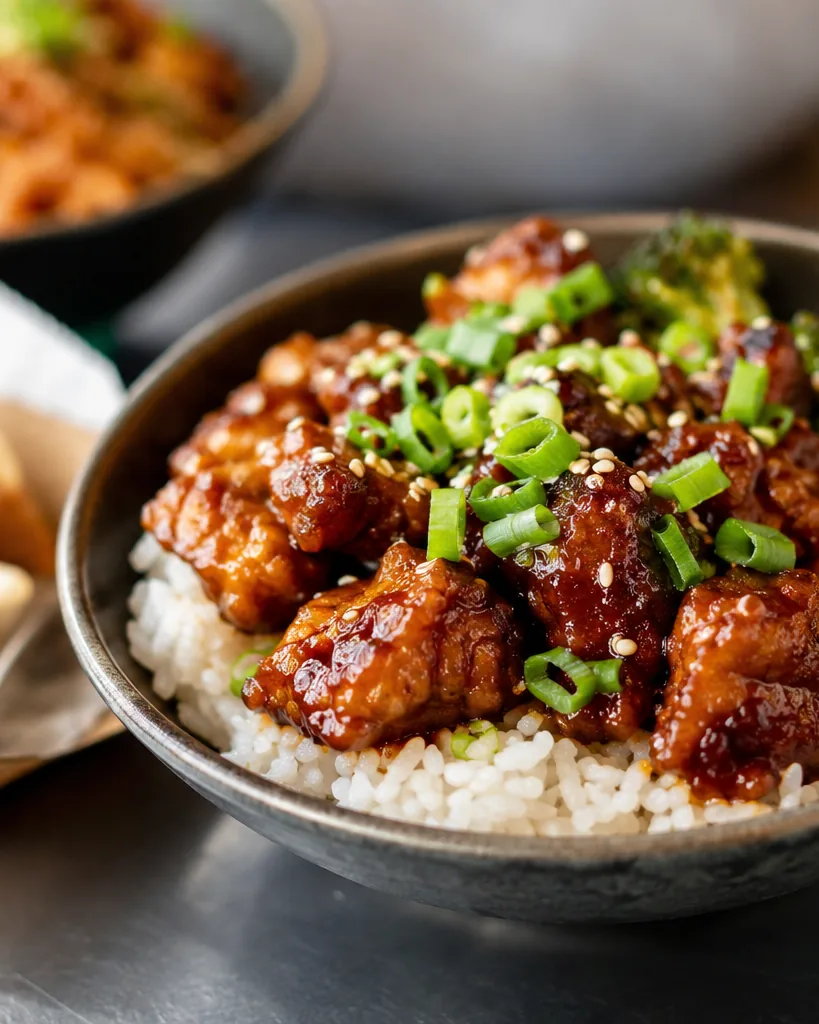
Korean BBQ and tacos: bulgogi and short-rib bowls, kimchi fried rice, and the Kogi-style taco. High margin, fast on a flat-top, and the flavor does the marketing. Thai: pad thai, drunken noodles, and green or red curry over rice. Wok-heavy, so you need the BTU, but a good curry base holds all day. Vietnamese: banh mi and pho. Banh mi is a phenomenal food-truck item because the bread and pickles prep ahead, but sourcing real airy baguettes is a daily hunt. Pho is beautiful and brutal on a truck because the broth ties up burner space and time.
Chinese: stir-fry, fried rice, orange chicken, dumplings. This is your wok-hei showcase and the most familiar to a general crowd, which means fast lines and easy upsells. Filipino: lumpia, chicken adobo, sisig, garlic rice. Underserved in most cities and deeply craveable, and lumpia off the fryer is one of the best impulse buys on any street. Fusion: the Kogi lane. Kimchi quesadillas, bulgogi cheesesteaks, curry fries. Just make sure the fusion has a reason to exist beyond a clever name. If you want to stress-test your board before you commit, our roundup of food truck concept ideas is a good sanity check, and a strong food truck name that fits the concept matters more than new owners think.
Food cost and pricing math that keeps you open
This is the section that would have saved me that first miserable month. The blended food-cost target across your whole menu is 28-33 percent. That means if a dish costs you $4.05 in ingredients, you are not pricing it at $6, you are pricing it so that food is under a third of the ticket. The formula is dead simple: menu price equals cost per serving divided by your target food-cost percentage. If food is 30 percent of the price, the other 70 percent has to cover labor, fuel, propane, event fees, and, eventually, you.
Watch for it every season: the trap I see most often is a truck that stays busy all day and still loses money, because a full window was never the same thing as a profitable one.
Run a real plate through it. A three-taco plate priced at $15 with $4.05 of food is a 27 percent food cost, which is healthy. Add a $3 side of chips that costs you 40 cents, and your plate total is $18 with $4.45 of food, a blended 24.7 percent. That side did not just add three bucks. It dragged your whole plate’s food cost down and pushed profit up. Sides and drinks are where trucks actually make rent. In 2026, aim for a ticket average of $14-$22 per customer, and do not be shy about it.
Two more realities. Prep-heavy Asian menus, the ones loaded with fresh herbs, avocado, or seafood, need an 8-10 percent waste budget baked in, because cilantro and bean sprouts do not keep. And event pricing is a different animal. At a festival or a ballgame with a captive crowd, food-truck prices run 20-35 percent higher than a normal street day, and customers expect it. That premium is often the difference between a break-even Saturday and a great one. For a deeper build-out of a profitable board, our full food-truck menu guide walks the whole layout.
Sourcing and prep: where Asian trucks get hard
The romance of this cuisine hides some ugly supply problems. Banh mi lives or dies on the bread, and a real Vietnamese baguette is airy and shatter-crisp in a way a grocery roll never is. Find an Asian bakery that will hold a standing daily order, or your banh mi is just a cold-cut sub. Kimchi is another one. Making it in-house means fermentation space and consistency you may not have room for, so most trucks buy from a trusted producer and treat it like the anchor flavor it is.
I have seen new trucks try to ferment their own kimchi without a walk-in or a dedicated fermentation fridge, and it never ends well, batch after batch dumped before it ever hits a plate.
Rice, oil, and sauce are your volume buys. Jasmine and short-grain rice move in 25-50 pound bags, and a busy stir-fry truck burns through it fast, so store it dry and cook it fresh at the commissary each morning. Wok oil takes a beating at high BTU, so budget for frequent changes. And build your prep around holds: curry bases, marinated proteins, and pickles that keep for days, so your service window is assembly and heat, not cooking from raw. That is the only way to keep a line moving when thirty people show up at once. Having spent six seasons at the window, I trust a good hold over hero cooking every single Saturday.
Permits, the health department, and the paperwork nobody loves
Every jurisdiction is its own maze, so I will not pretend to give you your city’s exact list. What I can tell you is the shape of it. You will need a mobile food unit permit from your local health authority, a plan review before you ever cook, a commissary agreement, fire inspection for that suppression hood, and business licensing. Plan review commonly runs $200-$700, and the annual health permit lands in that $300-$600 band for most operators. The overlooked detail here is timing: most operators build the truck before the plan review clears, and that order stalls half the launches I have watched.
Builds stall at that exact step, in my experience, far more often than they stall in construction itself. Submit your plan review before you touch the interior, and call your health department directly instead of trusting a forum thread on your city.
Gather these before you file anything with your health department:
- Signed commissary agreement covering prep space, water fill, and overnight parking
- Equipment spec sheets for the wok range, flat-top, fryer, and hood
- Proof of commercial auto and general liability insurance
- Business license and any required food handler certifications
- A floor plan sketch showing your cook line and exits
Here is the order that keeps a build moving instead of stalling in a paperwork queue:
- Step 1 – Sign a commissary agreement before you spend on branding or wraps.
- Step 2 – Submit your plan review with equipment spec sheets for the hood, wok range, and fryer.
- Step 3 – Schedule your fire suppression inspection once the hood is installed.
- Step 4 – Book your mobile food unit inspection with the health department.
- Step 5 – Confirm your business license and insurance certificates are current before your first service.
Go straight to the source for the rules that bind you. In my state I work off the Texas Department of State Health Services, which spells out mobile food establishment permitting, and every state has its own version. The National Food Truck Association is also a genuinely useful hub, linking regional associations that know the local quirks of parking, event permits, and inspection cadence better than any national blog. Do not confuse a stranger’s checklist online with your county’s actual code. Call your health department. Twice. From my years on the truck, that phone call has saved me more headaches than any online guide ever did.
Warning: Never open on a promise from a landlord or event that you can operate without your commissary and permit finalized. I watched a friend build a gorgeous Thai truck and sit idle for two months because his plan review stalled. Permits before propane. Always.
Mistakes I made running an Asian-leaning truck
I launched my truck thinking hustle alone would cover for bad pricing, and it took a brutal month to prove me wrong. I underpriced my plates for a full month before I did the actual math, and I was busy the whole time, which is the cruelest trap. Busy and broke feels like success right up until you count the register. The fix was boring: I sat down, calculated cost per serving on every item, and reset the board to hold a 30 percent food cost. Same food, same line, and suddenly I was keeping money.
I have helped a handful of other operators walk back an overbuilt menu the same way, and every one of them came out with faster tickets and a calmer kitchen within a few weeks.
My second mistake was menu sprawl. I tried to do Korean and Thai and Chinese at once because I could cook all three, and my prep list ballooned while my tickets slowed to a crawl. I cut the board by half, leaned into Korean-fusion, and both my speed and my reviews jumped. The third was underpowering my electrical, which is how the generator died mid-rush. On a truck, redundancy in power and refrigeration is not luxury, it is survival. Build for the worst Saturday you can imagine, because that is the one that pays your year. If you are still shaping the concept, the Mexican food truck playbook taught me more about tight menus than any Asian guide did.
Frequently asked questions
How much does it cost to start an Asian food truck?
Plan for $50,000-$250,000 all-in, with most 2026 builds landing at $85,000-$120,000. The truck is the biggest piece at $60,000-$85,000 used. Add a wok range, flat-top, fryer, and a required hood with fire suppression at $5,000-$10,000, plus permits, insurance, and first inventory. A lean build with a good used rig can open closer to the bottom of that range.
What equipment does an Asian food truck need?
At minimum: a high-BTU wok range at 90,000-150,000 BTU per burner or an induction equivalent at 3.5-12 kW, a flat-top griddle, a deep fryer for fried items, commercial rice cookers, refrigeration, and a fire-suppression hood. Your exact line follows your concept. A Chinese stir-fry truck leans wok, a Korean-taco truck leans flat-top, and a banh mi truck leans fridge and bread storage.
What food cost percentage should I target?
Aim for a blended food cost of 28-33 percent across the whole menu. Price each item as cost per serving divided by your target percentage, then use sides and drinks to pull the blended number down. Budget an extra 8-10 percent for waste on prep-heavy menus with fresh herbs, avocado, or seafood, because those ingredients spoil fast and will quietly eat your margin.
Are Korean tacos still a good concept in 2026?
Yes, if you execute the technique and not just the trend. The Kogi format that Roy Choi launched in 2008 still works because it makes an unfamiliar cuisine approachable in a familiar wrapper, and it cooks fast on a flat-top with strong margins. The mistake is treating fusion as a gimmick. Great bulgogi, real kimchi, and a clean slaw beat a clever name every time.
How much can an Asian food truck make?
Most food trucks net $5,000-$12,000 a month at 15-25 percent margins once they find reliable spots and events. Your ticket average should sit at $14-$22 per customer, and event days at festivals or games can price 20-35 percent higher with captive crowds. Income swings hard with weather, location, and season, so treat your best Saturdays as the money that carries slow weeks.
Do I need a commissary kitchen?
In most jurisdictions, yes. A commissary gives you licensed prep space, water fill and gray-water dump, and often overnight parking, and many health departments will not issue your permit without a signed agreement. Budget $350-$900 a month. Check your local rules first, because a few areas allow self-sufficient trucks, but the large majority tie your permit to a commissary contract.
The bottom line
An Asian food truck is one of the best concepts on the street right now, because the flavors travel, the margins are strong when you respect the math, and Roy Choi already proved the model can build a following from a beat-up rig and a Twitter account. But the cuisine will not save a sloppy spreadsheet. Price for a 28-33 percent food cost, power your line for the worst Saturday, keep the board tight, and confirm every permit with your own health department before you cook. Do that, and the wok hei will do the rest. I burned a month learning it. You do not have to.