Good food truck names do three jobs at once: they read from 30 feet away, they hint at what you cook, and they are legally yours to keep. I have painted two trucks in my time, and the mistake I notice most often is owners falling for a clever pun before they check whether the name is even available. This guide flips that order. First a short method, then 120 example ideas by cuisine, then the checks that keep you out of trouble.
What I have seen work is a name you can say once at a farmers market and have a stranger repeat back correctly. That is the whole game. A menu can change, a wrap can be reprinted, but a brand you have to abandon after a cease-and-desist letter costs you every review, every follower, and every regular who knew where to find you.
So before you get attached, run each idea through a quick screen. Then browse the lists below and steal freely.
Quick answer: Pick a name that is short (aim for 10 to 15 characters), easy to spell, and tied to your food or your story. Then clear it in four passes: say it out loud for memorability, search the USPTO trademark database, confirm a matching .com and social handle are free, and make sure it signals your cuisine without boxing you in. If all four pass, that is your name. For more concept help, see our guide to food truck ideas.
How to name a food truck: the four screens
Naming feels creative, but a reliable filter is the fix. I run every candidate through four screens in order, because the cheap checks should kill weak ideas before you spend money. Most consumers can only recall 3 to 5 brand names within a single food category, so your job is not to be clever; it is to be the one name a hungry person remembers at lunch. Short and plain beats long and witty almost every time. If a name survives all four screens, it is worth putting on a truck.
Screen 1: memorability
Say the name out loud five times. Text it to a friend and see if they spell it back correctly without asking. Names that rhyme, alliterate, or repeat a sound stick better because a brain breaks them into chunks. Research on naming suggests keeping the whole thing to roughly 10 to 15 characters and 2 to 3 words. If people mishear it over the noise of a generator and a griddle, it is too long.
Screen 2: trademark clearance
This is the screen people skip, and it is the one that hurts. Search the federal trademark database at the USPTO before you commit. The USPTO does not only flag identical names; it also weighs whether a mark is close enough to confuse customers for related goods, so a “Rolling Taco” near another “Rollin Tacos” can be a problem. A federal application runs $350 per class, and examination usually takes 6 to 8 months, so you want to clear the field early, not after you have printed 500 loyalty cards.
Screen 3: domain and handle availability
Check the .com and the social handles in one sitting. A matching domain still matters: the top 100 websites average about 6.2 characters, and roughly 79.8% of successful startups use domains of 5 to 11 characters. You do not need one that short, but you do want one people can guess. Grab the handle on Instagram, TikTok, Facebook, and X at the same time so your name is consistent everywhere a customer might look for tomorrow’s location.
Screen 4: cuisine signaling
Your name should whisper the food without trapping you. “Seoul Food” tells people Korean before they read the menu. But if you name the truck “Brisket Barn” and later add tacos, the name fights you. In my experience, a name that signals a flavor or a vibe ages better than one that names a single dish. Aim for a hint, not a straitjacket.
Naming formulas that actually generate good candidates
When I am stuck, I do not wait for inspiration. I run the concept through a handful of formulas and generate 40 candidates in an afternoon, then screen them. Each formula below produces a different flavor of name, and mixing them gives you range. Write down every idea, even the bad ones, because a weak candidate often sparks a strong neighbor. The goal at this stage is volume; the four screens will do the cutting later.
- Owner or family name: Sal’s Slice, Mama Rosa’s, Nguyen’s Noodles. Personal, hard for a competitor to copy, and it puts a face on the brand.
- Pun or wordplay: Cheesus Crust, Wok This Way, Grillenium Falcon. Fun and shareable, but check the trademark twice; puns collide often.
- Place plus food: Austin Smoke Co, Bayou Bites, Brooklyn Dumpling. Roots you in a scene and helps local search.
- Adjective plus food: Loaded Fries Co, Smoky Joe’s, Sweet Heat Tacos. Descriptive and easy to grasp in a second.
- Alliteration: Taco Tuesday Truck, Burger Boulevard, Perky Pete’s. Repeated sounds are simply easier to recall.
- Invented or blended word: Tacotopia, Frydays, Brewnette. Unusual spellings can be easier to trademark, but only if people can still spell them.
A quick note on generators: tools like the Shopify business name generator are fine for sparking ideas, but they will happily hand you a name someone already registered. Treat every output as a candidate, not a decision.
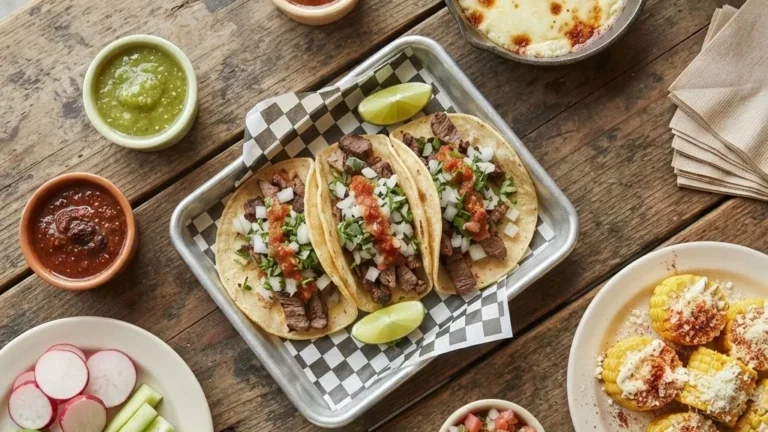
Taco truck name ideas
Tacos are the most crowded lane on the street, which means the trademark screen matters more here than anywhere. Aim for a name that carries heat, motion, or a wink, and always run it past the USPTO before you paint it. Here are two dozen to get you moving; treat them as raw material and bend them to your own voice and neighborhood.
- Rolling Tacos
- Taco Voyage
- Salsa Verde Wheels
- The Taco Cartel
- Guac and Roll
- Lucha Tacos
- Barrio Bites
- El Camino Tacos
- Taco Republic
- Sizzle and Shell
- Maiz and Main
- Taco Tremor
- Fiesta on Four Wheels
- Nacho Average Truck
- Corazon Tacos
- The Taco Standard
- Cactus Cantina Mobile
- Taco Compass
- Chile Nomad
- Habanero Highway
- Pico Pilots
- Taco Underground
- Verde Vagabond
- Al Pastor Post
BBQ truck name ideas
Barbecue names should smell like smoke. Long-and-slow is the promise, so lean on wood, fire, and regional pride. A word of caution I learned the hard way: naming a truck after one meat, like “Brisket Barn,” can hem you in when you want to add ribs, pulled pork, or a smoked chicken. Pick something that signals the pit, not a single cut. Two dozen to spark the pen below.
- Smoke Signal BBQ
- Low and Slow Mobile
- Ember Road
- The Smoke Wagon
- Bark and Bone
- Pitmaster’s Pull
- Hickory Highway
- Ash and Oak BBQ
- Brisket and Barrel
- Smokestack Sal’s
- The Rub Rig
- Firebox Kitchen
- Coals and Company
- Pit Stop Smokehouse
- Cinder Yard BBQ
- Mesquite Mile
- The Pull Cart
- Backyard Legend
- Smolder Street
- Whiskey Smoke Co
- Redwood Ribs
- The Ember Cart
- Slow Burn Mobile
- Charwood BBQ
Coffee and drink truck name ideas
Coffee and drink trucks live on rhythm and repeat customers, so the name should feel warm and quick to say at 7 a.m. Puns land well in this lane because the mood is light. Handles matter double here; a coffee brand lives on social media, so grab a clean Instagram name the same day you settle on the words. Here is a batch that balances cozy and clever.
- Perk and Park
- The Daily Grind Truck
- Bean Voyage
- Steam and Street
- Roast Rider
- Cup and Cruise
- Brew Route
- Mug Shot Coffee
- The Wandering Bean
- Espresso Yourself
- Java Jolt Mobile
- Drip and Drift
- Morning Mile
- Cold Brew Crew
- Bean Machine
- Grounds Control
- Latte Lane
- The Caffeine Cart
- Roam and Roast
- Steamwork Coffee
Dessert truck name ideas
Dessert trucks sell a feeling, so the name can be playful and sweet without apology. This is the one lane where a longer, punnier name can survive, because the treat itself carries the mood. Still, keep spelling easy; a customer who cannot type your name into a search box cannot find you Friday night. Sample the batch below across ice cream, donuts, and general sweets.
- Sugar Rush Mobile
- The Sweet Spot
- Whisk and Wheels
- Sprinkle Squad
- Cone Zone
- Batter Up Bakery
- Frost and Found
- The Donut Drift
- Scoop Troop
- Sugar and Spoke
- Melt and Main
- Churro Charlie’s
- The Sweet Fleet
- Glaze Days
- Waffle Wander
- Sundae Driver
- Cocoa Cruiser
- Icing on the Wheel
- Puff and Powder
- Sweet Machine
Burger truck name ideas
Burger names should sound hot off the flat-top: bold, short, a little greasy in the best way. Alliteration works overtime in this lane. Because burgers are a national favorite, the trademark screen at the USPTO gets crowded, so have two or three backups ready. Twelve to chew on below, tuned for smash burgers, classics, and gourmet stacks alike.
- Smash and Dash
- Patty Wagon
- The Grind House
- Flat Top Flyer
- Beef and Beyond
- Bun Voyage
- Sear Society
- Griddle Me This
- Stack Street
- The Smash Cart
- Char and Cheese
- Buns and Roses
That is 120 names across five cuisines, plus a bonus batch below. None of them are yours until they clear the four screens, so resist the urge to fall in love before checks are done.
20 more names for fusion, breakfast, and plant-based trucks
Not every truck fits neatly into one lane, and that is fine. Fusion concepts, breakfast rigs, and plant-based menus are some of my favorite naming challenges because a smart name can carry two ideas at once. Keep spelling clean and let a hint of your angle come through. Twenty more candidates below, split across mash-up menus, early risers, and greens-forward kitchens, all still subject to a trademark search before you commit.
- Fusion Junction
- East Meets Eats
- Global Grind
- Curry and Cruise
- Kimchi Cart
- Bibim Boulevard
- Sunrise Skillet
- Yolk and Roll
- Morning Rush Mobile
- Hash and Dash
- Biscuit Route
- Waffle Wagon
- Rooted Kitchen
- Plant Powered Wheels
- Green Machine Mobile
- Harvest Highway
- Sprout and Spoke
- Leaf and Loaf
- Garden Grind
- Kale and Coast
How to test a name before you paint the truck
A name can look great on a notepad and fall apart on a street corner. Before spending money on a wrap, put your two or three finalists through a cheap, fast field test. I have done a version of this at farmers markets, and it saves you from a pretty logo attached to a name nobody can repeat. Run each finalist through these steps in an hour or two, and let real reactions, not your own attachment, make the final call.
- Read it aloud to five people; ask each to spell it back an hour later.
- Text it to a friend without context and watch for a confused reply.
- Type it into a search box; if autocomplete pulls up a rival, rethink it.
- Mock it up on a napkin at wrap scale; step back 30 feet and read it.
- Check that it fits a social handle without extra numbers or underscores.
- Say it over background noise; a name that garbles at a market fails here.
- Ask a stranger what food they expect from that name.
- Sit with your top pick for 48 hours before you order any signage.
Naming mistakes that cost you later
I have watched good cooks pick bad names, and the failures rhyme. Almost every regret traces back to skipping a screen or chasing cleverness over clarity. The list below is the short version of a longer, more expensive education. Read it before you spend a dollar on a wrap, because a name change after launch means new signage, new cards, new social accounts, and a stack of confused regulars.
- Too generic: “The Food Truck” or “Tasty Bites” cannot be protected or found. Generic names are legally weak and get buried in search.
- Impossible to spell: if a customer cannot type it, they cannot find your Friday location. Clever spellings that confuse people cost you sales.
- Boxes you in: naming a single dish or a single street limits your menu and your routes later.
- Name-twin with a registered brand: skipping the USPTO search invites a cease-and-desist that can erase your brand overnight.
- No matching domain or handle: if the .com and the social names are taken, your brand is split across the internet before you open the window.
- Copying a trend: the fourth “Nashville Hot” truck in town is invisible. Distinct beats fashionable.
Here is one pattern under all of it: the name is the cheapest thing to get right and the most expensive thing to fix. Spend an extra week now.
Trademark, licensing, and the legal layer
A name is a business asset, so it lives inside the same paperwork as the rest of your truck. The good news: agencies involved publish plain-language help, and most of it is free to read. Below is the short map of who governs what, with real fees so you can budget. None of this is legal advice; it is the operator’s overview I wish someone had handed me on day one.
Start with the SBA, the U.S. Small Business Administration. The SBA walks you through choosing a legal structure and registering the business, and its microloan program lends $500 to $50,000 through approved intermediaries at roughly 6 to 9% APR, which is how a lot of first trucks get funded. Registering an LLC to hold the name usually runs $50 to $500 depending on your state.
Next, protect the name itself through the USPTO. A federal trademark is $350 per class to file, examination takes about 6 to 8 months, and later maintenance filings include a $225 per class declaration of use and a $325 per class renewal. You do not have to trademark on day one, but you should at least clear the name so you are not building on someone else’s mark.
Then there is the food side, governed by the FDA and, for meat and poultry, the USDA. The FDA publishes the Food Code that most states adopt for handling, temperatures, and safe sourcing, while the USDA sets the rules for the beef, pork, and chicken you serve. For a plain-English starting point on safe handling and recalls, foodsafety.gov pulls FDA and USDA guidance into one place. Your name will not pass a health inspection, but your practices will, so learn the basics early.
Those dollars add up faster than most people expect. Permits and licenses in year one run about $1,000 to $5,000, though local fees swing wildly, from roughly $811 in Denver to more than $17,000 in Boston. The U.S. Chamber of Commerce Food Truck Index has pegged first-year spending on permits, licenses, and legal compliance at around $28,276. Against a total startup cost of $85,000 to $120,000, the name and its paperwork are a small line, but a broken name can sink the whole build.
Once the legal layer is set, the name flows into everything else: your wrap, your menu board, your logo. If you are that far along, our food truck business plan guide ties the name into your budget and permits, and the food truck design guide shows how to make it readable at a glance.
Your food truck naming checklist
Print this and run every finalist through it. If a candidate stumbles on any single line, set it aside and move to the next; the whole point of a checklist is to make the cut feel unemotional. I keep a version of this taped inside my prep window, and it has saved me from at least two names I would have regretted.
- Say it out loud five times; have someone spell it back correctly.
- Keep it to roughly 10 to 15 characters and 2 to 3 words.
- Confirm it hints at your cuisine without naming one dish.
- Search the USPTO database for identical and confusingly similar marks.
- Confirm the .com is available, ideally 6 to 14 characters.
- Grab the handle on Instagram, TikTok, Facebook, and X.
- Google it to catch local businesses already using it.
- Check it reads clearly on a truck from 30 feet.
- Register the business or LLC through your state (about $50 to $500).
- Budget $350 per class if you plan to file a federal trademark.
Ten lines, one afternoon. That is the difference between a name you rent by accident and one you own on purpose. Take the time now, while a fresh coat of paint is still just an idea and not a $2,000 mistake.
Frequently asked questions
Do I need to trademark my food truck name?
Not to open, but it is smart. You can operate under a registered business name in your state without a federal trademark. What you cannot do safely is build a brand on a name someone else already owns. At minimum, run a free search on the USPTO database before you commit. If your truck grows or you plan to franchise, a federal trademark at $350 per class protects the name across the country, and examination takes about 6 to 8 months, so file sooner rather than later.
How long should a food truck name be?
Short enough to read from across a parking lot and spell without help. Aim for about 10 to 15 characters and 2 to 3 words. Data on branding backs this up: the top 100 websites average 6.2 characters in their domain, and roughly 79.8% of successful startups use domains of 5 to 11 characters. Remember that most people only hold 3 to 5 brand names per food category in their heads, so a tight, punchy name has a real edge over a long, clever one.
What makes a food truck name memorable?
Sound and simplicity. Names that rhyme, alliterate, or repeat a letter break into easy chunks the brain can grab. Keep the spelling obvious so customers can search it, and tie the words to a flavor, a story, or your own name so it means something. In my experience, the name a stranger can repeat back after hearing it once is the name worth keeping, and that test costs you nothing to run before you spend on a wrap.
How much does it cost to name and register a food truck?
The name itself is free; the paperwork around it is not. Forming an LLC to hold the name runs about $50 to $500 by state. A federal trademark, if you choose to file, is $350 per class with the USPTO. Beyond the name, first-year permits and licenses run about $1,000 to $5,000, and the U.S. Chamber Food Truck Index puts total first-year compliance spending near $28,276, so plan the name paperwork as one small part of a larger budget.