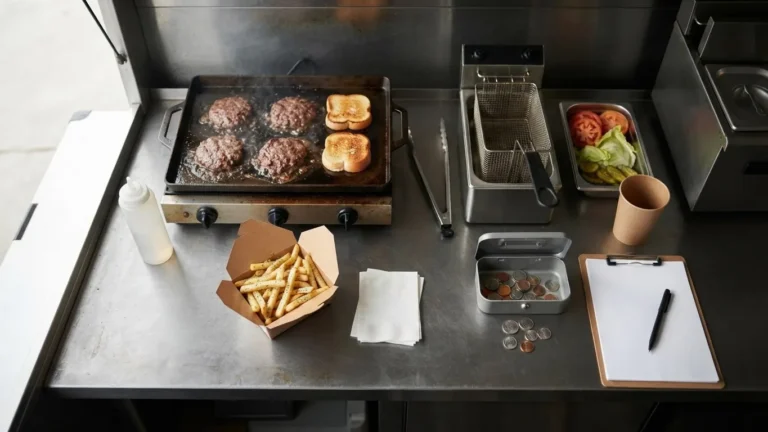
Scanning through used food trucks for sale can feel like the fast lane into this business, and often it is. A pre-built kitchen costs less than a fresh custom rig, and you can be serving in weeks instead of months. But a bargain sticker hides a lot. Over years of buying and running rigs, what I have seen when buying used is that the truck that looks clean in photos is the one that eats your repair budget. The good news: a used truck is very buyable if you know the seven things to check and the numbers that actually matter.
This guide walks the full path a buyer takes. Where to shop, what a used truck really costs by condition, the inspection you do before money changes hands, the title and VIN work, how financing lines up, and the recurring costs that decide whether the deal makes sense at all. If you are still shaping the whole plan, pair this with our food truck business plan guide so the purchase fits your route and menu.
Here is the short answer. Most solid used food trucks sell for $40,000 to $100,000, roughly a 30% to 50% savings versus a comparable new build. The sweet spot for value sits between $50,000 and $70,000. Below that you are usually buying repairs; above it, a new build starts to pencil out. Budget another 15% to 25% of the price for fixes, and inspect the generator, propane, NSF-stamped equipment, and title before you sign anything.
Where to Find Used Food Trucks for Sale
There is no single lot where every rig sits, so buyers work several channels at once. Online marketplaces are the busiest. UsedVending, UsedFoodTrucks.com, Commercial Truck Trader, the Mobile Food Alliance marketplace, and even eBay Motors all carry mobile kitchens, trailers, and step vans. Listings there range from a $13,000 bare trailer to a $150,000 turnkey build, so filter hard by your build-out needs. Marketplaces are convenient, but the seller wrote the description, and a photo will not show you a tired compressor or a soft floor.
Dealers and custom builders are the second channel. Shops like Venture Food Trucks or Zion Foodtrucks sometimes resell trade-ins or refurbished units. You pay a little more, but a reputable builder has already fixed the obvious problems and can stand behind the equipment. Auctions are the third channel, and the riskiest. Government surplus sales, restaurant liquidations, and repossession auctions can post a truck at a fraction of market, but you usually buy as-is with no test drive and no returns. I have watched a $22,000 auction win turn into a $40,000 truck after a new generator and a fire-suppression retag. Auctions reward buyers who can inspect fast and walk away faster.
- Online marketplaces: widest selection, buyer beware on condition.
- Dealers and builders: higher price, cleaner equipment, some warranty.
- Auctions: lowest entry price, highest risk, no test drive.
- Local classifieds and word of mouth: slow, but you meet the operator and get the history.
A word on geography. A truck listed three states away can look like a steal until you add transport and an out-of-state title transfer. I once chased a $38,000 rig in another region and, after a $1,600 shipping quote and a two-week registration wait, the local $44,000 truck turned out cheaper and faster to launch. Search wide, but weigh distance as a real cost. When two listings look close on price, the closer one usually wins because you can inspect it twice and drive it home the same day.
What a Used Food Truck Actually Costs
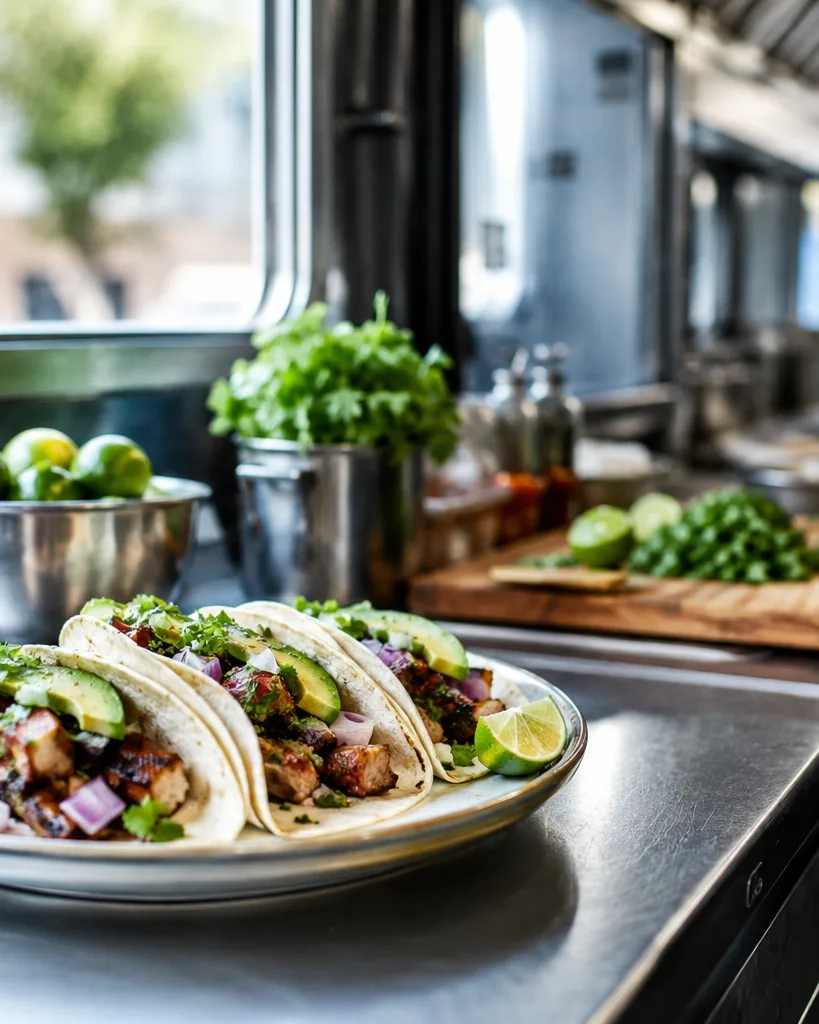
Price tracks condition and build-out more than year or brand. A stripped step van that barely runs might list at $20,000, while a food trailer with a full line runs $25,000 to $85,000. The average used food truck changed hands near $46,800 in 2026, but that number hides a wide spread. The table below is the way I frame a listing before I ever call the seller, because it tells me what repair budget I need on top of the sticker.
| Condition tier | Typical price | What you get | Repair budget to plan |
|---|---|---|---|
| Project / as-is | Under $30,000 | Runs poorly, dated or missing equipment | $15,000 or more |
| Fair | $30,000 to $50,000 | Drivable, aging generator and appliances | $8,000 to $15,000 |
| Good (best value) | $50,000 to $70,000 | Solid line, recent service, NSF equipment | 15% to 20% of price |
| Turnkey used | $70,000 to $100,000 | Near-new, full build, low hours | 10% or less |
Why the spread? Age plays a part, but hours, service history, and equipment quality move the price far more. A ten-year-old truck with a rebuilt engine, a low-hour generator, and NSF-stamped appliances can outvalue a five-year-old truck that was run hard and never serviced. Location matters too: trucks sell for more in warm-weather metros where the season runs most of the year, and less in regions where a rig sits parked four months out of twelve. Read the listing for what it does not say. A missing generator model, no mention of tank capacity, or photos that skip the kitchen line all signal a seller hoping you will not ask.
Two costs surprise first-timers. The build-out itself, meaning the cooking line and cold storage, represents $15,000 to $50,000 of any truck’s value, so a cheap shell with a good kitchen can be worth more than a clean shell with junk equipment. And the generator is its own line item: a consumer unit runs $500 to $3,000, while a premium Onan or Cummins costs $6,000 to $10,000 and holds about three times longer between service intervals. When you compare two trucks, compare the kitchens and the power plants, not just the paint.
The Buyer Inspection Checklist
This is the check that saves deals, and it is not the same as a health inspection. A health inspector confirms the truck is safe to serve the public. A buyer inspection confirms the truck is worth your money. You want both, but you run the buyer version first, ideally with a mechanic and an equipment tech at your side. The mistake I notice most is buyers falling for a shiny wrap while the compressor is on its last summer. Work the mechanical, the kitchen, and the safety systems in order, and write down every number.
- Drivetrain: engine, transmission, brakes, tires, and mileage. Ask for maintenance records. No records is a walk-away for me every time.
- Generator: make, model, and total run hours. Hours are the odometer of the power plant; a unit past 3,000 hours may be near a rebuild.
- Propane: tank date stamps, certification, regulator condition, and any smell or rust. Propane problems are safety problems.
- Fire and hood: the fire-suppression tag date and extinguisher inspection date. An Ansul-style system is required in roughly 90% of jurisdictions.
- NSF equipment: look for the NSF stamp on the fridge, freezer, sinks, and prep tables, plus a three-compartment sink and a separate hand-wash sink.
- Water system: fresh and gray tank capacity in gallons, pump function, and clean plumbing with no leaks.
- Electrical: the panel, shore-power hookup, and wiring. Melted or taped splices are a red flag.
The National Sanitation Foundation, or NSF, certifies commercial food equipment to sanitation standards, and states such as California require that stamp on the gear. If an appliance has no NSF mark, plan to replace it before you can pass a mobile-food permit. That single detail has flipped more than one deal from cheap to expensive in front of me.
Run this check in daylight and take your time. Fire up the generator and let it warm; listen for knocks and watch the exhaust. Turn on every appliance at once the way a real lunch rush would, and see whether the fridge holds temperature while the fryer and griddle pull power. Fill the fresh tank and run the pump to confirm the plumbing does not leak under pressure. A truck that sails through a static walk-around can still stumble the moment you load it. The fifteen minutes you spend running it hot are the cheapest fifteen minutes in the whole purchase.
Common Red Flags That Should End the Deal
Some problems are fixable and priced into a fair offer. Others should send you back to the listings. The difference usually comes down to safety, honesty, and paper. A seller who cannot produce maintenance records, dodges questions about generator hours, or rushes you to wire a deposit before an inspection is telling you something. Trucks are big-ticket items with long histories, and a straight seller expects you to look closely. Treat evasiveness as data.
- No maintenance records: hidden problems almost always exist, and you inherit every one of them.
- Salvage or branded title, or a lien: the truck may not be legally yours to run after you pay.
- Mismatched VIN: numbers that disagree across the title, cab, and frame can signal fraud or a rebuilt wreck.
- No NSF stamps: equipment you will have to replace before a health inspector signs off.
- Expired fire-suppression tag: a retag and possible recharge, plus a permit you cannot pass until it is done.
- Soft floor or rust at the frame: structural repair that dwarfs the price of any appliance.
None of these means the deal is dead on its own. A missing fire tag is a few hundred dollars; a soft floor might be thousands. The point is to price each finding honestly and negotiate from there, or walk. What I have seen when buying used is that the best deals come from sellers who volunteer the flaws, because they know a prepared buyer will find them anyway. The nervous sellers, the ones who will not let you run the generator, are the ones who cost you later.
Title, VIN, and the Paperwork That Protects You
The equipment can be perfect and the deal still be a trap if the paper is wrong. Confirm the title is in the seller’s legal name, is clean, and carries no lien or salvage brand. A lien means someone else can claim the truck after you pay. Match the VIN in three places: the title, the dashboard or door jamb, and the frame. If those numbers disagree, stop. Get a bill of sale with the price, date, VIN, and both signatures, and check that any transferable permits or a commissary agreement are named correctly.
If the truck crosses state lines to reach you, budget time for a title transfer and a possible state inspection before you can register it. A short, boring paperwork day beats a lien surprise six months in. When you are weighing whether to buy at all, our food truck rental guide shows how leasing a rig for a season can prove your route before you commit to a title in your name.
Financing a Used Food Truck
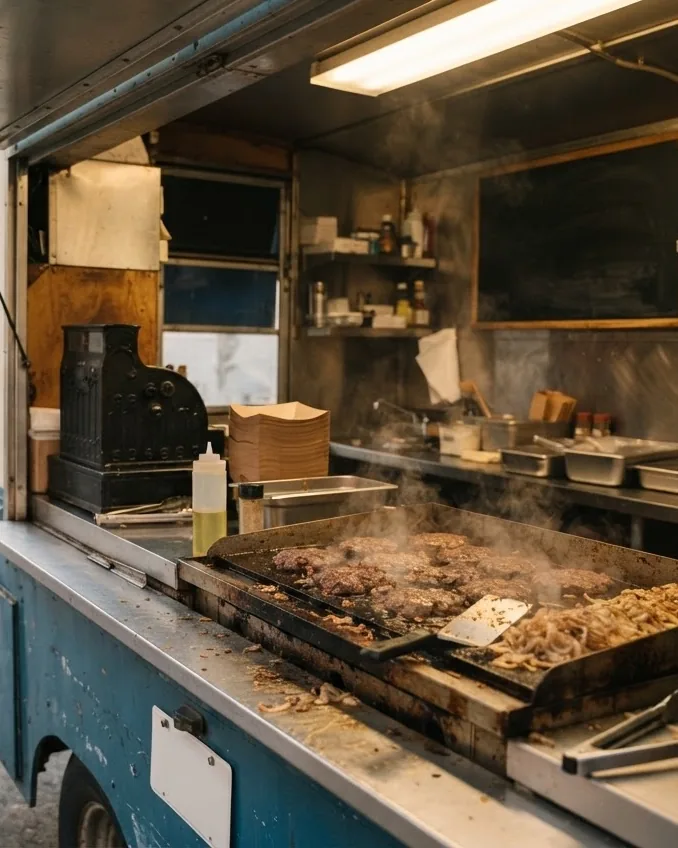
Few buyers pay all cash, and the loan you pick shapes the whole budget. The U.S. Small Business Administration, the SBA, backs two programs that fit trucks well. The SBA microloan goes up to $50,000 with rates from 0% to 13% and terms up to 6 years, which suits a used purchase and a little working capital. The SBA 7(a) loan is larger and more flexible, with terms up to 10 years for equipment and working capital. You can compare both on the official SBA website before you talk to a lender.
The SBA route has a trade. The rates and terms are among the best a small operator can get, but the paperwork is heavy. You will need a written business plan, financial projections, and personal financial statements, and approval can take weeks. If a seller has a hot listing and three buyers circling, an SBA timeline can cost you the truck. Many operators use a faster equipment loan to buy the rig, then refinance into an SBA loan later when the pressure is off. There is no single right answer; there is only the loan that closes before the truck sells.
Outside the SBA, banks, credit unions, and equipment lenders all write food-truck paper. Expect a down payment of 5% to 20% with good credit, and interest rates that commonly land at 6% to 9%. Equipment loans use the truck itself as collateral, which can lower the rate but means the lender can repossess if you fall behind. Get pre-approved before you shop; a seller takes a funded buyer more seriously, and you will not lose a good rig while you wait on paperwork.
Hidden and Recurring Costs Most Buyers Miss
The purchase price is the down payment on the real cost of operating. A US Chamber of Commerce Foundation study found the average operator spent $28,276 on regulatory costs in the first year alone. That figure lands hard on people who budgeted only for the truck. Here is where the money actually goes month after month, and why the cheapest listing is not always the cheapest truck.
- Commissary kitchen: most cities require a licensed base for prep, water, and waste. Plan $500 to $800 per month in most markets, and $800 to $1,200 per month in high-cost areas like LA County.
- Permits and inspections: health department permits run $50 to $1,000 depending on the city, and crossing county lines means paying and inspecting again.
- Insurance: a practical stack commonly costs $2,000 to $9,000+ per year, and many venues require $1 million per occurrence in general liability.
- Fuel and propane: figure $300 to $1,000 per month depending on route length and how hard the generator works.
Insurance deserves its own homework because the wrong policy can shut you down at a busy event. Our guide to commercial food truck insurance breaks down the coverages that permits and venues actually demand, so you are not scrambling the week before a festival. Food safety carries the same weight: the FDA publishes the Food Code that most local health departments adopt for mobile units, and the USDA sets guidance on safe holding temperatures and cross-contamination for the food you serve. You can read plain-language rules for handling and holding at FoodSafety.gov, and equipment standards trace back to the FDA and the NSF stamp on your gear.
New vs Used: Where the Break-Even Sits
The trade-off is real money, not just preference. A used truck saves 30% to 50% up front and gets you earning sooner, which matters when rent and loan payments start on day one. The cost is uncertainty: older equipment, unknown history, and that 15% to 25% repair reserve you should never skip. A new custom build removes the guesswork and can be spec’d exactly to your menu, but it can run $150,000 or more and take months to deliver.
There is a middle path worth naming. Buying a used shell and paying a builder to refit the kitchen can land between the two extremes: less than a full new build, more control than a mystery used rig. You start with a sound truck and known equipment, and you skip the worst of the guesswork. It is not cheap, since a fresh build-out alone runs $15,000 to $50,000, but for operators with a specific menu it can beat both a tired used truck and a six-figure new one. Weigh it as a real option, not an afterthought.
My rule of thumb after years in the game: below $50,000, expect real repairs and treat it as a project. Between $50,000 and $70,000, a used truck usually wins on value. Once a used listing climbs past $70,000, the gap to a new, warrantied build narrows enough that new deserves a serious look. The USDA and FDA rules apply to any truck you run, new or used, so the deciding factor is condition and total cost, not the model year on the title. Buy the kitchen and the paperwork, not the paint.
Frequently Asked Questions
How much should I budget beyond the sticker price of a used food truck?
Plan an extra 15% to 25% of the purchase price for repairs on a used unit, plus first-year regulatory and startup costs that averaged $28,276 in one US Chamber of Commerce Foundation study. On top of that, recurring costs like a commissary at $500 to $1,200 per month, insurance at $2,000 to $9,000+ per year, and fuel at $300 to $1,000 per month all hit before you turn a profit. The listing price is only the beginning of the math.
Do I really need NSF-certified equipment in a used truck?
In many places, yes. The National Sanitation Foundation, or NSF, certifies commercial food equipment to sanitation standards, and states such as California require the NSF stamp on your gear to pass a mobile-food permit. During your inspection, check the fridge, freezer, sinks, and prep tables for the mark. Any appliance without it may need to be replaced before you can legally serve, which can add thousands to a truck that looked cheap on paper.
Can I get an SBA loan to buy a used food truck?
Yes. The SBA microloan program lends up to $50,000 with rates from 0% to 13% and terms up to 6 years, and the larger SBA 7(a) loan offers terms up to 10 years for equipment and working capital. Most buyers put down 5% to 20% with good credit and pay interest around 6% to 9%. Getting pre-approved before you shop makes sellers take your offer seriously and keeps a strong listing from slipping away.
What paperwork should I verify before paying?
Confirm the title is clean, in the seller’s name, and free of any lien or salvage brand, then match the VIN across the title, the cab, and the frame. Get a signed bill of sale listing the price, date, and VIN, and confirm any transferable permits or commissary agreement. If the truck crosses state lines, allow time for a title transfer and a possible state inspection before you can register and run it.