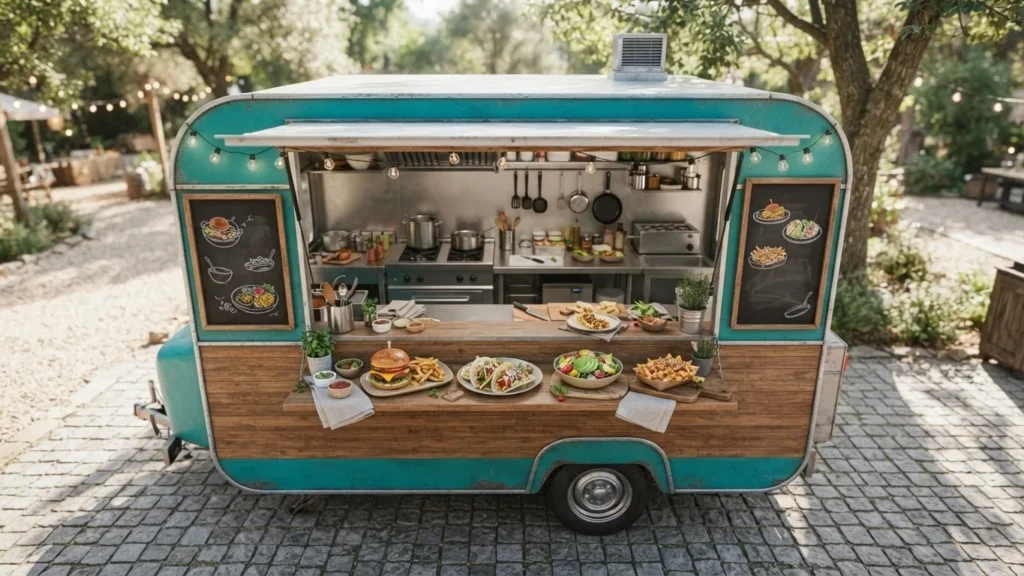
When you hire a food truck, the per-person menu rate you see first is only the food line. On the Best Food Trucks platform, full-service events average $2,584 and drop-off events average $1,108, and the single biggest surprise for small parties is this: a 40-guest event usually pays for 60 or more plates because of the minimum spend. The one mistake to avoid is treating the advertised $10 to $25 per head as your total bill. Book permits early, too: San Diego County wants 30 days.
Across the market, the average food truck catering cost runs $10 to $25 per person on general-market platforms, while confirmed bookings on one marketplace average $28.88 per head because that figure folds in full-service totals, not just food. Add a minimum spend, $300 to $1,000 in service, staffing and permit fees, travel past a base radius, gratuity of 15 to 20 percent, and sales tax. A single truck serves 50 to 65 plates per hour, so 100 guests need about 90 minutes of service.
How much it costs to hire a food truck: per-head rates and all-in totals
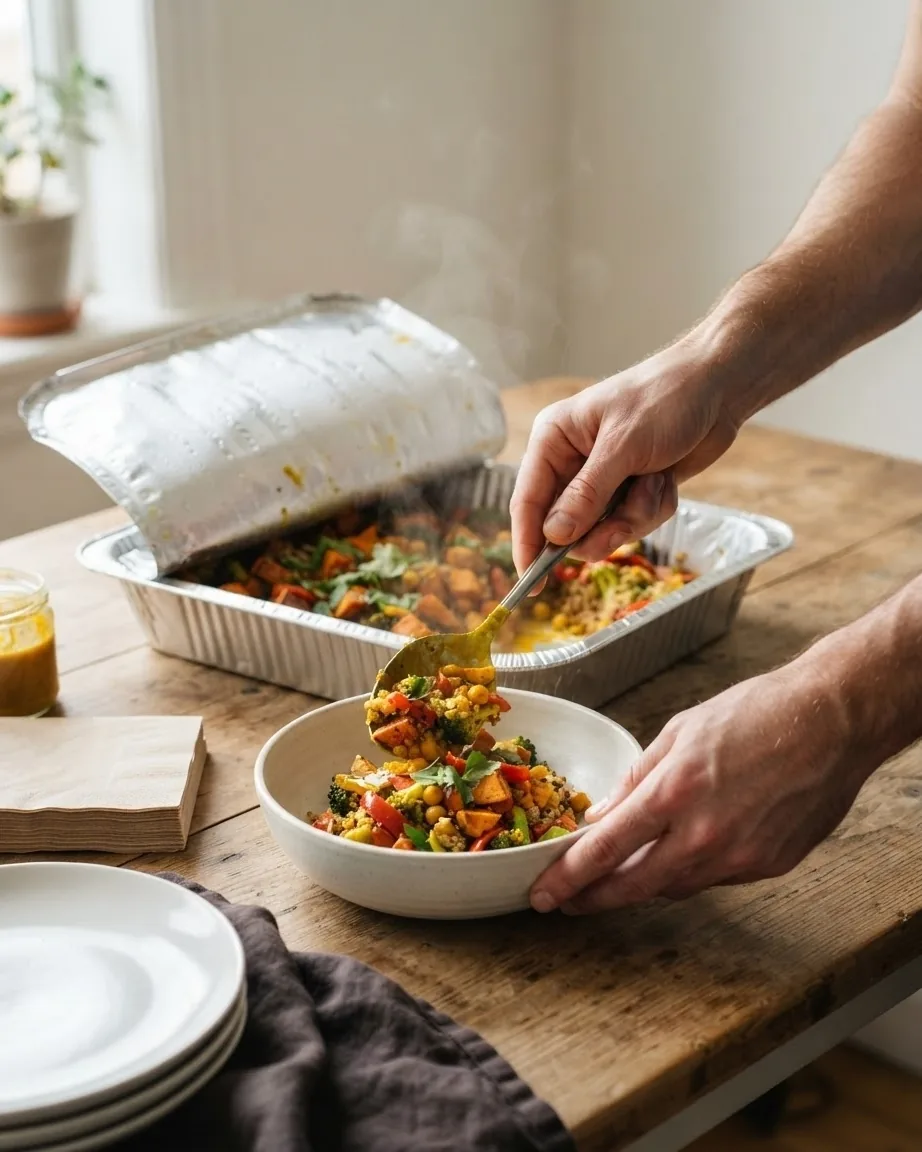
The per-person number depends on whose data you read, and the ranges are not interchangeable. General-market platforms quote $10 to $25 (foodtruckbooking.us) and $10 to $20 per person for the food line alone. Confirmed-booking data from Best Food Trucks averages $28.88 because it reflects full-service totals, and on that same platform birthday parties top the chart at $38 per person on average.
Totals swing just as hard by service style. Drop-off, where the truck delivers prepared food without staffing your window, averages $1,108; full-service averages $2,584. Best Food Trucks puts it plainly: “drop-off events average around $1,108, compared to $2,584 for full-service events”. If you only need food on a table and your own crew to plate it, drop-off is the lever that cuts the bill nearly in half.
Cost figures that actually settle the question
This table is built only from the figures the sources report, so you can match the number to the claim instead of to an average that hides the conditions.
| What it measures | Figure | Who reports it |
|---|---|---|
| Per-person, general market | $10, $25 | FoodtruckBooking.us |
| Per-person, confirmed bookings avg | $28.88 | Best Food Trucks |
| Birthday party, highest avg | $38 | Best Food Trucks |
| Drop-off event avg total | $1,108 | Best Food Trucks |
| Full-service event avg total | $2,584 | Best Food Trucks |
The minimum spend, and why 40 guests pays for 60 plates
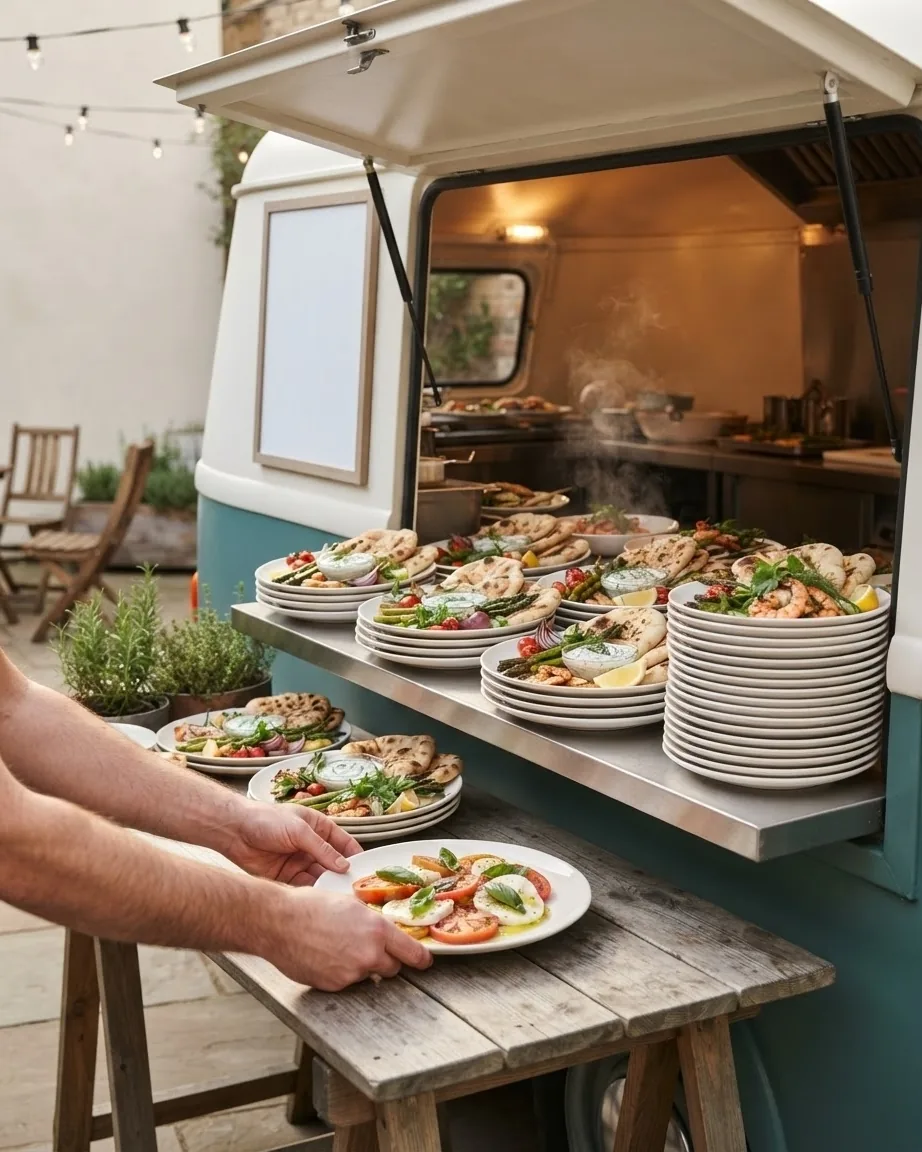
A food truck’s minimum is a floor on the booking, not a per-head price. Framed in dollars, FoodtruckBooking.us reports most minimums start between $500 and $1,000, while Truckster puts the typical minimum at $800 to $2,000. Best Food Trucks tiers it by size: small events under 75 guests run $800 to $1,200.
Honeyfund frames the same floor in guests, not dollars: most trucks require minimums of 46 to 100 guests regardless of your actual headcount. That is the mechanism behind the small-event penalty. Book a truck whose floor is 60 plates for a 40-person party, and you pay for 60. Fewer guests does not mean a cheaper booking once you fall under the floor: it means a higher effective price per head.
How many trucks you need, and how long the window runs
Throughput decides both the number of trucks and the service window, and the rate depends on menu style. FoodtruckBooking.us counts 60 to 100 guests per hour. Honeyfund and The Truck Chef count 50 to 65 plates per hour: the lower figure reflects made-to-order cooking versus an assembly line. Either way, 100 guests need about 90 minutes of service on one truck.
- Standard catering windows run 1.5 to 2 hours; most weddings want 2 to 3 hours of service.
- Extending to 3 or 4 hours adds cost through added staffing or a higher minimum.
- Above roughly 250 to 300 guests, plan on multiple trucks rather than one long window.
For example, a 200-guest reception at 50 plates per hour would take four hours on one truck: too long for a single window, so two trucks halve it. See our taco truck for parties guide for throughput at a tighter menu.
How to hire a food truck for an event, step by step
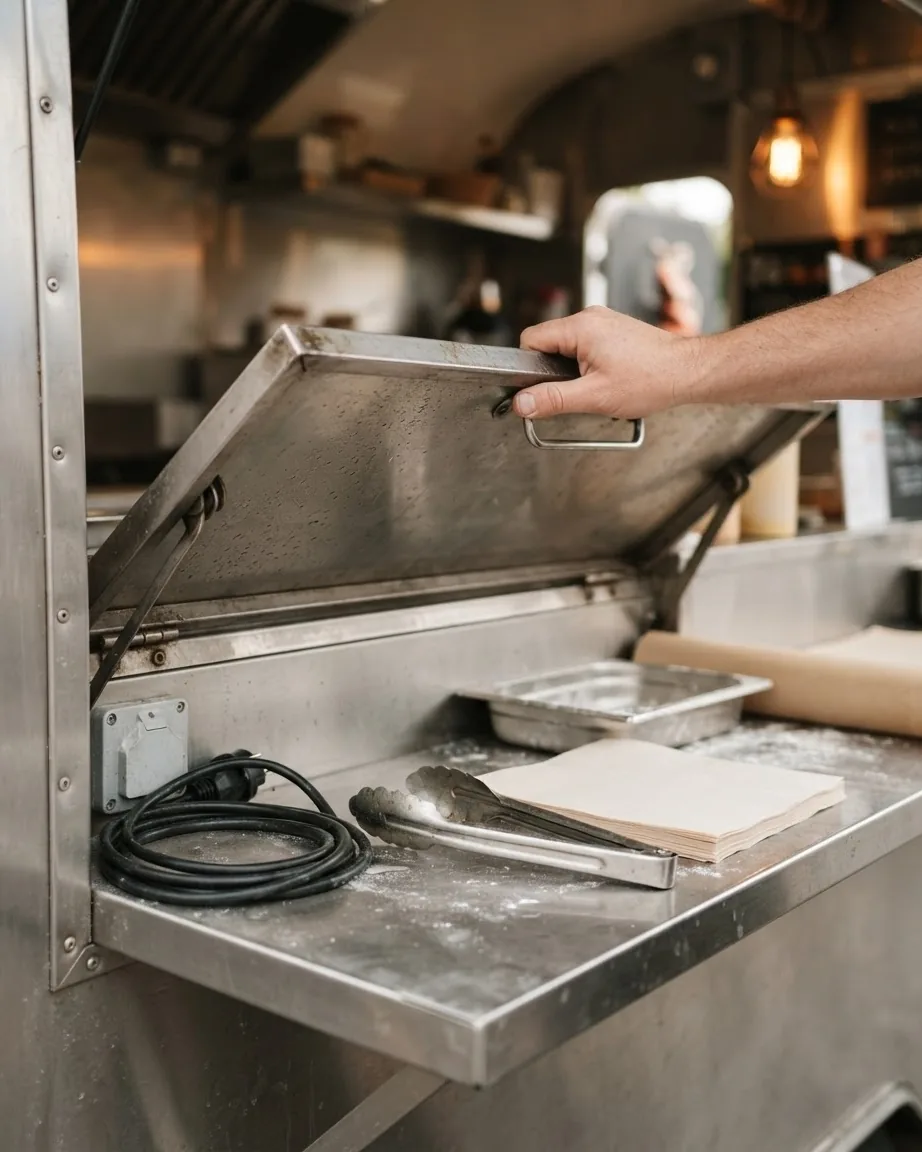
Before you request quotes, have these ready: final guest count, event date and start time, venue address, whether you want drop-off or full service, your target per-head budget, and any venue insurance requirement in writing.
- Submit a booking request with your date, headcount, and location; on a marketplace you can receive proposals from trucks in your area within 24 to 48 hours.
- Compare quotes on the all-in number, not the per-head rate: add the minimum spend, the $300 to $1,000 in fees, travel, gratuity of 15 to 20 percent, and sales tax.
- Confirm the service window: match your guest count to 50 to 65 plates per hour and lock a start time that leaves about 90 minutes for 100 guests.
- Ask what the truck does not provide (floor servers, bussing, tables, linens, cleanup, or alcohol), and assign those to yourself or the venue.
- Verify the truck can meet your venue’s insurance demand, commonly $1 million in general liability with the venue named as additional insured.
- File the local temporary-food permit on your jurisdiction’s clock: 30 days in San Diego County, 10 days in Virginia, at least 5 days in Albuquerque.
- Pay the deposit, typically 25 to 50 percent of the total, and read the cancellation terms before you sign.
- Confirm level parking within 100 feet of your service area plus power access at least a week before the date.
Deposit, cancellation, and how far ahead to book
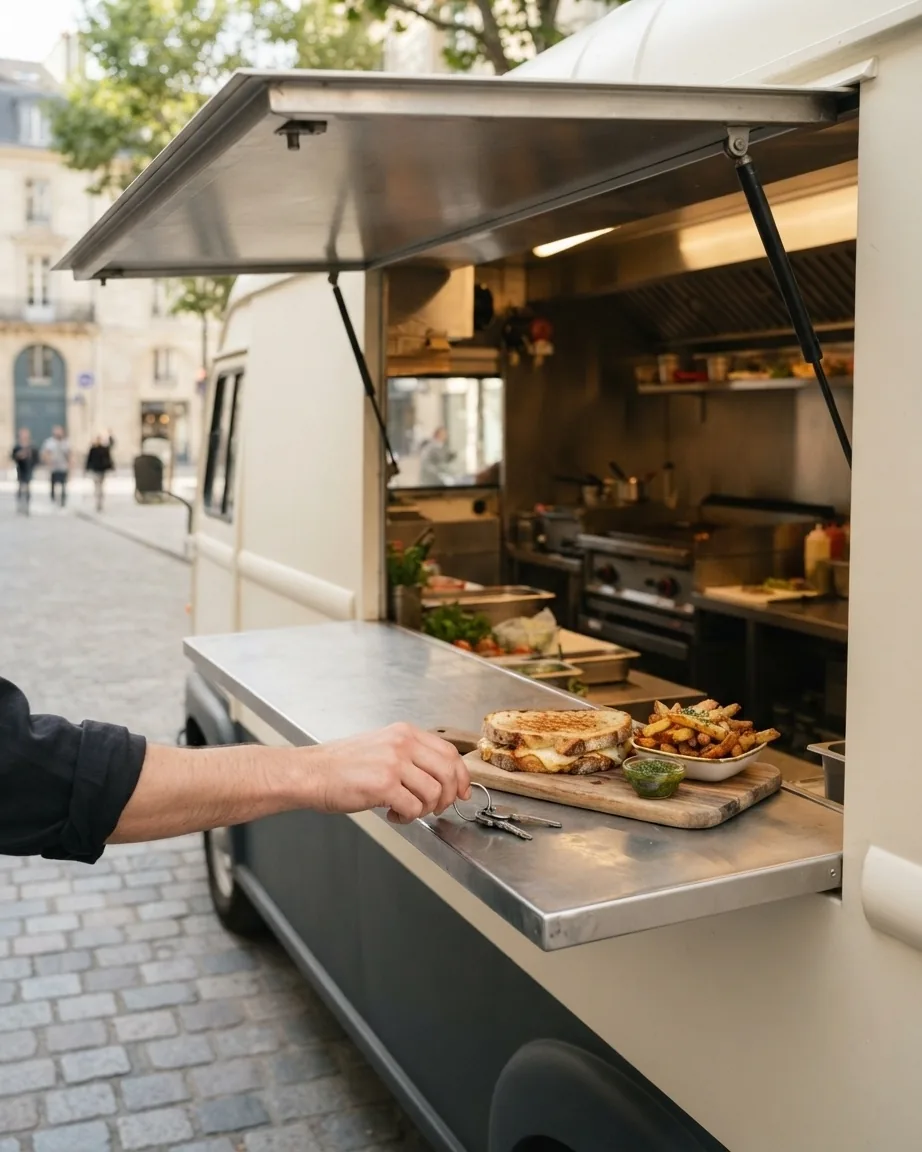
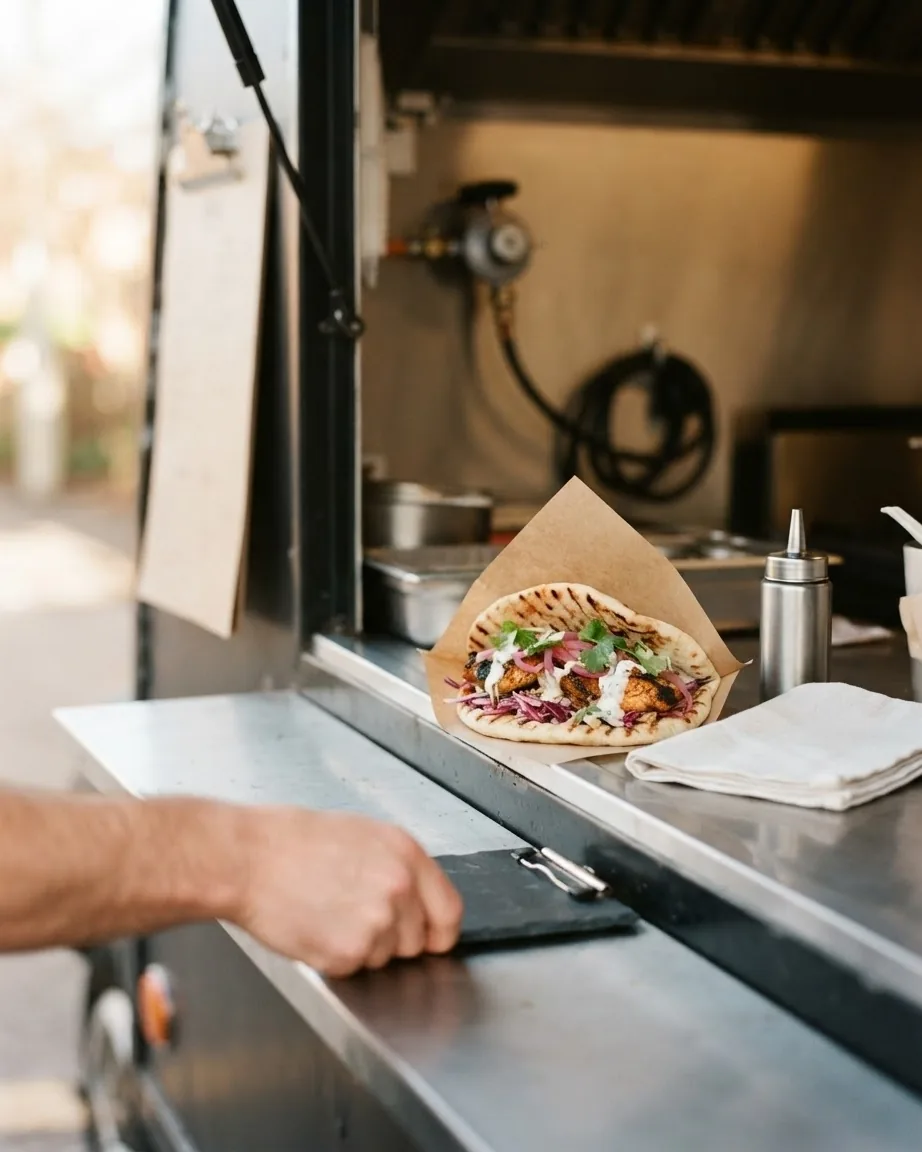
The standard structure on the Best Food Trucks platform is a deposit of 25 to 50 percent upfront, with the balance due before or at the event, and that deposit is typically non-refundable on a late cancellation. Peak dates (holidays and summer Saturdays) book out and price higher, and permit lead times stack on top of booking lead times, so a tight date needs both locked early.
What the truck won’t provide, and the setup your venue needs
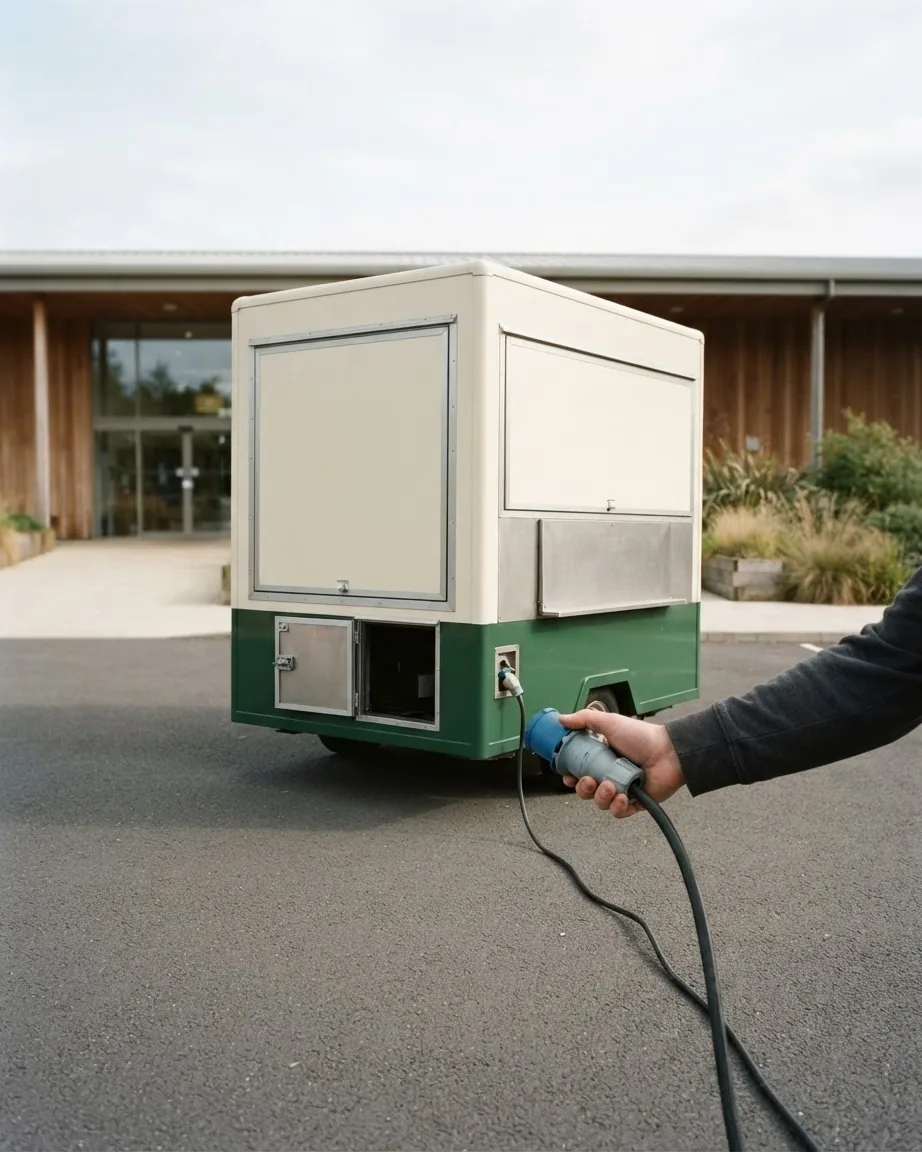
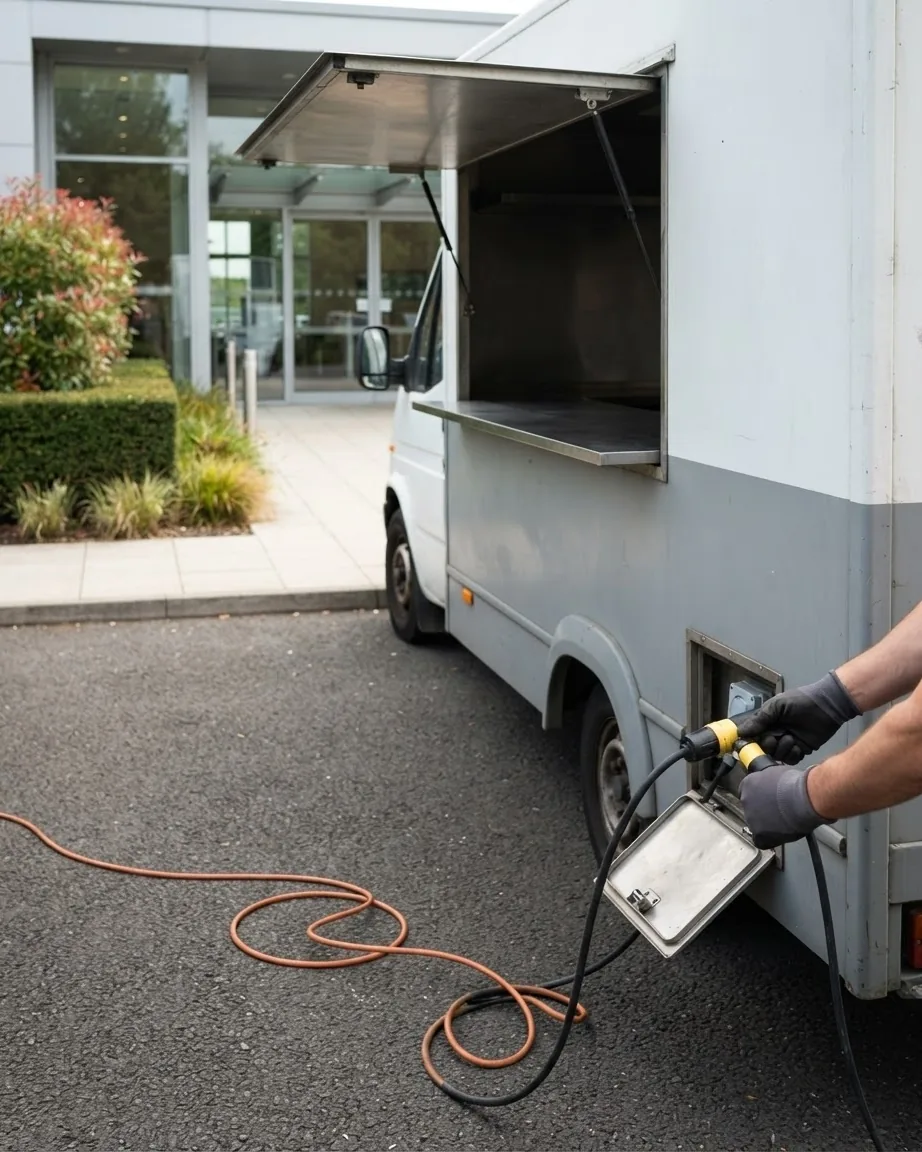
Hiring the truck covers the food and the window, not the room. The truck does not supply floor servers, bussing, tables, linens, cleanup, or alcohol: those are the host’s job or the venue’s. On the physical side, trucks need level parking within 100 feet of the reception area, access to power, and proper permits; some venues add food-truck fees around $200 to $500 or require specific insurance.
- Servers, bussing, tables, linens, cleanup, alcohol: all outside the quote.
- Level parking within 100 feet of where guests eat.
- Power access, confirmed with the truck before the date.
Insurance and permits: the steps that quietly kill a booking
An already-licensed truck is not automatically cleared for your specific event, and this is where late bookings fall apart. Most venues require the truck to carry $1 million in general liability, and many require the venue named as additional insured: get that in writing before you sign anything.
Permit lead times are set locally and do not transfer between jurisdictions. The County of San Diego Department of Environmental Health and Quality states that temporary food facility “Applications must be submitted at least 30 days prior to the event start date”, with late fees under 14 days. The Virginia Department of Health requires a $40 permit fee and limits a temporary establishment to “operates for a period of no more than 14 consecutive days in conjunction with a single event”; Loudoun County’s packet confirms the application is due no less than 10 days ahead with the $40 fee.
Albuquerque’s small-event exemption
The City of Albuquerque Environmental Health Department exempts a private invitation-only event where “the number of participants is limited to twenty-five (25) persons or less”. For events that do need a permit there, applications should go in at least 5 days ahead, permits are valid 14 days for one location, and incomplete applications can be voided after 30 days. These rules come from your own city and county: confirm yours before you book.
Permit lead times by jurisdiction
This comparison pulls three regulators’ deadlines into one view so you can see how far apart they sit. A reader in one city cannot infer another city’s rule from it: that is the point.
| Jurisdiction | Lead time / rule | Fee or note |
|---|---|---|
| San Diego County | At least 30 days before event | Late fee under 14 days |
| Virginia (via Loudoun) | No less than 10 days before | $40 permit fee; 14-day max |
| Albuquerque | At least 5 days; ≤25 guests exempt if private | Permit valid 14 days |
Gratuity, tax, and the all-in total that beats the teaser
The quote almost never includes gratuity or sales tax. Gratuity is typically 15 to 20 percent, charged on top of the food figure, and service time blocks, staffing, and permit fees add another $300 to $1,000. Stack those onto the per-head rate and the real number lands well above the advertised line. For the wider picture of event bookings and vendor terms, see our catering section and the deeper breakdown in Food Truck Events.
Frequently asked questions about hiring a food truck
How much to hire a food truck
Budget two layers. The food line runs $10 to $25 per head on general-market platforms, and confirmed bookings average $28.88 once full service is folded in. On top sit the minimum spend, $300 to $1,000 in fees, gratuity, and tax. Drop-off averages $1,108; full-service averages $2,584.
How much does it cost to hire a food truck
By event type the numbers shift: birthday parties average the highest at $38 per person. A small event under 75 guests carries a minimum of roughly $800 to $1,200, so even a short guest list rarely drops below that floor once staffing and travel are counted in.
How to hire a food truck for an event
Line up your date, headcount, and venue, then request quotes: marketplaces return proposals within 24 to 48 hours. Lock insurance of $1 million in general liability if the venue demands it, file the local permit on time, and pay a deposit of 25 to 50 percent to hold the date.
How to hire a food truck
Confirm parking within 100 feet of power and a window long enough for your crowd: one truck handles 50 to 65 plates per hour, so plan about 90 minutes for 100 guests. Above 250 to 300 guests, book a second truck rather than stretching the window to 3 or 4 hours.