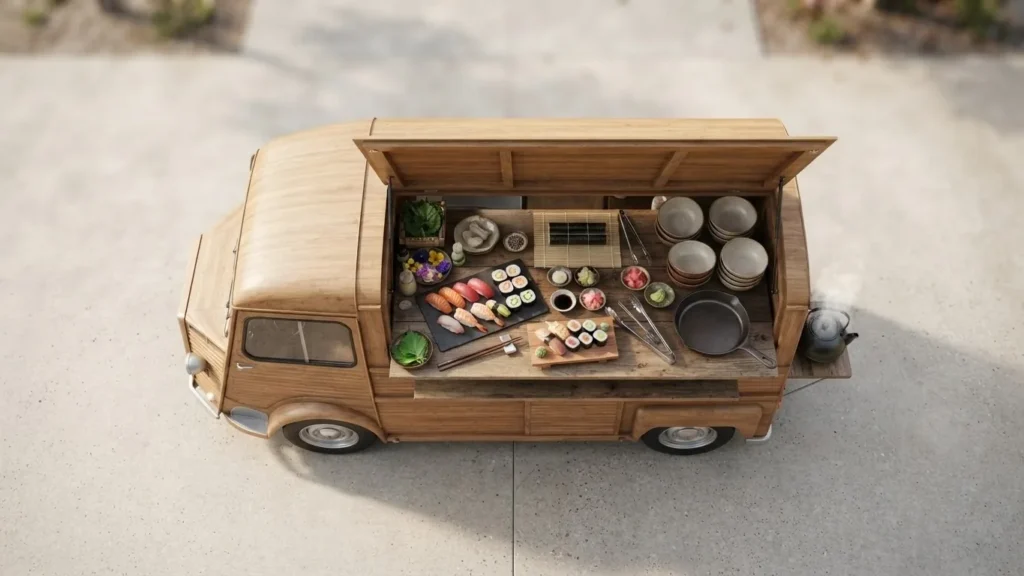
If you want raw fish on a Japanese food truck, the sushi cold chain and record-keeping decide feasibility before equipment does: hold sushi at 41°F or below through transport and display, keep acidified rice no longer than 8 hours, and keep your seafood tags for 90 days. Most first-timers skip raw fish entirely and build the window around takoyaki instead, because it eats one-handed at a crowded curb.
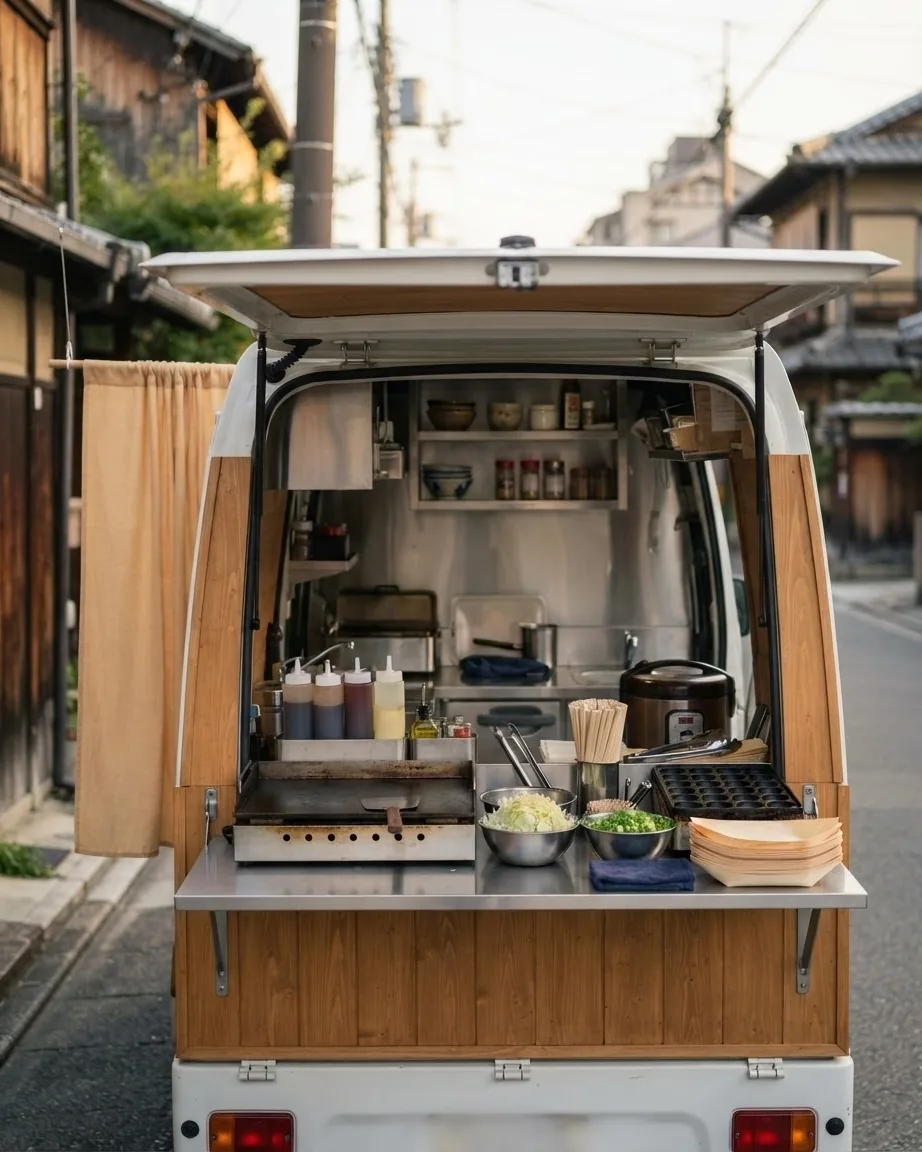
A workable Japanese truck sells fast, hand-held items and treats raw fish as a separate, heavily regulated track. Takoyaki, wheat-flour batter balls filled with chopped octopus, tempura scraps, pickled ginger and green onion: is the classic to-go choice; okonomiyaki, ramen and gyoza are harder to eat walking. A real anime-themed Los Angeles truck leans on Chicken Nanban, Cheese Mochi and classic Japanese curry rather than sushi. If you do serve raw fish, the fish must be frozen for parasite destruction, rice must sit at pH 4.6 or lower, and cold holding sits at 41°F. Budget $50,000 to $100,000 for a fully equipped truck.
The numbers that scope a Japanese food truck before you commit
The table lines up the cost, time and temperature figures each source states, so you can see where the raw-fish track adds obligations a hot-only menu never carries.
| Item | Figure | Who states it |
|---|---|---|
| Fully equipped truck | $50,000, $100,000 | The Restaurant Store |
| Equipment alone | $15,000, $30,000 | The Restaurant Store |
| Fully equipped trailer (plus tow vehicle) | $15,000, $100,000 | Best Food Trucks |
| Mobile permit fee | $150, $400/yr | Champaign-Urbana Public Health District |
| Cold hold / hot hold | 41°F / 135°F | Champaign-Urbana Public Health District |
| Sushi cold chain | 41°F or below | Manitoba Health |
| Acidified rice limit | pH 4.6, max 8 h | Manitoba Health |
| Seafood tag retention | 90 days | Manitoba Health |
| Monthly revenue (all concepts) | $20,000, $50,000; top $100,000+ | The Restaurant Store |
Which Japanese dishes survive a two-hour window
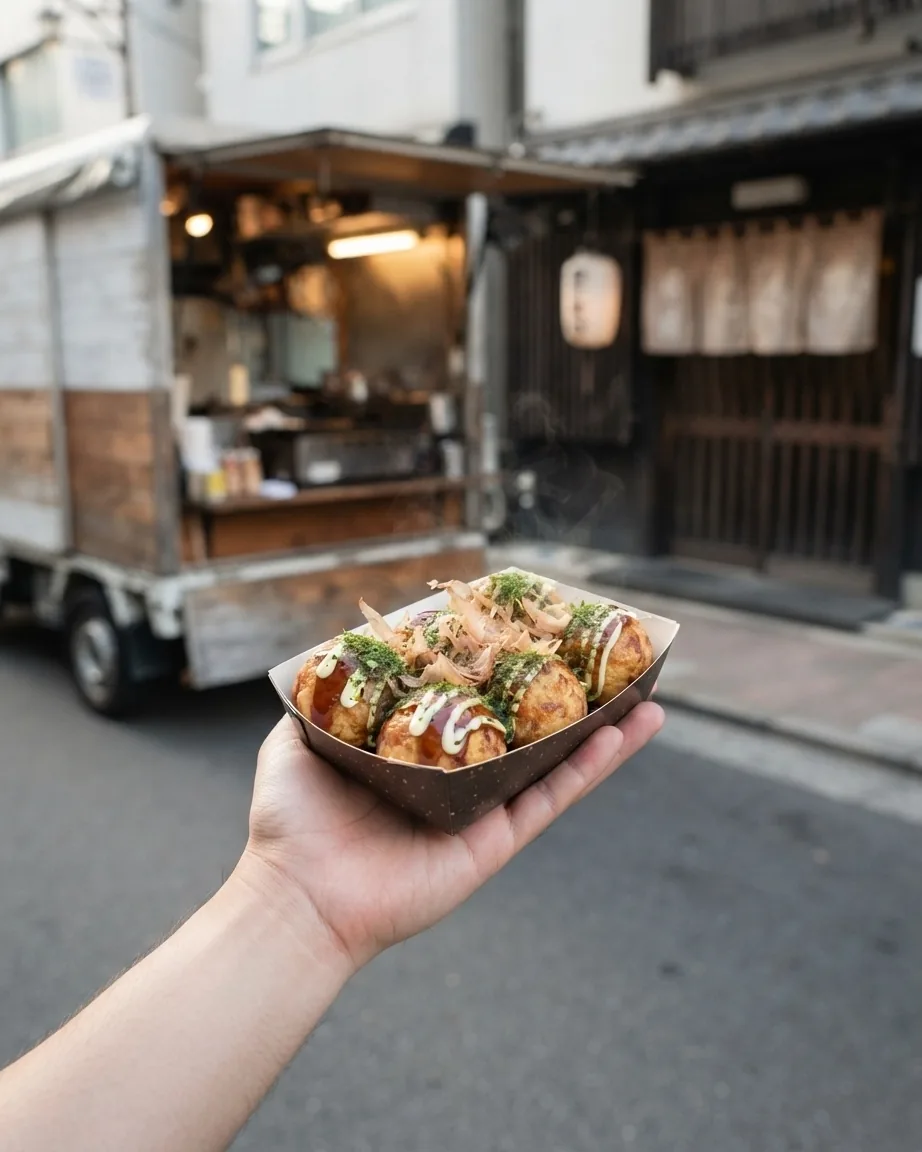
A lunch service runs about two hours, and a strong one moves 70 to 120 customers, so every item has to assemble in seconds and travel in a hand. Will Fly for Food argues “only takoyaki should be considered true Japanese street food” because it eats cleanly outside a restaurant, placing ramen, okonomiyaki and gyoza outside that category. That is a cultural judgment, not a ban (Golden State Trailers actively builds okonomiyaki trailers), but the throughput math favors items that need no bowl and no seat.
- Travels well: takoyaki, Japanese curry over rice, Chicken Nanban, Cheese Mochi; the LA operator Okamoto Kitchen aims to “introduce people to authentic, lesser known Japanese dishes such as Chicken Nanban, Cheese Mochi and Classic Style Japanese Curry.”
- Slows the line: ramen (hot broth, utensils, seating), okonomiyaki (griddle time, plate-and-fork), gyoza (pan batches).
- Raw-fish track: sushi burritos, poke bowls and temaki, which Sushi Robots lists as the mobile sushi formats worth building a menu around.
See also: our one-burger-a-night format guide.
The raw-fish rule set that decides whether sushi is worth it
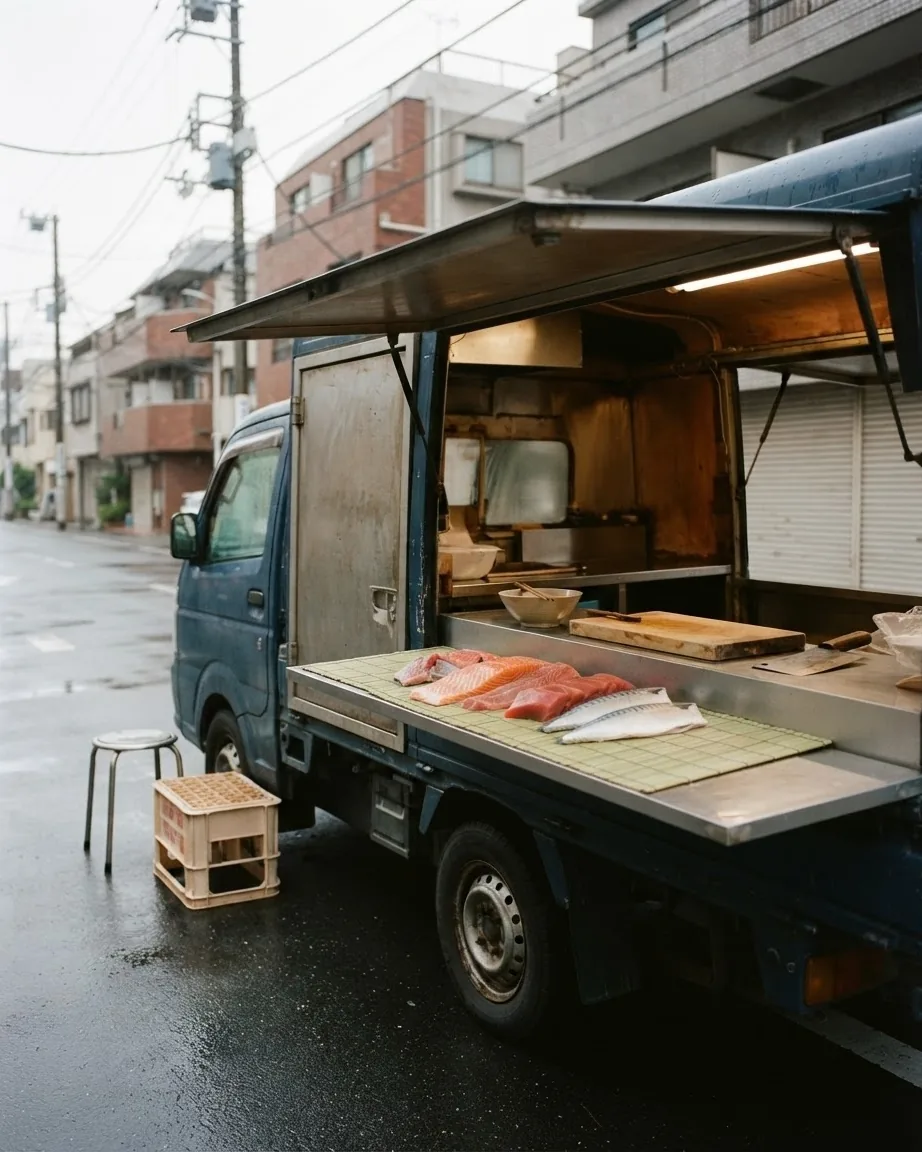
Raw fish turns a food permit into a layered compliance job. Under Manitoba’s Public Health Act, operators “must obtain a permit to operate an establishment that handles and prepares sushi,” on top of the standard mobile permit. The cold chain holds at 41°F end to end, and acidified rice at pH 4.6 or less can be stored up to 8 hours before the day’s remainder is discarded.
The freezing spec for parasite destruction appears in two forms in the same Manitoba guideline, and both matter because they describe different procedures. Fish must be “frozen at a temperature of -20°C (-4°F) for 7 days or below -35°C (-31°F) for 15 hours,” or, per a second passage, held by “freezing at -35°C (-31°F) or below until solid and storing at -20°C (-4°F) or below for 24 hours.” Treat whichever your supplier documents as the one you must prove.
Keep seafood tags a minimum of 90 days: the same source calls it imperative to retain seafood tags for 90 days. One note before equipment: with the exception of bamboo mats, wooden utensils must not be used for sushi prep.
Permits, commissary and the waste-water tank that catch first-timers
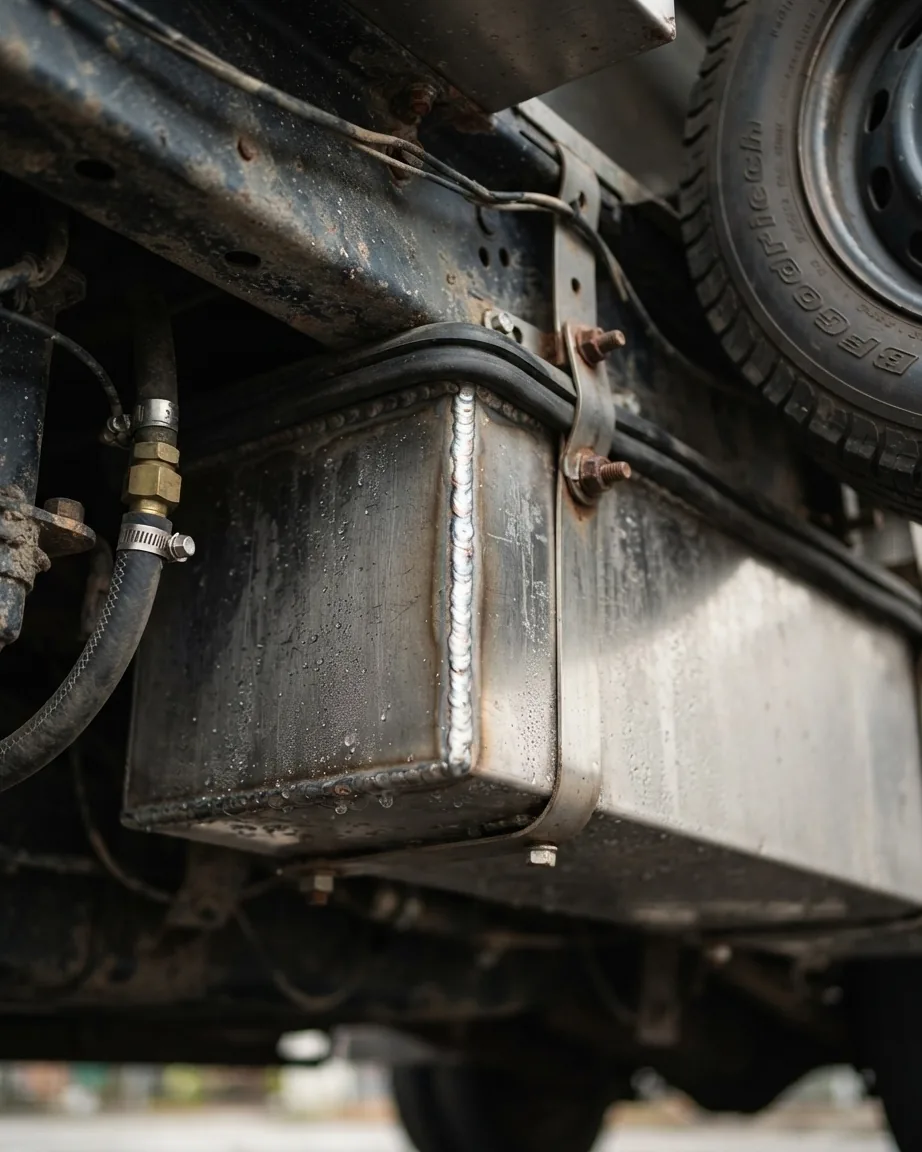
A health permit is required for any mobile unit serving potentially hazardous foods, and home preparation is not allowed: you prep at a commissary, not your kitchen. The Champaign-Urbana Public Health District sets its mobile fee at $150 to $400 a year by risk category and spells out the waste-water rule most builders underestimate: liquid waste “shall be stored in a permanently installed retention tank that is of at least 50 percent larger capacity than the water supply tank”. Size that wrong and the unit fails inspection. The binding version of every figure here is your own city and county’s: these are illustrative frameworks, not your jurisdiction’s code.
Holding temperatures and the clock that runs against you
On the line, cold foods stay at 41°F or less and hot foods at 135°F or above. The reason is bacterial growth, not paperwork: the USDA Food Safety and Inspection Service states bacteria “grow most rapidly in the range of temperatures between 40 °F and 140 °F, doubling in number in as little as 20 minutes”.
FSIS also sets the time limit for unrefrigerated food: never over 2 hours, and over 90°F ambient (a summer curb in direct sun) no more than 1 hour. That one-hour window is why a raw-fish display on a hot day is a professional call: if you cannot guarantee the cold chain, drop the item and sell the hot menu.
Truck, trailer, or the purpose-built okonomiyaki option
A fully equipped truck runs $50,000 to $100,000, with equipment alone at $15,000 to $30,000. A fully equipped trailer spans $15,000 to $100,000 but needs a tow vehicle on top. Financing a truck means a 20 to 30 percent down payment; renting means 3 to 6 months of rent banked. Generators need service every 500 hours.
Golden State Trailers builds okonomiyaki trailers from 16 to 30 feet, sized to the griddle-heavy menu: a concept-specific build worth pricing against a used truck. See also: our what it costs to hire a food truck guide, and the wider cuisine section for concept comparisons.
Does Japan have food trucks, and other questions operators ask
Does Japan have food trucks?
Yes, Japanese street vending centers on hand-held items, and takoyaki is the dish that defines the format because it is “made from wheat flour batter filled with chopped octopus, scraps of tempura, pickled ginger, and green onion” and eats cleanly on the move. That portability is exactly why it outperforms griddle or broth dishes across a 70-to-120-customer lunch run of roughly two hours at a Western window.