Here is the fact that ends most arguments at the window: the plate you grew up ordering in New York did not exist in its current cart form until 1990, per the oral history Grub Street ran in 2017. That means the “classic” everyone chases is younger than a lot of the people chasing it, which is exactly why no two cooks build it the same way.
If you want to pull off a tasty halal food truck chicken and rice at home or off a line, the first thing to accept is that there is no single formula to copy. Three tested recipes split on the white sauce, split again on the spice rub, and agree on almost nothing except where the thermometer has to land.
That disagreement is the useful part. Once you see where the recipes diverge, you can pick the version that fits your line instead of guessing.
Which halal food truck recipe to build: the quick answer
There is no canonical halal food truck chicken and rice. Serious Eats builds the white sauce on mayonnaise and Greek yogurt and rubs the chicken with lemon juice, oregano, and coriander. Moribyan adds toum and sour cream to mayonnaise and seasons shawarma-style with allspice. Hungry Paprikas rubs coriander, paprika, cumin, and onion powder. Thighs beat breast because they resist drying out. Marinate from 1 hour up to a hard 4-hour cap for the Serious Eats version. Cook every piece of poultry to 165F in the thickest part. That single number is not up for debate.
The white sauce: mayo-yogurt vs. mayo-toum, and where the names came from
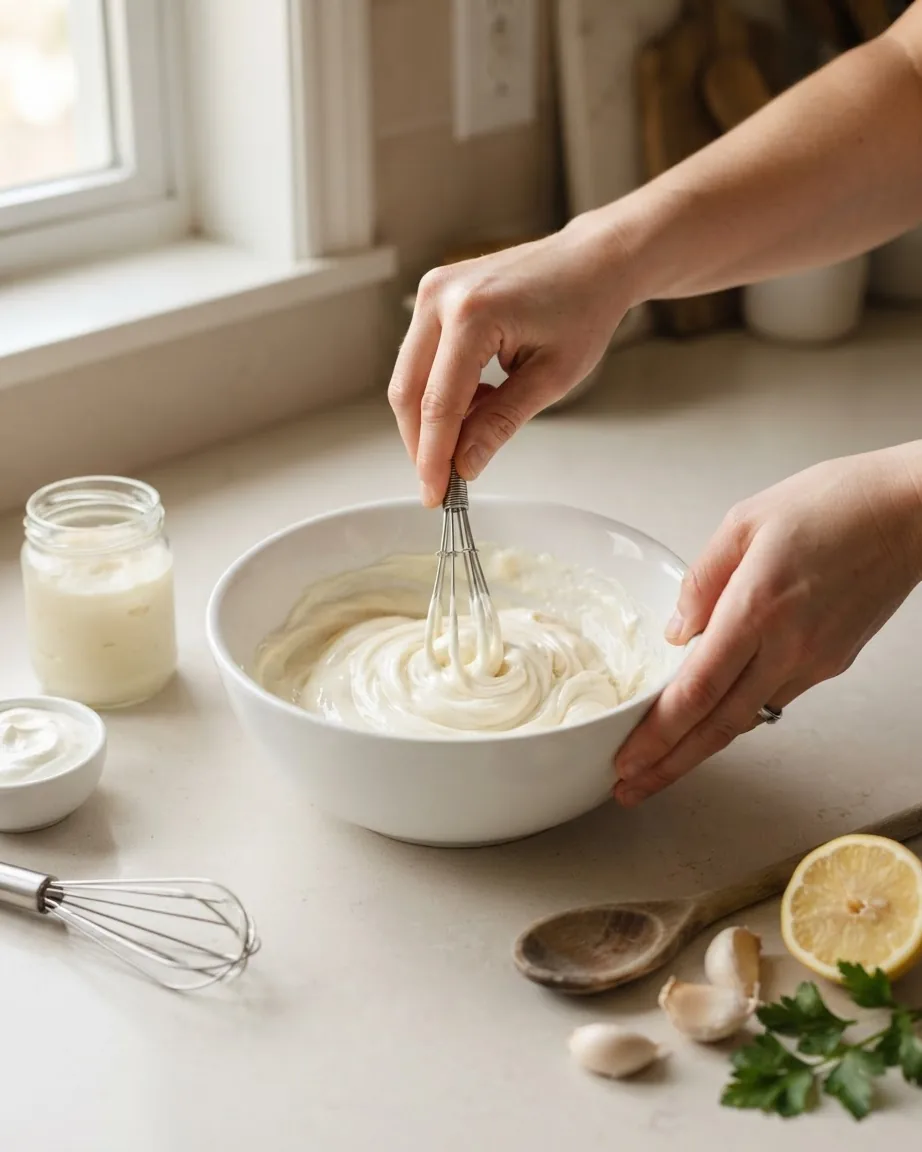
If a tasty halal food truck plate lives or dies on one thing, it is the pale sauce ladled over everything. The recipes do not agree on what goes in it.
One version keeps it lean: equal parts mayonnaise and Greek yogurt as the base. Another goes richer and more garlic-forward, folding toum (a whipped garlic spread) and sour cream into mayonnaise, with the toum doing the heavy lifting on flavor. A read of the back of a Halal Guys packet judged it to be mayonnaise, black pepper, and some other spices – mayo-based, not yogurt-based.
That matters for the naming confusion. People sometimes call the pale sauce tzatziki, but tzatziki is made with yogurt, cucumbers, dill, and garlic, while most halal carts use mayonnaise. The cart vocabulary flattened all of it into “white sauce” and “red sauce.” That tzatziki-to-white-sauce lineage is framed as a theory, not settled history, so treat the ancestry as a story worth telling, not a fact to assert.
For your line, the split is practical: the yogurt-and-mayo base tastes brighter and thinner; the toum-and-sour-cream base is heavier, holds on the plate longer, and reads as more garlicky. If you run a window where sauce sits in a squeeze bottle for a service, the richer base coats better. One recipe flagged that a store white-sauce packet carried 330 calories for the sauce alone – one reason making your own lets you control what goes on every plate.
Three spice blends: lemon-oregano, dry four-spice, or shawarma allspice
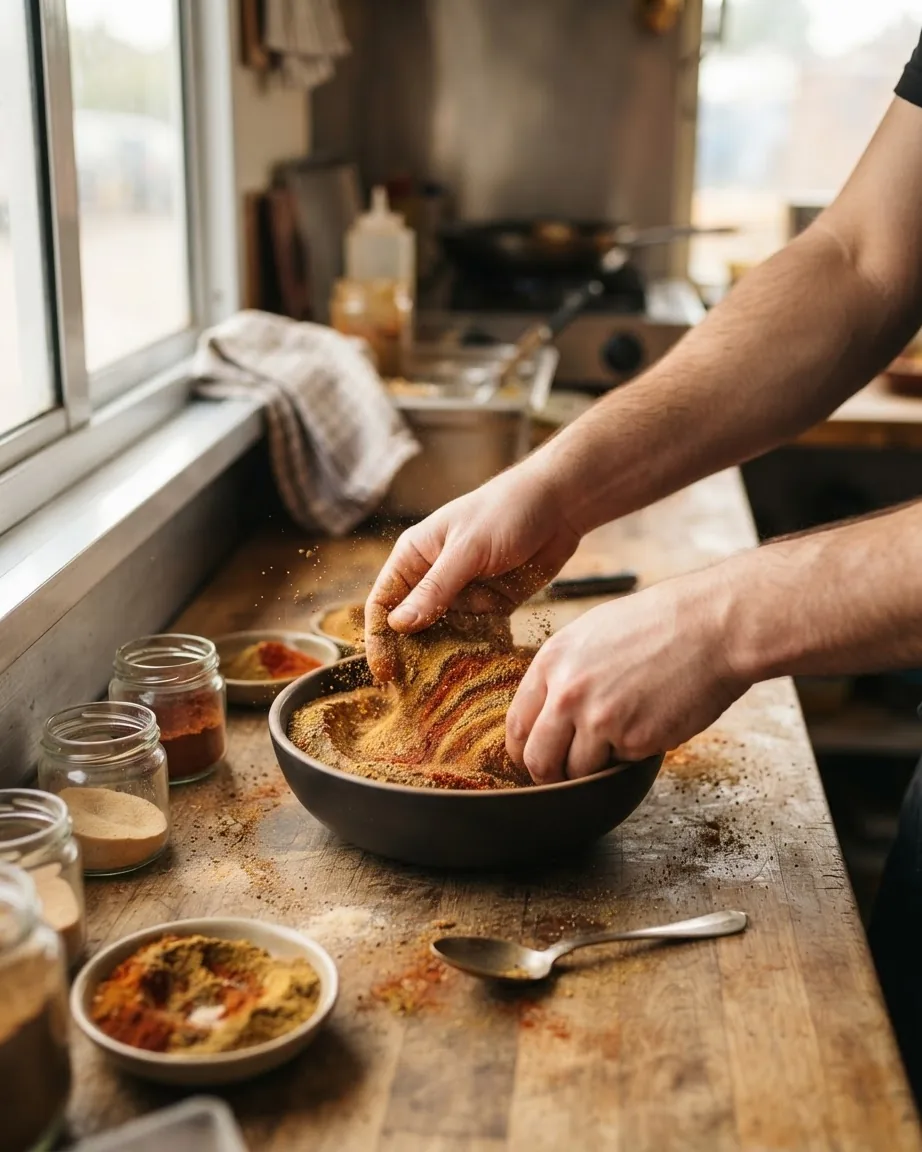
The rub is the second place these recipes part ways, and the three roads taste genuinely different.
- Lemon-forward and herby (Serious Eats): a marinade of lemon juice, oregano, and coriander. The acid is doing double duty – flavor plus tenderizing – which is also why it has a time limit (more on that below).
- Dry four-spice (Hungry Paprikas): 2 teaspoons ground coriander, 2 teaspoons paprika, 1 teaspoon ground cumin, and 2 teaspoons onion powder. This is the most “cart yellow” of the three and the easiest to batch because it is a dry blend you can premix.
- Shawarma-style (Moribyan): built on 2 tablespoons allspice, pushing the plate toward the warm, sweet-spice shawarma profile rather than the lemon-herb one.
Pick by the flavor you are selling, not by which is “right.” The lemon-oregano version reads Mediterranean-bright; the allspice version reads Levantine-warm; the dry four-spice version is the most neutral crowd-pleaser and the friendliest to prep ahead.
The 4-hour marinate cap that wrecks texture
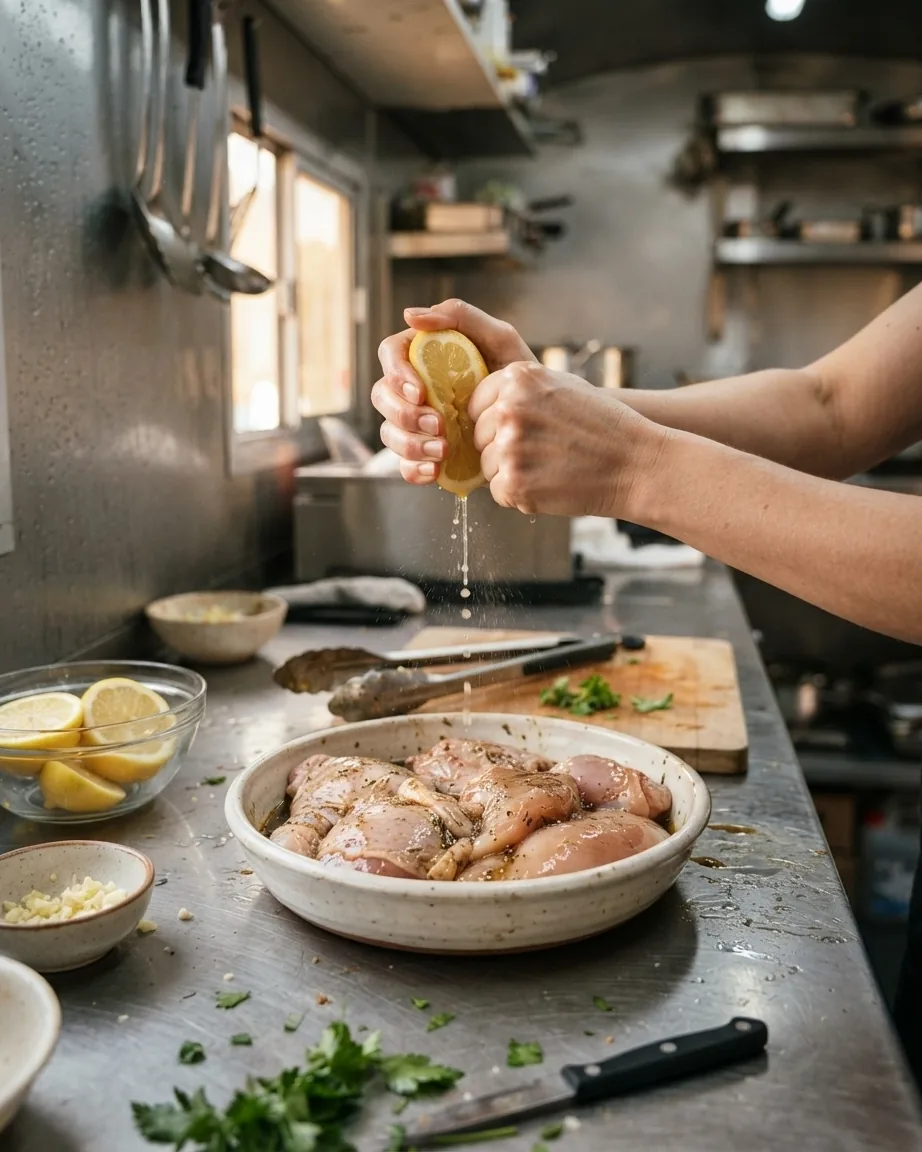
This is the make-or-break step most home cooks get wrong, and the two recipes genuinely disagree, so here is the real picture.
The lemon-marinade version calls for at least 1 hour and up to 4 hours in the refrigerator, with a direct warning not to go past 4 hours or the texture turns mushy. That cap exists because the marinade carries lemon juice – acid breaks down the surface proteins, and past a point it keeps going until the meat goes soft and pasty. The acid is the reason for both the flavor and the ceiling.
The dry-rub recipe, running a different blend, suggests at least 4 hours or overnight, and adds that if you are short on time, 30 minutes will do as a floor.
These are not contradictory – they are two different marinades. The rule is simple: if your blend has a strong acid like lemon juice, respect the 4-hour cap. If your blend is mostly dry spices, overnight is fine. Match the marinate window to the acid, not to a number you read somewhere.
Thighs or breast, and the internal temperature that is not negotiable
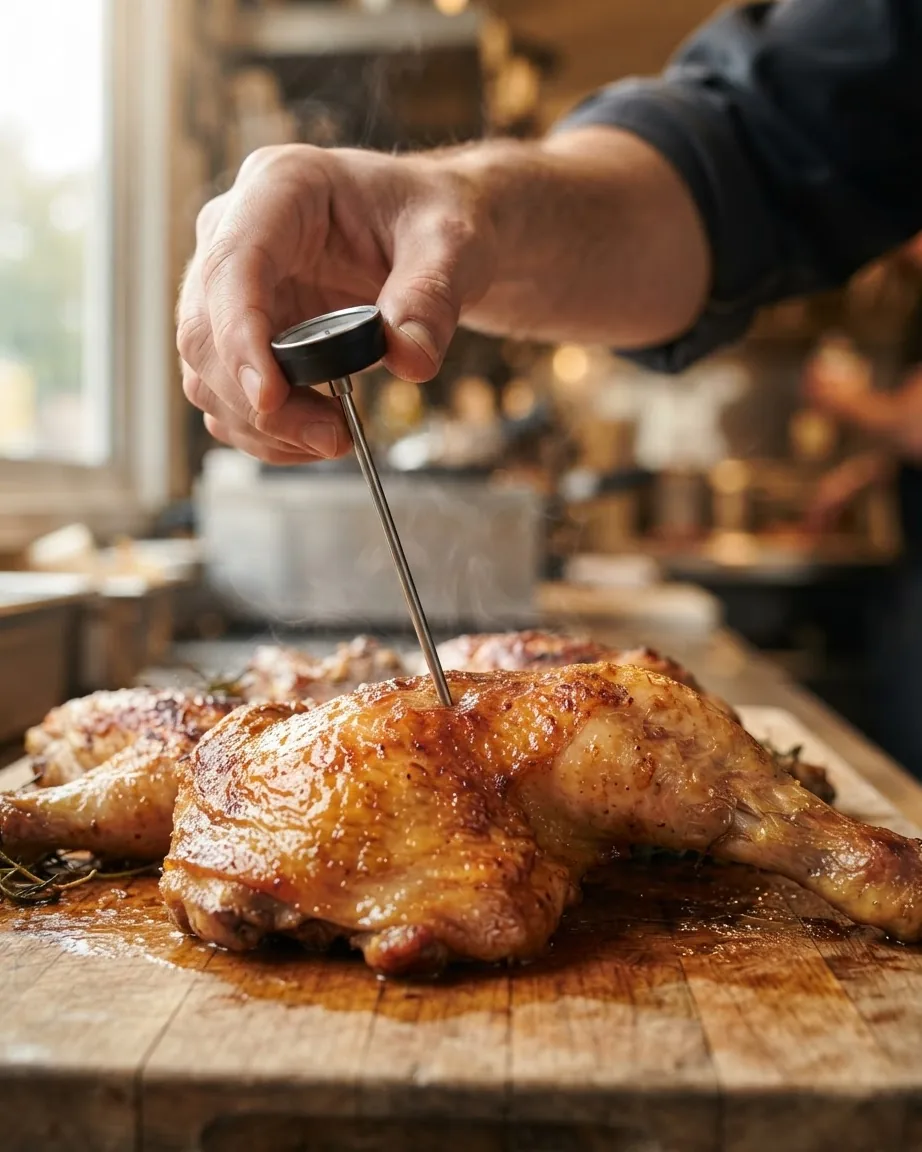
The tested recipes reach for chicken thighs on purpose: they are less prone to drying out than breast, which gives you tender, juicy meat even if the pan runs a minute long. On a truck line, that forgiveness is worth money – breast punishes you the moment the ticket backs up.
On the cook, the recipes and the government agree, which is rare. One method browns the chicken without disturbing it until lightly browned on the first side, about 4 minutes, then cooks until the center of each thigh registers 165F on an instant-read thermometer. Another browns on each side until a crust develops, about 4 minutes on each side.
The number itself is set by food safety, not by taste. FoodSafety.gov lists 165F (74C) as the safe minimum internal temperature for all poultry – whole bird, breasts, legs, thighs, wings, and ground poultry alike. That is the floor, and it happens to match the tested-recipe target exactly, so there is no trade-off to manage here: cook to 165F, verified with a thermometer in the thickest part, every time. Color and firmness are not reliable; the probe is. Keep in mind these temperatures are enforced locally by your health department, and hitting a number on a chart is not the same as a food-safety guarantee – it is the minimum you cannot go under.
If you ever swap the protein to a beef or lamb steak or chop, the floor changes: the safe minimum drops to 145F (63C) with a 3-minute rest for beef, lamb, and goat steaks, roasts, and chops. Different animal, different number – do not carry the poultry rule across.
The yellow rice: wash, toast, and the 20-minute lid rule
The turmeric rice is where the plate gets its color and where a rushed step turns the whole thing gluey.
One approach toasts the rice in butter with turmeric and cumin first – the spices go in and cook until fragrant but not browned, about 1 minute, then the rice goes in to coat before any broth. Toasting in fat coats each grain so it stays separate instead of clumping, and it blooms the turmeric so the color and flavor carry. Another builds the pot with turmeric, salt, cinnamon stick, and cardamom pods, then – once it is simmering – covers it with a tight-fitting lid and cooks 20 minutes undisturbed. “Undisturbed” is the operative word: lifting the lid drops the steam that is actually cooking the top layer.
A third handles the grain before it ever hits heat: wash the rice for 2 minutes with warm water or until the water runs clear, with an option to soak it in water for 30 minutes and then drain. Washing strips surface starch so the finished rice is fluffy rather than sticky – the single step that separates cart-style rice from the gummy version. On a truck, washing in 2 minutes is faster than a 30-minute soak, but the soak buys you a little more insurance against clumping if your rice tends to stick.
“Halal” vs. “zabiha”: the word on your sign actually means something
Customers ask, and most recipe pages never define it, so here is the distinction that belongs on your menu knowledge, not just your board. Per the American Halal Institute, zabiha refers to meat from an animal slaughtered by a sane Muslim adult across the throat without the animal feeling pain, while halal is the broader term for anything permitted under Islamic law.
Practically: all zabiha meat is halal, but “halal” on a sign is a wider claim than “zabiha.” If you source zabiha, say so – it is a more specific promise, and the customers who care about it know the difference. Do not use the words interchangeably on signage you cannot back up.
How the plate became a cart staple: the 1990 origin
Context the recipe pages skip, and it helps you sell the plate honestly. That oral history calls the dish as central to New York’s food scene as hot dogs or pretzels, even though it did not exist in its current cart form until 1990. The demand curve those vendors describe is stark: one vendor said halal meat accounted for about 5 percent of his business at the start, and now halal meats are 80 percent of his sales. The same vendor said he had been in the country 46 years, with a first job in a meat market.
That shift from 5 percent to 80 percent is the whole business case in two numbers: a niche order became the default order inside one career. If you are opening a halal concept today, you are not betting on a trend – you are entering a lane that already pulled that far.
Protein swaps and the rest of the plate
The chicken is the anchor, but the format bends. You can tweak the dish to run gyro or steak shawarma instead of chicken – same rice, same sauces, different protein, which is a clean way to add a second menu line without a second prep system. If you go to a beef or lamb steak, remember the temperature floor drops to 145F with a 3-minute rest, not the poultry 165F.
Do not forget the salad. The cart version is raw chopped vegetables dressed simply with olive oil and lemon juice – the acid on the salad echoes the lemon in the marinade and cuts the richness of the white sauce. It is the cheapest component on the plate and the one that makes the whole box taste balanced.
If you are costing out a full concept rather than a single plate, our halal truck food guide runs the sourcing and scaling side, and the broader cuisine section covers neighboring concepts. For a different protein build, see also our burger truck guide.
What one homemade serving actually carries
Numbers you can trust, with the limits stated plainly. One recipe publishes full nutrition: one serving runs 663 calories and 1623 mg of sodium.
Two cautions on those figures. First, the 663-calorie serving and the 330-calorie store packet are not comparable – one is a full homemade plate, the other is a sauce packet label read off the back. Do not stack them against each other. Second, the 1623 mg sodium figure is a single serving on its own; without a sourced daily reference value, resist the urge to turn it into a percentage. It is a real number that tells you this is a salty plate by design – useful to know before you reach for the salt shaker at the end.
What a full batch of the dry-rub recipe really totals (6 servings)
The Hungry Paprikas recipe is quoted at 663 kcal and 1623 mg of sodium per serving, and it yields 6 servings.
- Full recipe calories: 663 kcal x 6 servings = 3,978 kcal.
- Full recipe sodium: 1,623 mg x 6 servings = 9,738 mg.
- Sodium density: 1,623 mg / 663 kcal = about 2.45 mg of sodium per calorie.
Frequently asked questions
Can I prep the marinated chicken the night before a shift?
It depends on your blend. A lemon-heavy marinade should not sit past that 4-hour ceiling, so overnight prep will leave it pasty. A dry-spice rub without strong acid handles an overnight rest fine – that is the Hungry Paprikas approach. If you want to batch ahead, build a low-acid rub and add any lemon at cook time instead.
Why does my rice come out gummy even when I follow the times?
Usually it is unwashed grain. Surface starch is what glues the rice together, so skipping the rinse undoes a perfect simmer. Rinse until the water runs clear, or soak and drain first. The other culprit is peeking – every lid lift vents the steam cooking the top layer, which is why the instruction is to leave it alone.
Is there a faster way to hit a juicy result on a busy line?
Run thighs, not breast. The forgiveness is the point: thighs can sit an extra minute past 165F without going dry, so a backed-up ticket does not cost you the plate. Breast crosses from done to chalky in seconds. Thighs also brown better in the roughly 4 minutes the recipes give the first side.
Do I have to make my own white sauce?
No, but making it lets you control the plate. A read of a store packet by one cook put it at 330 calories for sauce alone, with a long ingredient list. A homemade base – mayo and yogurt, or mayo with toum and sour cream – is a handful of ingredients you can adjust for thickness and garlic to match how long it has to hold in a squeeze bottle. Food-safety temperatures and rules are enforced by your own city and county health department; the figures here come from published recipes and FoodSafety.gov and are not a substitute for your local code.