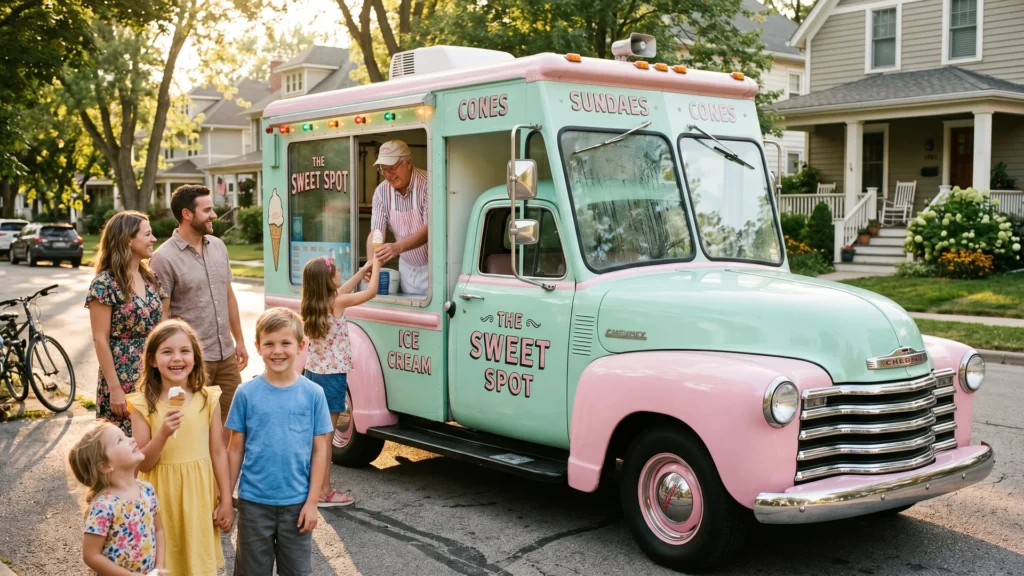
Everyone has a memory of an ice cream truck, the tinny jingle drifting down the block, the scramble for change, the menu sticker peeling on the side window. What almost nobody has is a clear picture of the business behind it. An ice cream truck is not a childhood memory, it is a seasonal small business with thin licensing, a sharp choice between two models, and a revenue window that closes when the weather turns. I have spent enough summers around frozen-dessert vending to tell you how it actually works, what it costs, and where the money and the headaches really are.
I will keep the numbers honest. The figures here are typical market ranges drawn from what operators commonly report, not quotes or promises. Your truck, your city, your menu, and your route will move every one of them. Treat this as a working map of the business, not a guarantee of what you will spend or make.
What an ice cream truck really is
Strip away the nostalgia and an ice cream truck is a vehicle, a freezer or a frozen-dessert machine, and a service window, governed by the same kinds of rules as any mobile food operation plus a few that are specific to frozen product. It rolls a slow route or parks at events, sells a small menu fast, and lives or dies on two things most people never think about: keeping product at temperature and squeezing a full season out of a short calendar.
The single most important decision you will make is which of two businesses you are actually running, because they look identical from the curb and behave completely differently behind the window. One sells pre-packaged novelties out of a freezer. The other makes soft serve to order. That one choice drives your startup cost, your licensing burden, your staffing, and your margins. Get it right before you buy anything.
The two ice cream truck business models
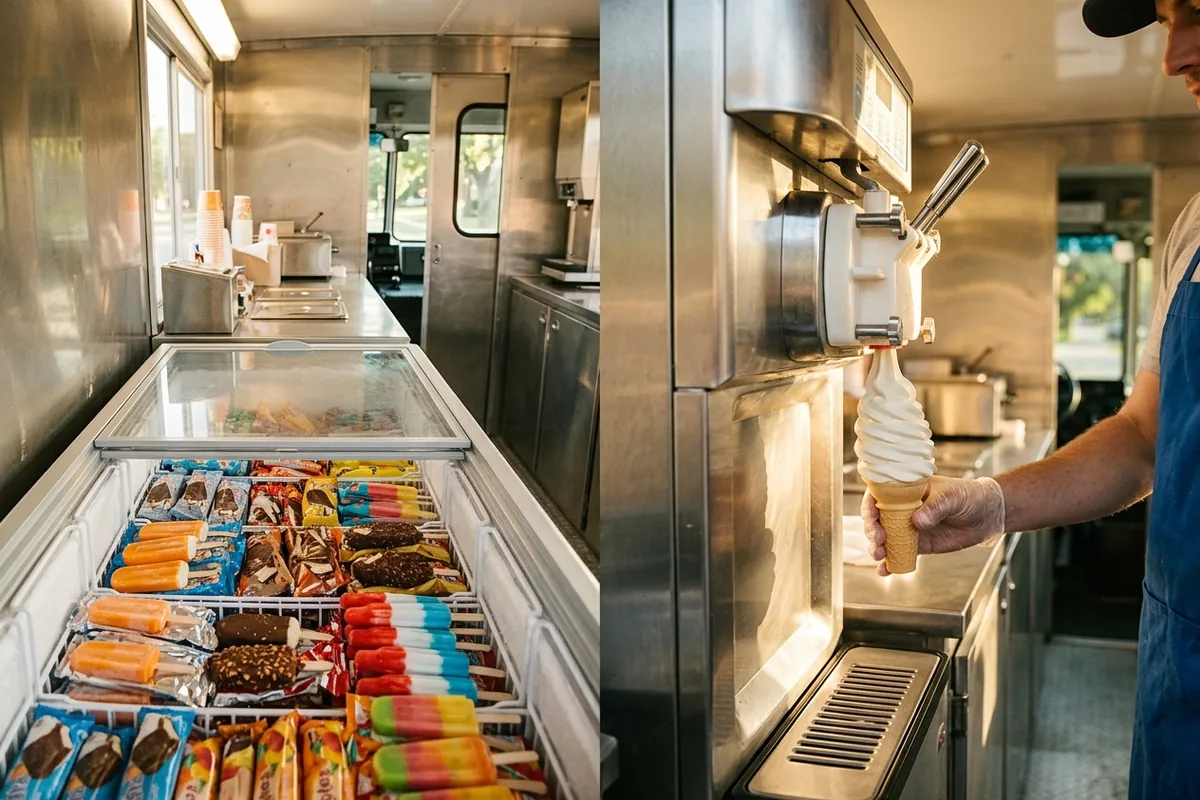
The novelty model is the simpler path. You stock pre-packaged, pre-made frozen treats, the wrapped bars, cones, and character pops everyone recognizes, and sell them out of chest or display freezers. Because the product is sealed and made elsewhere, the food-handling rules are lighter, the equipment is cheap, and the operation is easy to learn. A reliable freezer setup can run a few hundred to fifteen hundred dollars. The trade-off is margin: you are reselling someone else’s product, so the markup per unit is modest.
The soft-serve model flips that equation. You build a real frozen-dessert kitchen on wheels around a soft-serve machine, which is the cost anchor of the whole operation, commonly fifteen hundred dollars used to eight or even eighteen thousand new. You also need a steady mix supply, more cleaning, often more staff, and usually a more built-out truck. In exchange, the margins are excellent, with soft serve gross margins frequently cited in the seventy percent and up range because the ingredient cost per cone is low and the markup is high.
| Factor | Novelty / freezer truck | Soft-serve build |
|---|---|---|
| Key equipment | Chest / display freezers ($200 – $1,500) | Soft-serve machine ($1,500 – $18,000) |
| Licensing burden | Lighter, sealed product | Heavier, often a separate machine permit |
| Margin per item | Modest resale markup | High, often 70%+ gross |
| Staffing / cleaning | Minimal | More, daily machine cleaning |
| Best for | Simple start, routes, low risk | Higher revenue ceiling, events |
Neither model is wrong. The novelty truck is the right first step for someone who wants a low-risk, low-complexity entry and a neighborhood route. The soft-serve build suits an operator chasing higher per-cone margins and willing to take on the machine, the cleaning, and the licensing that come with making product to order. Pick based on your appetite for complexity and the revenue ceiling you want, not on which looks better in photos.
What it costs to start
The vehicle is your biggest variable. A used truck can be had for ten to twenty thousand dollars, while a new custom build runs sixty thousand and up, and leasing sits around fifteen hundred to two thousand a month if you would rather not buy. On top of the truck come the parts that make it an ice cream truck: paint or a wrap at two to five thousand, shelving and freezers, and yes, the music box and amplifier, commonly five hundred to fifteen hundred dollars for the jingle that announces you.
The frozen-dessert side adds its own line items depending on your model. Novelty trucks spend mainly on freezers and opening inventory. Soft-serve trucks spend on the machine and the mix. Either way, budget for permits, a commissary agreement, and insurance before you sell a single cone, because those fixed costs start the day you get licensed, not the day you turn a profit. The table earlier shows the equipment split; the truck and the build are where the real money goes.
If the broader economics of a mobile food business are new to you, it is worth grounding yourself in the fundamentals before you commit, since an ice cream truck shares most of its bones with any other rig. The starting and running a food truck hub covers the costs, permits, and commissary realities that apply here too, and the rest of the frozen-dessert concepts live on the ice cream and dessert trucks hub.
Licensing, permits, and the commissary rule
Frozen desserts carry a few licensing quirks on top of the standard mobile food vendor permit. The base permit from your local health department is usually inexpensive, often around a hundred dollars, but it varies widely by city. The quirk is that a soft-serve or frozen-dessert machine frequently needs its own separate permit, classified differently from a freezer of sealed novelties, so a soft-serve operator may be filing two applications where a novelty operator files one.
Inspections for an ice cream truck center on temperature control above almost everything else, because frozen product that warms and refreezes is both a quality problem and a safety one. Inspectors will look at your refrigeration, your handwashing station, and your ability to hold product cold through a full service. The CDC’s plain-language guidance on food safety is a useful reminder of why temperature discipline is the whole game with frozen and dairy product.
Then there is the commissary rule, which surprises people who assume they can run the business from a home freezer. Most health departments bar storing commercial inventory at home and require you to operate out of a licensed commissary, with many jurisdictions requiring the truck to return to that base at least once every twenty-four hours to clean, restock, and dump waste. You will also want to register the business and get a federal tax ID, which you can do through the IRS guide to getting an EIN, and check your city’s specific rules through the SBA overview of how to apply for licenses and permits.
The seasonality nobody warns you about
This is the reality that the nostalgia hides. An ice cream truck is a strongly seasonal business, and in most of the country your real earning window is roughly five to seven months of warm weather. Some jurisdictions even issue seasonal permits, valid for instance from April through October, sometimes on a two-year cycle with a mandatory pre-season re-inspection. You are not running a year-round operation, you are running a sprint and then storing the truck.
Plan your money around that calendar or it will hurt. The operators who survive treat the warm months as the time to build a cushion that carries them through a dead winter, when the truck sits and the fixed costs, insurance, storage, any loan payment, do not pause. Going in expecting twelve months of revenue is the fastest way to be caught short in February. Budget for a season, not a year, and the seasonality stops being a nasty surprise and becomes just the shape of the business.
Building a menu and the jingle question
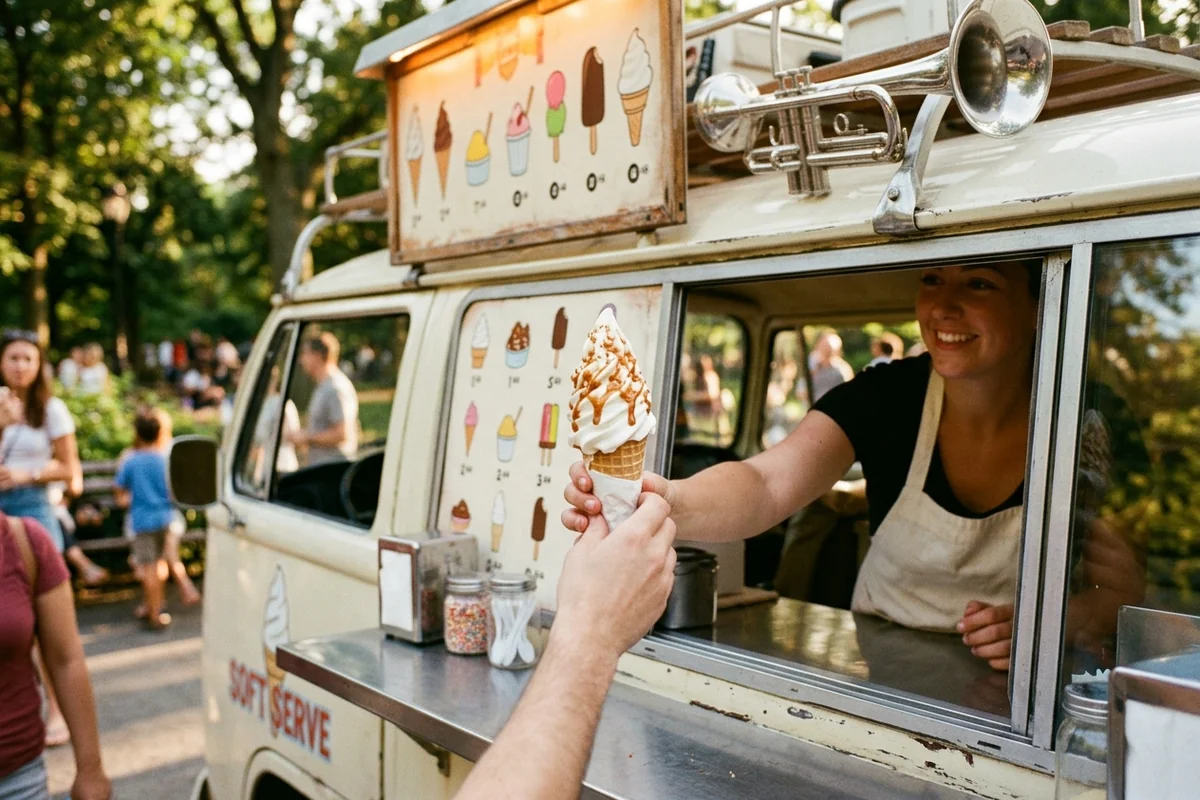
Keep the menu tight, the same discipline that serves every food truck well. A focused board of proven sellers moves faster and wastes less than a sprawling list. Novelty trucks lean on the recognizable classics; soft-serve trucks build around cones, cups, and a few high-margin toppings. A small, smart set of add-ons does more for your average ticket than a dozen extra flavors nobody orders.
Toppings and a couple of premium twists are where a soft-serve truck earns its margin, and they cost very little. A swirl finished with a real dessert sauce reads as premium and lifts the price you can charge, and the technique behind a good homemade dessert sauce translates straight to a truck window. It is also smart to carry at least one dairy-free option, since a meaningful slice of customers cannot or will not eat dairy, and a single well-made plant-based frozen dessert captures a group that would otherwise walk away. Both moves add sales without adding much to your prep.
Then there is the jingle, which is part charm and part liability. Trucks have played music to announce themselves for the better part of a century, but cities increasingly regulate it. Many places cap the volume, limit how long and how often the chimes can play, and some restrict or ban playing music while the truck is moving, partly for noise and partly for child safety. Because you sell to kids who dart toward the truck, expect rules about flashing lights, a backup alarm, and watch-for-children signage. Know your city’s ordinance before you turn on the music, because a noise citation is a silly way to lose a day’s profit.
Renting an ice cream truck instead of owning
If you only want a truck for a party, a school event, or a corporate appreciation day, renting is the easy route, and it is a real slice of the market. Event operators typically price around a hundred fifty to two hundred dollars an hour with a one to two hour minimum, or per serving at roughly four to ten dollars a head, with common minimums in the few-hundred-dollar range. A small event might come to a base of around five hundred dollars for a set number of servings plus a truck fee.
For an owner, the rental market is also a revenue stream worth knowing about, because private events pay a known amount for a known headcount, which is steadier than chasing curb traffic. Whether you are renting one for an afternoon or thinking about offering your own truck for events, the same advice applies: confirm the servings, the hours, the travel, and what the price includes in writing, so the only surprise at the curb is how fast the line forms.
The honest money picture for an ice cream truck is that it rewards low overhead and a long, well-worked season rather than a single big idea. Your costs are mostly fixed, the truck, the insurance, the commissary, the storage, so every additional service day in the warm months drops more to the bottom line once those are covered. That is why the operators who do well tend to start simple with a novelty truck, build a reliable route and a roster of repeat events, and only graduate to a soft-serve build once they know their market. Keep the truck busy through the season, bank the surplus for winter, and the business behind the jingle turns out to be a sound one.
Routes, events, and how ice cream trucks find customers
An ice cream truck makes money three ways, and the strongest operators run all three. The first is the route, the slow neighborhood loop that built the whole image of the business. A good route is a learned thing: you find the streets, the parks, and the hours where families are out and the demand is real, and you run them consistently so customers come to expect you. The classic route business is steady but weather-dependent, and it rewards operators who track which stops actually sell rather than just driving and hoping.
The second stream is events. Festivals, fairs, sports complexes, and busy public spaces concentrate hungry people in one place, which beats cruising for them, though organizers often charge a fee or a percentage. The third, and quietly the best, is private catering: birthday parties, school functions, corporate appreciation days, and weddings. Catering pays a known amount for a known headcount on a scheduled date, which removes the guesswork that makes route income unpredictable. One booked event can equal several ordinary route days, and you are not burning fuel hunting for customers.
Marketing a moving business is mostly about being findable and predictable. Post your route and hours the same way every day so regulars can plan around you, and lean on the nostalgia that already works in your favor, because few businesses enjoy as much built-in goodwill as the ice cream truck. Chase the catering inquiries hard, since they are the most profitable and the most stable part of the calendar. The mix of a reliable route plus booked events is what turns a seasonal novelty into a business that actually clears money before the weather turns.
Frequently Asked Questions
How much does it cost to start an ice cream truck?
The truck is the biggest variable: used rigs run about ten to twenty thousand dollars, new custom builds sixty thousand and up, and leasing roughly fifteen hundred to two thousand a month. Add a wrap at two to five thousand, freezers or a soft-serve machine, a music box, and opening inventory, plus permits, a commissary, and insurance. A simple novelty truck starts far cheaper than a full soft-serve build. These are ranges, so get local numbers before you commit.
Should I sell pre-packaged novelties or soft serve?
Novelties are the simpler, lower-risk path: cheap freezers, lighter licensing because the product is sealed, and an easy operation, but modest resale margins. Soft serve costs more up front for the machine and mix and carries a heavier licensing and cleaning burden, but the gross margins are excellent, often seventy percent or more. Choose novelties for a low-complexity neighborhood route and soft serve for a higher revenue ceiling and event work.
Do you need a special license for an ice cream truck?
You need the standard mobile food vendor permit from your local health department, which is often inexpensive but varies by city. Frozen-dessert and soft-serve machines frequently require a separate permit on top of that. Most jurisdictions also require a commissary agreement and bar storing inventory at home, with many requiring the truck to return to the commissary at least once every twenty-four hours. Check your local health department for the exact requirements.
Is an ice cream truck a year-round business?
In most of the country, no. It is strongly seasonal, with a real earning window of roughly five to seven warm months, and some cities even issue seasonal permits valid only part of the year. Fixed costs like insurance, storage, and any loan payment continue through the off-season, so the operators who last build a cash cushion during the busy months to carry them through winter. Budget for a season, not twelve months of revenue.