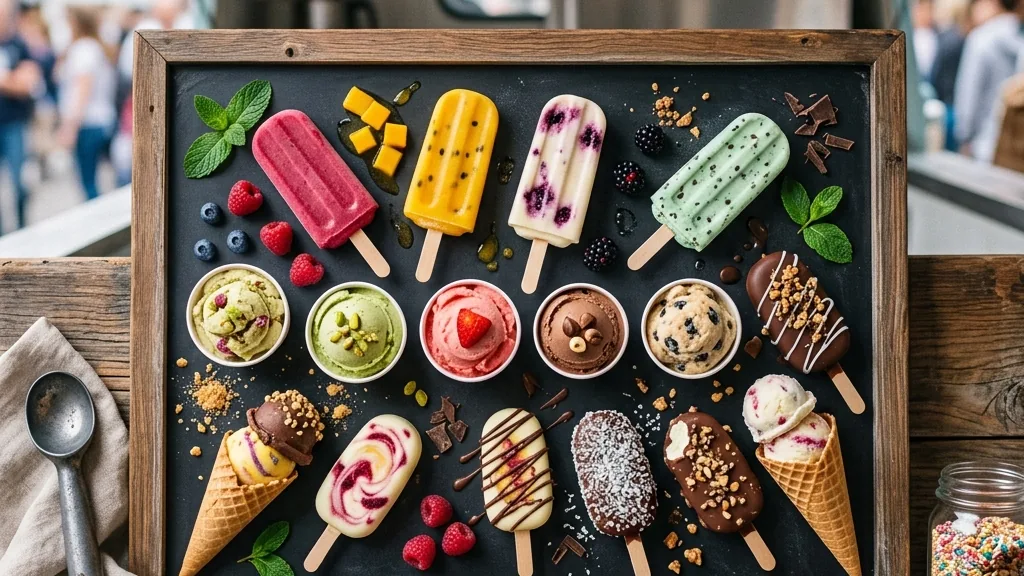
By Sal Bendetti, food truck owner | Published June 28, 2026
What’s inside this guide
An ice cream truck menu is more than a list of frozen treats. It is a tight, fast-selling mix of soft serve, branded novelties, popsicles, and snow cones, chosen so a single window can serve a long line on a hot afternoon without slowing down. Whether you are a parent trying to decode the pictures on the side of the truck or a future vendor planning what to stock, the menu follows a logic worth understanding.
Here is the short version. As of June 2026, a typical ice cream truck menu runs from about $2.50 for a snow cone to roughly $7.00 for a loaded sundae, with most single items landing between $3.00 and $5.00. The list usually splits into soft serve from a machine, pre-packaged novelty bars from a freezer, snow cones or shaved ice, and a few cold drinks. The exact mix depends on the region, the season, and whether the truck works a neighborhood route or private events.
This guide walks the full menu item by item, gives current 2026 price ranges, covers allergens and food safety the way a health inspector would, and then shows how operators turn that menu into real profit. If you are weighing the business side, our deeper guide to starting an ice cream truck picks up where this leaves off.
From the operator: I run a savory truck and not an ice cream route, but in my experience the economics are the same trade I live every day, and the operators I share a commissary with showed me how the frozen side really makes its money. When I launched my own truck, I found the dollars and the headaches were identical even where the soft serve was not, so I am writing this as a fellow vendor.
Soft serve vs. hard pack: how the truck is built
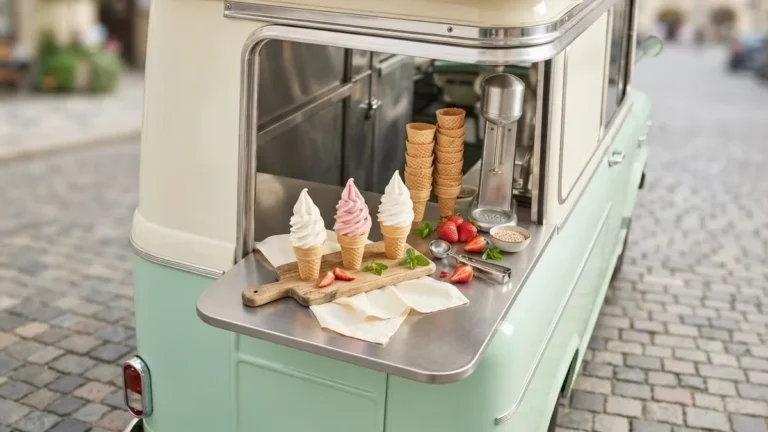
Almost every classic route truck is really two cold systems in one vehicle. The first is a soft serve machine that dispenses fresh product on demand. The second is a deep freezer packed with wrapped novelties and pre-made bars. Understanding that split explains the whole menu.
Soft serve comes out of the machine at roughly 18 to 20 degrees Fahrenheit. It carries more whipped-in air, which is why it feels light and pipes into that tall swirl. The air content, called overrun, usually sits around 33 to 45 percent of the finished volume. More overrun means a softer, fluffier scoop and a lower cost per serving, which is part of why soft serve is a vendor favorite.
Hard pack, also called hand-dipped, is the opposite. It is pre-frozen in tubs and held near 0 degrees Fahrenheit, then scooped to order. According to USDA guidance from its Food Safety and Inspection Service (USDA FSIS), 0 degrees Fahrenheit (about minus 18 Celsius) is the storage standard that keeps frozen food safe. Wrapped novelty bars live in the same freezer, which is why a truck can carry both a swirl cone and a Drumstick from the same window.
This two-system setup is the reason menus look the way they do. Soft serve items and snow cones are made fresh and priced for volume. Branded bars are inventory you buy, store, and resell, so their pricing follows what you paid plus a markup.
The soft serve machine also shapes how the day runs. It needs a few minutes to bring the mix down to serving temperature, it has to be cleaned and sanitized on a schedule, and it can only pour so fast during a rush. Operators who lean on soft serve plan for that, keeping the mix topped up and the machine cycling so the swirl stays firm. When a long line forms, the wrapped bars from the freezer become the pressure valve, because grabbing a Drumstick takes a second while piping a perfect cone takes longer.
The classic ice cream truck menu, item by item
Strip away the regional quirks and most trucks share a familiar core. These are the categories you will see on almost any window.
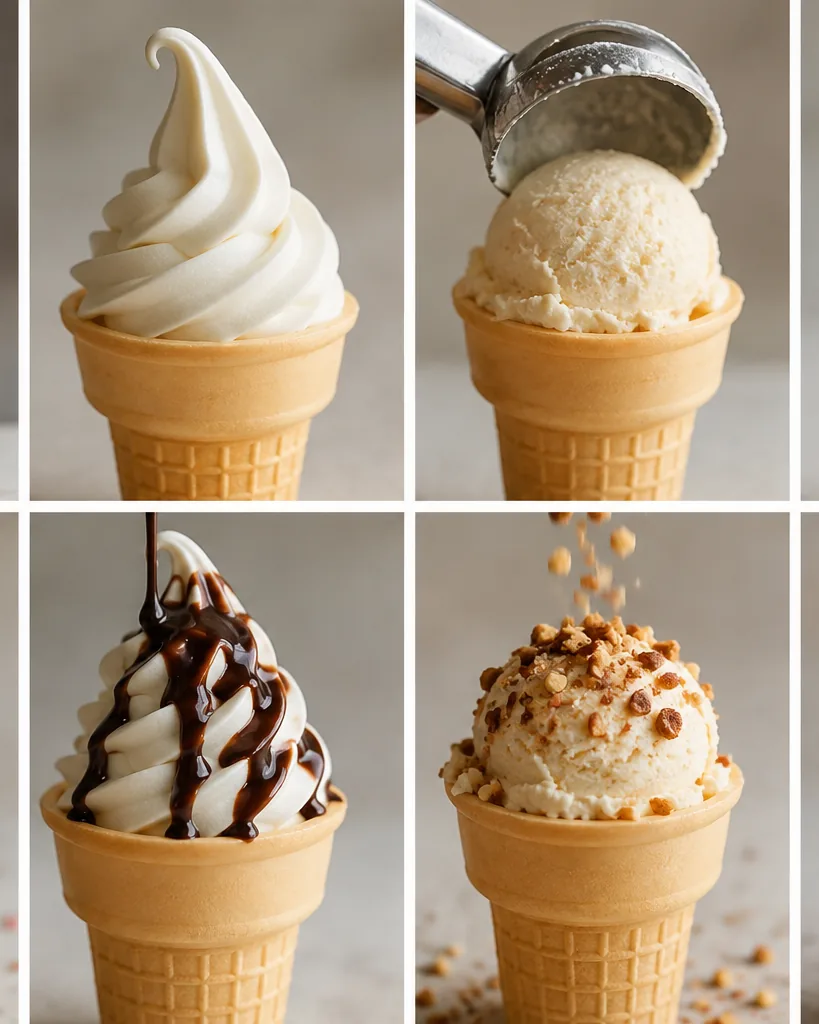
- Soft serve cones: vanilla, chocolate, and the chocolate-vanilla twist, often with a dipped chocolate shell or rainbow sprinkles as an upsell. A waffle cone upgrade is common.
- Ice cream sandwiches: the classic chocolate wafer style, plus larger and premium versions.
- Cups and sundaes: a simple cup, or a sundae with hot fudge, caramel, strawberry, or brownie, finished with whipped topping, nuts, and a cherry.
- Milkshakes, malts, and floats: thick blended drinks that lean on the same soft serve base.
- Snow cones and shaved ice: crushed or finely shaved ice with flavored syrup, often the cheapest item on the board.
- Italian ice and sorbet: dairy-free frozen options that widen who can buy.
A well-stocked route truck can carry on the order of 40 or more distinct items once you count every flavor, bar, and syrup. That breadth is deliberate. A crowd at a park has kids who want a character bar, adults who want a real sundae, and someone who needs a dairy-free option, and the truck wants a yes for all of them.
Branded novelties people ask for by name
The freezer is where nostalgia lives. Shoppers rarely ask for “a popsicle”; they ask for the specific bar they grew up with. Stocking the right names is half the battle.
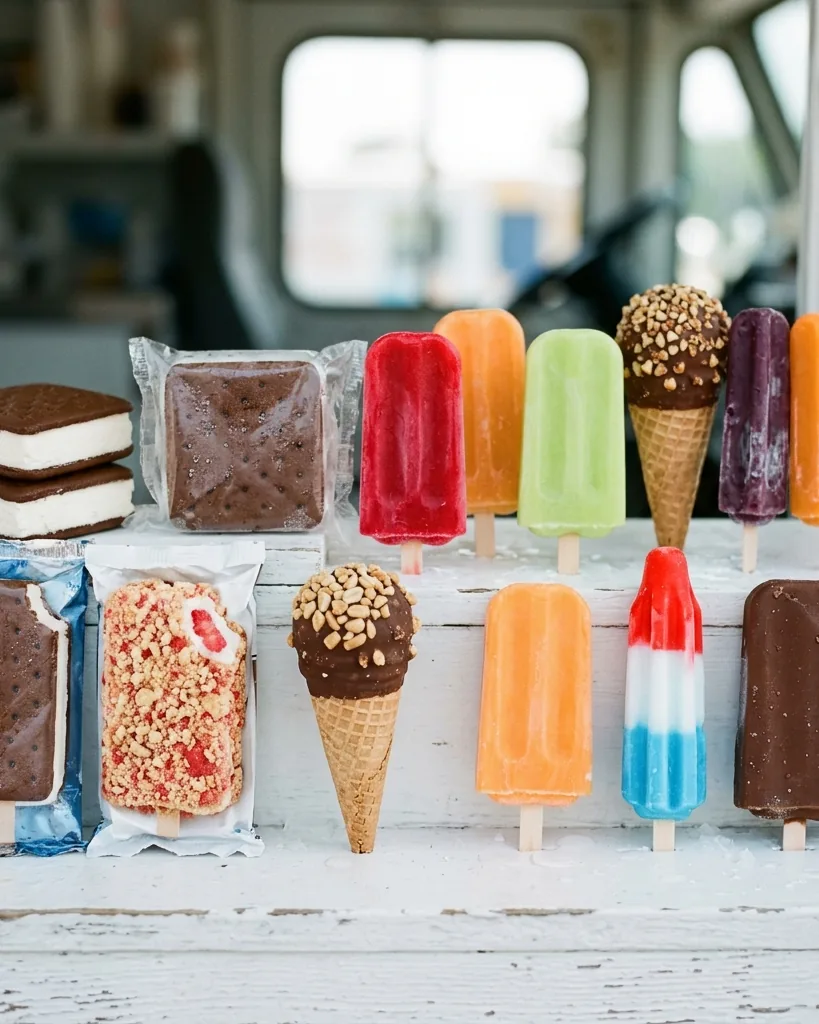
- Bomb Pop and Firecracker: the red, white, and blue rocket pops that spike every summer, especially around the Fourth of July.
- Character bars: the gumball-eye faces such as SpongeBob, Spider-Man, Batman, and Sonic. These are the impulse buy for younger kids.
- Drumstick: the sugar cone filled with vanilla or chocolate, topped with nuts and a chocolate tip.
- Classic bars: Strawberry Shortcake, Chipwich, Push-Up sherbet, Creamsicle, and cookies-and-cream bars.
- Premium pre-packs: single-serve cups from brands like Haagen-Dazs and Ben & Jerry’s for the higher-spend customer.
One name worth knowing for the nostalgia factor: the Choco Taco was discontinued by Klondike in July 2022 after more than 40 years. Customers still ask for it, so a smart vendor keeps a similar cone-and-chocolate item on the board to catch that demand. Naming real products like this is the overlooked detail most thin menu pages skip.
Snow cones, shaved ice, and frozen drinks
Snow cones and shaved ice deserve their own spotlight because they are usually the highest-margin line on the truck. The raw materials are ice, water, sugar syrup, and a cup. A single machine can run 25 or more syrup flavors, so the variety on the board costs almost nothing to expand.
Shaved ice (the fine, snow-like texture sold under brands like Snowie) sits a notch above a crushed-ice snow cone in quality and price. Italian ice, fruit pops, and aguas-style frozen drinks round out the cold-drink section. For a hot, thirsty crowd, these items move fast and protect your margins when premium bars are selling slowly.
What a typical order looks like
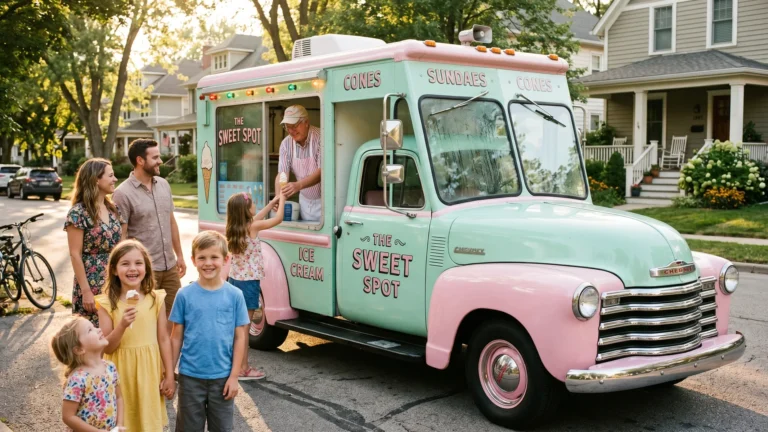
Menus make more sense when you picture a real line at a summer park. A parent with two kids might order one character bar at $4.00, one twist cone at $4.50, and a snow cone for themselves at $3.00, a roughly $11.50 ticket that took under a minute to fill. The character bar was an impulse grab, the cone was the treat, and the snow cone was the cheap add-on that pushed the total higher.
That pattern is why vendors design for the add-on. A toppings bar at $0.50 to $1.00, a waffle cone upgrade at $1.00 to $1.50, and a drink all nudge the average ticket up without slowing service. The board should make the upgrade obvious, because the customer who already decided to buy is the easiest one to sell a little more. Combos, like a cone plus a drink at a small discount, do the same job while making the price feel fair.
From the buyer’s side, the takeaway is simple. The named bars are fixed prices, the made-to-order items reward customization, and the snow cones are the budget pick. Knowing that, a family can plan a round of treats and know roughly what the window will ring up.
Ice cream truck menu prices in 2026
Prices vary by city, by venue, and by whether the truck is on a public route or a paid booking, but the ranges below reflect what U.S. customers are paying in 2026. Use this as a sample menu to benchmark against.
| Item | Typical 2026 price |
|---|---|
| Snow cone / shaved ice | $2.50 – $4.00 |
| Popsicle / Bomb Pop | $3.00 |
| Ice cream sandwich | $3.50 |
| Character / novelty bar | $4.00 |
| Soft serve cone | $3.50 – $5.50 |
| Drumstick | $5.00 |
| Sundae | $5.00 – $7.00 |
| Milkshake | $4.75 – $5.75 |
| Premium pre-pack (Haagen-Dazs, Ben & Jerry’s) | $5.00 – $6.00 |
| Toppings (sprinkles, nuts, sauce) | $0.50 – $1.00 |
| Waffle cone upgrade | $1.00 – $1.50 |
Notice the spread. The cheapest item, a snow cone, is also the most profitable to make, while the priciest premium cups carry the thinnest margin because you paid a wholesaler for them. That tension drives every pricing decision a vendor makes.
Allergens and food safety on a small truck
This is where most online menu lists go quiet, and where a serious food business earns trust. Frozen treats touch nearly every major allergen, so labeling matters.
According to FDA labeling rules, there are nine major food allergens, often called the Big 9: milk, eggs, peanuts, tree nuts, soy, wheat, fish, shellfish, and sesame. Sesame became the ninth on January 1, 2023, under the FASTER Act of 2021. On a small truck, the bigger risk is cross-contact: the same scoop, the same dipping well, or the same prep surface touching multiple products. Offering clearly labeled dairy-free sorbet and Italian ice gives allergy-sensitive customers a safe choice. The FDA explains consumer-facing allergen basics on its food allergies page.
Having spent years behind my own flat-top, I can tell you the permit and equipment headaches are identical to mine. I noticed the danger early: I spent a whole service shut down because I sized a generator wrong, and on a freezer truck that same mistake melts your whole inventory. In my experience the cold chain is where the real risk lives, so I recommend spending on it first and decorating the truck later.
Safety note: If you sell to the public, your county or city health department, not this guide, has the final say. Confirm your local mobile food permit, commissary requirement, and equipment rules before your first service day.
Holding temperatures are the other half of safety. Soft serve dispenses at about 18 to 20 degrees Fahrenheit, and wrapped novelties should stay near 0 degrees Fahrenheit in the freezer. Equipment also matters to inspectors. Health departments expect commercial gear certified by NSF International (NSF), not home-style freezers, and the NFPA fire code applies to any unit that cooks. Most operators also carry a ServSafe food-handler certification, a program tied to the National Restaurant Association. The rules are enforced locally, so your county or city health department is the final word on permits and inspections.
How vendors price the menu for profit
A menu is a pricing tool first and a list second. The goal is a blend of high-margin made-to-order items and recognizable bars that pull customers in. Here is the math behind the board.
Per-item gross margins of 30 to 50 percent are normal, but they are not even across the menu. A snow cone built from syrup and ice might return most of its sale price as profit, while a branded premium cup you bought wholesale might return only a slice. Smart operators lead with the cheap, named items to draw a line, then upsell sundaes, toppings, and waffle cones, which carry better margins.
The simplest way to read the menu like an operator is to think in food cost. If a snow cone uses about 30 cents of ice, syrup, and a cup and sells for $3.00, the ingredient cost is roughly 10 percent of the price. A premium pre-pack that cost you $3.50 wholesale and sells for $5.50 runs closer to 60 percent. That is why the board is built around the cheap items even though the premium cups look more impressive. The goal is a blended food cost that keeps the whole truck in the healthy 25 to 35 percent range most foodservice operators target.
I learned this the hard way on my own flat top: lead with the cheap, fast, high-margin item. On my truck that is a side; on the ice cream route it is the snow cone, and I have seen the operators who push it outsell the ones leaning on pricey branded bars. The mistake I see most often is stocking premium freezer cups that you paid a wholesaler for, the thinnest margin on the board. What I didn’t expect when I started was how much of my money came from soft serve and syrup, the same way it does from my drinks, so I recommend building the board around them.
Worked example – one summer afternoon: Say you sell 60 snow cones at $3.00 (cost $0.30 each), 40 soft serve cones at $4.50 (cost $0.90), and 30 premium pre-packs at $5.50 (cost $3.50). Revenue is $180 + $180 + $165 = $525. Food cost is $18 + $36 + $105 = $159, or about 30 percent. The snow cones and soft serve carry the day, while the premium cups add sales but eat margin. Shift ten of those premium sales to soft serve and your food cost drops below 28 percent on the same traffic.
After fuel, insurance, inventory, and labor, a typical net business margin lands around 15 to 25 percent. Revenue depends entirely on placement. A well-located route truck can clear $500 or more on a good day, while a single two to three hour private booking, like a birthday, a wedding, or a corporate event, commonly runs from $500 to over $3,000. Those bookings are where many operators make their real money, because the crowd is captive and the per-head spend is predictable.
Startup cost spreads widely too. A used van with basic gear can start near $10,000, while a new custom build with a fresh soft serve machine, freezers, and a point-of-sale system can pass $100,000. Licenses and permits often add $500 to $2,000 before you sell a single cone. If you are budgeting a build, our breakdown of food truck concepts and costs is a useful next read, and the U.S. Small Business Administration (SBA) outlines the licenses and permits a new mobile business needs.
Regional and seasonal differences
There is no single national ice cream truck menu, and that is part of the charm. The board shifts with geography and the calendar.
In the Northeast, Mister Softee built its name on soft serve, so swirl cones dominate. Good Humor heritage bars shaped the wrapped-novelty side of the business across much of the country. In many Latino neighborhoods, the paletero pushing a cart of paletas (fruit and cream bars on a stick) is the local version of the truck. In Hawaii and warm coastal areas, Kona-style shaved ice and raspados take the lead. A vendor who matches the menu to the neighborhood sells more.
Season matters just as much. Most trucks run hard from roughly March or April through September, then taper off. Rocket pops spike around the Fourth of July, pumpkin-spice soft serve appears in the fall, and peppermint shows up at winter holiday markets. Building a short seasonal rotation keeps regulars curious and gives the truck something fresh to advertise.
Payment and presentation have shifted too. Cash once ruled the window, but most trucks now take cards and contactless taps, which raises the average sale because customers are not limited to the bills in their pocket. The jingle still does its old job of announcing the truck blocks away, but a clear, well-lit menu board and posted prices do the heavy lifting once the line forms. A board the crowd can read from ten feet back keeps the line moving and cuts down on the questions that stall a busy window.
Building your own ice cream truck menu
If you are designing a board from scratch, resist the urge to stock everything. A focused menu serves faster, wastes less, and is easier to price. Start with a soft serve base in two or three flavors, a freezer of six to ten proven novelty bars, a snow cone line for margin, and a couple of dairy-free options for inclusivity. Add one or two premium items for the higher spender and a small drinks section.
Then label clearly, post prices where the line can read them, and keep allergen information handy. Insurance is not optional once you operate in public; see our guide to food truck insurance before you book your first event. A menu that is fast, legal, and profitable beats a long menu that confuses the line and slows the window.
Test your board before you commit to printing it. Run a few events with a short list, watch which items sell and which sit, and track how long each order takes to fill. The treats that move fast and pour quickly earn a permanent spot; the slow movers get cut or rotated to seasonal status. A menu is never truly finished, and the best operators trim and refine theirs every season based on what the line actually buys rather than what looked good on paper.
Frequently asked questions
How much does an ice cream truck charge per item?
Most single items run between $3.00 and $5.00. Snow cones start around $2.50, standard bars and cones sit near $3.50 to $5.00, and loaded sundaes or premium cups can reach $6.00 to $7.00. Private-event pricing may differ, since the host often pays a flat booking fee instead of per item.
What is the most popular ice cream truck item?
It varies by crowd, but soft serve cones and the named character bars are perennial best sellers with kids, while snow cones move fastest on the hottest days. For the vendor, snow cones and soft serve usually deliver the best profit, which is why they anchor most menus.
Are ice cream truck treats safe for people with allergies?
Pre-packaged bars carry allergen labels listing the Big 9 allergens, so they are easy to check. Made-to-order soft serve and sundaes carry cross-contact risk because of shared equipment, so anyone with a serious allergy should ask about dedicated scoops and choose a labeled dairy-free sorbet or Italian ice when in doubt.
Can you book an ice cream truck for a private event?
Yes. Many operators take private bookings for birthdays, weddings, schools, and corporate days. A two to three hour event commonly runs from $500 to over $3,000 depending on guest count and menu. Booking early in the summer is wise, because the best trucks fill their weekends fast.
Putting it all together
An ice cream truck menu is a small, fast machine for turning a hot day into repeat customers. For buyers, it is a quick map of what to order and what it should cost. For vendors, it is the single most important profit lever you control: lead with cheap, named, high-margin treats, label everything honestly, match the board to your neighborhood and the season, and let private bookings carry the big revenue days. Get that mix right and the line forms itself. If a frozen-treat route is part of a bigger plan, compare it with other concepts in our roundup of popular food truck types before you commit.