Dessert food trucks are the closest thing to a cheat code I have found in this business, and I say that after five summers of running a flat-top out of Austin. My savory truck fights for every dollar against food cost, propane, and a labor line that never sits still. The little sweets window I bolted on runs at a margin the burger side will never see. If you are weighing a sweets truck, this is the honest math on startup cost, gear, permits, menu pricing, and where the money actually shows up.
Prices below reflect this season’s fryer, generator, and permit costs, not last year’s numbers.
Here is the short version. A dessert truck usually costs $40,000 to $150,000 to get on the road, though a simple churro, mini-donut, cookie, or coffee concept often lands between $35,000 and $70,000 because the equipment is lighter. Once you are open, dessert and beverage trucks run 80 to 90 percent gross margins, with food cost commonly 15 to 25 percent on ice cream and coffee. That spread is why a truck selling a $4 brownie that costs fifty cents to make can survive a slow Tuesday. Your best days are festivals, private catering, and any event where people already have a plate and want one more sweet thing.
Why dessert trucks make money when savory struggles
The whole game is food cost. Across the food-truck world, food cost runs 15 to 35 percent of revenue. On my burger side I fight to keep it near 32 percent once you count beef, cheese, buns, and waste. Sweets sit at the low end of that band, often 15 to 25 percent, because sugar, flour, mix, and cream are cheap and they do not spoil the way protein does.
Put real numbers on it. A gourmet brownie might carry fifty cents of flour, sugar, butter, and chocolate, and I sell it for $4. A cone of soft serve is maybe seventy cents of mix and a cone, and it goes for $5. Ice cream and frozen treats commonly return 70 to 80 percent margin per item; churros, gourmet donuts, and crepes land 50 to 70 percent. Nothing on my savory menu clears 70 percent. That is the appeal in one sentence: dessert food trucks turn cheap staples into high-ticket impulse buys. It is dessert vs savory, and on food cost alone dessert wins every time.
The second reason is impulse. Nobody plans a day around a funnel cake, but almost everyone says yes to one when they walk past the smell of it frying. That means you do not need to be the reason people came to the event. You just need to be there when they are already happy and looking for the last thing they buy.
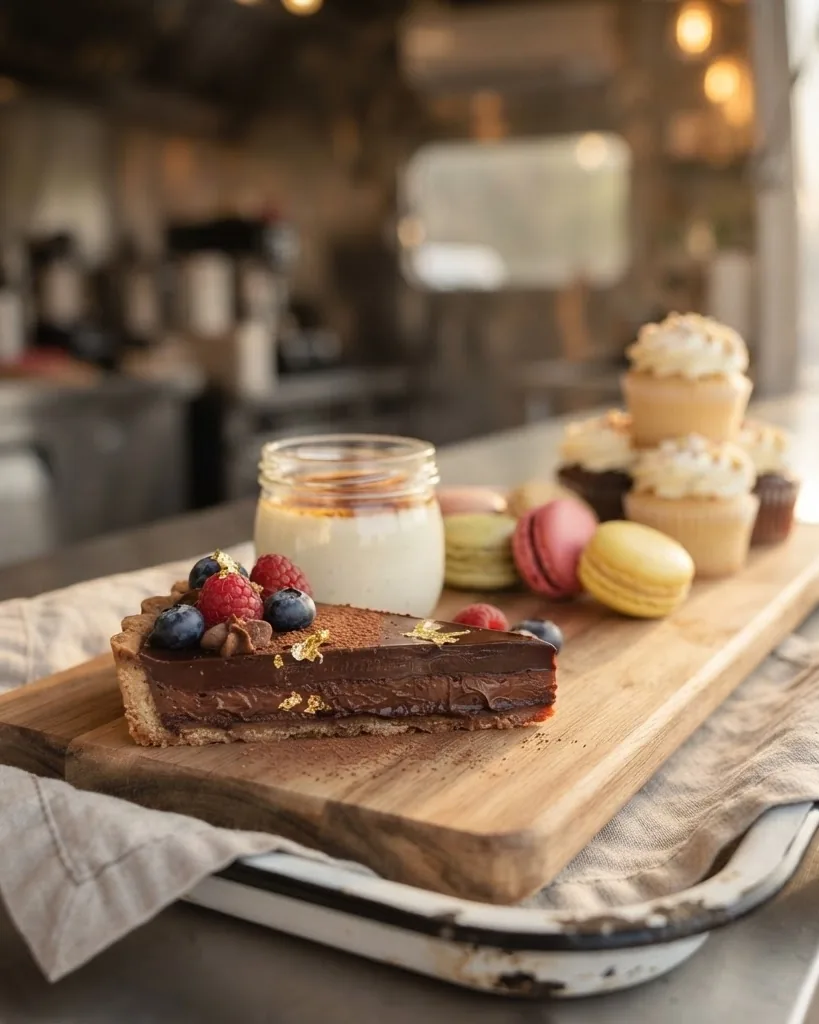
Popular dessert truck concepts and what they need
Not every sweets concept costs the same to run, and the gear you buy locks you into a lane. Pick the concept first, then buy the truck around it. These are the concepts I see working the Texas circuit, from lightest to heaviest.
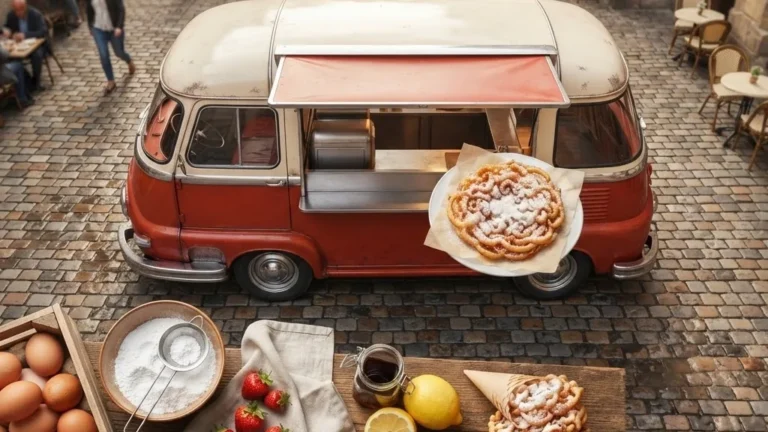
Churros are the low-overhead champ. A fryer, a piping setup, cinnamon sugar, and a couple of dipping sauces, and you are in business. Funnel cakes use the same fryer and read as a fair-food classic that people pay $8 to $10 for without blinking. Mini donuts run through a small automatic donut machine and pump out volume fast, which matters when a line forms. Loaded cookies and brownies need almost no on-truck cooking if you bake off-site in a commissary, so your equipment bill is tiny.
Waffles and mini pancakes (the poffertjes and bubble-waffle crowd) need irons and a little more prep, but they photograph well and carry premium toppings. Ice cream is the heaviest lift. Soft serve needs a machine and steady power; scratch or hard ice cream needs a batch freezer and a dipping cabinet, which is where the $150,000 builds come from. If you want the ice cream lane specifically, I broke down the buildout in my guide to running an ice cream truck, and the menu side in my ice cream truck menu breakdown.
Here is the quick version of that lineup, the way I would explain it to a friend at the counter:
- Churros and funnel cake: same fryer, lowest equipment cost, fastest to open
- Mini donuts: automatic machine, high volume for lines that will not wait
- Loaded cookies and brownies: bake off-site, almost no on-truck equipment
- Waffles and mini pancakes: irons plus real prep time, but premium toppings pay for it
- Ice cream: heaviest gear and the highest startup number on this list
I built my first truck around a churro setup because it was the cheapest way to learn the business without betting the farm on a batch freezer I did not know how to run yet.
What it costs to start a dessert truck in 2026
Let me give you the full range and then the pieces. Total startup for dessert food trucks runs $40,000 to $150,000. The vehicle is the biggest line. A custom-built dessert truck runs about $65,000. A concession trailer runs $40,000 to $55,000 and is the cheapest sensible way in for a fryer concept like churros or funnel cake. A basic used trailer you finish out yourself can start around $30,000. A full ice cream truck with a batch freezer and dipping cabinet climbs toward $150,000.
Then come the costs people forget. A full vinyl wrap runs $2,500 to $5,000, and a partial wrap or logo placement runs $1,000 to $3,000, but do not skip it because the wrap is your billboard at every event. Permits and licenses land anywhere from $800 to more than $17,000 depending on your city and county, which is a huge spread you have to price locally. Opening inventory of mix, cones, toppings, and packaging runs $3,000 to $5,000. Keep $10,000 to $20,000 in working capital for the first couple of slow months, because you will have them.
| Concept | Startup range | Food cost | Best for |
|---|---|---|---|
| Churros | $35,000-$60,000 | 15-20% | Festivals, night markets |
| Funnel cake | $35,000-$65,000 | 18-22% | Fairs, sporting events |
| Mini donuts | $40,000-$70,000 | 18-25% | High-traffic lines, markets |
| Loaded cookies | $35,000-$60,000 | 20-25% | Catering, office drops |
| Waffles / mini pancakes | $45,000-$80,000 | 20-28% | Brunch events, photo crowds |
| Soft serve / ice cream | $60,000-$150,000 | 15-25% | Summer routes, parks, weddings |
Tip: Do not buy the biggest truck you can finance. Buy the smallest rig that fits your concept and your two busiest events. I watched a friend carry a $130,000 note on a soft-serve build that only ran twelve good weekends a year, and the payment ate every one of them.
The equipment that survives a Saturday rush
Cheap gear fails at the worst moment, and I learned that the hard way when a bargain generator quit on me mid-rush at a Saturday market with forty people in line. After eight years running trucks, both burger and dessert, I do not gamble on cheap gear anymore. Buy equipment rated for more than you think you need, because a dessert truck lives or dies on how fast it can move a line.
For fried concepts, a commercial funnel cake or donut fryer costs about $400 to $1,500 and comes with a BTU output of 45,000 to 95,000 on the common models. A Carnival King 30-pound flat-bottom fryer runs 54,000 BTU, which handles a steady weekend. If you expect long fair lines, step up toward a 120,000 BTU unit so the oil recovers temperature fast when you drop cold batter. Higher BTU means faster recovery, which means shorter lines, which means more tickets before the crowd wanders off.
For soft serve, a commercial three-flavor machine starts around $2,250 and climbs with output and pump features. These machines pull real power, so size your generator to the machine and not the other way around. For scratch ice cream or gelato, a batch freezer runs $3,500 to $15,000 and up by capacity, and you will also want a dipping cabinet to hold and scoop hard flavors. Generator fuel alone runs $30 to $80 per operating day on a busy truck, so build that into your event math.
One more piece people skip: fire safety. Any truck running a fryer or open flame needs suppression that meets the standards from the National Fire Protection Association, and your local fire code authority will inspect for it before you serve. According to NFPA, that suppression system needs regular inspection and service, not a one-time install you forget about. Budget for it up front, because a failed fire inspection means you sit out the event you built your whole month around.
Permits, health, and the paperwork nobody warns you about
This is the part that separates the trucks that open from the trucks that stay a daydream. You cannot just park and sell. You need a business structure and an EIN, which you set up through the IRS, and you will collect and remit sales tax on every cone. The Small Business Administration has plain-language guides on structure, financing, and the licenses you will need, and it is the first bookmark I give anyone starting out. According to the SBA, undercapitalization, not a bad menu, is the reason most small food businesses stall in year one, which matches everything I have seen on the lot.
What most guides get wrong about permits is the timeline, not the price. People budget the dollar amount and forget that commissary approval, health inspection, and fire sign-off can take weeks to line up, and you cannot serve a single item until all three clear.
Health is local, and it is strict. Most cities require your dessert truck to operate out of a licensed commissary kitchen, meaning you prep, store, and clean at an approved facility, not your garage. Here in Texas I answer to the Department of State Health Services rules, but your own city or county health department writes the version you live under, so call them before you buy anything. I am not giving legal or permit advice here; I am telling you to confirm every rule with the office that inspects you.
Here is the order I actually walk new operators through, step by step:
- Step 1 – Set up your business structure and get an EIN through the IRS.
- Step 2 – Call your city or county health department and ask exactly what a dessert truck needs before you buy anything.
- Step 3 – Book a licensed commissary kitchen so you have an approved place to prep, store, and clean.
- Step 4 – Apply for your local food truck permit, sales tax registration, and any state license your concept needs.
- Step 5 – Schedule your fire suppression and health inspections before you commit to a launch date.
The overlooked detail in that list is step five. Operators book their first event before the inspections clear, then scramble when the fire marshal or health inspector cannot make the date, and the truck sits idle on what should have been opening weekend.
The National Food Truck Association is worth joining for the advocacy and the operator resources, because permit rules shift and it helps to have a group tracking the changes. Expect the full permit and license stack to run anywhere from $800 to more than $17,000 depending on where you operate. That is the widest number in this whole article, and it is the one you must nail down locally before you sign for a truck.
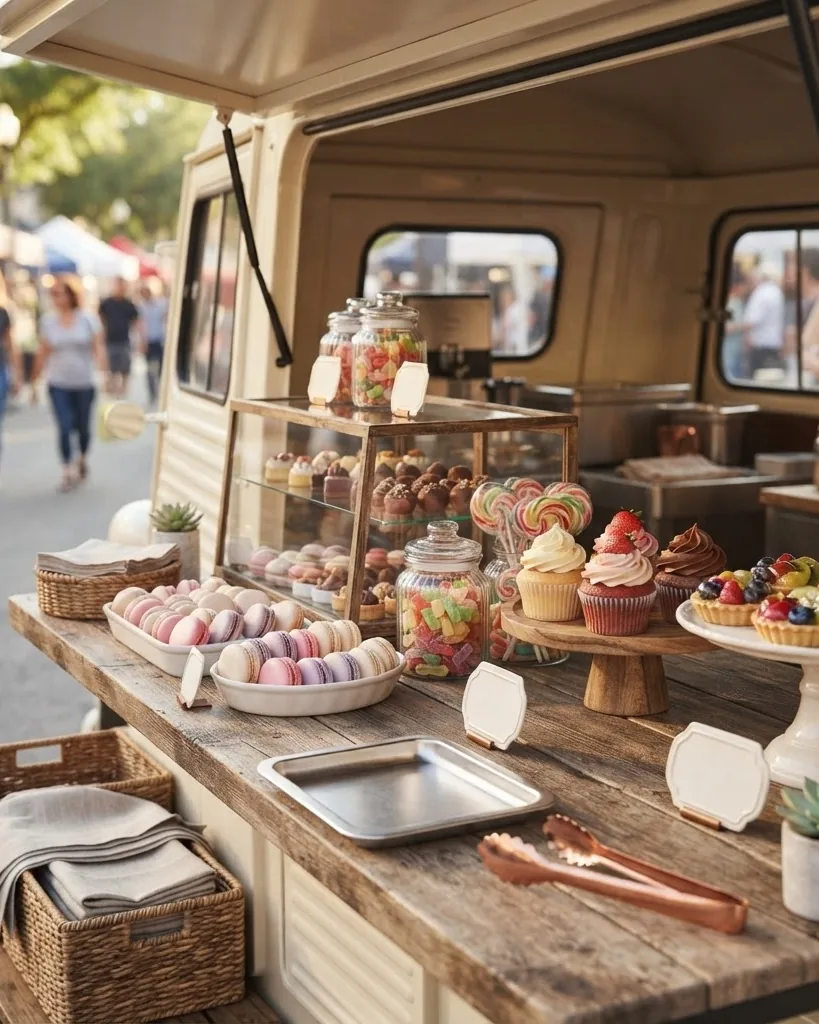
Menu pricing and the margin on each item
Pricing is where I lost money my first summer. I underpriced my plates for a month before I sat down and did the food-cost math, and I was basically handing out dessert at cost on my slowest days. The rule I run now: price every item so food cost stays under 25 percent, then round up to a clean number that is easy to take at a busy window. Having spent six seasons at the window taking orders, I can tell you the price sign matters almost as much as the recipe.
Here is roughly where I land on a dessert menu. A cone or cup of soft serve goes for $4 to $6. A basket of churros runs $6 to $8. A funnel cake is $8 to $10 and nobody argues, because that is the fair-food price they expect. A loaded cookie is $3 to $5. A half dozen mini donuts is $6 to $8. A specialty sundae is $7 to $9. Every one of those holds food cost under a quarter of the price, which is how the truck clears 80 to 90 percent gross.
Two pricing moves matter more than the base price. First, sell add-ons: a scoop, a sauce, a topping, an extra fifty cents to a dollar that costs you almost nothing. Second, bundle for groups, because a family of four rounding up to a $25 combo moves more volume than four people deciding one at a time. If you want a deeper menu framework, I laid one out in my post on food truck menu ideas that actually sell.
Best events and the catering math
Where you park decides your year. My best dessert days are not random street corners; they are events where people already have money out and a plate in hand. Festivals, night markets, fairs, and county events are the bread and butter, because dessert is the natural last purchase of the day.
Watch the vendor fees, though. Event fees run $50 to $2,500 depending on the size and draw of the event. The rule I use is simple: if an organizer wants a flat fee, I need to believe I can earn at least ten times that fee in sales, or I pass. A fairer deal, when I can get it, is paying 5 to 10 percent of my sales in place of a flat fee, so the risk is shared. Read the contract for power too, because if the venue has no accessible electricity you are running that generator at $30 to $80 a day in fuel.
Catering is the quiet moneymaker. When I launched my truck, I had no idea catering would end up carrying my slowest weeks, but it does every year now. Private and corporate dessert catering runs $10 to $22 per head, and most trucks set a minimum order of $400 to $800 to make the trip worth it. A single dessert add-on at $5 to $7 can lift a per-head catering ticket by 30 to 50 percent, which is why I always pitch the sweets truck as the add-on to a savory caterer’s event. Weddings, office parties, and school functions book weeks ahead and pay on invoice, so they smooth out the slow weeks that festivals leave behind.
If you want a lighter, even cheaper concept to test events with, a beverage angle pairs well with dessert. I wrote up the numbers on that in my lemonade truck cost breakdown, and a fresh-squeezed cup next to a churro basket is one of the best margin pairs on any lot.
Mistakes I made so you do not have to
My first mistake was buying gear for the truck I wanted instead of the events I actually booked. I bought a soft-serve machine before I had a single summer route locked, and it sat cold through a wet spring while the note came due. Buy the machine after you have the calendar, not before.
My second mistake was ignoring commissary and prep time in my hourly math. Dessert looks simple, but batching cookie dough, mixing funnel batter, and prepping toppings eats hours you never see at the window. I now count two prep hours for every four service hours, and I price the menu to pay for that time.
My third mistake was running one concept and one menu everywhere. A funnel cake kills at a county fair and dies at a Tuesday office lot. Now I flex the menu and the price to the crowd, and I keep a cross-over item like a loaded cookie or a donut that sells in any setting. If donuts interest you, that lane has its own quirks I covered in my donut food truck startup guide.
Frequently asked questions
How much do dessert food trucks cost to start?
Plan on $40,000 to $150,000 total, though a simple churro, cookie, mini-donut, or coffee concept often lands between $35,000 and $70,000 because the equipment is light. The vehicle is the biggest piece: about $65,000 for a custom truck, $40,000 to $55,000 for a trailer, and up to $150,000 for a full ice cream build with a batch freezer.
Are dessert trucks more profitable than savory food trucks?
On margin, yes. Dessert and beverage trucks run 80 to 90 percent gross margins with food cost often 15 to 25 percent, while savory concepts fight food cost near 30 to 35 percent. A brownie that costs fifty cents can sell for $4. The catch is volume: dessert is an impulse buy, so you need foot traffic and events to move enough units.
What is the cheapest dessert truck concept to start?
Fryer concepts like churros and funnel cake, plus baked concepts like loaded cookies, are the cheapest to launch. A commercial fryer runs $400 to $1,500, and cookies can be baked in a commissary with almost no on-truck equipment. Those concepts often open in the $35,000 to $60,000 range once you count a trailer, wrap, and permits.
Do I need a commissary and health permits for a dessert truck?
Almost always yes. Most cities require you to prep and store out of a licensed commissary and to pass health inspection before serving. Permits and licenses run $800 to more than $17,000 depending on your location. Set up your business and EIN through the IRS, and confirm every rule with your own city or county health department before you buy a truck.
How do I price a dessert truck menu?
Price each item so food cost stays under 25 percent, then round to a clean number. Common price points are $4 to $6 for soft serve, $6 to $8 for churros, $8 to $10 for funnel cake, and $3 to $5 for loaded cookies. Add-ons and group bundles lift the average ticket without adding much cost.
What events make the most money for dessert trucks?
Festivals, fairs, night markets, and private catering. Watch vendor fees, which run $50 to $2,500 per event; earn at least ten times any flat fee or negotiate 5 to 10 percent of sales instead. Catering runs $10 to $22 per head with $400 to $800 minimums, and a $5 to $7 dessert add-on can lift a ticket 30 to 50 percent.
The bottom line
Dessert food trucks are the highest-margin corner of this business, and the numbers back it up: 80 to 90 percent gross, food cost as low as 15 percent, and startup you can hold under $70,000 if you pick a light concept. The margin is real, but it only pays off if you match the concept to the events you can actually book, buy gear that survives a rush, and nail your permits before you sign for a truck. Do the food-cost math on every item, chase the festivals and catering, and price for the prep time nobody sees. Get those pieces right and a sweets window will out-earn a burger line every summer I have ever worked.