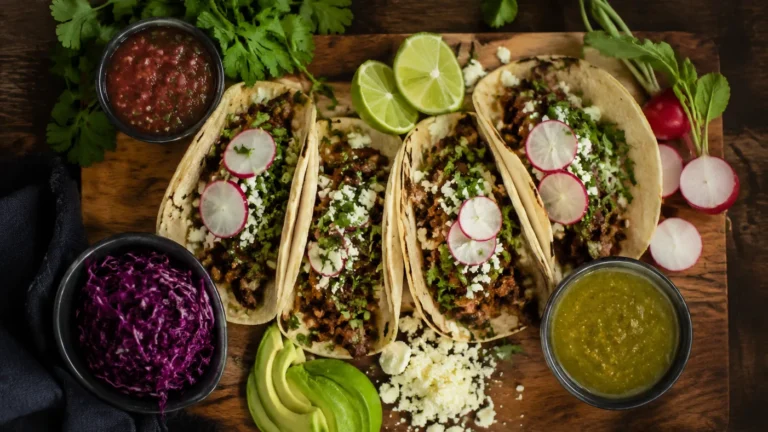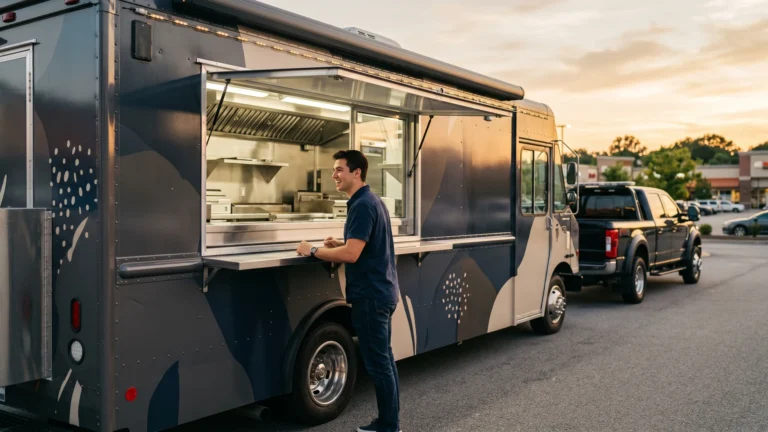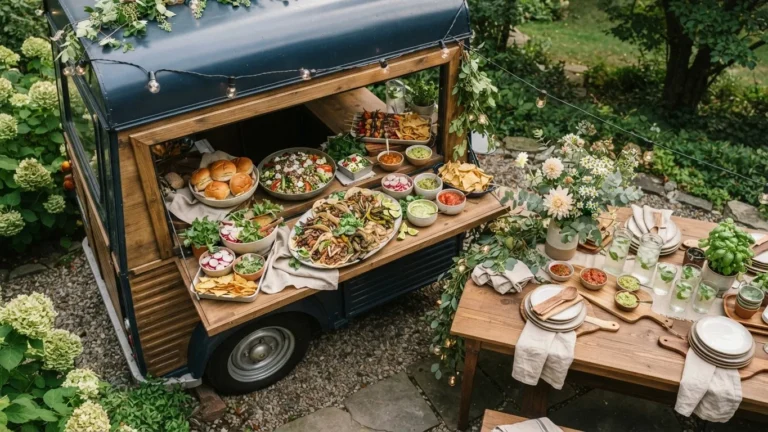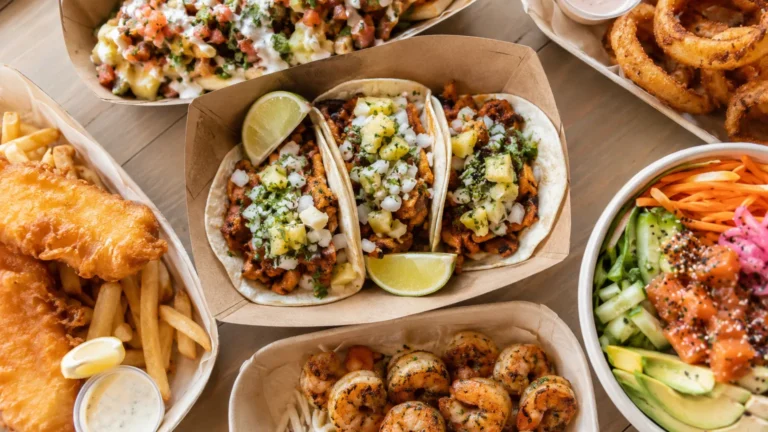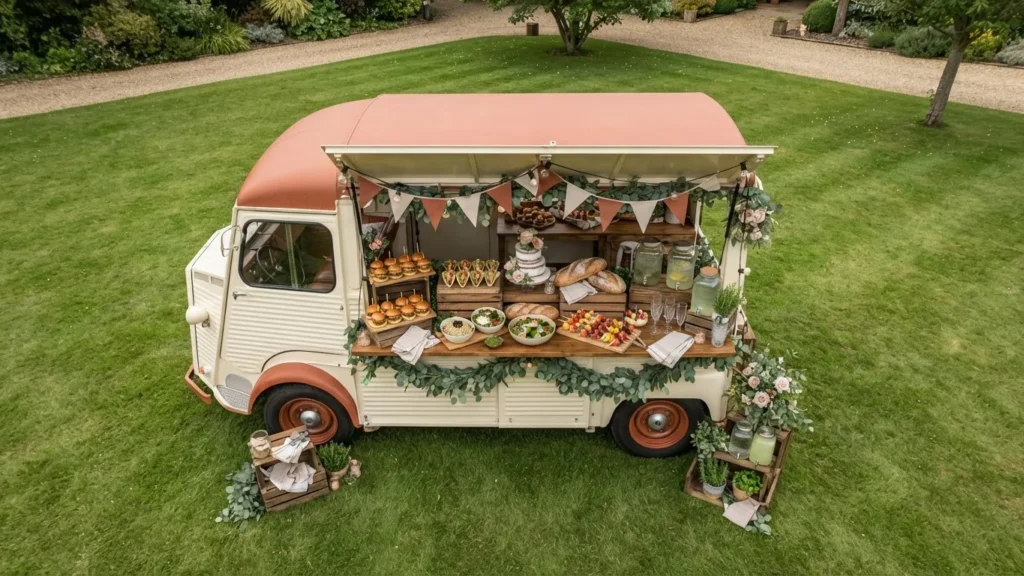
The gap between a food truck and a seated caterer is wide enough to decide your whole reception budget. The Knot puts food truck wedding catering at $10 to $25 per person against roughly $85 per person for traditional catering. That spread is real, but the per-head figure on a food truck rental for a wedding is the first line of the invoice, not the last. Minimums, travel, venue fees, permits, and insurance sit on top of it, and in some cities a local fire or health permit can stop your booking cold after the deposit clears. This guide sorts the price ranges that actually disagree, sizes the truck count to your guest list, and names the compliance step most couples never hear about.
The Knot 2023 Real Weddings Study found that 4 percent of the nearly 10,000 newlyweds surveyed had a food truck at their celebration, so you are planning something uncommon enough that venues and vendors may not have a smooth routine for it.
Quick answer: A food truck rental for a wedding runs about $10 to $35 per person for food, plus stacked fees most couples forget. Vendor minimums, permits, and venue fees commonly sit on top of the per-head price. One truck feeds roughly 100 to 150 guests; above that, add a second truck. For a 100-person wedding, Wedding Spot’s cited figure lands between $1,000 and $3,500 total. Book 3 to 4 months ahead for peak season, confirm $1 million in liability coverage, and check your city’s fire and health permit rules before you sign.
What $10 to $85 per head actually buys, and why the ranges don’t line up
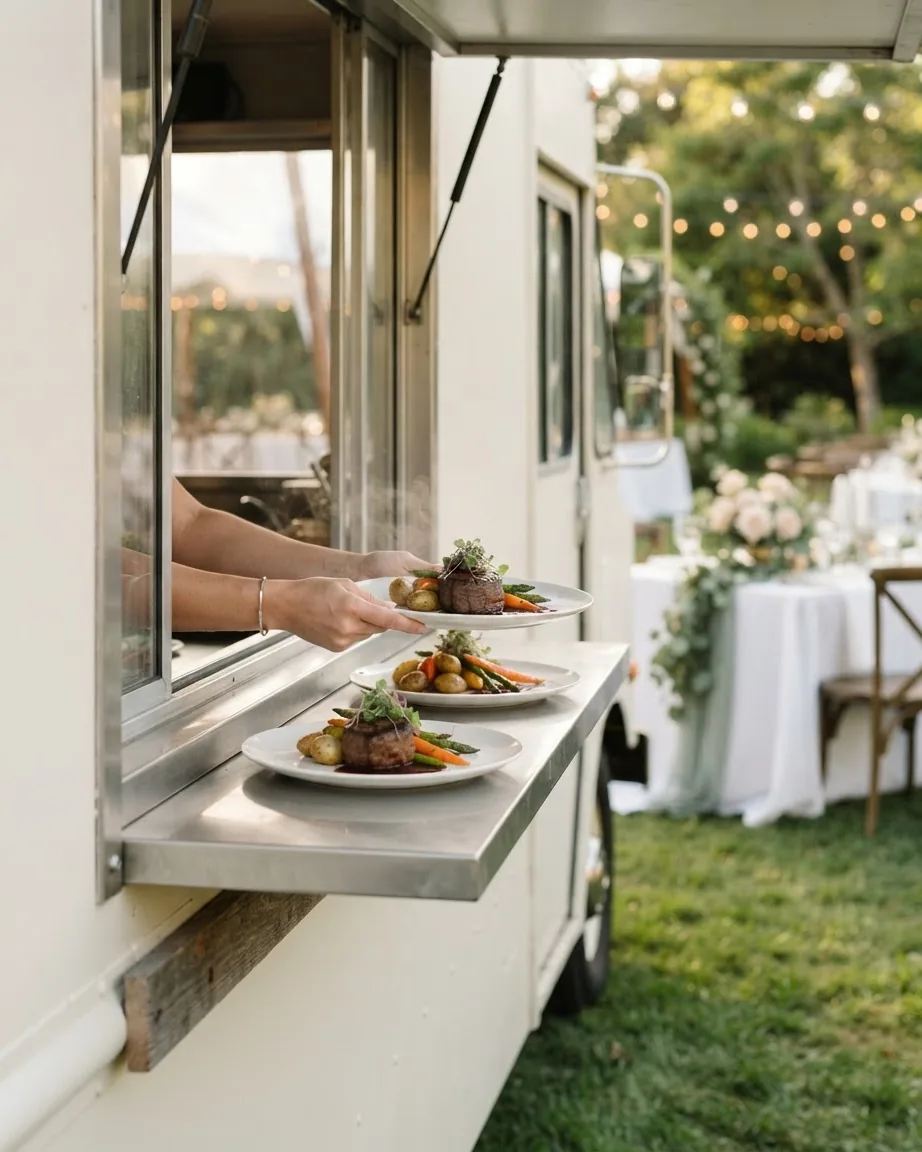
Every planning site quotes a per-head number, and almost none of them agree, because they are measuring different things. Here is where the figures stand:
- The Knot: $10 to $25 per person, against about $85 per person for traditional catering.
- Zola: $10 to $20 a person, with traditional catering averaging $70 a head.
- Honeyfund: $18 to $45 per guest for entrees in 2026.
- Marry Me Tampa Bay, quoting the St. Pete Taco Lady: $18 to $30 per person.
- Wedding Spot, citing Social Tables: $10 to $35 per person, or $1,000 to $3,500 for a 100-person wedding.
These are not five estimates of one number. Honeyfund’s $18 to $45 covers entrees only in 2026. The Knot’s $10 to $25 and Zola’s $10 to $20 appear to describe broader food cost. Marry Me Tampa Bay’s figure comes from a single working operator, not a survey. Read them as overlapping ranges tied to scope and year, not as a consensus price.
The two catering baselines don’t reconcile either. The Knot cites $85 per person; Zola cites $70 a head. They sit on different pages with different methods, so don’t average them into one comparison number. The honest takeaway: a food truck typically costs a half to a quarter of seated catering per plate, but the exact multiple depends on which baseline your region actually charges.
The fee stack that turns a $15 plate into a real budget
The per-head price assumes a smooth, high-volume night. Weddings are neither, so trucks protect themselves with a minimum, and venues and jurisdictions pile on their own charges. According to Honeyfund, most trucks require minimums of $800 to $1,500, then add travel fees, permits of $50 to $200, and possible equipment rental. On top of that, some venues charge their own food truck fee or require specific insurance.
Run the math on a small guest list and the minimum, not the menu price, sets your bill. If your food cost at $18 a head comes to less than the $800 floor, you pay the floor. That is the same trap that hits smaller private bookings, something we unpack in our food truck rental for a party breakdown.
Honeyfund frames the whole picture plainly: “Most couples spend $18-45 per guest for entrees in 2026, plus fixed fees like $300-1,000 minimums and travel charges.” Two things to pin down before you sign: ask whether gratuity is already baked into the quote, and ask exactly what the quote includes, because disposable dishes and utensils are usually in, while dedicated servers usually are not.
How many trucks you need: sizing service to your guest count
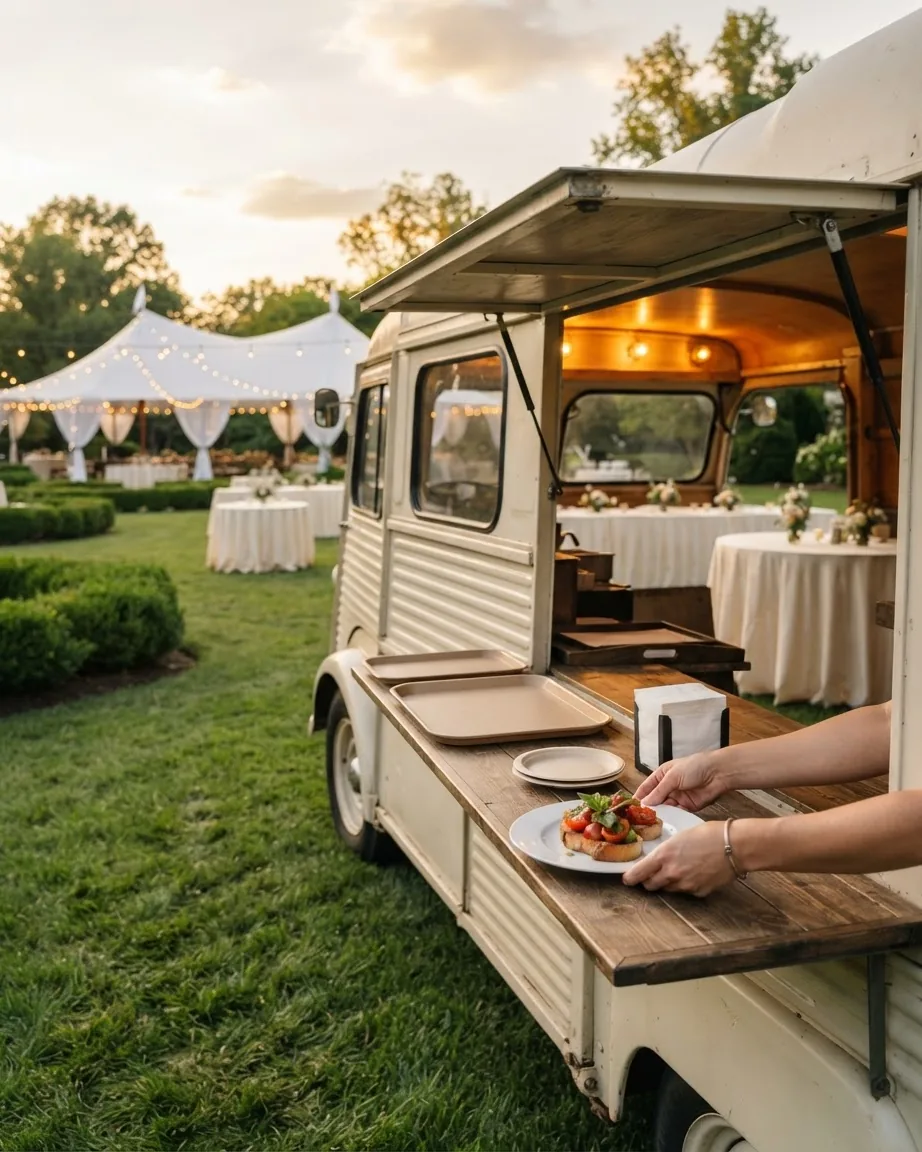
Truck count is where generic advice gets you a 40-minute line at your own wedding. The sources frame capacity three different ways, and each assumes a different service window.
- Total-guest rule of thumb: The Knot says a single truck serves 100 to 150 people; above that, bring in a second. Zola puts the ceiling at 150 guests maximum.
- Per-course ratio: Food Truck Club recommends one truck per 75 to 100 guests for a main course, and states a 150-guest wedding needs two trucks to keep wait times under 15 minutes.
- Throughput: Honeyfund pegs a single truck at 50 to 65 plates per hour, meaning 100 guests need about 90 minutes of service time.
These aren’t contradictions, they’re the same truck measured under different assumptions. The 100 to 150 ceiling works if you’re comfortable with a longer window. The one-truck-per-75-to-100 ratio is stricter because it targets a sub-15-minute wait. Honeyfund’s own math ties them together: “A single truck serves 50-65 plates per hour, meaning 100 guests need about 90 minutes of service time.” The same source also expects 2 to 3 hours of service time for most weddings, which is the overall event window, not the throughput.
The decision rule: if your guest list is at or near 150 and you want short lines, budget for two trucks. If you’re at 100 or under and can live with a 90-minute rolling service, one truck does it. One more catch Innovo Kitchen raises: most trucks specialize in one food type, so expecting a single truck to cover cocktails, dinner, and dessert is a common mistake. If you want range, that’s a second vendor, not a bigger order.
The food-truck-rental-for-wedding venue check that happens before you pay a deposit
Here’s the move that saves a lost deposit: talk to the venue before you book the truck, not after. Some venues disallow outside catering outright, and some keep a preferred-truck list you have to work from. A food truck rental for a wedding lives or dies on physical fit, and the numbers are specific.
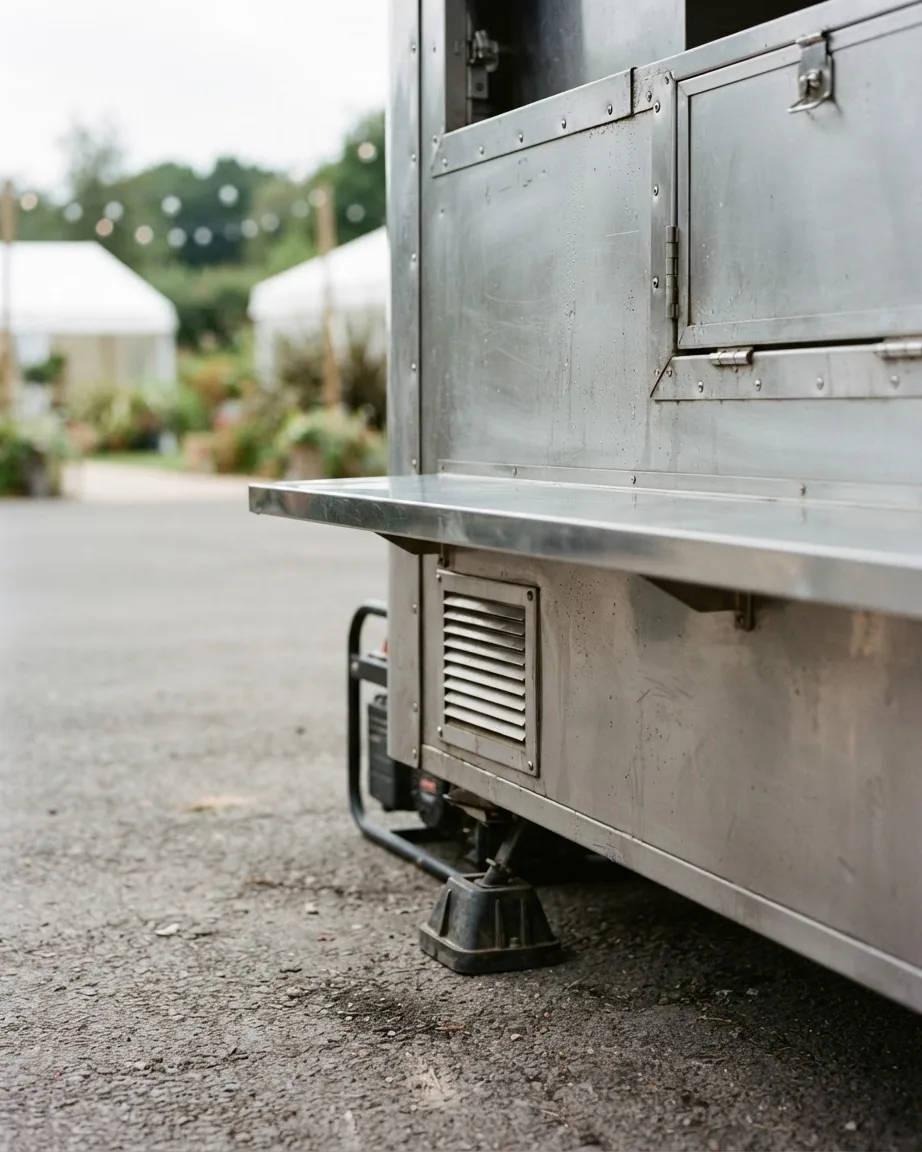
Honeyfund says trucks need level parking within 100 feet of the reception area, plus power access and proper permits. Food Truck Club gets more precise on the surface: the truck needs 20 to 30 feet of paved or hard-packed parking, and grass, gravel, and steep grades are problems. A truck that can’t set up level or can’t reach power isn’t a catering problem, it’s a no-show.
Power itself has three sources: plug in, generator, or a running engine. The truck should sit outside, well ventilated, with fumes directed away from guests. Ask about noise rules early, because some venues prohibit generators after a set hour, and a silenced generator at 9 p.m. means cold food during your late-night service. Plan arrival too: Food Truck Club says the truck typically arrives 60 to 90 minutes before service to set up and fire up the kitchen, so that window has to fit your timeline and the venue’s access hours.
The $1 million insurance line and the contract risk nobody warns you about
Insurance is the clause venues enforce hardest. Food Truck Club states that most venues require the truck to carry $1 million in general liability and may need to be named as an additional insured, which you should confirm 30 days before the date. That “additional insured” wording matters: a truck can hold a policy and still not have your venue named on it, and some venues treat the missing endorsement as a reason to deny entry.
The quieter risk is the contract itself. Some trucks may not sign a contract at all, and a few reserve the right to skip out at the last minute, which is why using an established company beats booking the cheapest operator you find at a festival. For weddings, host-pay is the standard arrangement, where the couple covers the full bill, as opposed to the attendee-pay model common at corporate events. Lock the payment model, the minimum, the arrival window, and the insurance endorsement into one signed document. For the broader logistics of booking any event vendor, see our catering coverage.
What a truck won’t do: ruling yourself out before you spend a dollar
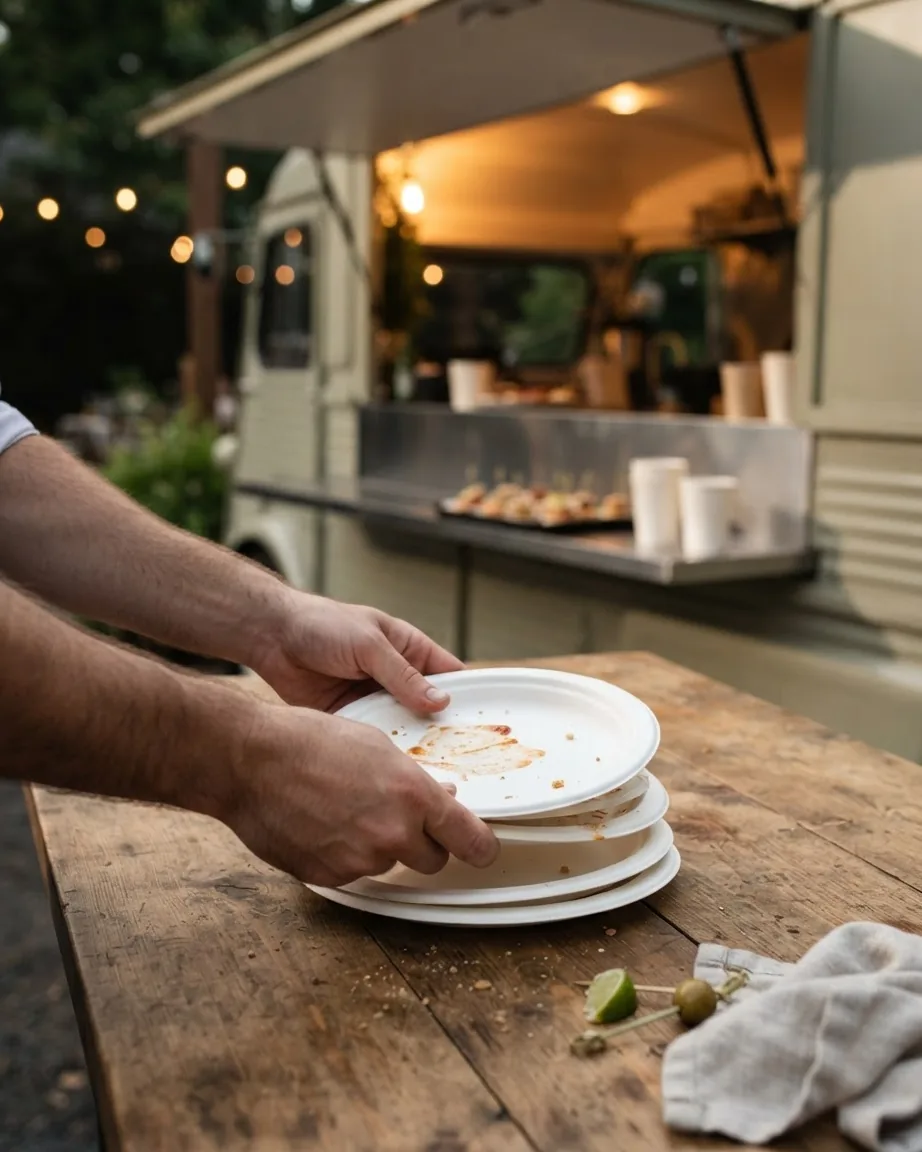
A food truck is the wrong call for some weddings, and knowing that early is cheaper than discovering it after the deposit. Zola’s own list of disadvantages includes complicated logistics and regulations, longer wait times, weather dependency, and limited ability to accommodate dietary adjustments. A truck cannot deliver plated, multi-course formal service, so a black-tie reception or an indoor-only venue without adjacent parking is a poor match.
A food truck also doesn’t replace a full-service caterer. Caterers manage rentals and bring staff to set up, bus tables, clean, and break down. Most trucks don’t provide alcohol, though mobile bar carts exist as a separate booking. Disposable dishes and utensils are typically included, but dedicated servers often are not, so budget for the labor you’ll still need to pour drinks, clear plates, and manage the room.
Allergen warning
One planner’s workaround is worth stealing. Desireé Dent, founder of Dejanae Events, suggests using a truck for late-night snacks when there’s not a huge rush, rather than the main dinner crush, and she recommends asking couples whether they’ve actually tasted the truck’s food at festivals or travels before booking. On dietary needs, raise them directly: cross-contamination can be a real issue in a smaller food truck kitchen, so if you have guests with serious allergies, confirm how the line handles it or choose a different format.
Two booking timelines, and which one applies to you
The lead-time advice splits, and both answers are right for different situations. Food Truck Club says to book 3 to 4 months ahead for peak wedding season, which it defines as June through October. The Knot notes that couples often don’t start working with their caterer until about five or six months before the wedding, and suggests the same schedule works for a food truck.
Resolve it by season and popularity. If you’re marrying in peak months or you want a specific, in-demand truck, treat the 3-to-4-month figure as your absolute floor and reach out earlier. If you’re off-season with flexible taste, the five-to-six-month cushion The Knot describes gives you room without panic. Either way, the insurance confirmation lands 30 days out, so work backward from that date.
The local permit that can block your wedding after the deposit clears
This is the layer the wedding sites skip, and it’s the one that cancels bookings. A truck’s general business license is not the same as permission to operate at your specific venue on your specific date. Local fire, health, and zoning rules apply, and they are set and enforced where you live, not nationally. The fees alone aren’t comparable across cities, which is the point.
- Cincinnati: under the Cincinnati Fire Department, all mobile food preparation vehicles must pay a $200 permit fee, with or without fuel, per the 2025 Ohio Fire Code update, and special-event trucks need local health and fire registration and inspection even when they’re based outside the city.
- Millville, New Jersey: the Bureau of Fire Safety’s food truck permit form charges a Type I permit fee of $54, expressly contemplates a truck used for a wedding, and requires property-owner permission when the applicant isn’t the owner. It also wants a kitchen-hood fire-extinguishing inspection report issued no more than 6 months before the event, with the application and fee submitted 3 business days before the event and inspection, and a new permit each time the unit relocates.
- New York City: the Department of Health and Mental Hygiene requires organizers to notify the Health Department 30 days before the event begins for vending at temporary events.
- San Luis Obispo County, California: Environmental Health Services requires a mobile facility to operate with an approved commissary and report daily for cleaning and servicing, and any mobile food facility stopping at one location for one hour or more must secure restroom facilities for its employees.
- Chattanooga: the city requires zoning that allows mobile food vending plus written owner permission on private property.
The $54 in Millville and the $200 in Cincinnati aren’t two guesses at one number. They’re different jurisdictions, different permit definitions, and different codes, which is exactly why you can’t estimate your own cost from somebody else’s city. Pull the figure from your own city and county.
One subtle trap for private weddings: a private event on private property is not automatically exempt from permitting. New York City’s temporary-event rules reach events on private property, while separately exempting a business or social function where the public is not invited, and that exemption doesn’t erase every underlying license a truck must still hold. Don’t assume “it’s a private wedding” settles the question. Ask your local health and fire departments directly, because the compliance lead time, 30 days in NYC, 3 business days in Millville, falls on you, the organizer, not the truck.
Real Service Time by Guest Count: the Plates-Per-Hour Math Nobody Runs
Sources quote throughput for a single truck, but only ever apply it to a tidy 100-guest example. Divide your own guest count by both ends of that rate and the picture changes fast. The article’s cited “about 90 minutes for 100 guests” is the best case; it assumes the truck never drops below its top speed.
- 100 guests: service time stretches considerably if the kitchen runs below its top speed. The widely repeated “90 minutes” is the floor, not the average.
- 150 guests (the one-truck ceiling The Knot and Zola both name): service at the slow end can eat the entire 2-to-3-hour service window most weddings plan for, which is exactly why Food Truck Club says 150 guests needs a second truck to hold waits under 15 minutes.
The takeaway: run your real number against the slow end of the rate, not just the fast end. If two hours of guests cycling through a line doesn’t fit your timeline, you’re not buying a bigger menu – you’re buying a second truck.
FAQ
Can one food truck handle cocktail hour, dinner, and dessert at my wedding?
Rarely. Innovo Kitchen flags this as a frequent planning error because most operators specialize in a single food type. A taco truck won’t also plate your dessert course well. If you want variety across the night, you’re booking two vendors or two trucks, which changes both your minimum spend and your parking footprint. Plan the menu scope before you price anything.
Is a food truck a bad fit for a rainy-day or indoor wedding?
Often, yes. Zola lists weather dependency as a real disadvantage, and a truck needs level, hard-packed parking within roughly 100 feet of guests. An indoor-only venue with no adjacent surface for the truck, or an outdoor plan with no rain backup, leaves you exposed. Confirm a covered guest flow and a usable parking pad before committing, not after.
What’s the cheapest the whole thing can realistically come in at?
For a small list, your floor is the vendor minimum, not the menu. The per-head price only drives the bill once your guest count pushes spending above that minimum. Below it, you’re buying the floor.
Does my wedding need its own permit, or does the truck handle everything?
Depends on your city. In New York City, the organizer notifies the Health Department 30 days out; in Millville, the applicant files 3 business days before and needs the property owner’s written permission. Those deadlines land on you, not the vendor. A private wedding isn’t automatically exempt, so call your local fire and health offices before you sign the truck’s contract.