Myrtle beach food truck festival weekends are their own kind of animal, and I say that as a guy who has run a flat-top through a Saturday beach rush. I own a truck out of Austin, and I have driven east to work Grand Strand events more than once. This is the page I wish somebody had handed me the first time: what the festival is actually like if you are coming to eat, and what it costs and takes if you are coming to sell. No tourism-brochure gloss, just the numbers and the window-level truth.
The short version is that these are big, loud, cheap-to-enter street parties built around handheld food, live music, and a whole lot of walking. For a family it is a $5-a-head afternoon. For an operator it is a permit stack, a booth fee, and a bet on whether the line moves fast enough to pay for the day. Both sides deserve straight talk, so I am going to give both.
Quick answer: The Myrtle Beach Food Truck and Music Festival ran April 10-12 in 2026 at the Old Myrtle Square Mall, 2501 N. Kings Hwy, put on by N.S. Promotions and Events. Reporting had 30,000-plus people across three days and 55 to 80 vendors. General admission was $5 at the gate or online. If you want to vend, expect a booth fee in the $100-$150 range at most food truck festivals (bigger events run higher), plus separate South Carolina food permits: a Retail Food Establishment permit that bottoms out at a $200 minimum, and a Horry County special event process with a $250 application fee and $100 per day.
I checked these numbers again this month against what I am seeing out on the circuit, and the fee ranges and permit costs below still hold.
What the Myrtle Beach food truck festival is actually like
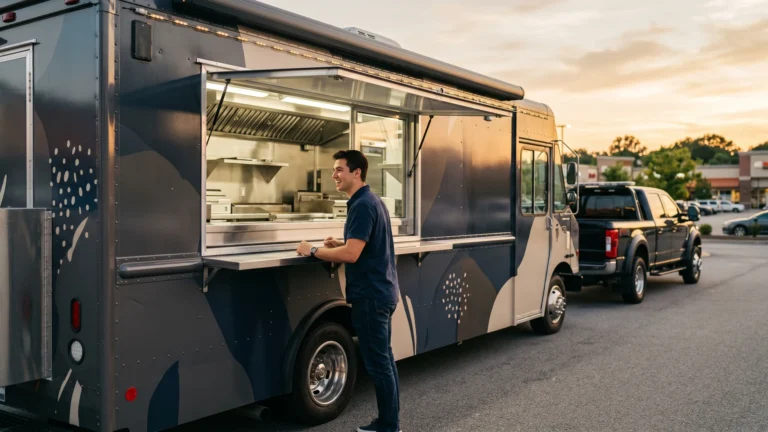
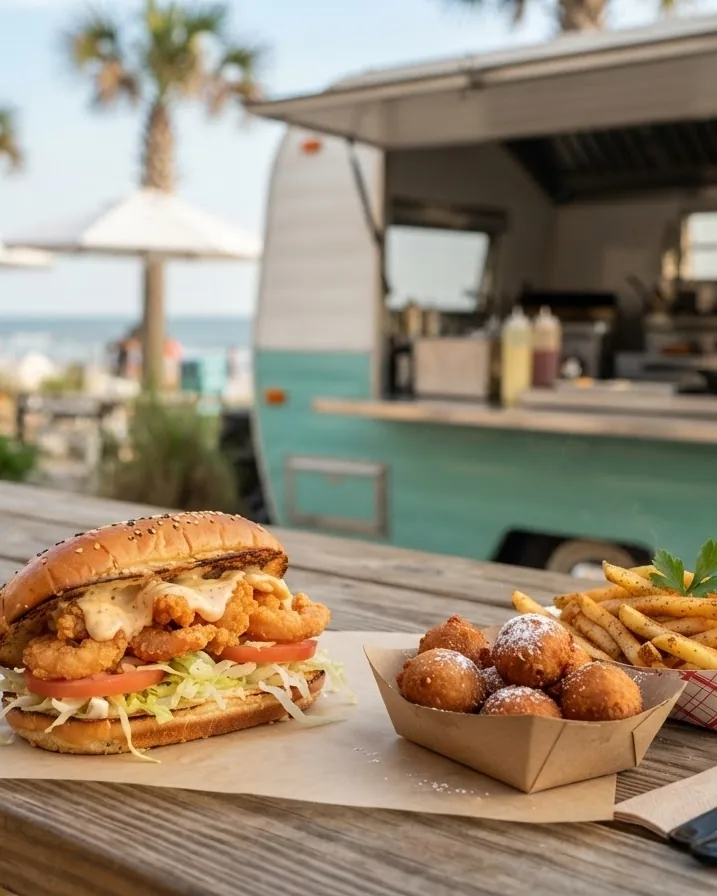
Picture a mall parking lot turned into a food midway. Trucks and tented booths line the edges, a stage runs live music, and the middle fills with folding tables, strollers, and people deciding between shrimp rolls and funnel cake. The 2026 event pulled north of 30,000 people over the weekend, which tells you the pace: Friday is a warm-up from 4:00pm to 8:00pm, Saturday is the monster from 11:00am to 8:00pm, and Sunday winds down 11:00am to 5:00pm.
As an eater, the play is simple. Bring cash and a card, because some booths are card-only and some are cash-only, and the line you want will always be the one that does not take what you brought. Go hungry but graze; the whole point is splitting a lot of small plates across a crew. Prices at these things tend to sit in the $8-$14 range per handheld item, so a family of four grazing hard is a $60-$90 afternoon on top of the $5 tickets.
Come early on Saturday if you hate lines. By 1:00pm the popular trucks are 20-deep and the shade is gone. I have watched people wait 35 minutes for a lobster roll they could have grabbed in five at noon. The music ramps up later, so if you are there for the bands, the afternoon heat trade-off is real.
When and where these festivals happen on the Grand Strand
The Grand Strand runs food truck and street festivals mainly in the shoulder seasons, spring and fall, because that is when the weather cooperates and the tourists are thick but not sweltering. The flagship Myrtle Beach Food Truck and Music Festival has landed in April. You will also find smaller truck rallies, brewery lots, and market events scattered from Murrells Inlet up through North Myrtle Beach across the warmer months.
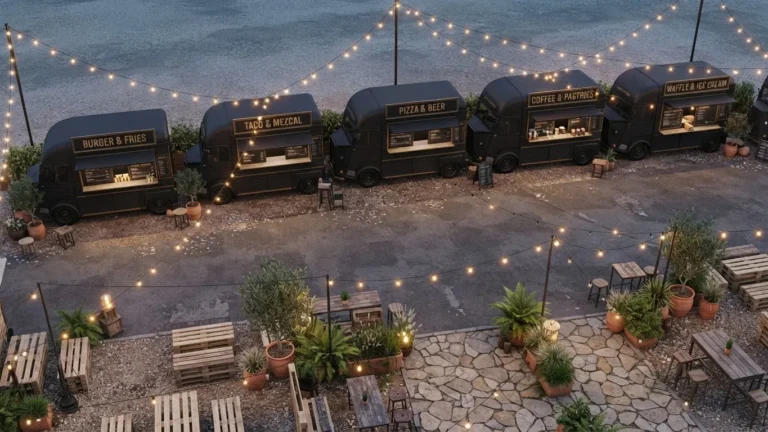
Location matters more than people think. The Old Myrtle Square Mall site gives organizers a big flat lot with real parking, which is why a 30,000-person event can happen there without gridlock. Beachfront and boardwalk events are prettier but tighter, and that changes everything for a vendor hauling a 20 ft rig and a generator.
If you are planning a trip around one, book lodging early. April weekends on the Strand fill up, and a festival weekend fills up faster. If you are planning to vend one, note that summer brings the crowds but also brutal window heat; I have cooked a July market where the flat-top plus the pavement had my prep station reading like an oven. Spring and fall are kinder to your food, your cooler ice, and your crew.
Vendor booth fees and how the money really works
Here is where operators get burned, so read slow. A festival booth fee is not one number, it is a stack. At most food truck festivals the base sits around $100 for a 10 ft x 10 ft craft-style space and $150 for a truck or a larger footprint. I have paid $125 for a standard truck spot and seen a 10 ft x 20 ft run $230. Big, heavily marketed events can charge a flat fee up to $1,600, which is a real gamble, and in my experience that top-end number scares off vendors who would cover it easily once a 30,000-person crowd shows up.
Then come the add-ons. Electric hookup is commonly $100 for 110-volt and $200 for 220-volt service, which matters if you do not want to run your own generator. Some events skip the flat fee and take a commission instead, usually 10% of sales, or offer a 5%-10% cut as an alternative to paying up front. Application fees can be a separate, non-refundable $50 on top of everything. I have seen promoters bundle three or four of these add-ons into one contract without spelling out the total, so tally every line item yourself before you sign.
The rule of thumb I run by: on a flat fee, you want to clear about 10 times the booth cost to make the day worth the fuel, labor, and food cost. So a $150 booth means I am aiming for $1,500 in sales, and I will not commit to an event unless the crowd size makes that believable. A 30,000-person weekend clears that bar easily; a 400-person church-lot rally does not. For vendors still building that cushion, according to SBA guidance on small business budgeting, holding back extra cash for a slow opening weekend beats assuming the average always holds.
Flat fee versus commission is the first real fork in the road for a new vendor, and the table below breaks down both paths along with the common add-ons that show up on almost every contract.
| Fee model | Typical cost | Output/risk | Best for |
|---|---|---|---|
| Flat booth (small event) | $100-$150 | You keep all sales, eat the risk if crowds flop | Proven local events |
| Flat booth (big festival) | $230-$1,600 | High cost, high ceiling, needs a real crowd | 30,000+ attendee events |
| Commission split | 5%-10% of sales | Low downside, organizer shares the risk | Unproven or first-time events |
| Electric add-on | $100 (110V) / $200 (220V) | Saves generator hassle and fuel | Booths without onboard power |
Tip: Before you send a booth deposit, ask the promoter three things in writing: expected attendance, whether the fee is flat or commission, and whether power and water are included. If they dodge attendance or will not put the fee model in writing, that is your answer. I once paid up front for a “huge” event that drew maybe 600 people, and I ate the loss because I never asked the crowd question.
Before you sign anything, run down this list with the promoter:
- Expected attendance for the weekend, in writing, not a guess
- Whether the fee is flat, commission, or a hybrid of both
- Whether power and water hookups are included or billed as add-ons
- Load-in time and the space dimensions your rig actually needs
- Cancellation and rain-date policy before you wire a deposit
How to apply as a vendor
Applying is a two-track job, and mixing them up is the classic rookie mistake. What most guides get wrong is treating the event application and the government paperwork as one task; they run on different clocks, different offices, and different deadlines. Track one is the event itself: you apply to the promoter, not the city. For the Myrtle Beach Food Truck and Music Festival that means N.S. Promotions and Events, usually through their site or the event’s Eventeny listing. You submit your truck info, menu, insurance, and photos, and they decide who gets a slot. Popular events fill months out, so do not wait.
Track two is the government paperwork, which the promoter will require but does not issue. In South Carolina your food permit is separate and has to be in hand before the event signs off. For a Myrtle Beach or Horry County event you are also looking at a special event permit process run by the county. The National Food Truck Association keeps plain-language guides and a directory of regional associations that can point you to the right local office, which is worth a bookmark when you work events in states you do not know. With new vendors, the pattern I see is trusting the promoter’s yes as the finish line, when county paperwork decides if you load in.
Before any of that though, get your business itself squared away. You need a federal EIN to open a business bank account and file taxes as a food truck operator, and according to the IRS you can apply for one free directly on their site with no third-party fee required. I built my first truck without one for two weeks and could not open a checking account until I fixed it, so do not skip this step.
Start the government track early. Horry County special event permits can be filed up to a year ahead and generally no later than 90 days before the event, with some deadlines at 45 days. The city of Myrtle Beach wants applications for large events roughly 90 days out and smaller ones about 60 days out. Miss those windows and you are not vending, full stop.
Here is the order I actually work through on every new festival application:
- Step 1 – Apply to the event promoter directly through their site or Eventeny listing with your truck info, menu, insurance, and photos.
- Step 2 – File your South Carolina Retail Food Establishment permit with the SC Department of Agriculture well before the event date.
- Step 3 – Submit the Horry County special event permit application, ideally months ahead of the 90-day and 45-day deadlines.
- Step 4 – Confirm your city business license and hospitality fee registration so nothing surprises you at load-in.
South Carolina permits and health rules for festival vending
This is the part people wish they could skip, and it is exactly the part that gets a truck shut down at the gate. In South Carolina, the food permit you need is a Retail Food Establishment permit, and as of July 1, 2024 those are issued by the South Carolina Department of Agriculture rather than the SC Department of Health and Environmental Control. A lot of older guides still say DHEC, so do not get confused; the current authority for mobile food is SCDA. I have seen trucks get turned away at check-in because they were still working off the old DHEC paperwork instead of SCDA.
The cost math on the state permit: there is a $100 initial fee plus an annual inspection fee that ranges from $100 up past $250 for high-volume operations, and the total is never less than $200. In practice most trucks land somewhere in the $100-$400 per year band. You also want a certified food protection manager on board; ServSafe Manager certification runs about $125 and is good for five years.
Local layers stack on top. City mobile food vendor permits run roughly $50-$200 a year in most SC cities, and up to $150-$300 in Charleston. A city business license is often $50-$200 plus a gross-receipts component. For a Myrtle Beach event specifically, Horry County charges a $250 non-refundable special event application fee plus $100 per day, and a hospitality fee of 2.5% of sales with a $125 minimum applies when you sell prepared food or drink.
Warning: None of this is legal advice, and rules change. The permit that covered you last spring may have moved offices or shifted fees, exactly like the DHEC-to-SCDA handoff did. Always confirm the current requirement with the city of Myrtle Beach, Horry County, and SCDA before you commit money to an event. I keep a folder of current permit PDFs per state and re-download them every season, because operating on last year’s rules is how you get sent home. For festival vendors, the trap I see is budgeting for last year’s fee schedule and getting surprised when the number has moved by check-in day.
Do not forget fire. If you cook with grease or open flame, you need a working suppression system and a passed inspection. A hood and fire inspection runs $50-$150, and an Ansul-style suppression install is $1,500-$3,500 if you are building the truck out. The National Fire Protection Association sets the standards inspectors check against, so build to those, not to whatever the last guy got away with. According to NFPA, the suppression system needs a passed inspection before you ever plug in a fryer, and skipping that check before a festival date is the overlooked detail that gets a rushed build sent home at the gate. I build every fryer setup according to NFPA before a festival, not after.
What actually sells at a beach festival
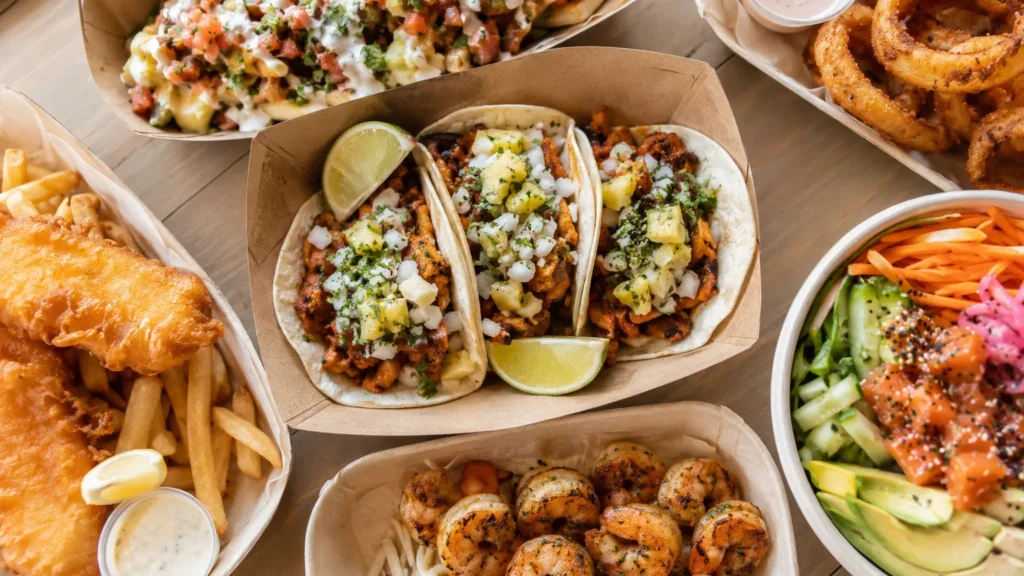
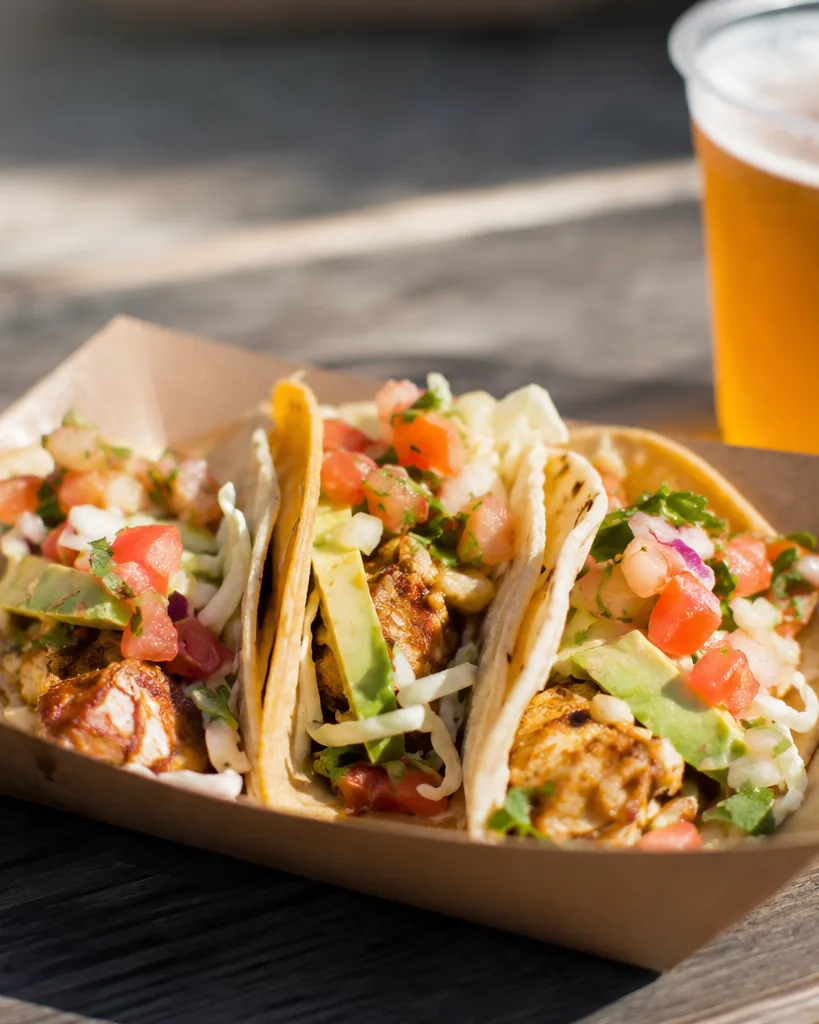
Menu discipline is the difference between a good day and a nightmare. Having spent six seasons at the window during beach season, I trust handheld and fast over clever every time. At a beach festival you want handheld, fast, shareable, and heat-tolerant. Lobster and shrimp rolls crush it near the coast. Loaded fries, smash burgers, birria tacos, and anything you can hand over in a paper boat move fast. On the sweet and drink side, funnel cake, fresh lemonade, and frozen drinks are money in the shade.
Keep the menu to 6-8 items. I know it is tempting to show off range, but every extra item slows the line, and at a festival the line is the whole business. A Saturday rush can be hundreds of tickets in three or four hours, and your kitchen throughput, not your recipe, is the ceiling. I underpriced my plates for a solid month my first summer before I sat down and did the food-cost math; do not learn that one the hard way. I have helped other operators trim their menu down before their first beach festival, and every one of them moved faster once they did.
Price for the setting. Festival crowds expect $8-$14 handhelds and will pay it, so pricing at your normal street rate leaves money on the table and pricing too low buries you in labor for no margin. Build a combo or two to lift the average ticket, run a card reader and a cash box both, and staff one more person than you think you need. The rush does not wait for you to find your rhythm.
Sal’s take on working a beach festival
After eight years running trucks, I can tell you a beach festival is a different beast from a downtown lunch shift, and the ocean is the reason. Wind and salt air do more damage on a beach weekend than any kitchen problem, a lesson from my 8 years running trucks. Wind will lift your tent and your ticket rail if you do not weight everything down; I lost a menu board to a gust at a boardwalk event and had to chase it across the sand mid-order. Salt air, sun, and heat gang up on your food and your crew, so bring extra ice, extra shade, and extra water for the people, not just the coolers.
Power is the other trap. If the event does not include electric and you are running a generator, plan your fuel; a long festival day can burn more than you budget, and running dry at 6:00pm on a Saturday is a self-inflicted disaster. The generator that quit on me mid-rush at a market taught me to carry a backup and a full spare can, every single time. Running dry mid-rush on a Saturday, in my experience, costs more in lost sales than the fuel would have cost for the whole weekend.
The upside is volume you cannot get any other way. A single strong festival weekend can do what a slow two weeks of street service does, and it seeds a mailing list and social following full of tourists who tag your truck. That is why I keep coming back east for these even with the drive. Just go in with the numbers done, the permits filed, and the menu tight, and a Grand Strand weekend can be one of the best paydays on your calendar.
If you are weighing events more broadly, my rundown of how to work a food truck festival for profit and the play-by-play from the Anoka food truck festival breakdown cover the same math for other markets.
One more angle for owners: festivals are a shop window for your catering calendar. Half the private-event bookings I land start with somebody eating my food at a festival and asking if I do parties. If that is your goal, treat the booth like a sales table and think about how a beach event feeds your food truck catering business. And if you do not own a rig yet but want to test a market like the Strand, a short-term food truck rental to test a market or a spot in a local food truck park setup is a lower-risk way to learn the crowd before you buy in.
Frequently asked questions
When is the Myrtle Beach food truck festival in 2026?
The Myrtle Beach Food Truck and Music Festival ran April 10-12, 2026, at the Old Myrtle Square Mall on N. Kings Hwy. Hours were Friday 4:00pm to 8:00pm, Saturday 11:00am to 8:00pm, and Sunday 11:00am to 5:00pm. Grand Strand food truck events cluster in spring and fall, so check the promoter’s site each year for the exact dates.
How much does it cost to attend?
General admission was $5 per person, available at the gate or online, and kids often get in free or cheap. Plan on roughly $8-$14 per handheld food item once inside. A family grazing across several trucks usually spends $60-$90 on food on top of tickets, so bring both cash and a card since booths vary on what they accept.
How much is a vendor booth at a food truck festival?
At most food truck festivals a booth runs about $100 for a 10 ft x 10 ft space and $150 for a truck or larger footprint, with big events charging $230 up to $1,600. Electric hookups add roughly $100 for 110-volt or $200 for 220-volt. Some events take a 5%-10% commission on sales instead of a flat fee.
What permits do I need to vend in Myrtle Beach, SC?
You need a South Carolina Retail Food Establishment permit, now issued by the SC Department of Agriculture rather than DHEC, which carries a $200 minimum. Add a Horry County special event permit at $250 application plus $100 per day, any city license, and the 2.5% hospitality fee on prepared food. Confirm current rules with each office before you commit.
Is working a beach festival worth it for a food truck?
It can be one of your best paydays if the crowd is real. I aim to clear about 10 times a flat booth fee to justify the day, which a 30,000-person weekend clears easily. Keep the menu to 6-8 fast handhelds, price at festival rates, staff up for the rush, and treat the booth as a lead source for catering bookings.
The bottom line
The myrtle beach food truck festival is a cheap, loud, food-first afternoon for eaters and a real business decision for operators. If you are coming to eat, bring $5 a head, some cash, an empty stomach, and come early Saturday. If you are coming to sell, do the math before the deposit: booth fee plus power, the SCDA food permit at a $200 floor, the Horry County $250-plus-$100-a-day process, and the 2.5% hospitality fee, all against a crowd big enough to clear ten times your fee.
Get the numbers and the permits right, keep the menu tight, and the Grand Strand can pay you back for the drive. From my years on the truck, the operators who treat this like real accounting, not a hobby, are the ones who keep getting invited back. For anything money-related here, verify with SCDA, the city of Myrtle Beach, and the National Food Truck Association. According to the SBA, new small business owners should confirm licensing and permit costs directly with the issuing agency before budgeting a season, and that starts with the basics at the U.S. Small Business Administration and the federal EIN process at the IRS.